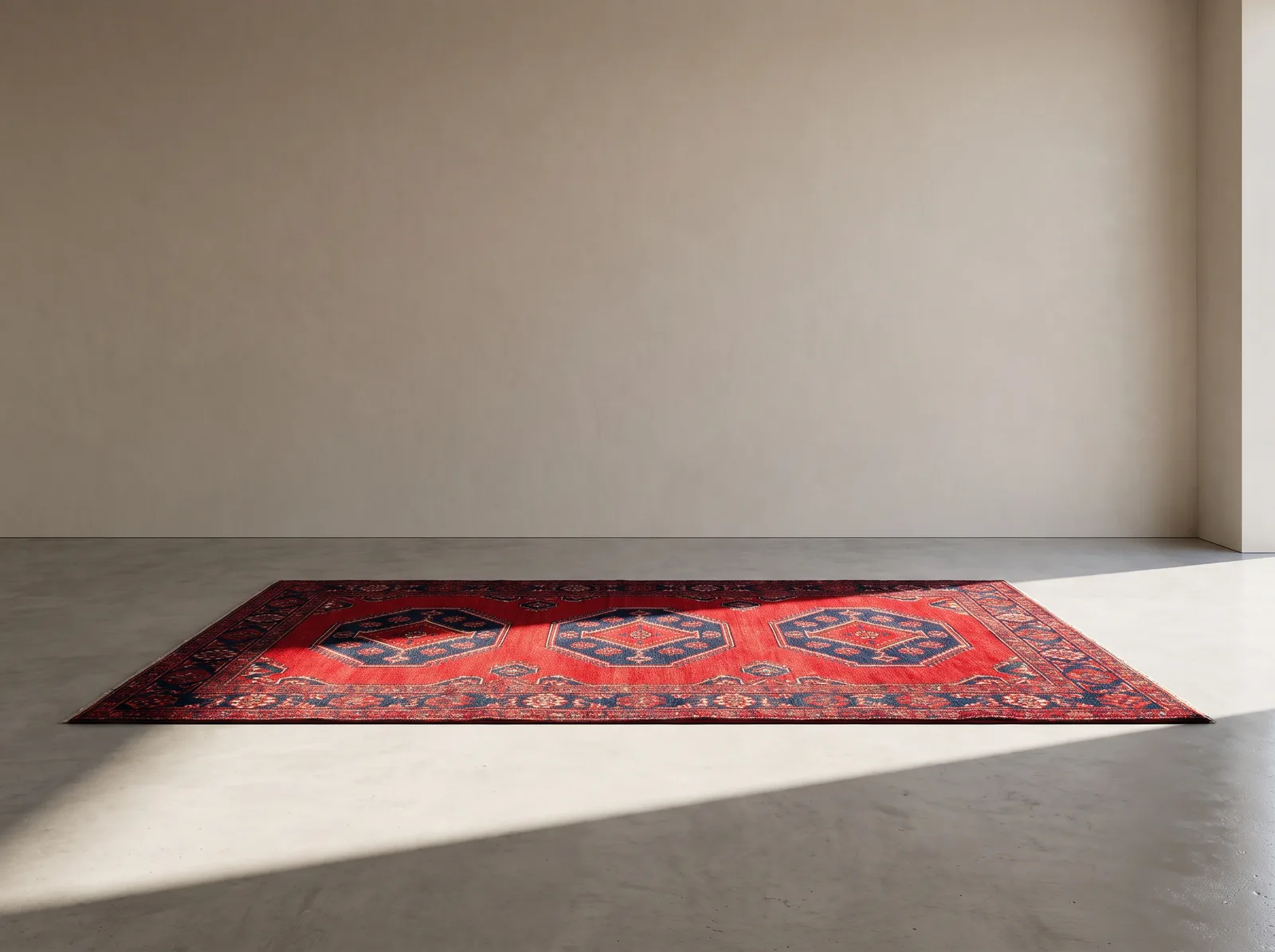
Turkish Rugs: Anatolian Knots, Colour and Pattern
Anatolia, Turkey
Turkish rugs bring Anatolian weaving traditions, strong colour and recognisable knot structures together. Explore their history and design language.
More Than a Rug
Few rug traditions have shaped the history of the knotted carpet as fundamentally as the Anatolian one. Bold geometric patterns in deep reds, blues, and ivory, woven by nomadic and settled communities alike over centuries, have made the Turkish rug one of the longest continuously produced textile art forms in the world.
The Ghiordes Knot That Named the Technique
Anatolian weavers developed the so-called Ghiordes knot (also called the Turkish knot) — a symmetrical knot technically distinct from the asymmetrical Persian Senneh knot. This knot creates a somewhat coarser but exceptionally durable structure and was later adopted by many Caucasian and Central Asian weaving traditions as well — direct evidence of how influential Turkish knotting technique became beyond its own borders.
From Nomadic Tents to Ottoman Palaces
The origins of Turkish carpet weaving date back to the 13th century, when Seljuk and later Ottoman weavers first made carpets for their own, often nomadic, use. With the rise of the Ottoman Empire, carpet production became increasingly professionalized, with specialized workshops in cities like Ushak, Ghiordes, and Kula producing carpets both for the domestic market and for export to Europe.
Early Carpets in European Painting
Turkish carpets reached Europe via trade routes as early as the 14th and 15th centuries and were prized enough there to be regularly depicted in paintings by masters like Hans Holbein the Younger and Lorenzo Lotto — so frequently that certain pattern types are still known today as "Holbein carpets" or "Lotto carpets." These paintings are now considered important historical sources, since many of the original depicted carpets themselves haven't survived.
Regional Centers With Their Own Character
"Turkish rug" is an umbrella term for a wide range of regional traditions, each with its own character. Ushak carpets are known for their large-scale medallion and star patterns, Hereke carpets for exceptionally fine silk quality, and kilim flatweaves for their graphic, geometric patterning. This regional diversity makes the Turkish rug tradition as multifaceted as the Persian one, but with a distinct, generally bolder color and form language.
A Statement for Boho, Traditional, and Eclectic
The Turkish rug works in Boho interiors as a bold color anchor alongside rattan and natural materials, as well as in traditionally styled rooms, where it's honored as an authentic piece of craft, and in eclectic interiors, where its graphic patterning serves as a deliberate contrast to calmer furniture.
The Turkish Rug in Today's Interiors
As the central rug beneath a living room seating group or dining table, the Turkish rug shows its full chromatic effect. Smaller formats also work well as hallway runners, where the dense knotting ensures high durability.
Ateliology Style Verdict
The Turkish rug proves that a craft tradition that gave an entire knotting technique its name doesn't lose significance over the centuries. From nomadic tents to European master paintings, it remains a testament to Anatolian weaving at the highest level. That is exactly what makes the Turkish rug a genuine style piece.
More rug styles
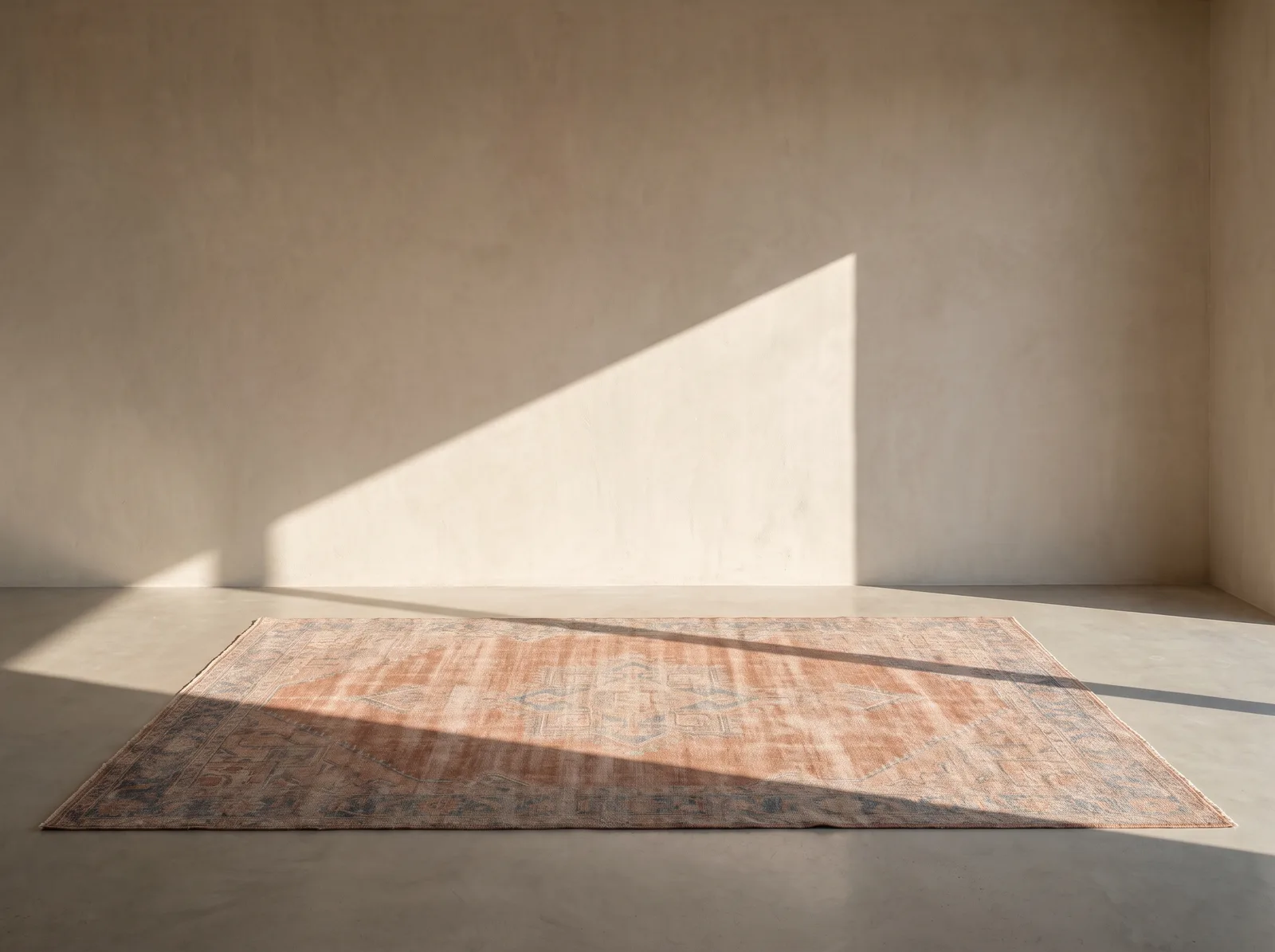 Uşak, Western TurkeyOushak Rug
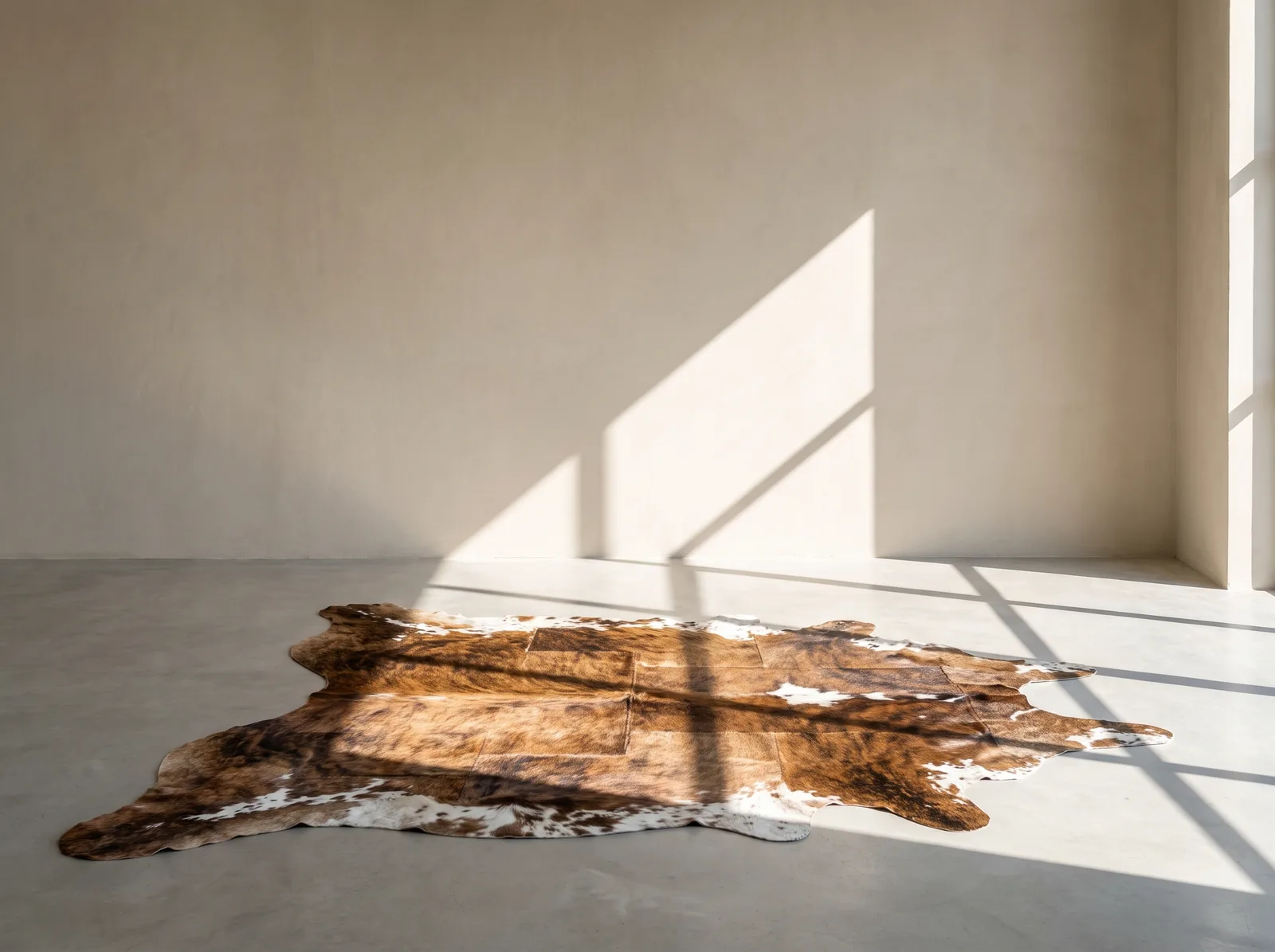 South America, Europe (processing)Cowhide Rug
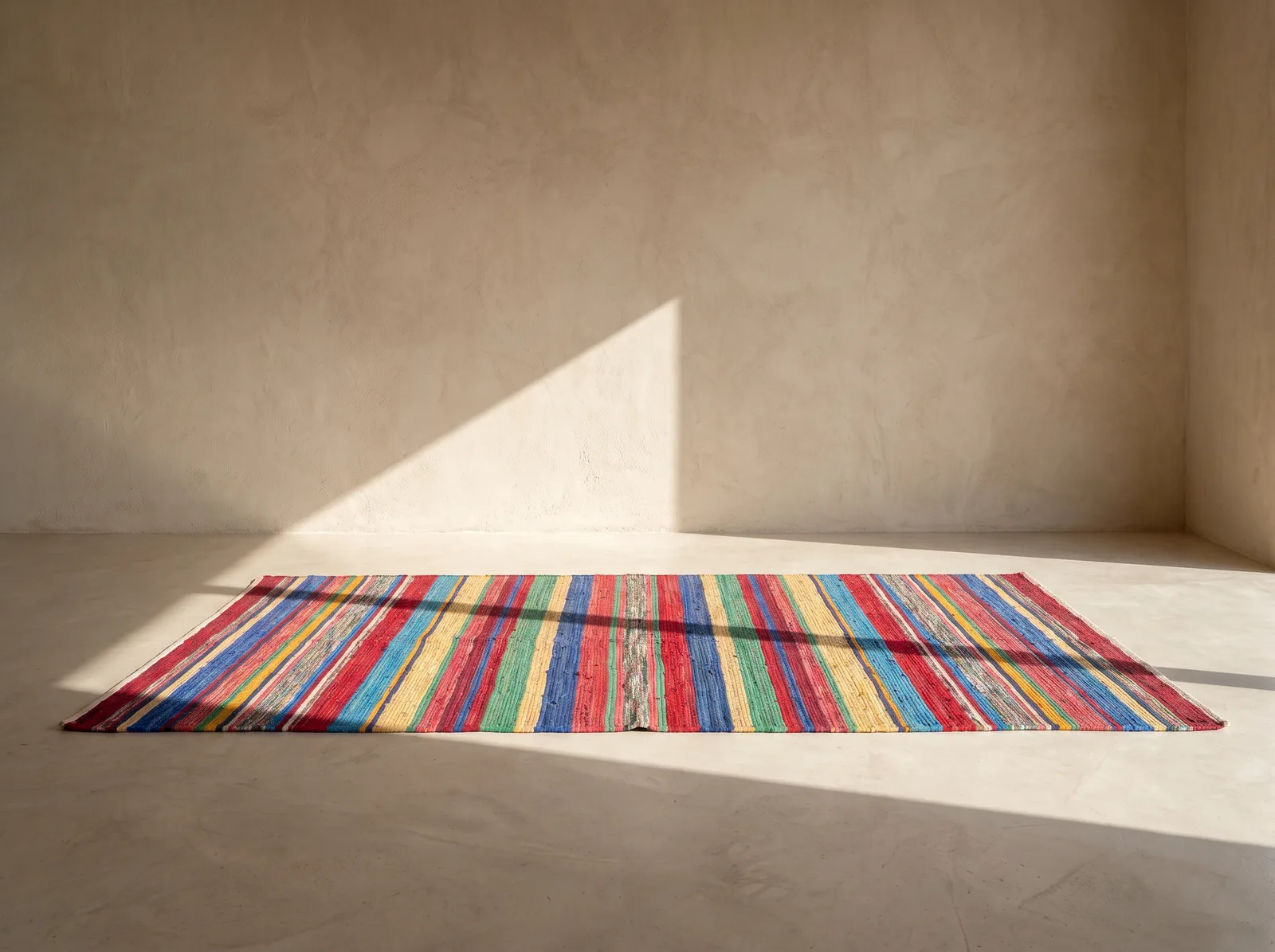 North America and ScandinaviaRag Rug
 Aubusson, FranceAubusson Rug