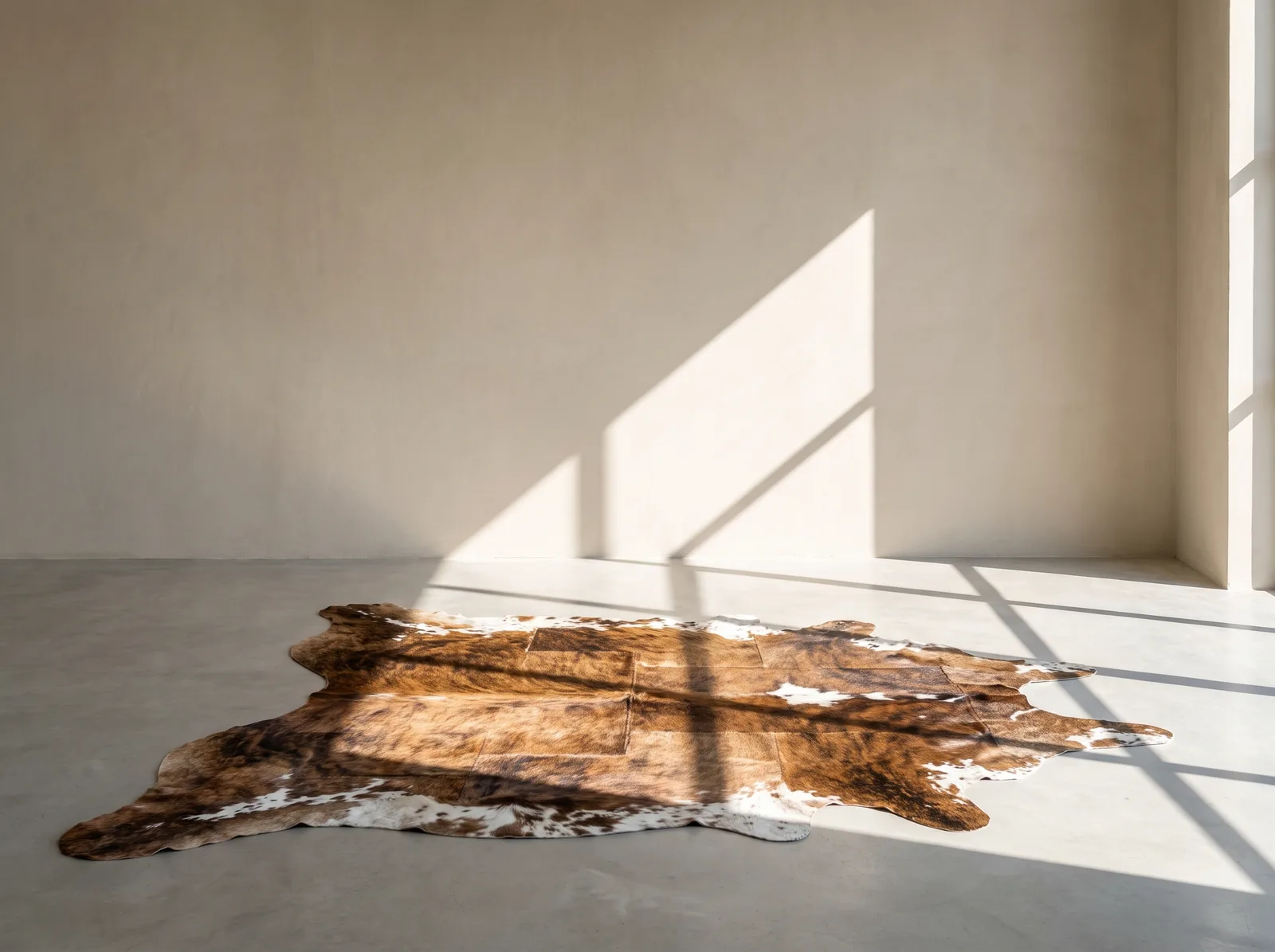
Cowhide Rugs: Natural Pattern and Room Balance
South America, Europe (processing)
Every cowhide has its own markings. Explore how to assess, place and combine this natural floor covering without letting it dominate the room.
More Than a Rug — a One-of-a-Kind From Nature
No two cowhide rugs are alike. The irregular brown, black, or reddish patches on a cream-white base result from each animal's natural coat markings and can't be reproduced or predicted through design. This absolute uniqueness makes every single cowhide rug a genuine one-of-a-kind, with no deliberate human design decision involved at all.
A Byproduct of Cattle Farming
The cowhide rug emerged as a practical byproduct of cattle farming, particularly in the large ranching regions of South America like Argentina and Brazil, where cattle hides were traditionally processed into leather or floor coverings rather than left unused. This repurposing of an agricultural byproduct stands in contrast to most other rug traditions, which were intended from the start specifically for textile production.
Tanning as the Decisive Processing Step
For a raw cowhide to become a durable, odor-neutral floor covering, it undergoes an elaborate tanning process that preserves, cleans, and softens the hide without damaging its natural hair structure and coat markings. This tanning technique, refined over centuries in South America and Europe, is the decisive factor in the quality and durability of the finished rug.
From Ranch Furnishing to 1960s Design Object
While cowhides have been a matter of course in rural South American regions for centuries, European and American designers only discovered them as a deliberate interior statement in the 1960s and 70s, often in the context of a rising interest in natural materials and organic forms in furniture design. Since then, the cowhide rug has become a fixture of modernist and industrial living concepts.
From Brindle to Black and White
Cowhide rugs are categorized by their coat markings, from classic black-and-white spotted hides to brown-and-white variants to so-called "brindle" hides with their characteristic, tiger-like striped pattern. This natural diversity means buyers today can choose from a wide range of color combinations without any single hide needing to be industrially dyed.
A Statement for Industrial, Modern Organic, and Eclectic
The cowhide rug naturally fits into Industrial interiors, where its raw natural materiality complements the aesthetic of exposed concrete and metal, as well as into Modern Organic rooms, whose nature-driven material language is directly reflected here, and into eclectic interiors, where its irregular shape functions as an organic counterpoint to geometric furniture.
The Cowhide Rug in Today's Interiors
Beneath a coffee table or as an accent in an otherwise linear room, the cowhide rug shows its full organic effect. Since genuine cowhide is low-maintenance and durable, it also works well for heavily used living areas.
Ateliology Style Verdict
The cowhide rug proves that a pure agricultural byproduct can become a sought-after design object when its natural uniqueness is treated as a strength rather than an accident. No two pieces are ever alike — that is exactly what makes the cowhide rug a genuine style piece.
More rug styles
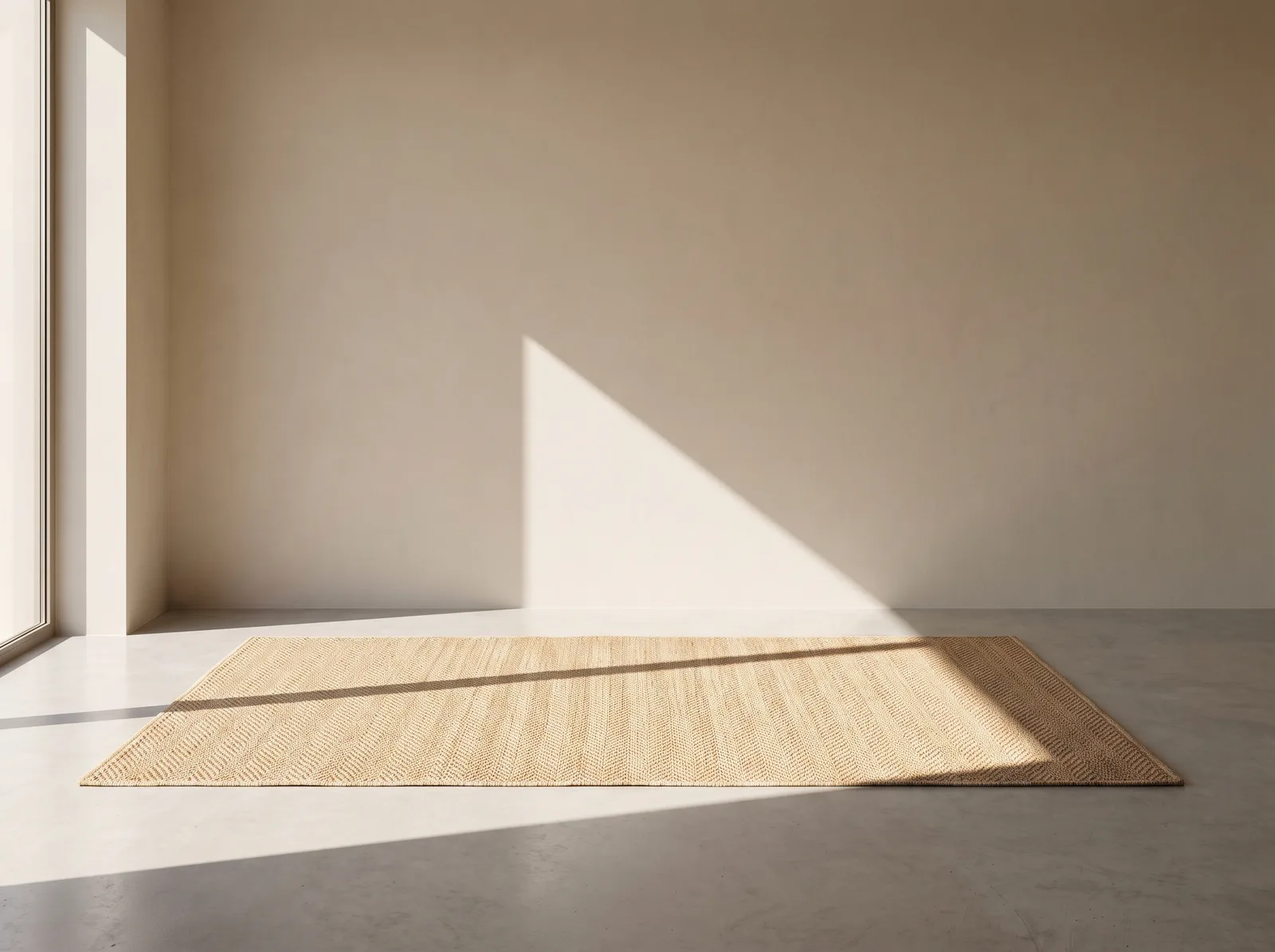 Mexico (origin), East Africa (main cultivation)Sisal Rug
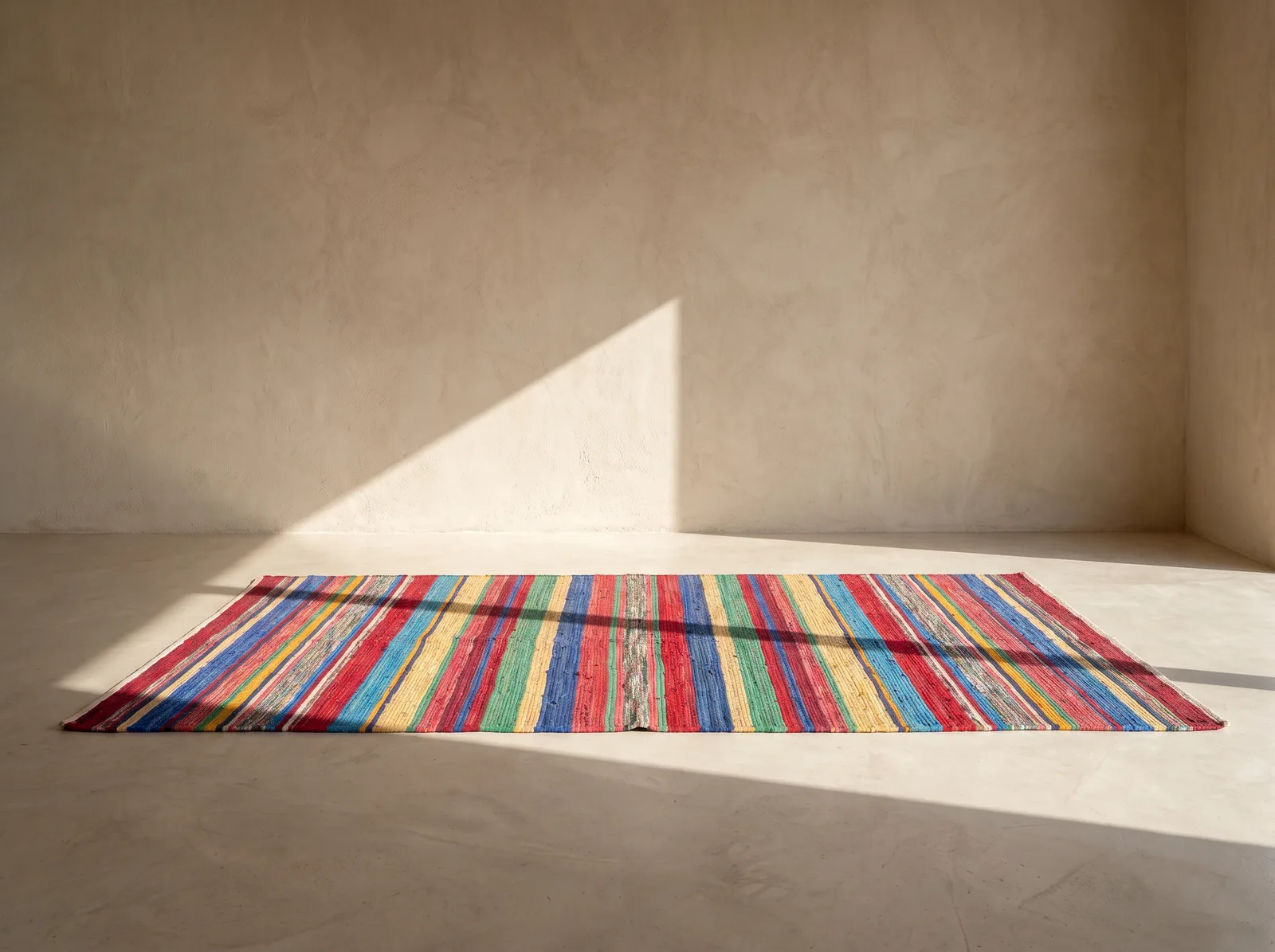 North America and ScandinaviaRag Rug
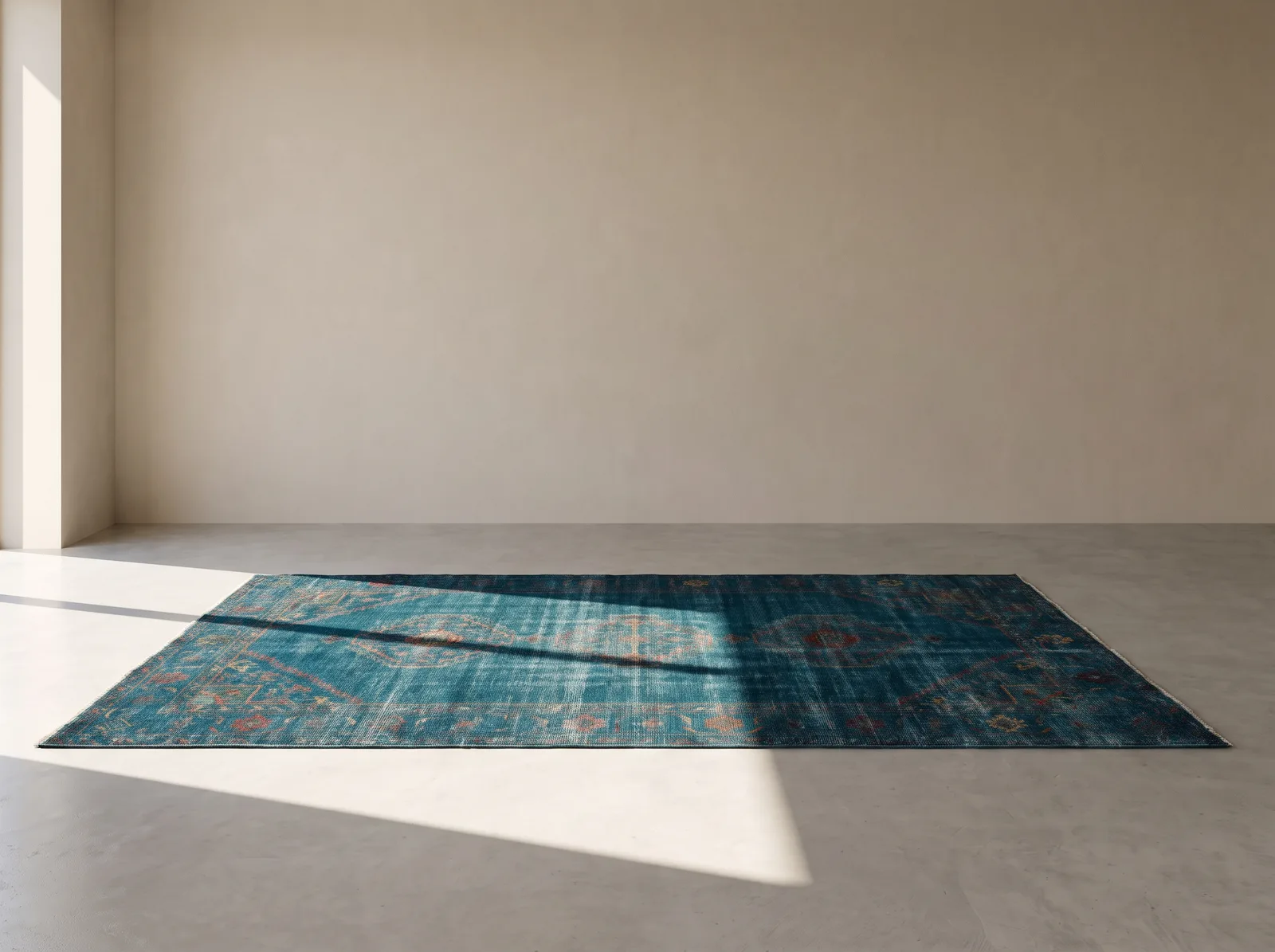 Turkey (source carpets), global trendOverdyed Rug
 Tibetan PlateauTibetan Rug