Grandmillennial
Grandma's living room, reconsidered: chintz, chinoiserie, and blue-and-white porcelain, embraced without irony instead of endless beige minimalism.
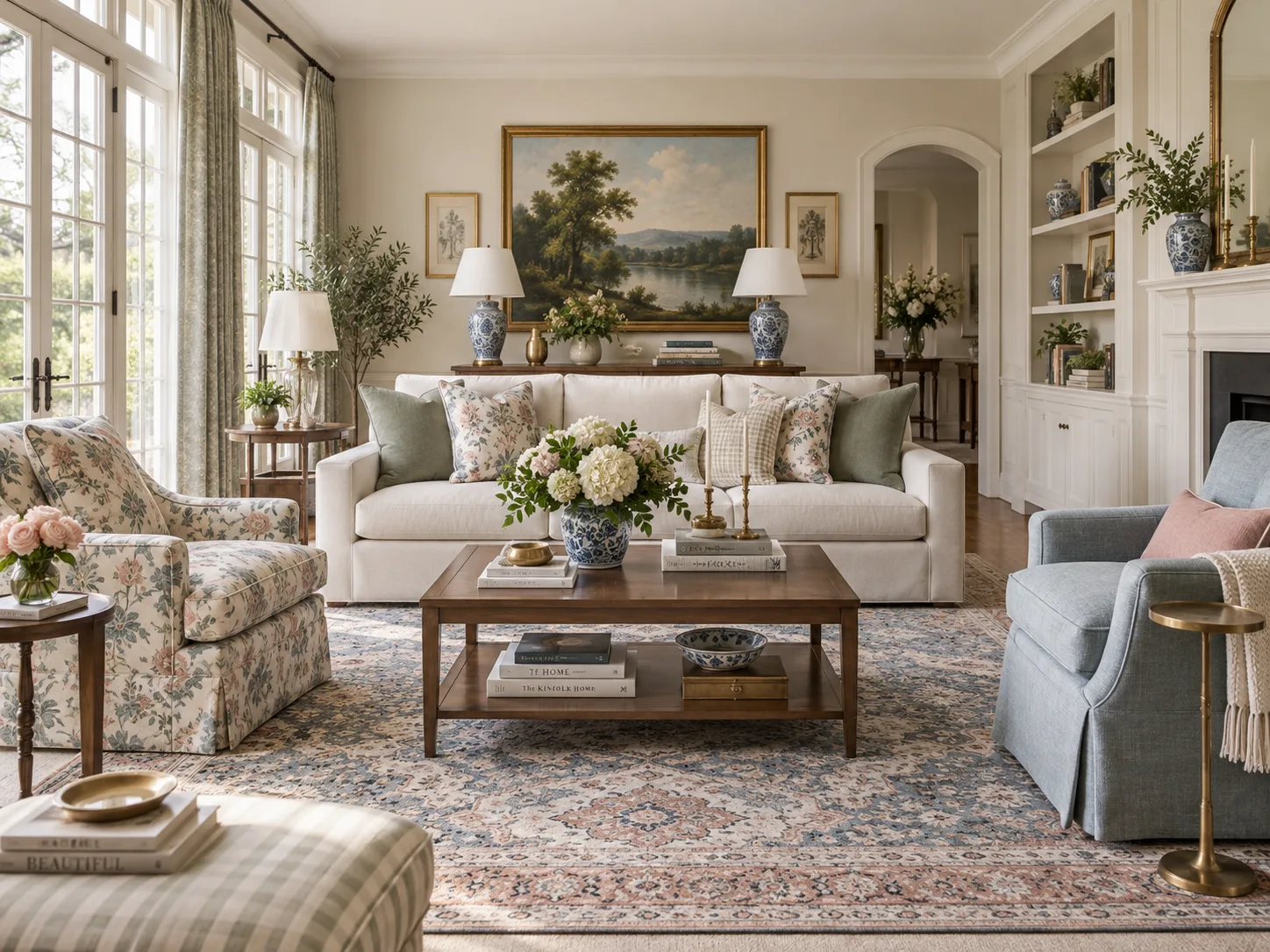
Where does the name come from?
Ten or fifteen years ago, you'd probably have tried to get rid of them as fast as possible: the floral curtains, the dark sideboard, the porcelain vases, the Persian rug, and that one armchair that looks suspiciously like someone drank their Sunday coffee in it back in 1987. Today, you'd more likely open Google Lens first and check whether the good piece is actually a design classic. The term itself is surprisingly young: American journalist Emma Bazilian coined "grandmillennial" in 2019 for House Beautiful — for younger people suddenly falling for things long considered old-fashioned: chintz, floral fabric, rattan, chinoiserie, needlepoint, pleated lampshades, and classic furniture. The crucial part: not ironically. Nobody decorates this way because grandma's living room is funny-retro right now — they genuinely find it beautiful.
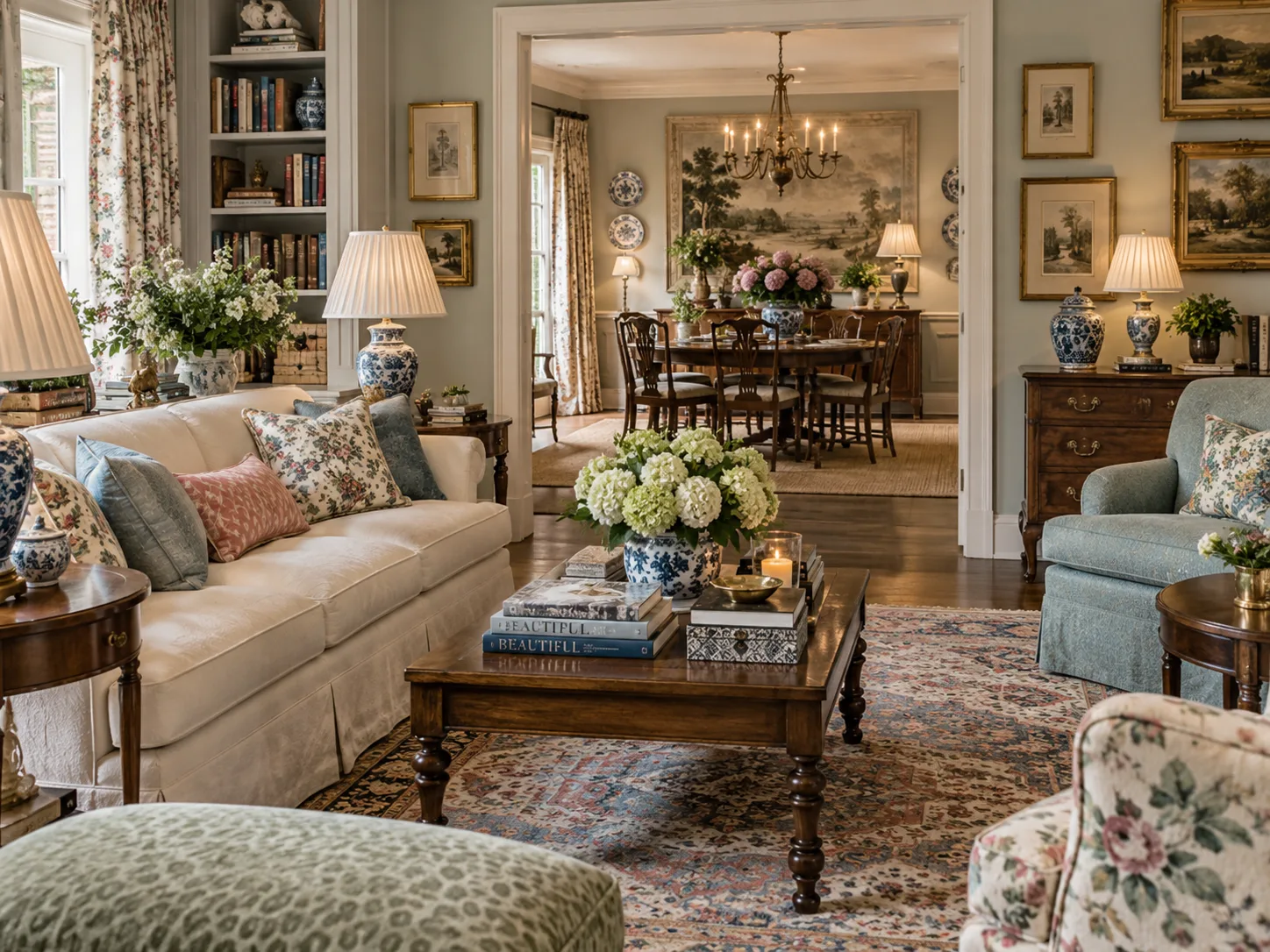
Why does Grandmillennial feel so familiar?
Grandmillennial rooms rarely look like they were freshly delivered from a furniture showroom — and that's exactly the appeal. There might be a seventy-year-old sideboard standing next to a brand-new sofa, a stack of books on the table beside a blue-and-white porcelain vase. Patterns are allowed to overlap, wood is allowed to be dark, and brass doesn't have to look brushed and minimal. A room is allowed to say something again about who lives there. That produces something a lot of perfectly styled interiors are missing: memory. Grandmillennial evokes parents' and grandparents' houses, old hotels, English country houses, antique shops — living rooms where the furniture wasn't swapped out for the next collection every three years. If your first thought is Emily Gilmore's house from "Gilmore Girls," you're not far off — her living room of traditional antiques, gilded furniture, and classic landscape paintings is more formal than today's Grandmillennial style, but the DNA is clearly related. "Bridgerton," too, serves a much more historical Regency aesthetic, but shows the same delight in ornament, color, and decorative detail — pretty much the exact opposite of a white wall with a single monstera in front of it.
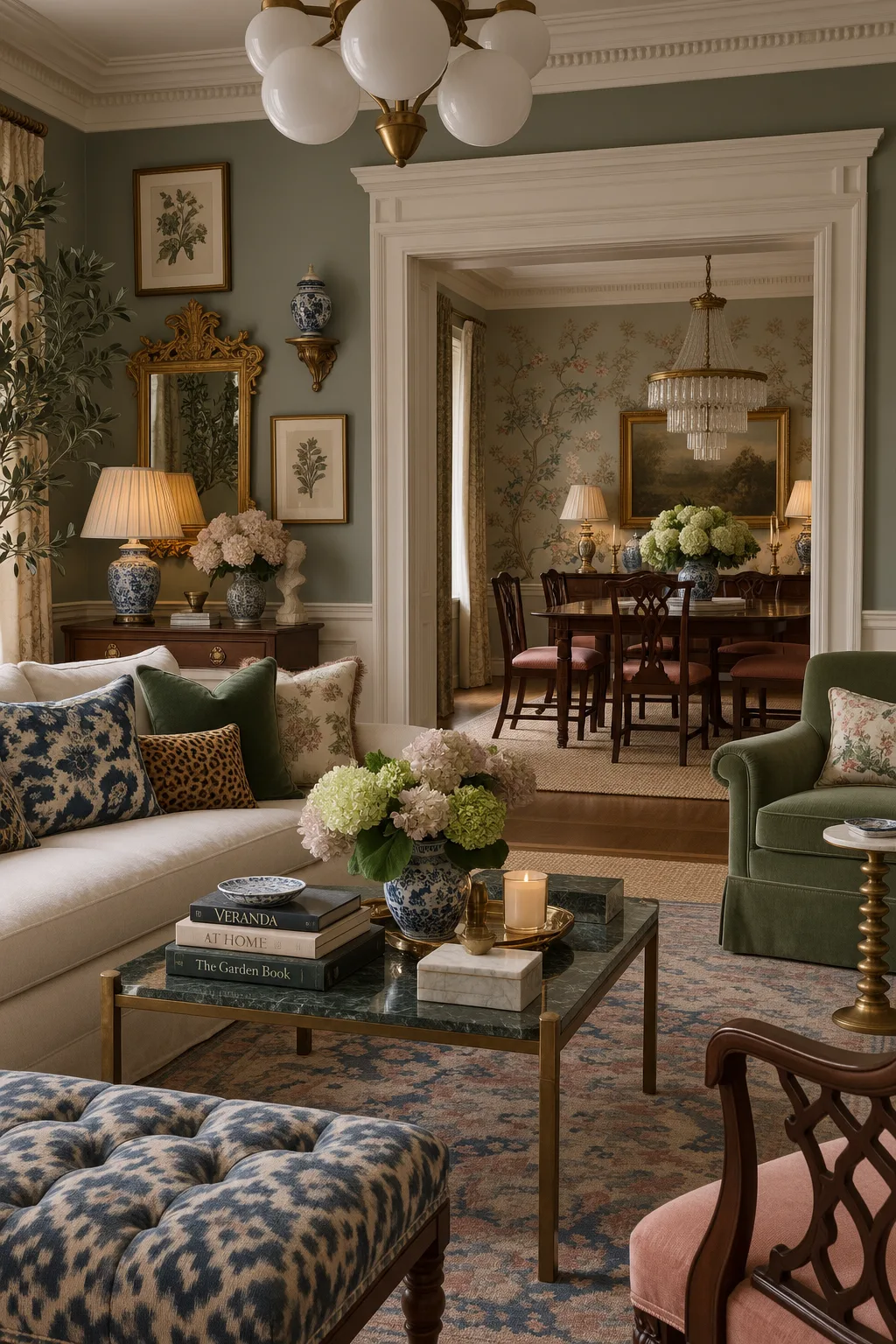
Is Grandmillennial just the next short-lived trend?
Probably not. The style has existed under this name since 2019, while many of its individual elements are far older. At the same time, designers have been observing a years-long return to traditional decorating — though not as a faithful reconstruction of old living rooms, but mixed with modern pieces. That stylistic freedom is exactly what separates today's neo-traditionalism from classic Traditional style. Which is probably why Grandmillennial works best precisely when you don't make everything Grandmillennial.
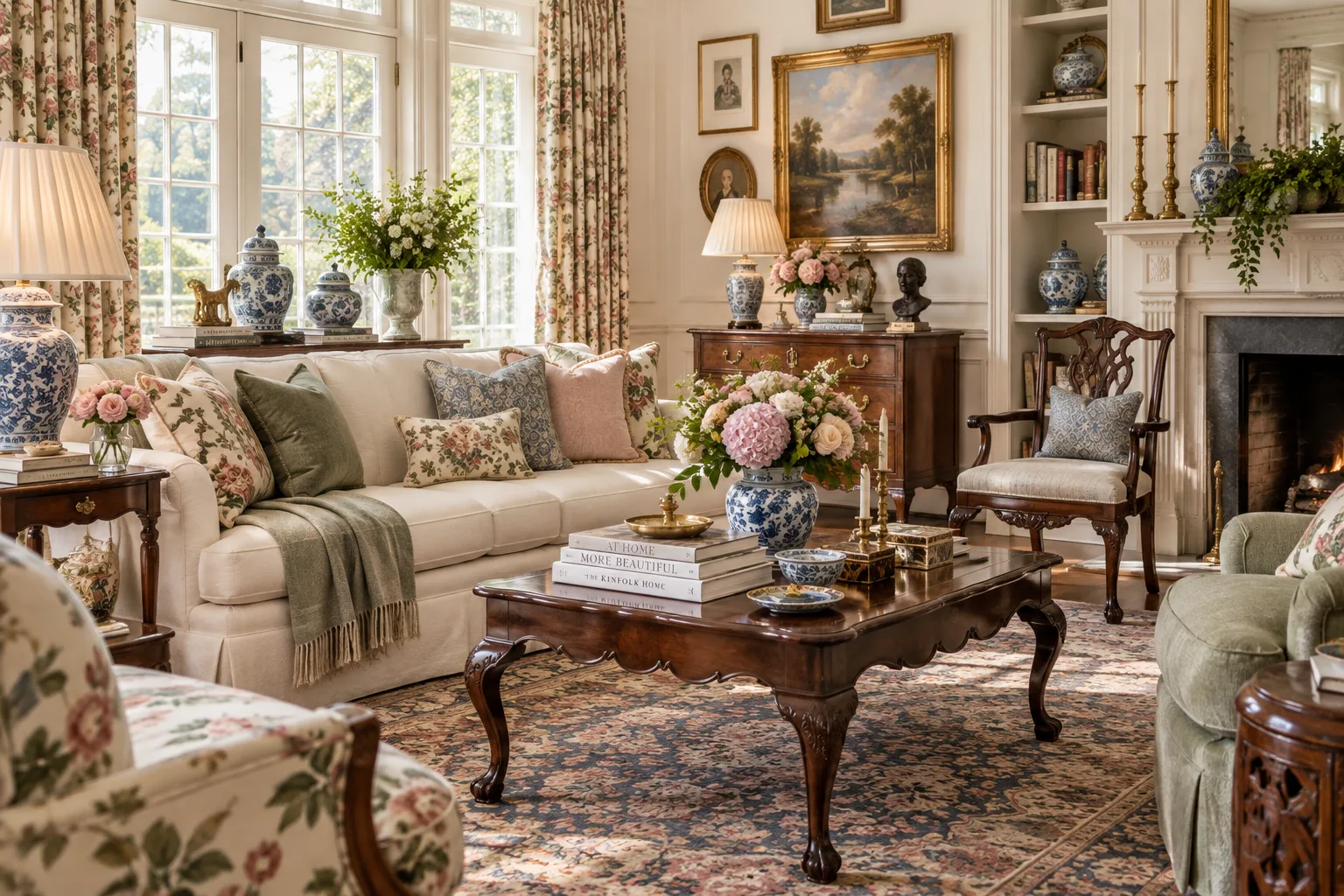
Grandmillennial × Space Age: Grandma Meets 2001
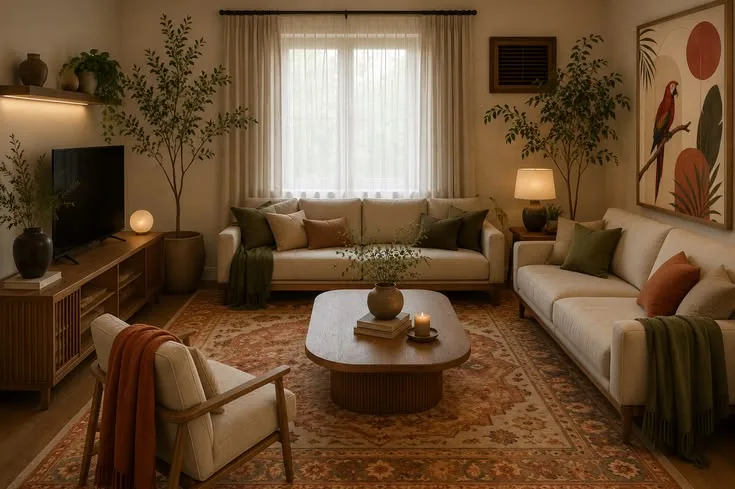
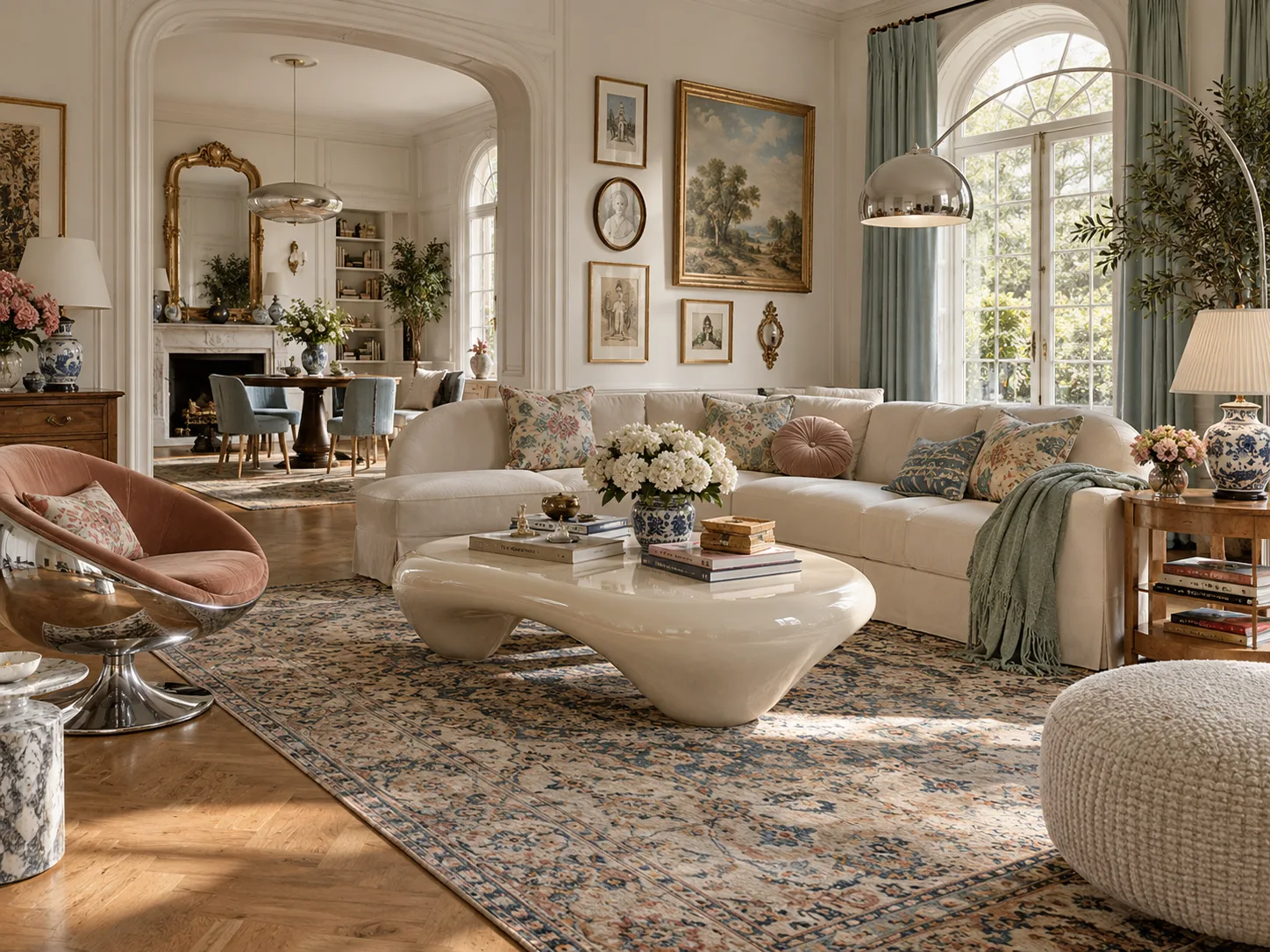
Sounds like a bad idea at first. It's surprisingly good. Picture a classic sofa, a Persian rug, floral cushions, and an antique chest of drawers — and then, suddenly, an organically shaped white Space Age coffee table or a chrome lounge chair in front of it. That exact stylistic break is what stops the room from looking like an untouched 1984 time capsule. Space Age brings chrome, high gloss, plastic, and futuristic curves. Grandmillennial supplies the wood, pattern, and nostalgia. Both styles, as it happens, love a strong single statement piece — they just come from completely different decades. The trick: Grandmillennial should be the stage, Space Age the surprise guest. One or two futuristic pieces are plenty.
Grandmillennial × Art Deco: Surprisingly Natural Partners
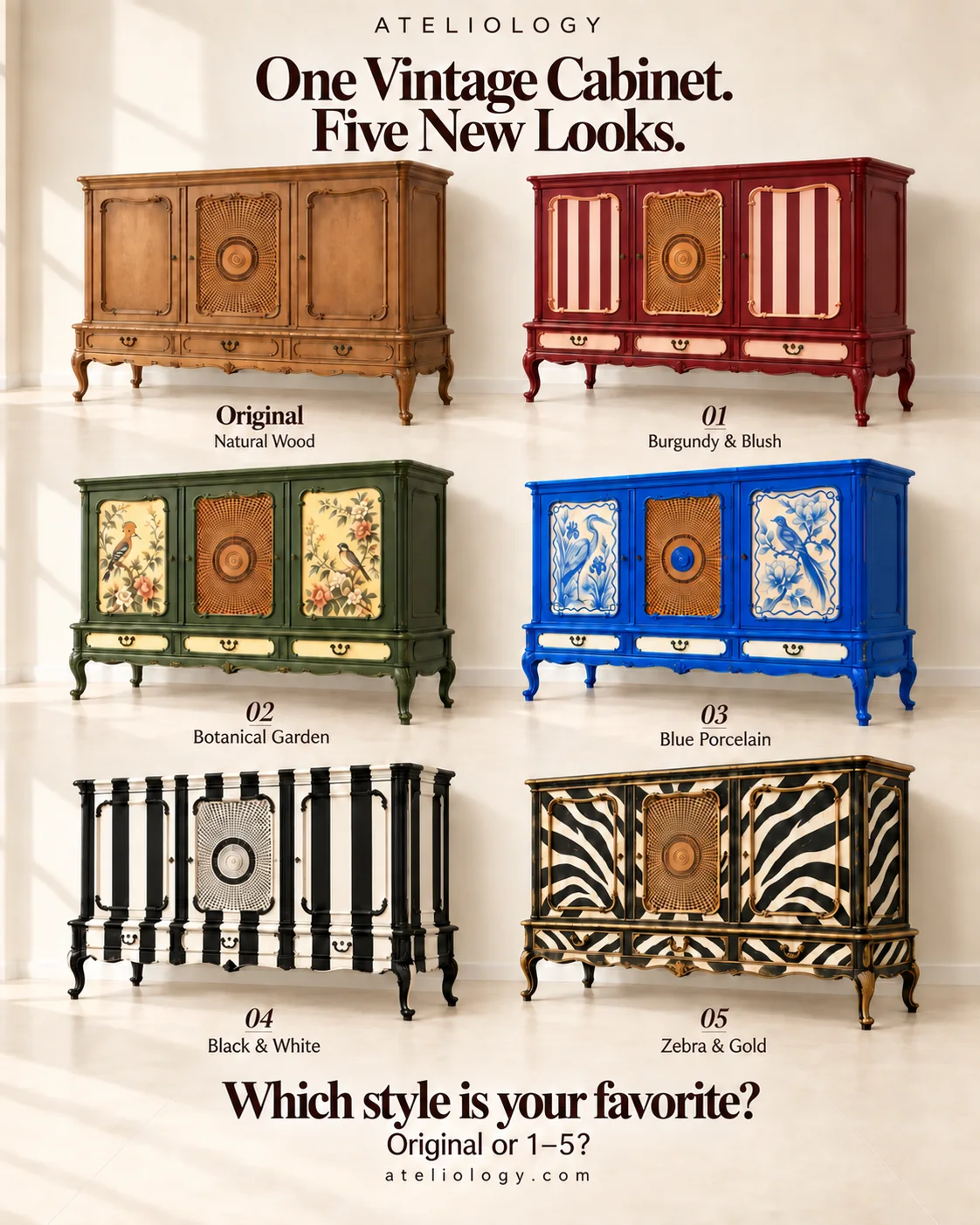
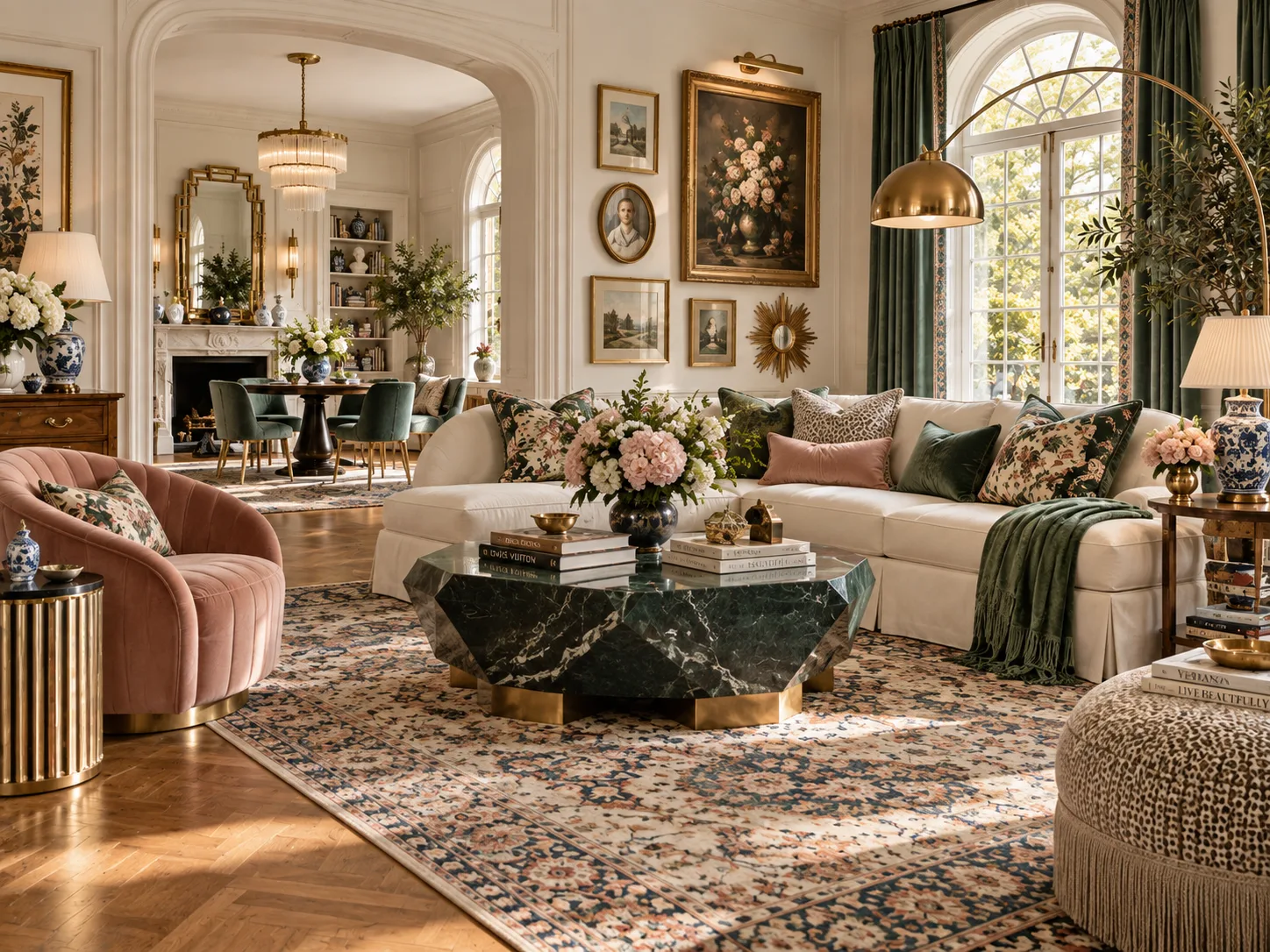
This pairing is easier. Art Deco brings brass, dark wood, marble, glass, geometric shapes, and velvet — much of which already slots into Grandmillennial rooms without any friction. An Art Deco side table next to a floral armchair? Great. A geometric brass lamp above a classic wood sideboard? Also great. A whole black high-gloss room with gold fan patterns, plus chintz, chinoiserie, and a Persian rug on top? Maybe call it a day at that point. Art Deco works best here like jewelry: a few good pieces, not an entire theme park.
Grandmillennial × Chippendale: Basically a Home Game
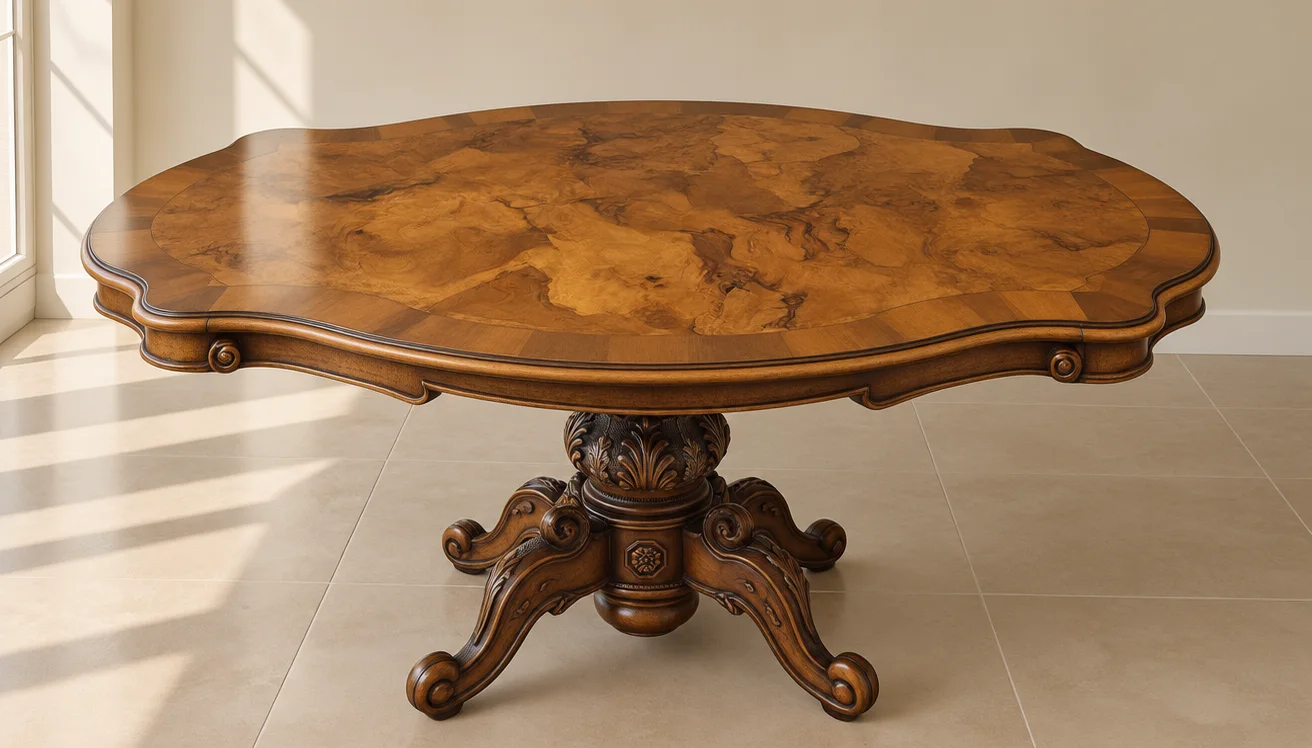
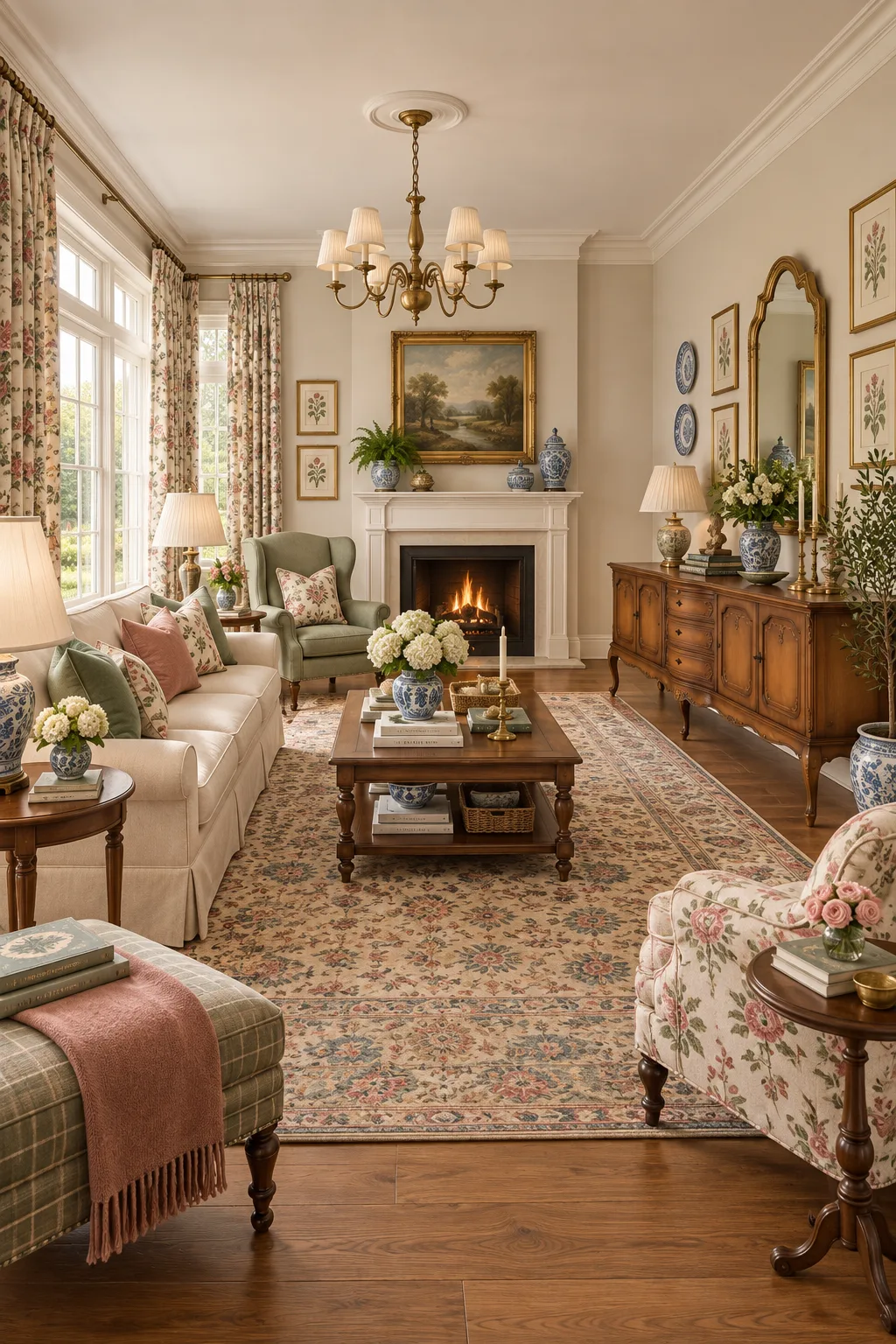
A Chippendale sideboard is almost a natural resident of a Grandmillennial living room. Dark or warm wood, curved legs, carved detail, and classic proportions fit the whole idea of the style perfectly — and a large sideboard in particular can give a room the historical weight it needs. To keep it from feeling like a museum piece, though, don't stack a complete antique collection on top of it. One modern table lamp, one abstract painting, or one large ceramic vase next to it is enough to pull the piece back into 2026. The Chippendale piece is allowed to look old. The whole room doesn't have to.
And Then There's Grandmillennial × Japandi
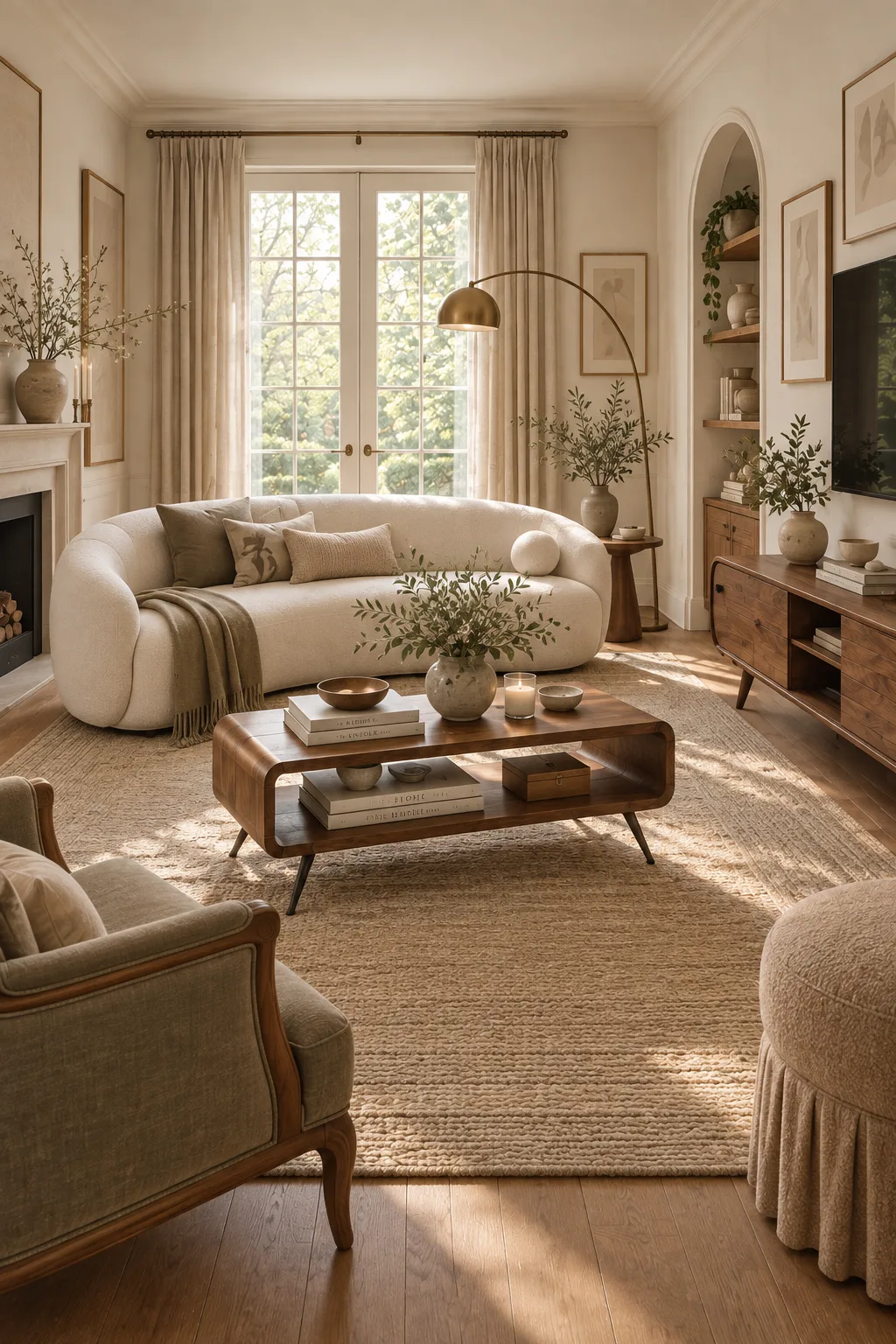
This is the most unusual combination — and maybe the most exciting one. Japandi wants calm, natural materials, clean lines, and little decoration. Grandmillennial wants pattern, keepsakes, and gladly one more vase. But that's exactly why they can correct each other. You might start with a Japandi base, for instance: a light linen sofa, a cream-colored rug, warm wood flooring, simple ceramics, and a few plants. Then add Grandmillennial elements deliberately: an antique sideboard, a floral armchair, a classic painting, or blue-and-white porcelain. Suddenly Japandi feels less interchangeable — and Grandmillennial feels less crowded. That might be exactly where the style's most interesting future lies: Grandmillennial doesn't actually have to mean rebuilding grandma's living room. It means letting back in things that carry personality, history, and sometimes a bit of glorious unreasonableness. The simplest rule for it: one style gets to play the lead, the others get good supporting roles. Then Chippendale, Space Age, Art Deco, and Japandi really can exist in the same universe — without the living room looking like an antiques dealer merged with a design museum.