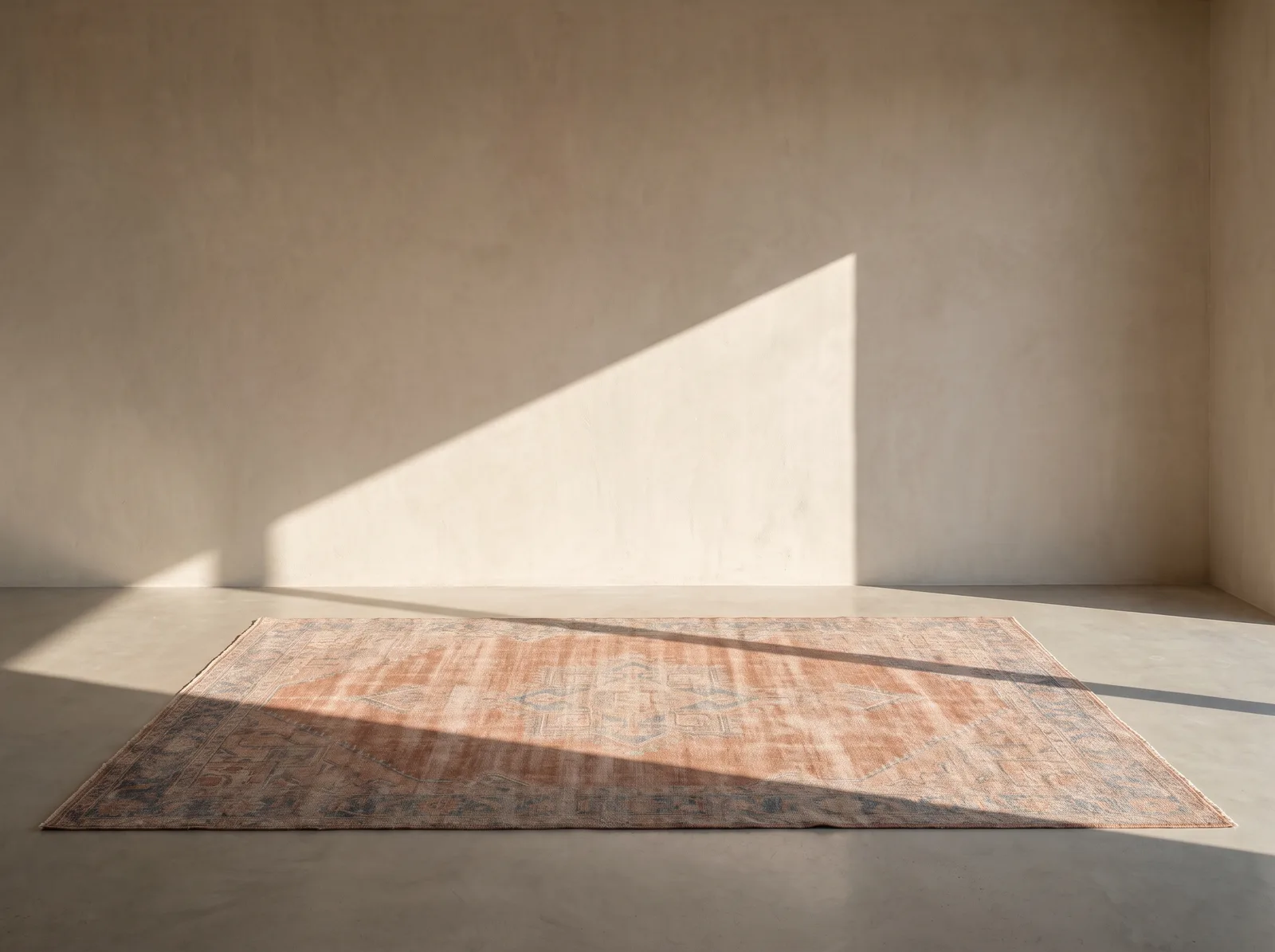
Oushak Rugs: Soft Colour and Ottoman Heritage
Uşak, Western Turkey
Oushak rugs are known for softened colour, generous pattern and a link to western Anatolian weaving. Explore their history and calm room presence.
More Than a Turkish Rug
While many Turkish rugs are known for bold, saturated colors, the Oushak rug stands apart for its strikingly soft, almost faded-looking palette of muted terracotta, ivory, and dove blue. That restrained color choice was unusual even at the time of its origin, and it's what makes the Oushak one of the easiest rug types to integrate into modern interiors today.
A Weaving City of International Rank
The Oushak rug is named after the Western Turkish city of Uşak, which had already been a significant center of carpet weaving since the 15th century. Production reached its peak under Ottoman rule in the 16th century, when Oushak carpets were specifically made for export to Europe — an early example of globally operating rug trade, centuries before the term "globalization" existed.
Coveted at European Royal Courts
Oushak carpets found their way into numerous European royal houses and wealthy households, where their large-scale, often star-shaped medallion patterns were considered especially prestigious. As with other Turkish carpets of the era, paintings by European masters serve as important historical evidence of their early spread, since many of the original pieces themselves haven't survived.
Wool Instead of Silk, Openness Instead of Density
Unlike the finest Persian silk carpets, the Oushak is traditionally made from wool, with a comparatively open knot density that gives the rug its characteristic, somewhat looser structure. This more open knotting allowed for larger formats at reasonable cost and was a major factor in keeping Oushak carpets affordable enough for generously sized European reception rooms.
The 20th-Century Rediscovery
After a period of relative obscurity in the 19th century, the Oushak rug experienced a remarkable rediscovery in the 20th century, particularly through American and European interior designers who recognized its muted palette as an ideal complement to modern, minimalist interiors. Original antique pieces are now traded as collector's items, while numerous manufacturers serve the characteristic "vintage Oushak" look with new interpretations.
A Statement for Vintage, Boho, and Modern Luxury
The Oushak rug naturally fits into Vintage interiors, where its faded palette suggests patina and history, as well as into Boho rooms with warm earth tones, and into Modern Luxury interiors, where its muted elegance provides a calm counterpoint to more dramatic materials.
The Oushak Rug in Today's Interiors
The Oushak works especially well as a large-format rug in open living areas, since its restrained coloring never competes with other furniture colors. In bedrooms, it provides a warm but never intrusive foundation beneath the bed.
Ateliology Style Verdict
The Oushak rug proves that restraint itself can become an unmistakable signature. Born in a Western Turkish weaving city, its color palette is still considered a modern, timeless choice centuries later. That is exactly what makes the Oushak rug a genuine style piece.
More rug styles
 Scandinavia, Australia, New ZealandSheepskin Rug
 North America and ScandinaviaRag Rug
 Aubusson, FranceAubusson Rug
 Scandinavia (Finland, Sweden)Rya Rug