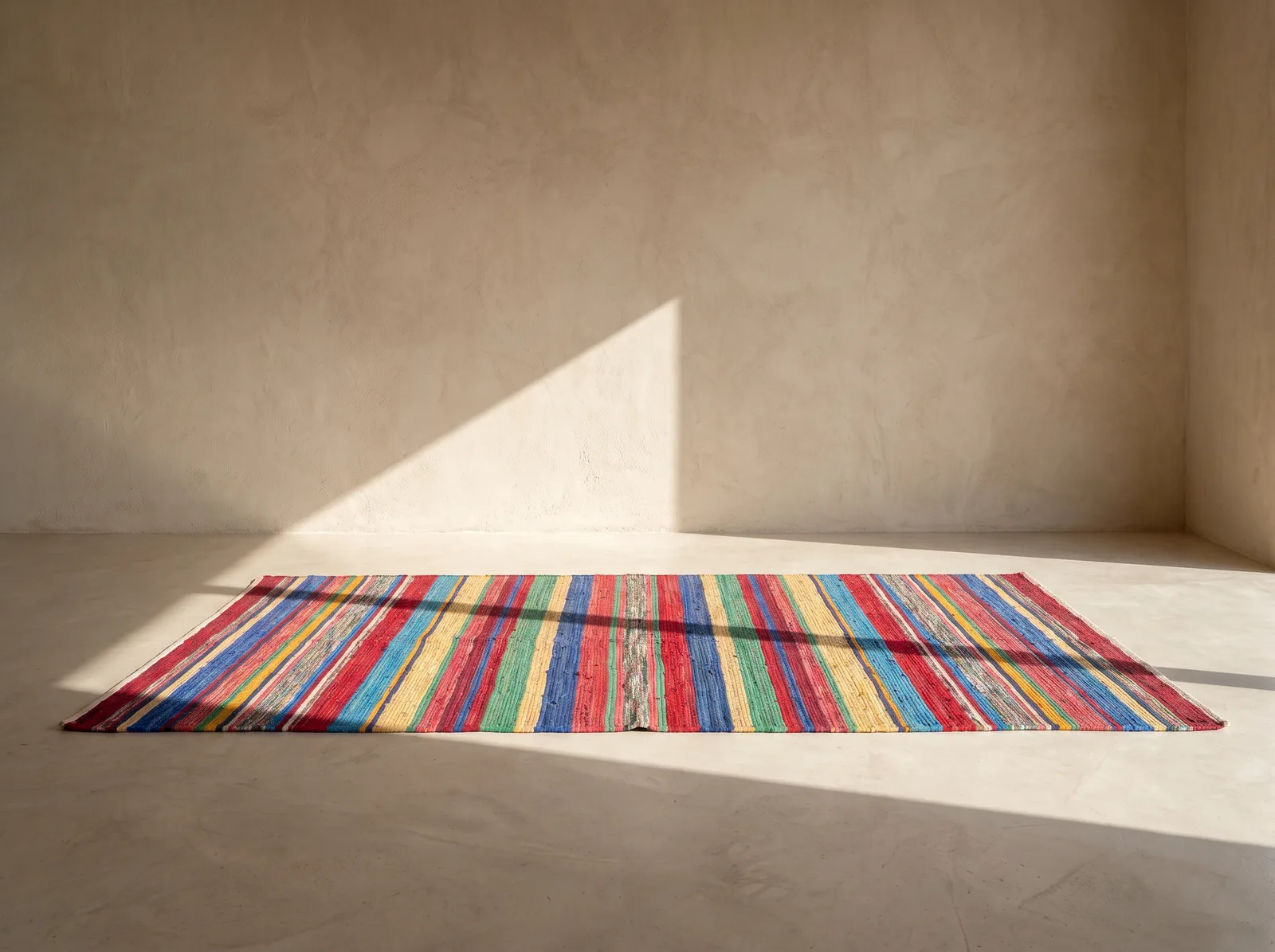
Rag Rugs: Reused Textile, Colour and Character
North America and Scandinavia
Rag rugs turn leftover fabric into a useful, colourful floor covering. Explore their craft, variations and practical place in a modern home.
More Than a Rug — Recycled Craft
The rag rug is one of the few rug types whose entire concept is built on reuse: instead of freshly spun yarn, the characteristic stripes are made from cut-up scraps of old clothing, bedding, or curtains, woven or braided into a flat rug. This approach makes the rag rug one of the earliest examples of sustainable textile design, long before the term existed.
Born of Frugality
The rag rug emerged in the early 19th century in rural households across North America and Scandinavia, where textiles were precious and waste simply wasn't affordable. Worn-out clothing was cut into narrow strips, sewn together into long bands, and then woven, braided, or crocheted — a process often passed down through generations of women in a family.
Three Techniques, One Shared Principle
Over the decades, several production techniques developed in parallel: woven rag rugs on a simple loom, braided variants made from fabric strips twisted into braids and sewn together in a spiral, and crocheted rugs made from strips joined into a long cord. All three techniques share the same underlying principle: many small, differing fabric scraps become a cohesive, functional whole.
An American Folk Art Legacy
In the United States, the rag rug developed into a distinct folk art form, especially in rural New England communities, where communal "rug braiding bees" — social gatherings where several women braided rugs together — became an important social event. Historic rag rugs are now displayed in folk art museums and valued as important records of 19th-century American domestic life.
A Modern Comeback Through Sustainability
In recent years, the rag rug has experienced a comeback closely tied to growing awareness of sustainable, circular textile production. Modern manufacturers deliberately use textile waste from the clothing industry to produce rag rugs at larger scale, without betraying the original, handmade principle of reuse.
A Statement for Vintage, Boho, and Eclectic
The rag rug naturally fits into Vintage interiors, where it's honored as an authentic heirloom piece, as well as into Boho rooms with collected, warm textures, and into eclectic interiors, where its colorful striped pattern works as a playful pop of color.
The Rag Rug in Today's Interiors
As a runner in the kitchen or hallway, the rag rug is especially practical since it's usually easy to wash and its patterned structure hides stains well. In children's rooms, its soft, sturdy construction provides a kid-friendly, durable floor covering.
Ateliology Style Verdict
The rag rug proves that craft born of pure necessity can become a treasured design object whose character stems directly from its history of reuse. That exact honest, resource-conscious origin is what makes the rag rug a genuine style piece.
More rug styles
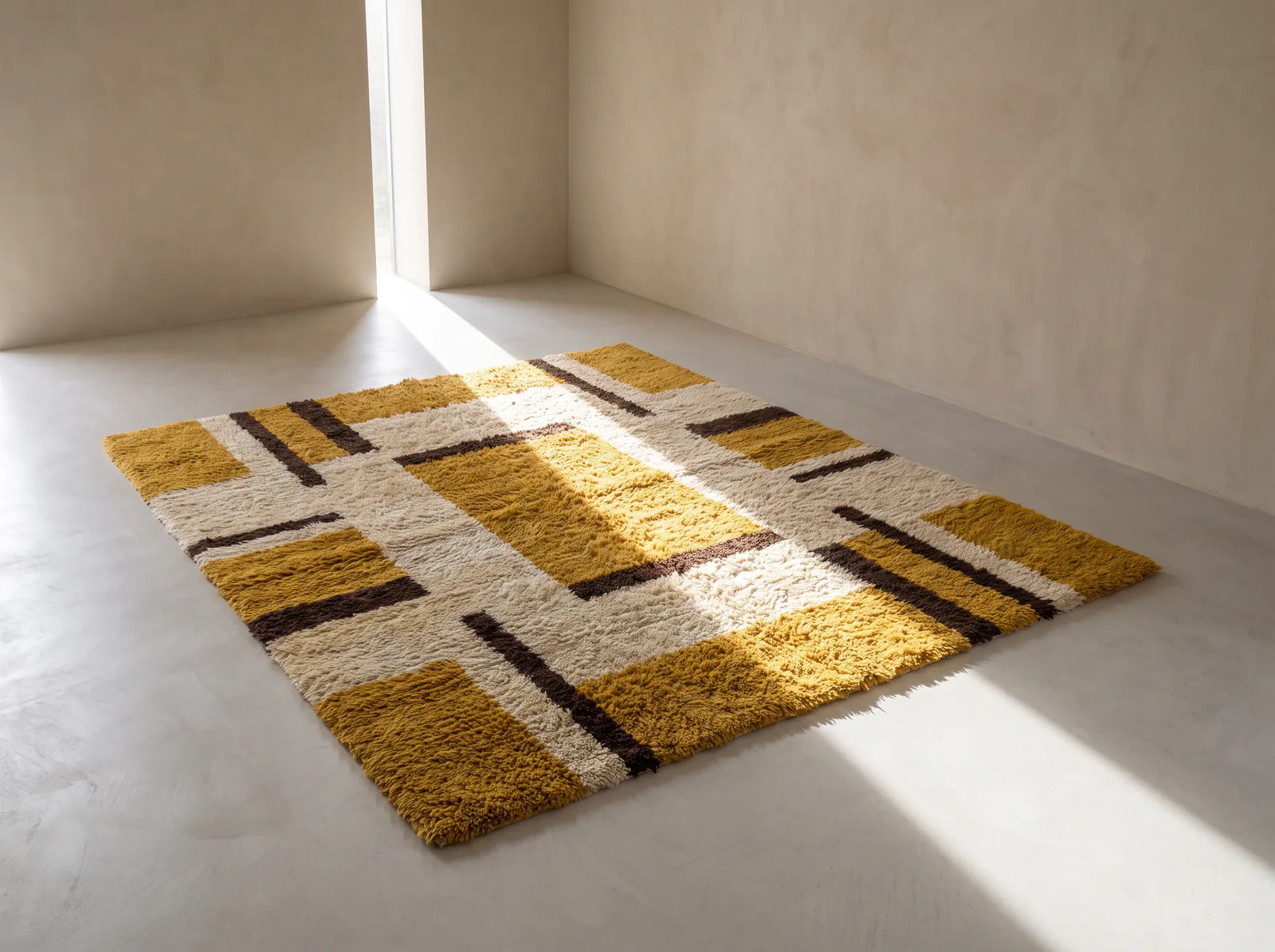 Scandinavia (Finland, Sweden)Rya Rug
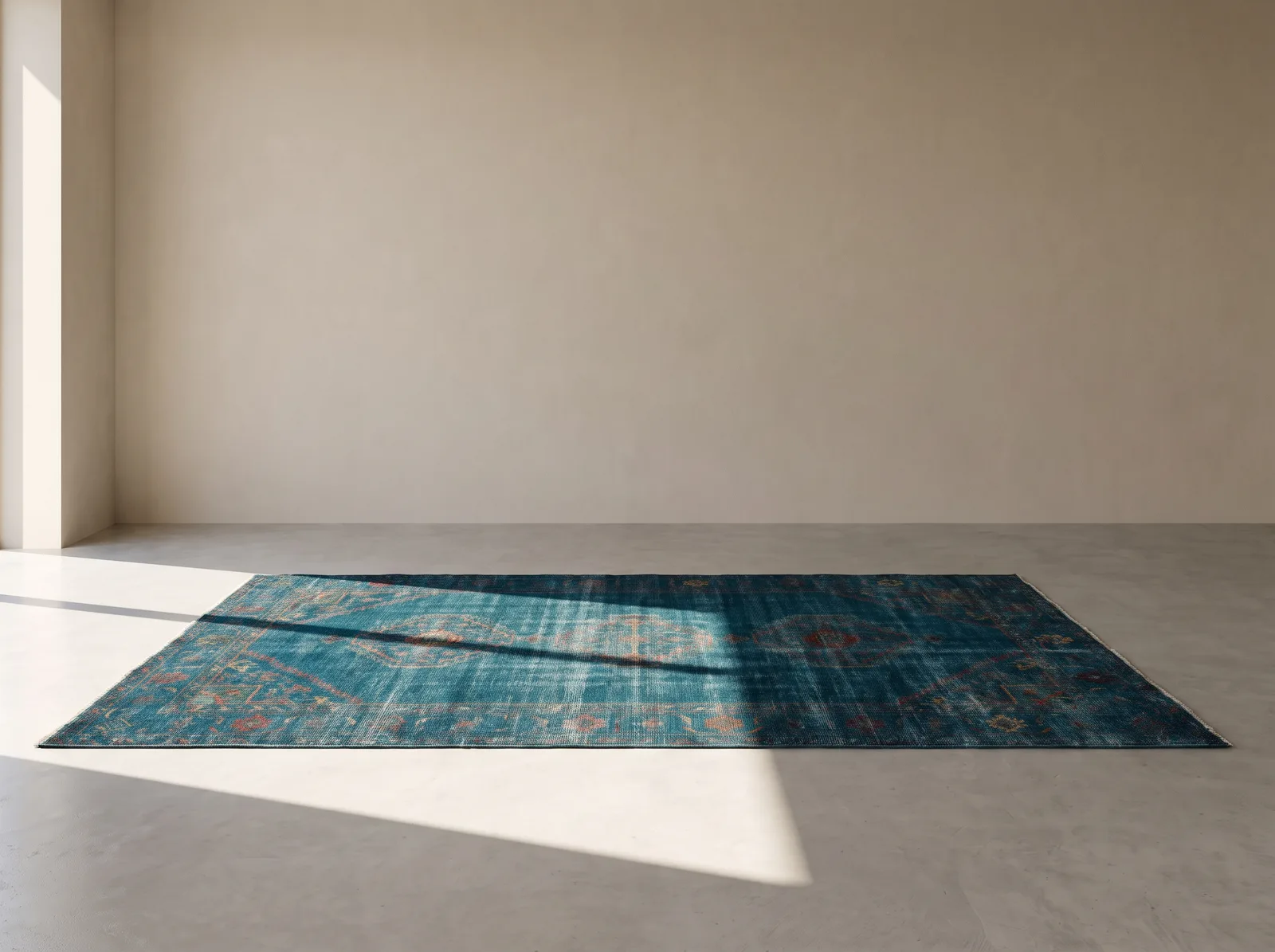 Turkey (source carpets), global trendOverdyed Rug
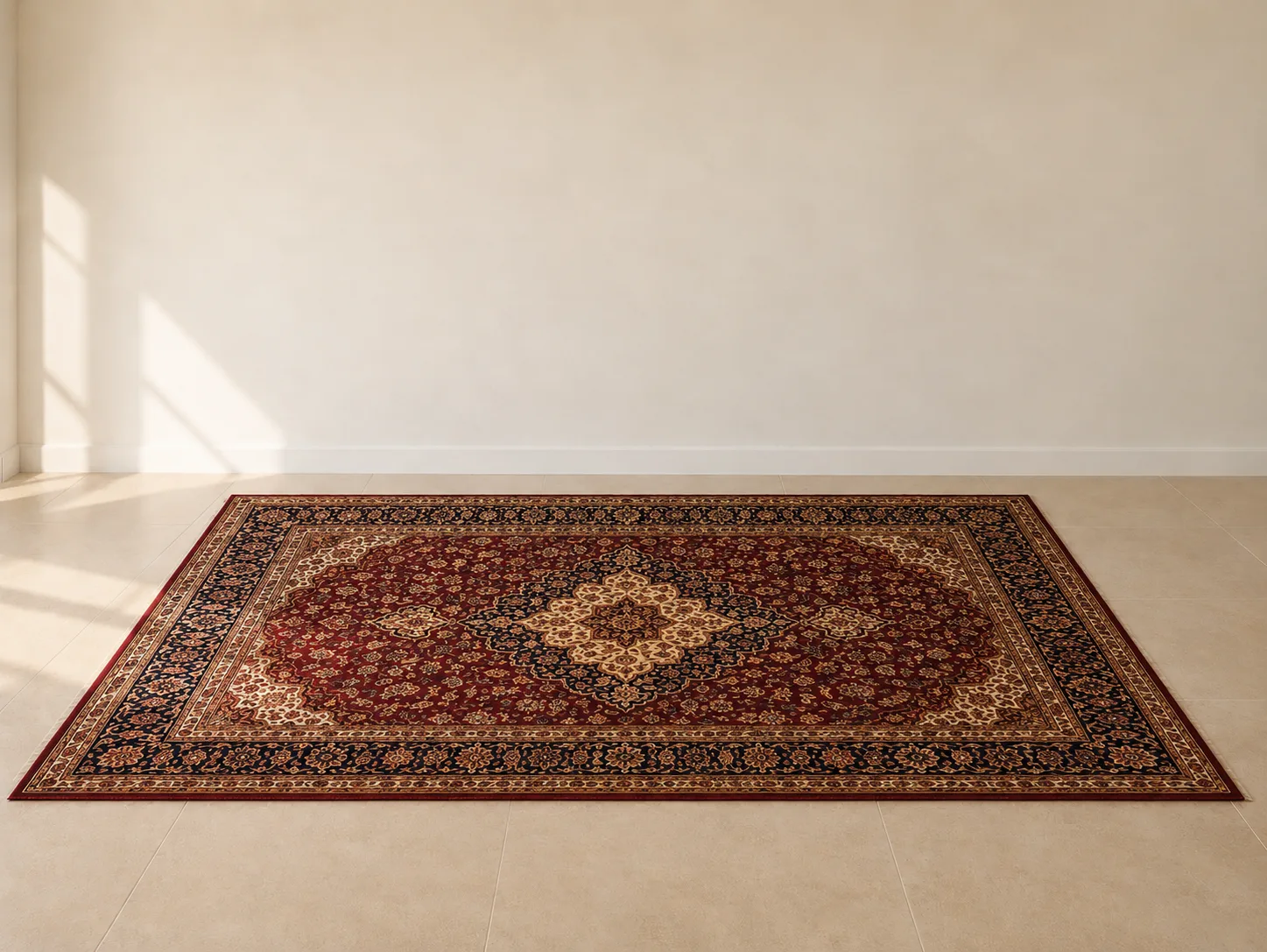 Iran (Persia)Persian Rug
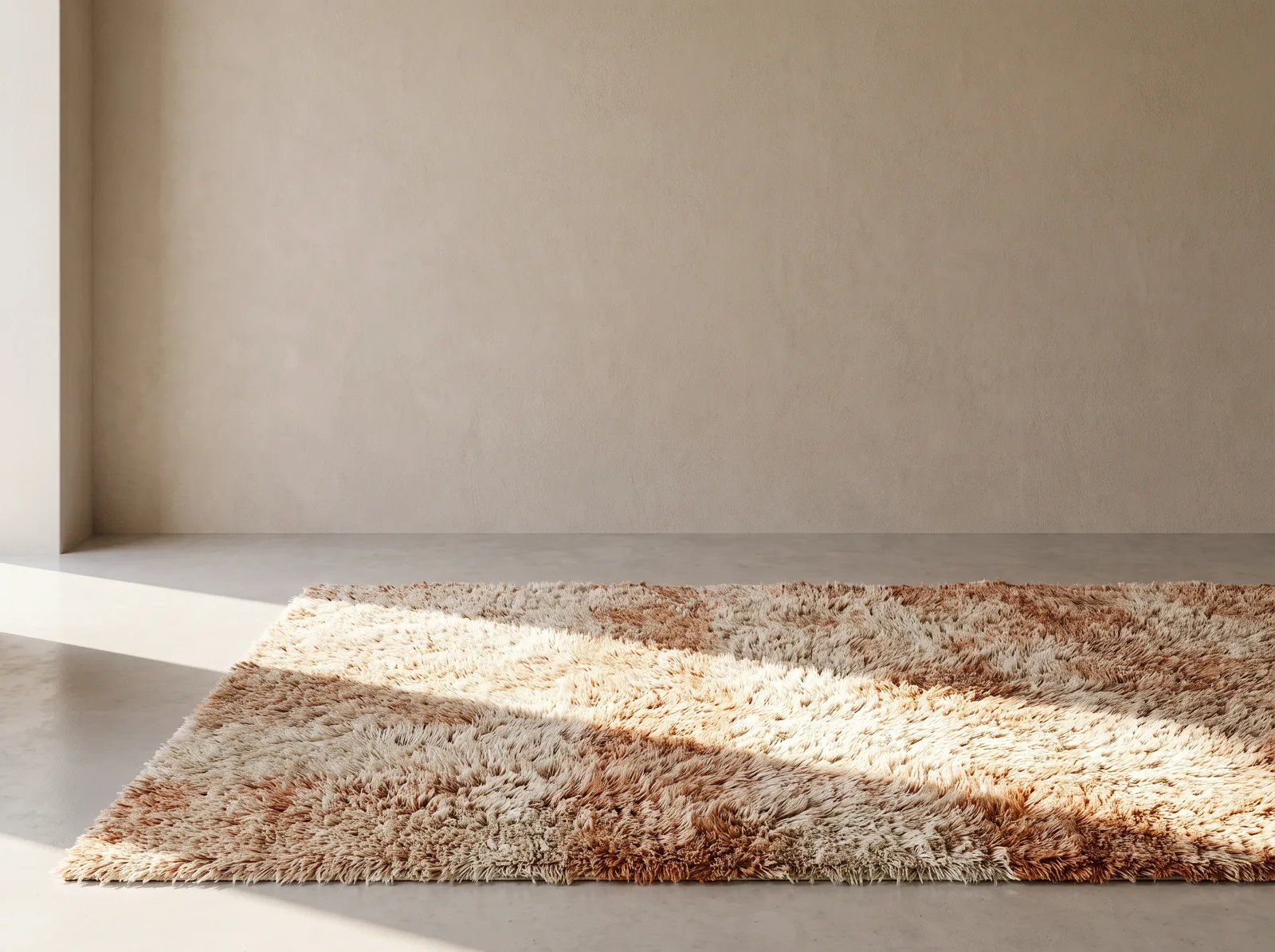 USA/Western Europe, with roots in Greece and ScandinaviaShag Rug