Hollywood Regency
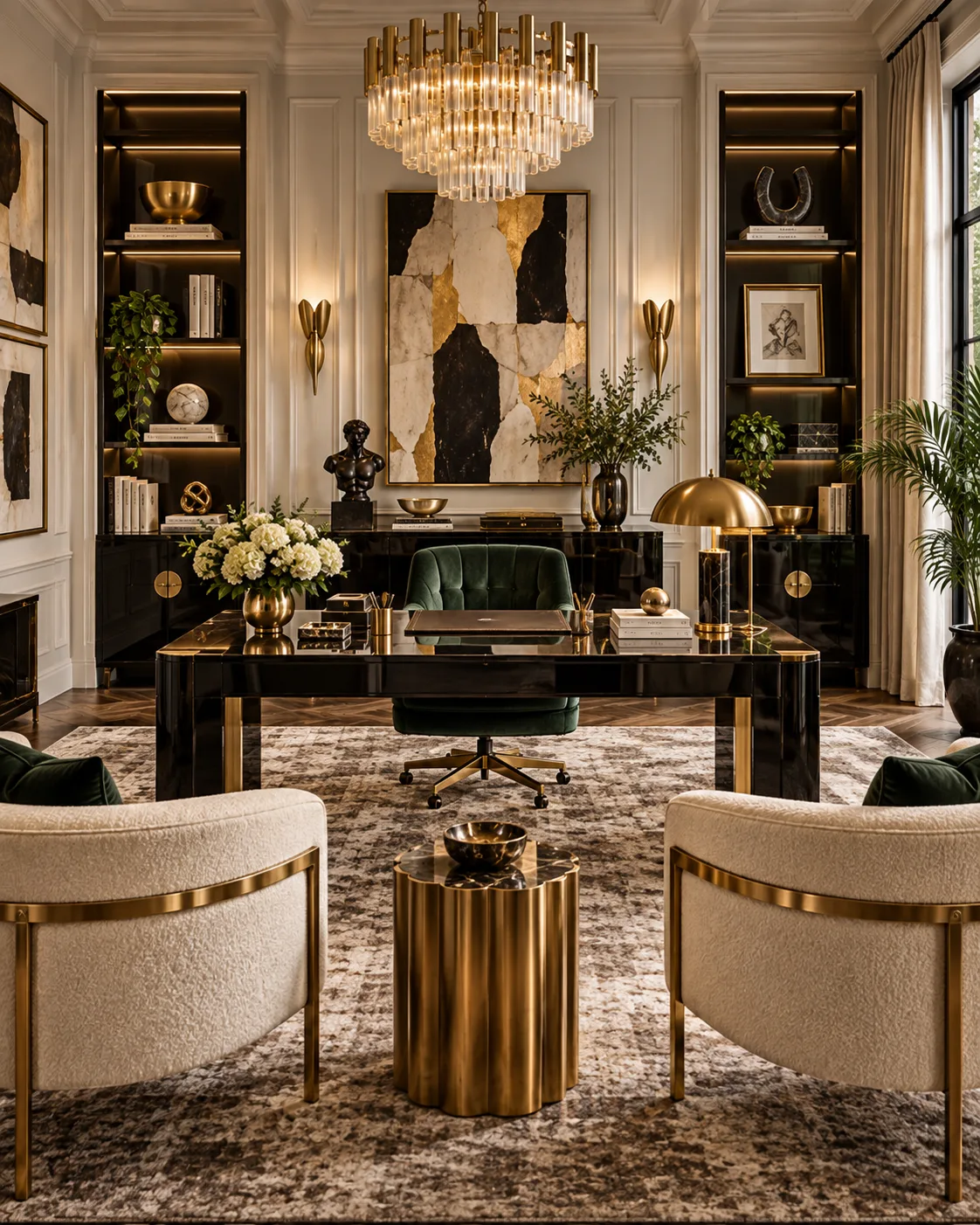
Gold, marble, velvet, and at least one oversized chandelier: Hollywood Regency is glamorous, dramatic, and deliberately too much — staged with control, never chaos.
Where Does Hollywood Regency Actually Come From?
The roots of Hollywood Regency lie in Hollywood's golden age, roughly the 1930s to the 1950s. Back then, film studios weren't just producing stars — they were producing entire fantasy worlds. So the houses and apartments of actors, producers, and other social heavyweights were expected to make a statement too. Not subtly. Designers like Dorothy Draper and William Haines shaped an aesthetic that combined classical elegance with modern, exotic, and glamorous elements. Haines himself, incidentally, started out as an actor before becoming one of Hollywood's most famous interior designers. You could say Hollywood Regency was born where the film set and real life decided to run off together. The style helped itself, quite shamelessly, to the best bits of several eras at once: a little Art Deco here, some Neoclassicism there, chinoiserie, Regency elements, French furniture, exotic patterns, modern lines. Rules? More like suggestions.
What Defines Hollywood Regency?
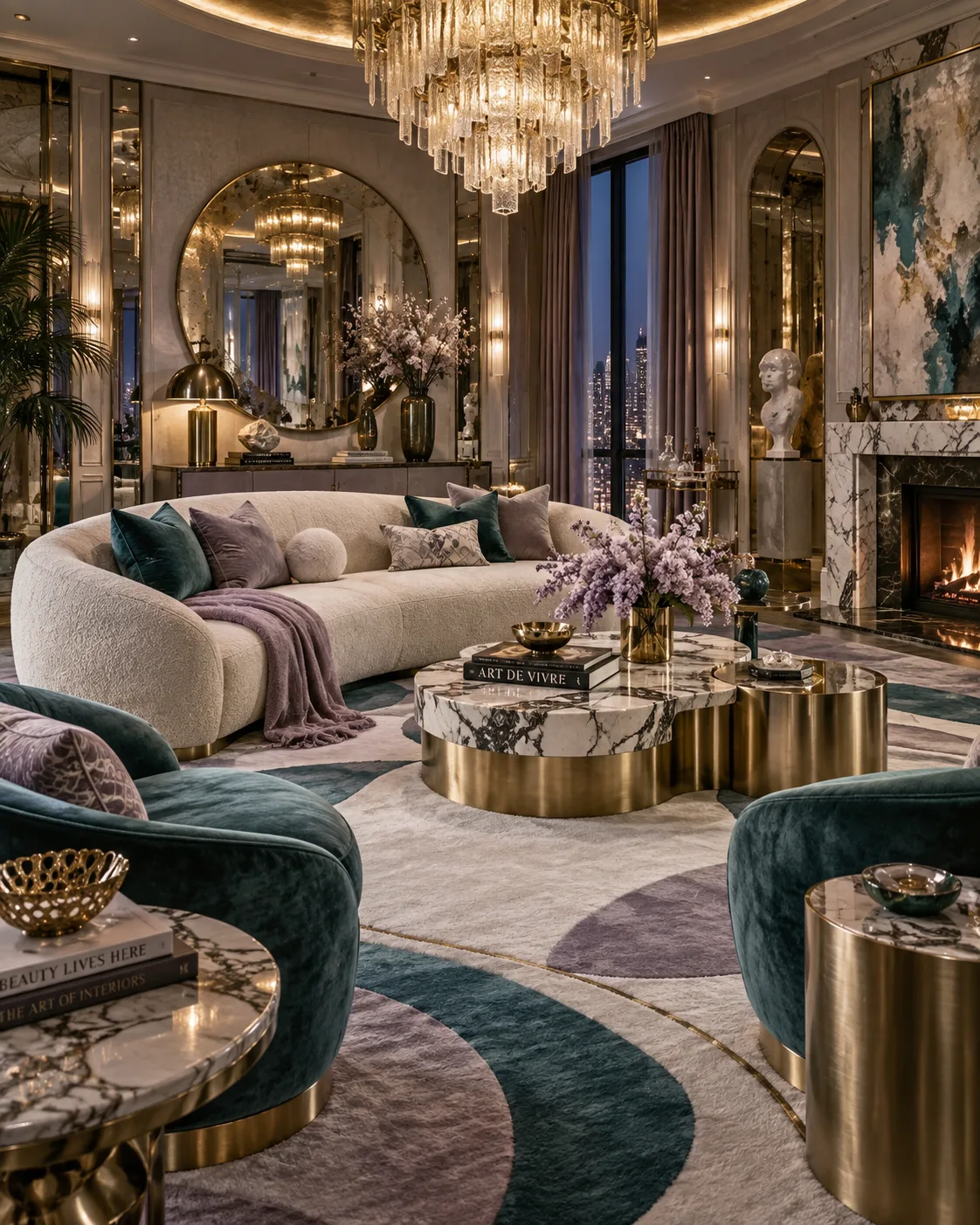
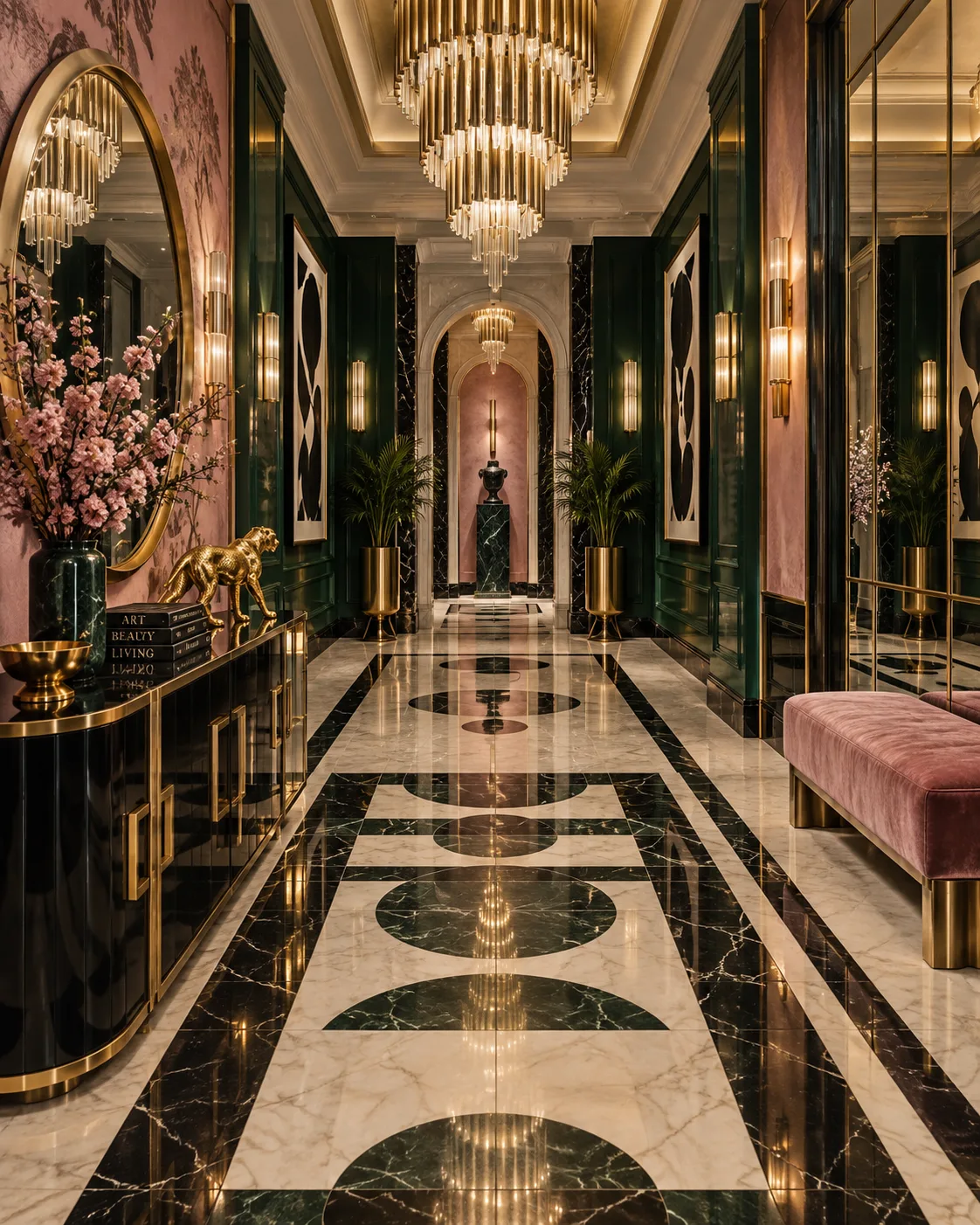
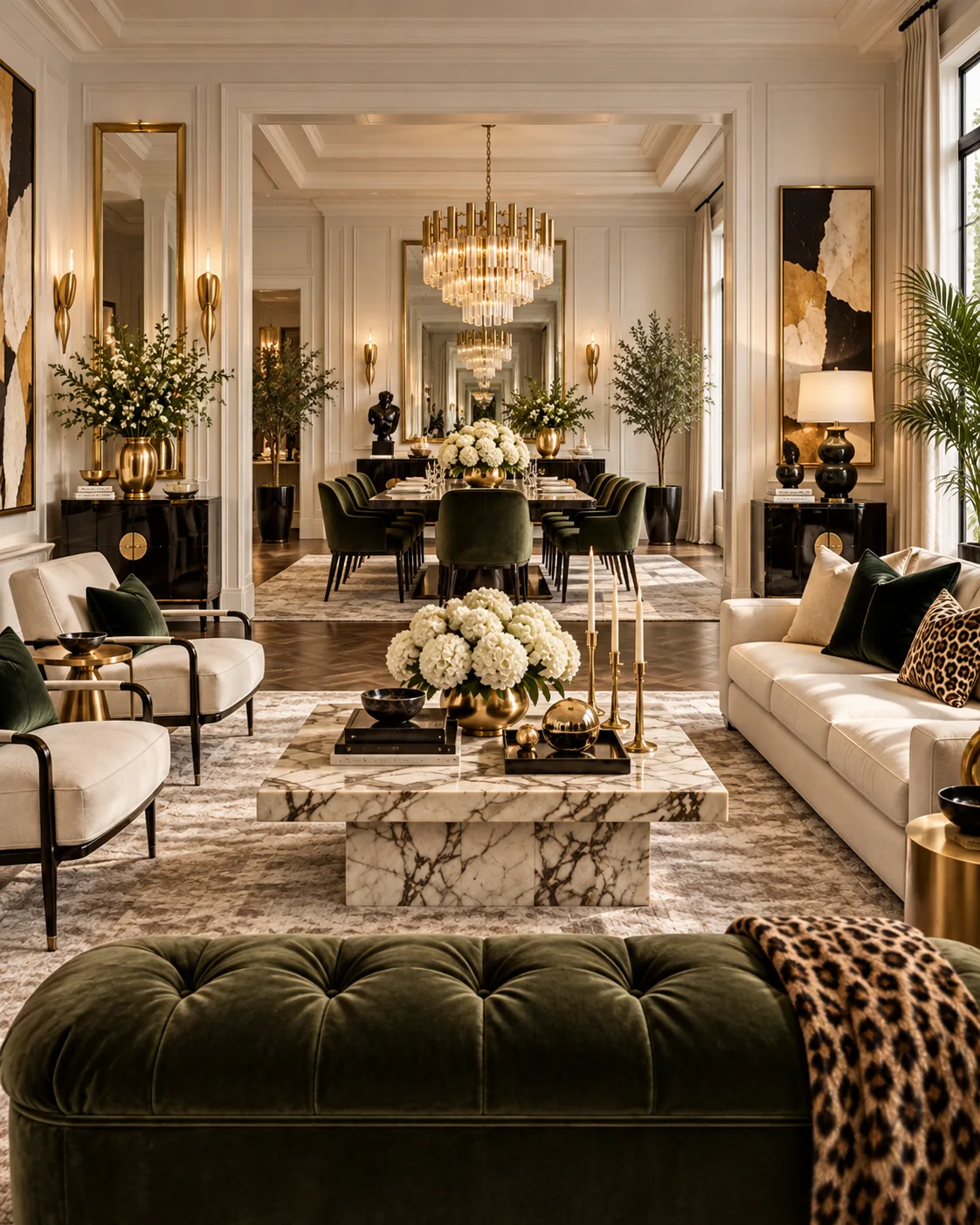
The most important thing first: the room is allowed to want something. Hollywood Regency doesn't want to be neutral. It wants to look elegant, luxurious, maybe even a little sexy. Typical elements include high-gloss surfaces, lacquered furniture, mirrors, brass, gold, chrome, marble, glass, velvet, and silk, plus strong geometric shapes and furniture with clean, elegant silhouettes. What's interesting here is the contrast. A simply shaped sofa might be upholstered in deep velvet. A minimalist side table gets a brass base. Classic wall paneling meets a large abstract artwork. So Hollywood Regency doesn't automatically mean every inch has to be covered in ornament. The luxury often comes from materials, proportions, and staging. And staging is the key word here.
Gold Is Part of the Deal. Full Stop.
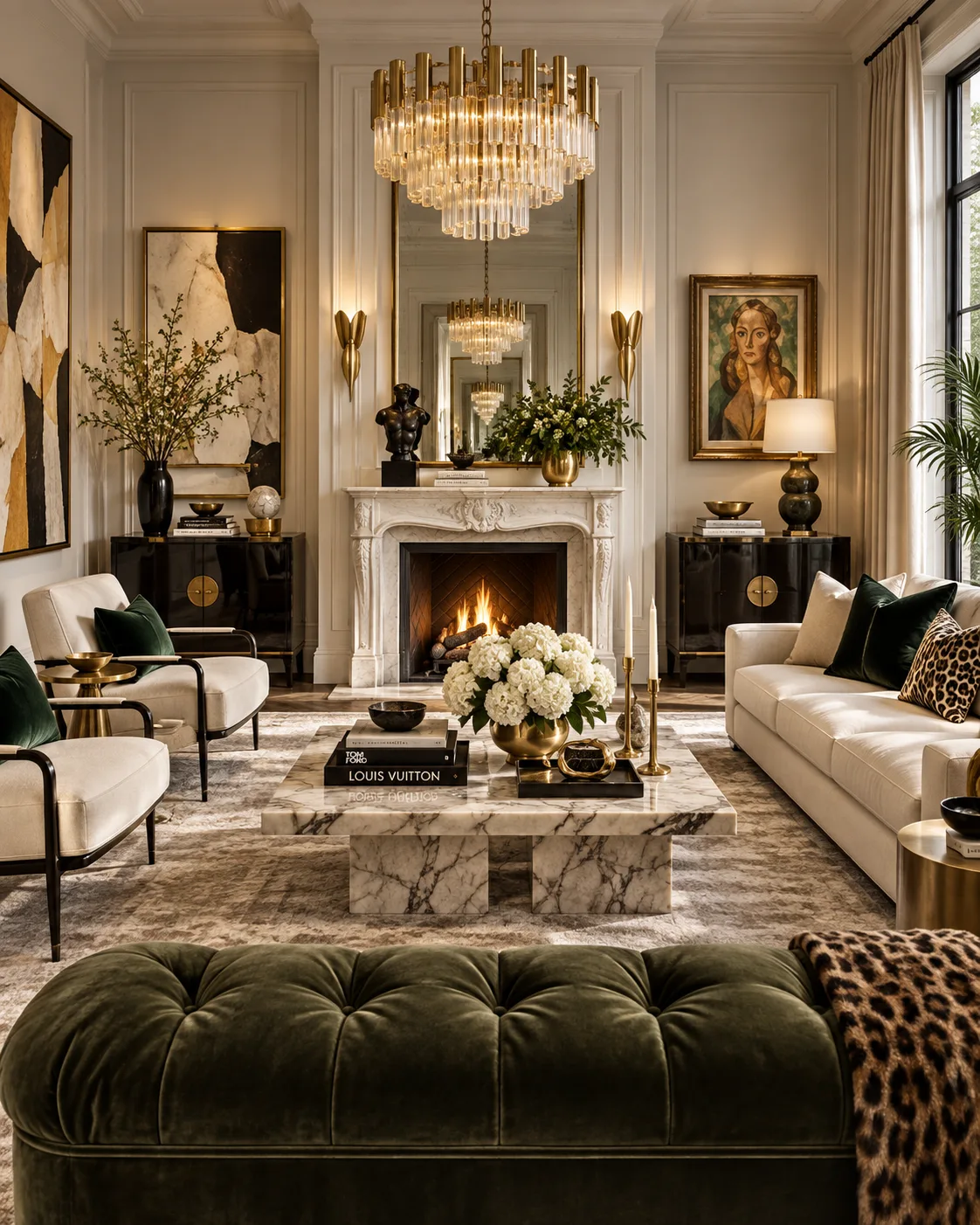
There's plenty to argue about. Whether pineapple belongs on pizza. Whether a TV above the fireplace is a good idea. Or whether a sofa really needs seven throw pillows. Hollywood Regency has a much simpler answer: gold goes in. It doesn't have to look like the throne room of an unhinged monarch. But brass, bronze, or warm gold tones give the style its signature glamour. A gold table base. Brass handles. A mirror frame. A lamp. A side table. Or all of the above. Hollywood Regency has a rare skill: it can combine things that are already fairly extravagant on their own and still make the result look convincing. That only works, though, if the materials actually look high quality. Gold-colored plastic film is not Hollywood Regency. That's more Hollywood parking lot.
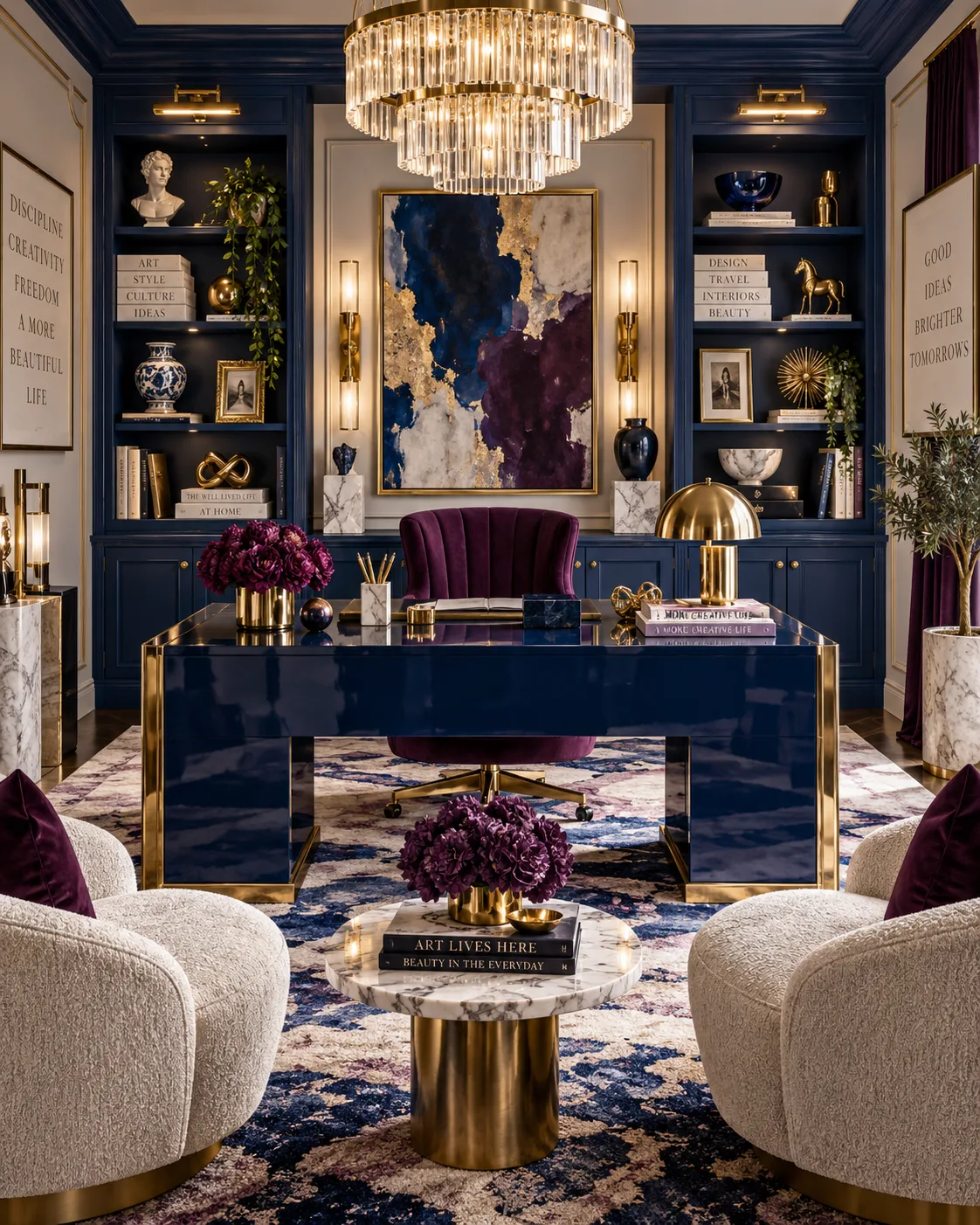
And Then Marble Shows Up
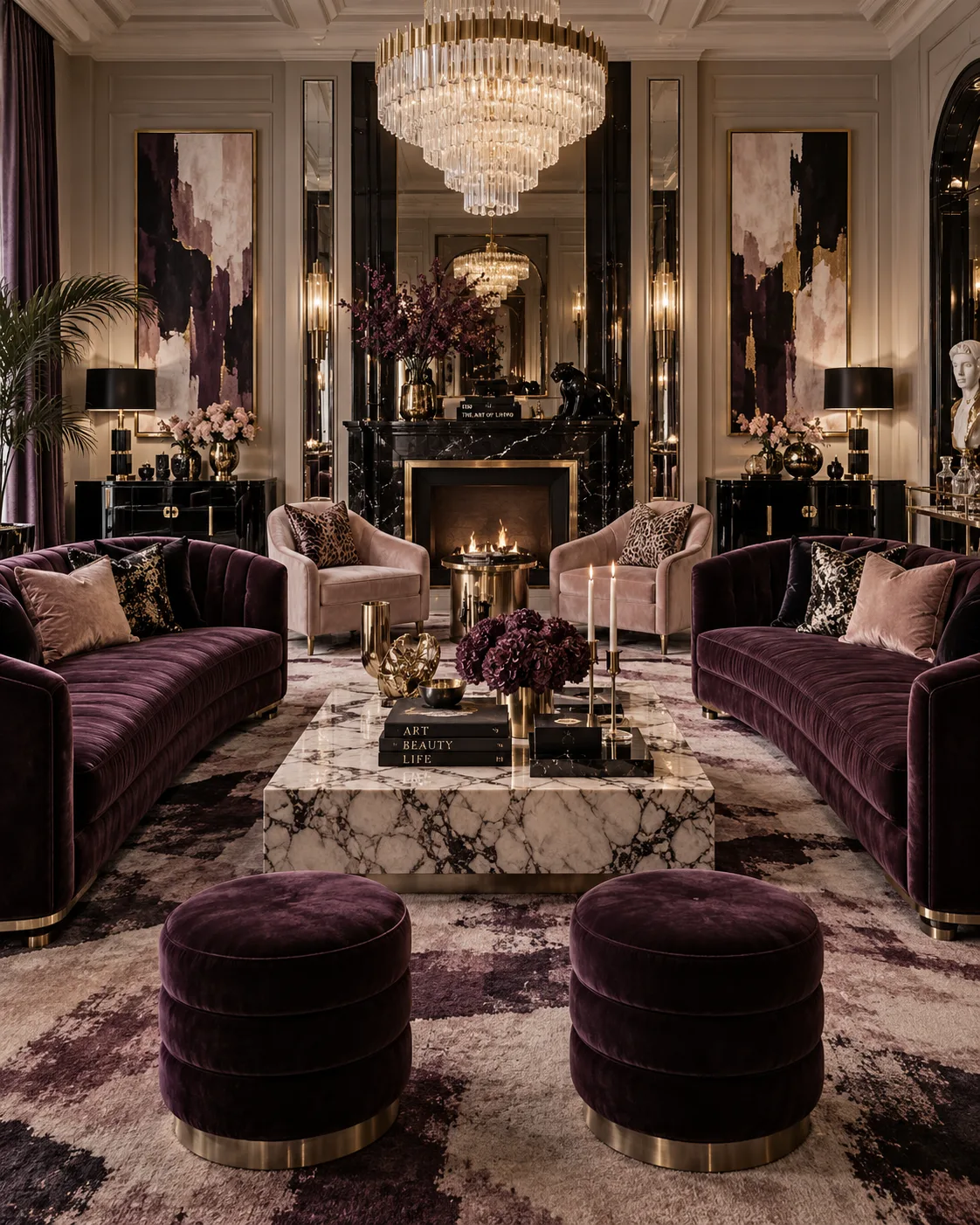
Marble is basically gold's best friend. The two walk into a room together and the price per square foot seems to rise on the spot. Black marble with white veining, classic white Carrara, or dramatically streaked Calacatta all work especially well. Coffee tables, consoles, side tables, or even entire fireplace surrounds gain a strong presence from it. The nice part: marble stops the glamour from getting too sugary. While velvet and gold can quickly start to feel soft and decorative, stone brings in something heavy and architectural. The result feels more grown-up. Or at least like someone very convincingly pretending to have their entire life together.
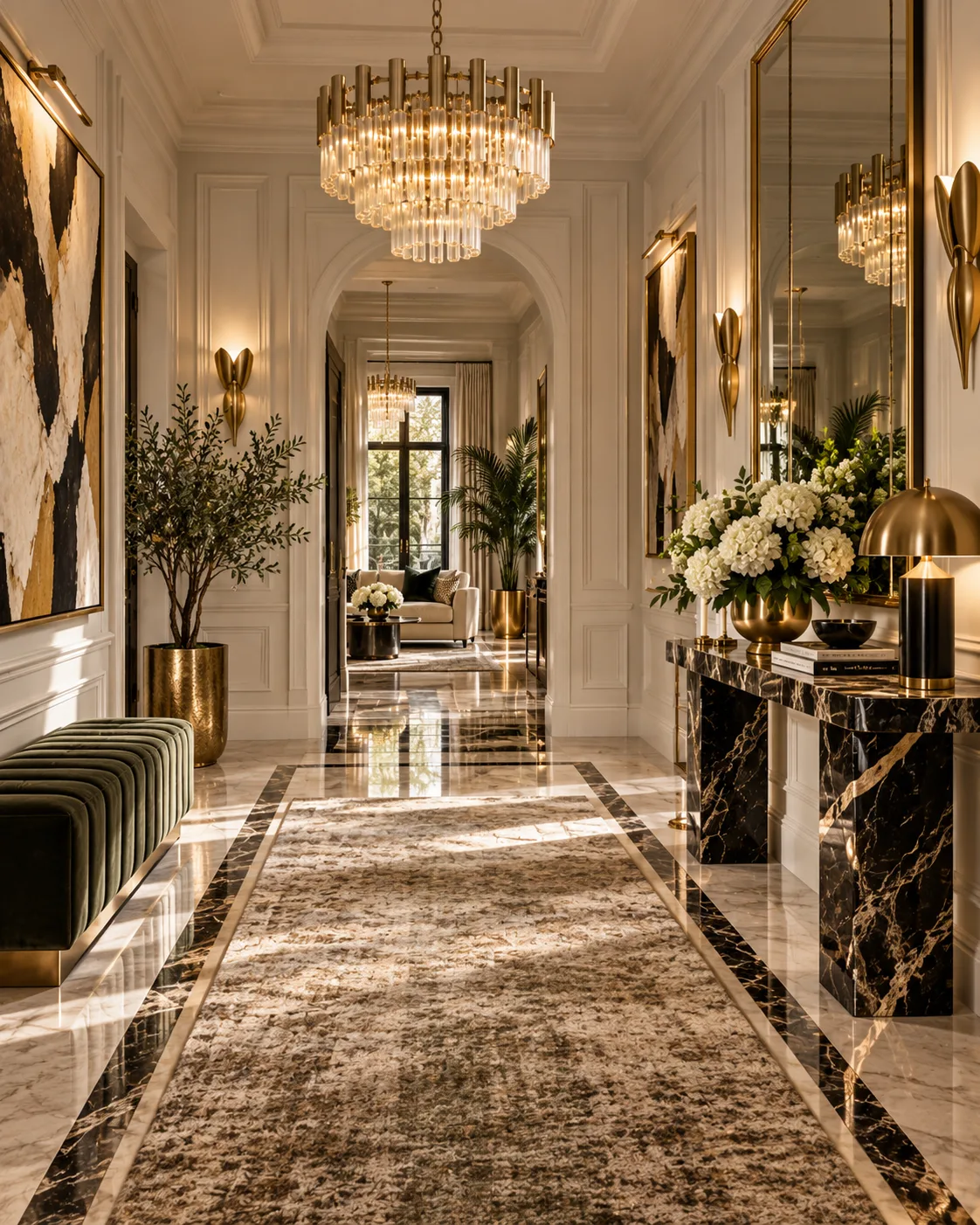
Mirrors Are Not an Afterthought
Hollywood Regency loves mirrors. Big mirrors. Small mirrors. Mirrored furniture. Mirrored walls. Why? Because mirrors reflect light, make rooms feel bigger, and above all do one thing extremely well: multiply drama. A chandelier is nice. A chandelier reflected in three mirrors until it suddenly looks like an entire army of chandeliers — that's Hollywood Regency. This can work surprisingly well especially in smaller apartments. One large mirrored surface, combined with dark furniture, velvet, and brass, can suddenly give an ordinary living room quite a lot of depth.
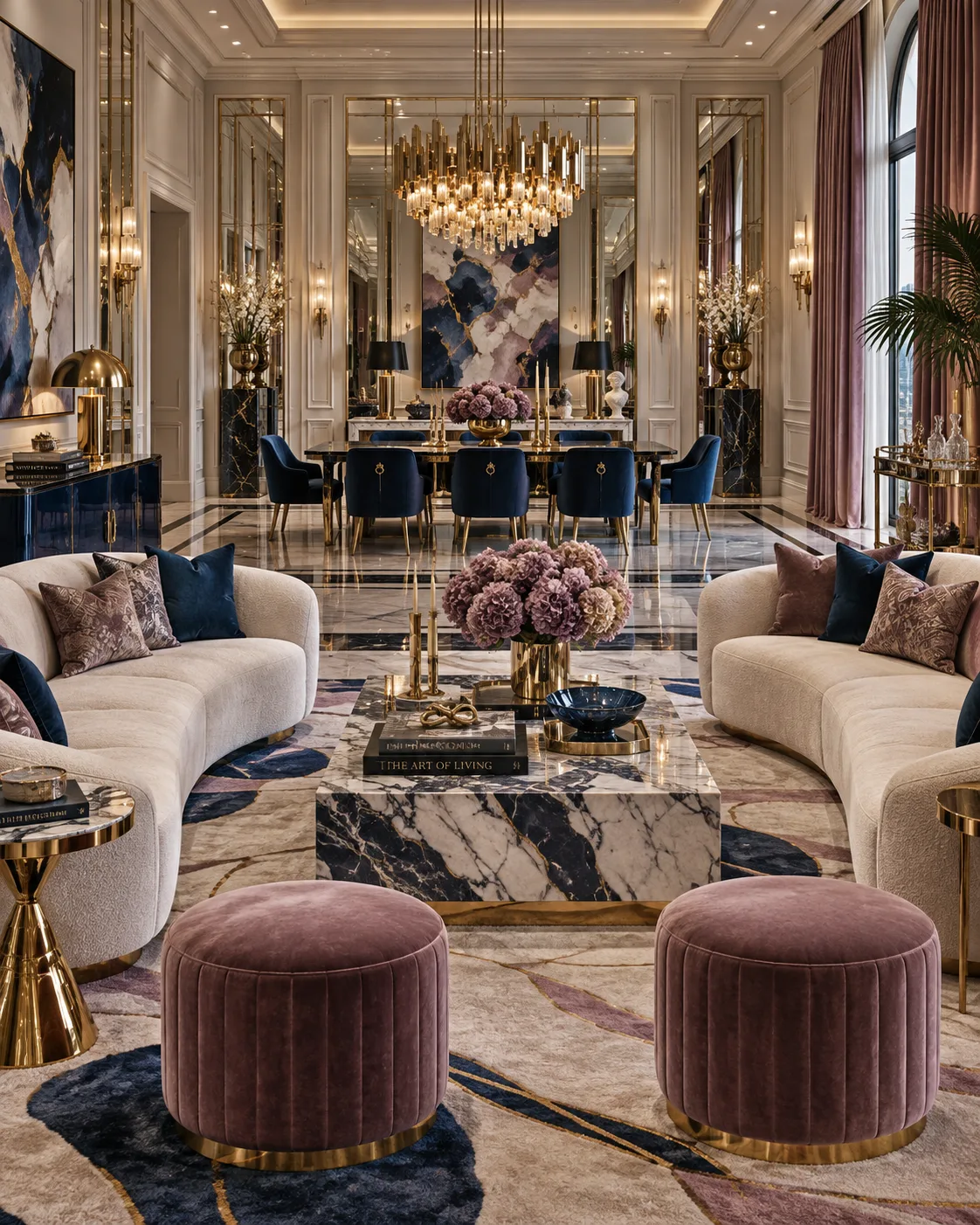
Which Colors Work?
The classic version likes to play with black, white, cream, and gold. But Hollywood Regency can be a lot more colorful than that. Emerald green, navy, aubergine, bordeaux, plum, or petrol all work fantastically — especially as velvet. A deep green sofa with brass legs against a cream-colored wall? Very good. An aubergine armchair, a black marble table, and a gold lamp? Now it's getting interesting. Pink can work too, as long as it leans toward dusty rose or old rose rather than drifting into "princess birthday party at the furniture store."
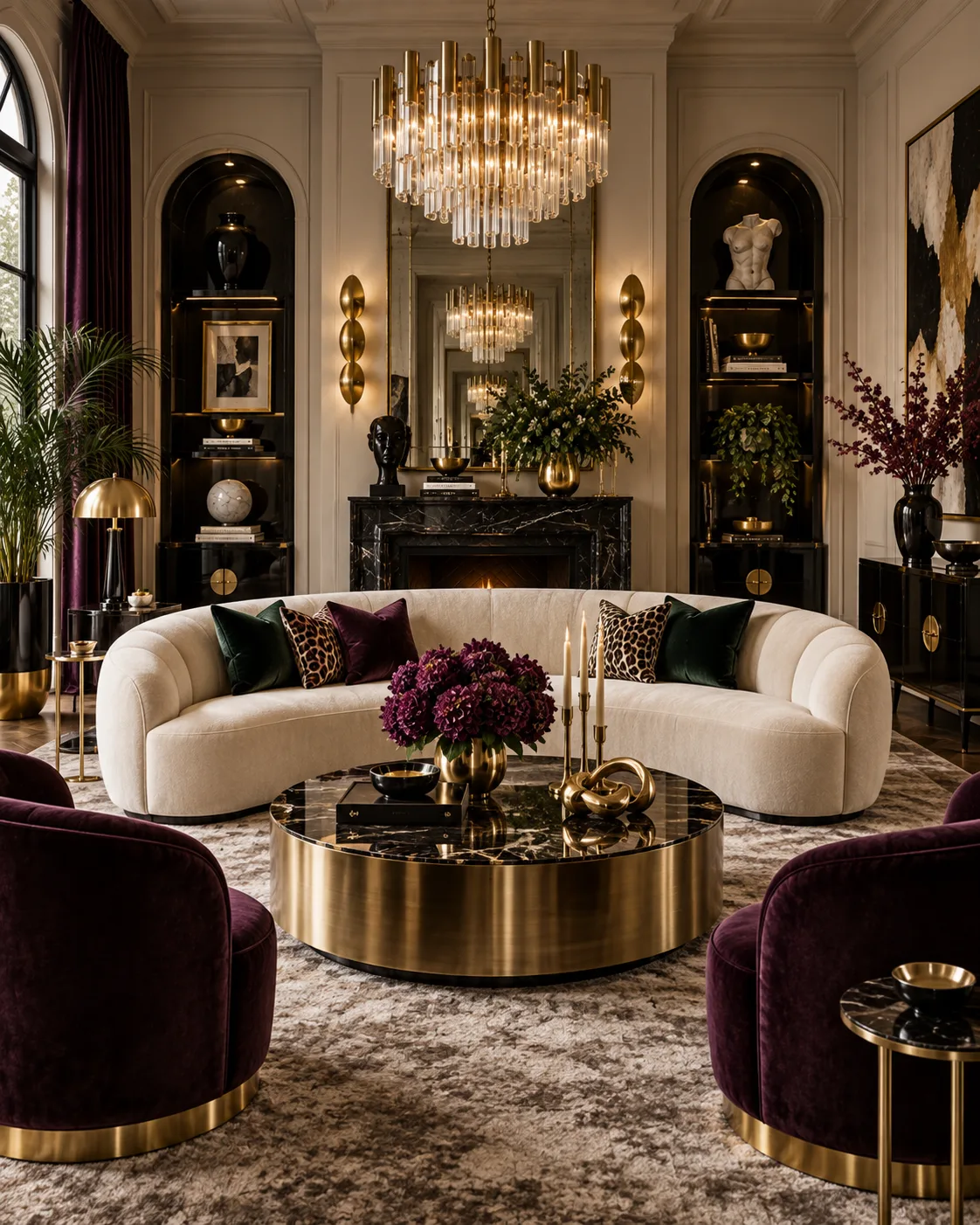
Pattern? Yes, But With Personality
Leopard print. Yes, leopard print. Hollywood Regency is one of the rare styles where a leopard-print cushion doesn't automatically read as bad taste. Animal prints, geometric patterns, and chinoiserie all fit beautifully. But dosage matters. One leopard-print cushion: glamorous. A leopard rug, plus a leopard sofa, plus leopard curtains? At that point it starts looking like a big cat founded an interior design firm.
Why Does Hollywood Regency Work So Well Again Today?
Maybe precisely because our interiors have gotten extremely restrained for years now. Beige sofa. Beige rug. Beige curtain. At some point you look around your living room and wonder whether you actually live there, or whether you're looking at the result of a very successful oat-milk ad campaign. Hollywood Regency is the counter-movement. The style allows personality. It allows color. It allows decoration. And yes, it also allows a bit of ego. A room is allowed to be beautiful simply because beauty is fun. Not every piece of furniture has to be practical, timeless, and optimized for resale value. Sometimes a table is just allowed to be gold because a gold table looks damn good.
The Actual Secret
Despite everything, Hollywood Regency isn't a competition to cram as many expensive things into a room as possible. The style lives on controlled excess. That's a real distinction. A large chandelier needs room to breathe around it. A dramatic marble table works better when the sofa stays calm. A bold velvet armchair might only need a single gold lamp next to it. That's why the best Hollywood Regency rooms don't look chaotic. They look staged. Almost like a film set. Just one you'd actually want to live in. And maybe that's the nicest way to sum up this style: Hollywood Regency doesn't just decorate a room. Hollywood Regency gives it a leading role.