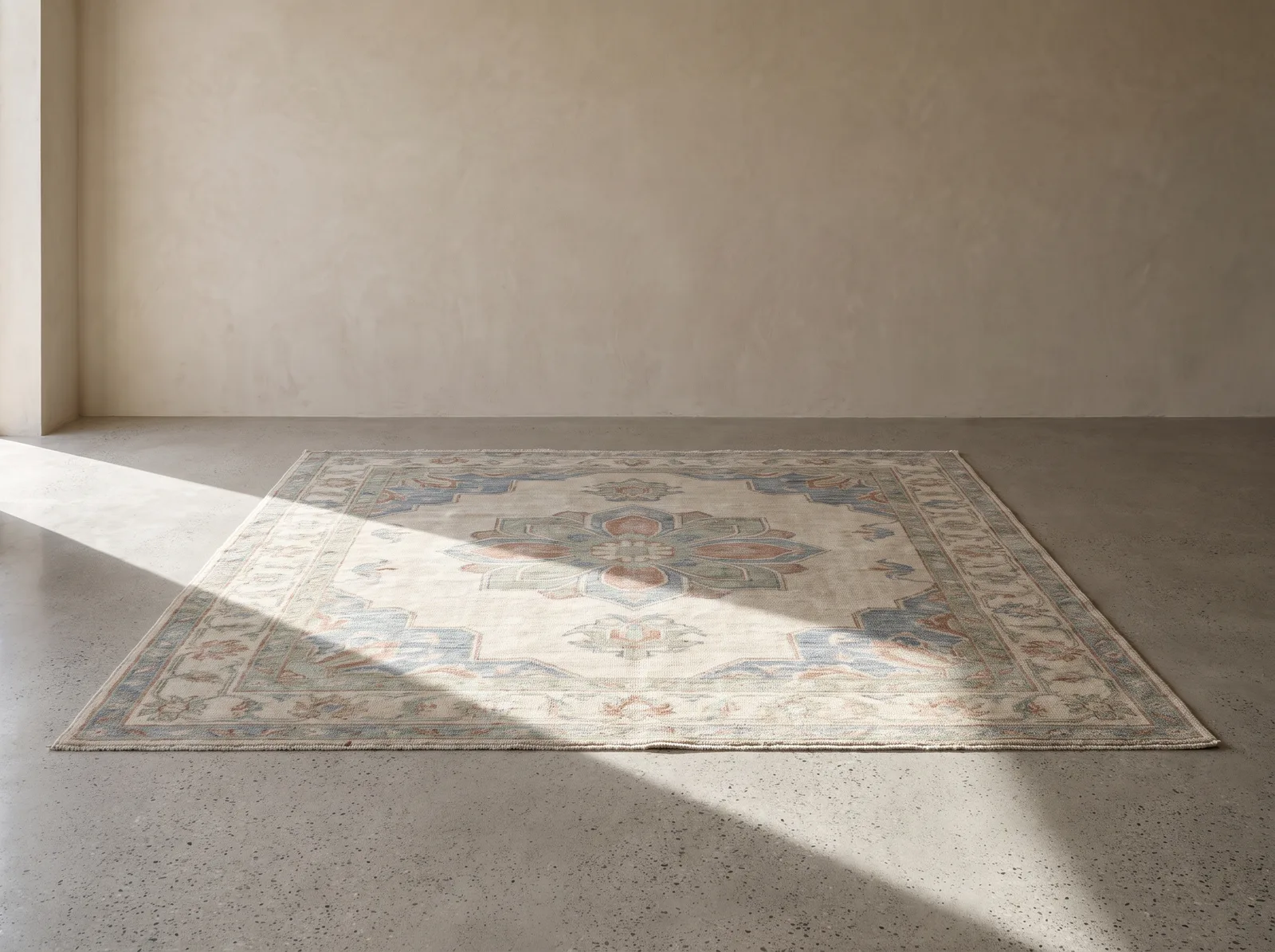
Tibetan Rugs: Highland Wool and Loop-Knot Technique
Tibetan Plateau
Tibetan rugs are known for a distinctive loop-knot technique and highland wool. Explore their cultural context, texture and considered placement.
More Than a Rug From the Himalayas
Tibetan rugs differ fundamentally from the better-known Persian or Turkish traditions — both in their knotting technique and in their original use. Instead of complex floral or geometric all-over patterns, many Tibetan rugs feature calmer, often symbolically charged motifs such as dragons, lotus flowers, or Buddhist auspicious symbols set against muted, earthy fields of color.
From the Wool of Hardy Highland Sheep
Tibetan rugs are traditionally made from the wool of Changpel sheep, a breed adapted to the extreme climate of the Tibetan Plateau, whose wool is prized for its particular elasticity and natural sheen. This robust wool quality produces rugs that are exceptionally durable despite comparatively simple tools and production conditions.
The Loop-Pile Technique as a Distinguishing Feature
Tibetan weavers use a unique technique called "loop-pile knotting," in which yarn is wound around a metal rod to create even loops, which are then cut to form the characteristic pile. This method differs fundamentally from the Persian Senneh knot or the Turkish Ghiordes knot, making the Tibetan rug a technically distinct tradition within world carpet art.
Originally Rarely Made for the Floor
Historically, Tibetan rugs were used as pure floor coverings less often than in other rug cultures — instead, they frequently served as seating mats in Buddhist monasteries, as saddle blankets, or as door hangings. This varied, often religiously charged use explains why many traditional Tibetan patterns carry symbolic rather than purely decorative meaning.
Exile, Re-Establishment, and International Recognition
Following Tibet's political annexation in the 20th century, many Tibetan weavers settled in exile in Nepal and India, where they continued their craft tradition under new conditions and made it accessible to international markets. This diaspora production, often organized under fair working conditions with support from Tibetan exile communities, accounts for much of what's traded internationally as "Tibetan" rugs today.
A Statement for Modern Organic, Japandi, and Traditional
The Tibetan rug naturally fits into Modern Organic interiors, where its muted palette and wool quality underscore the style's nature-driven material language, as well as into Japandi rooms and into traditionally styled interiors, where it's honored as an authentic, culturally significant piece of craft.
The Tibetan Rug in Today's Interiors
As a floor covering in a meditation corner or a quiet reading spot, the Tibetan rug shows its full, calming effect. Smaller formats also work well as seat cushions, a use that directly echoes its original monastic function.
Ateliology Style Verdict
The Tibetan rug proves that a geographically isolated highland tradition can produce a completely independent, technically distinctive form of rug art. Through political upheaval and geographic dispersal, it remains a testament to cultural continuity. That is exactly what makes the Tibetan rug a genuine style piece.
More rug styles
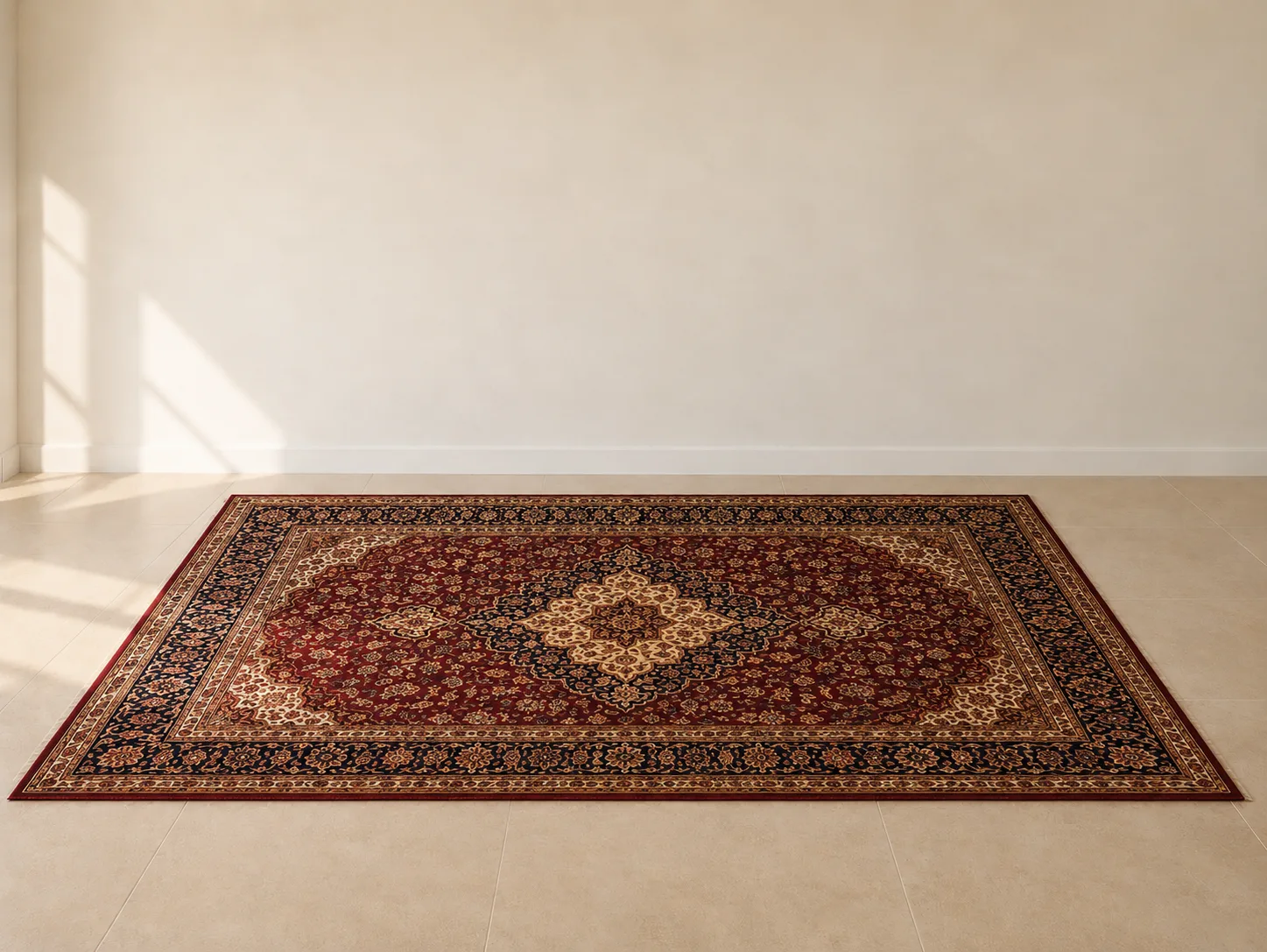 Iran (Persia)Persian Rug
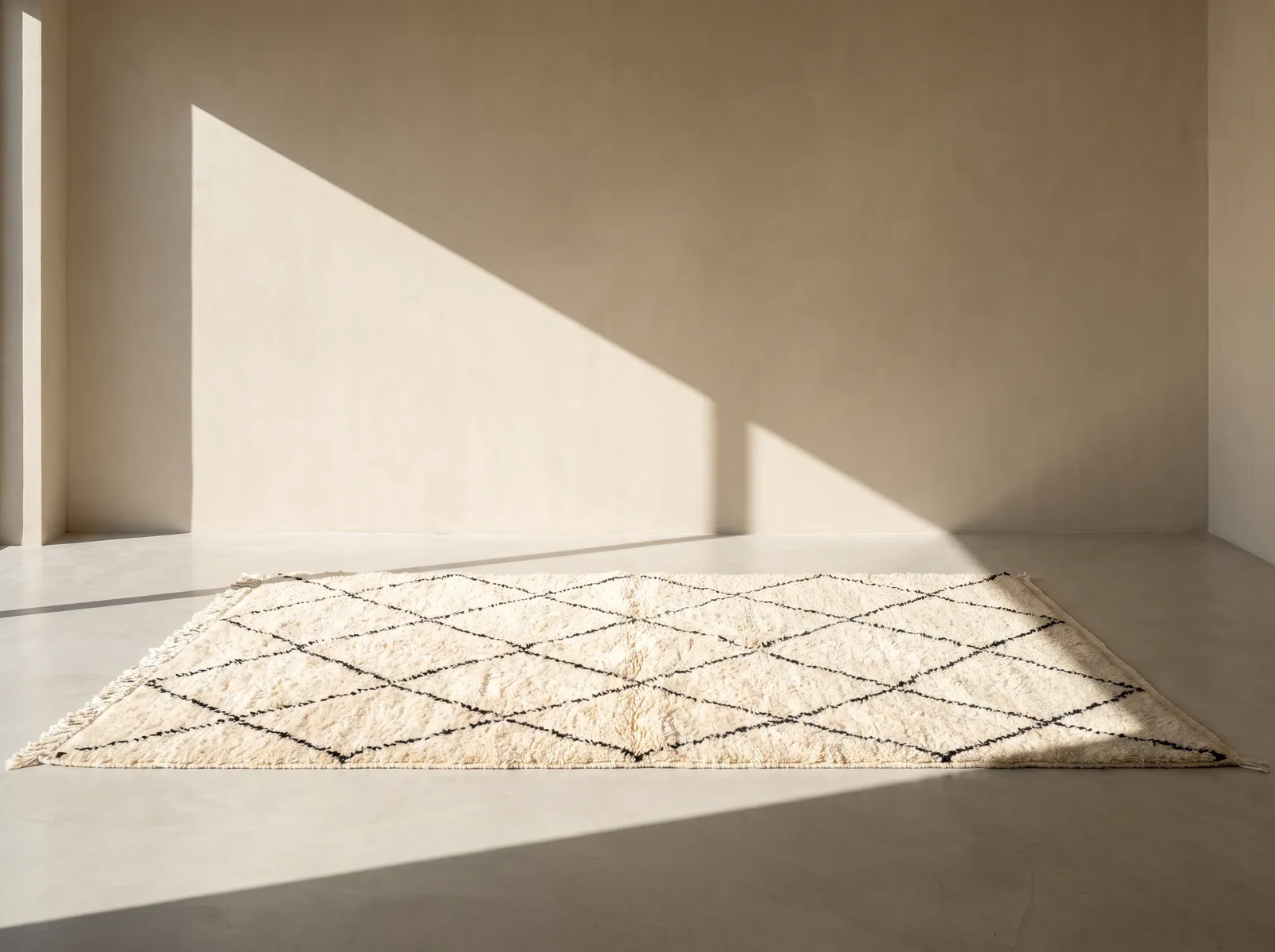 Atlas Mountains, Morocco (Amazigh/Berber tribes)Moroccan Berber Rug
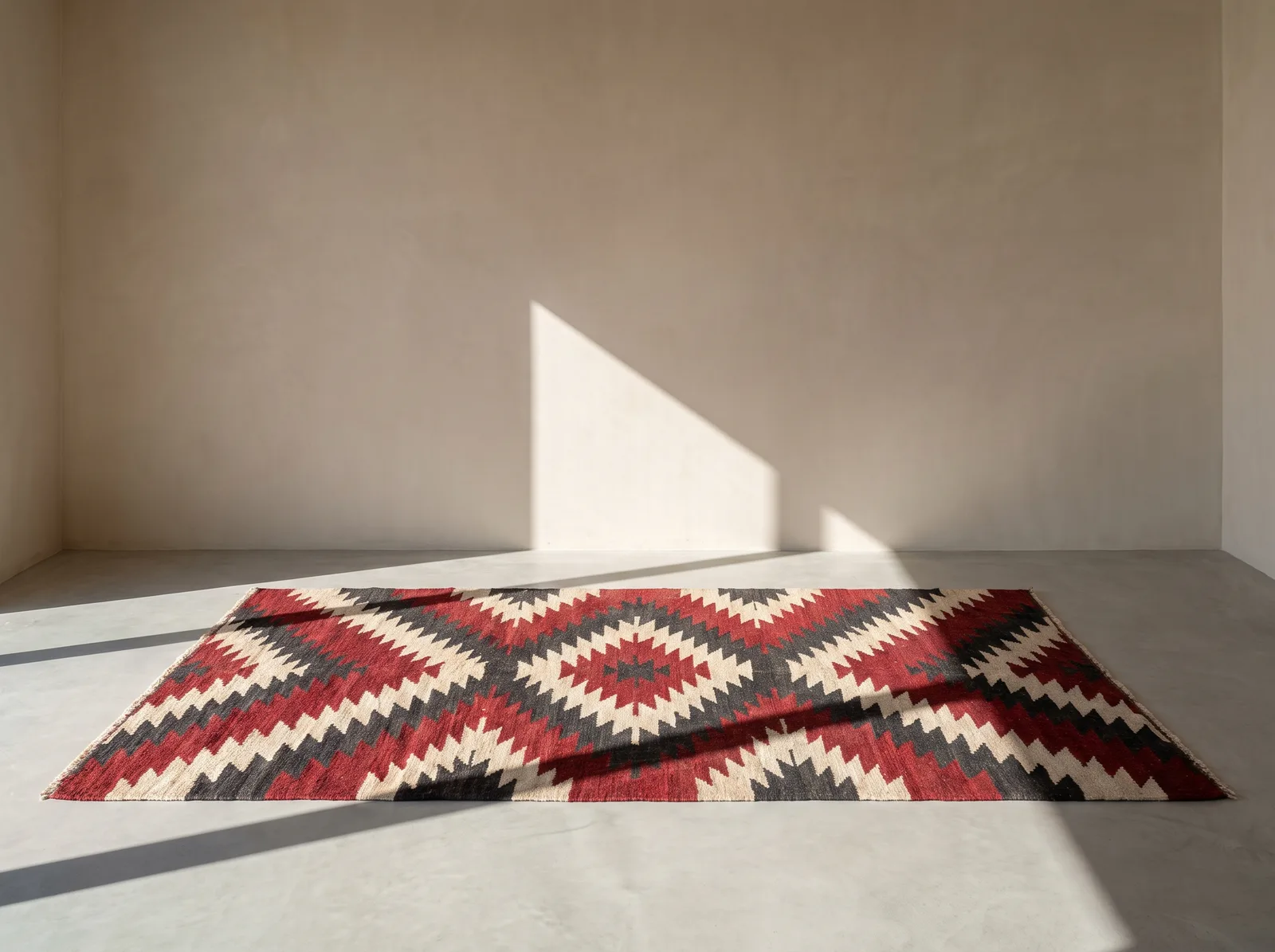 Diné (Navajo) Nation, American SouthwestNavajo Rug
 Anatolia, the Caucasus, and PersiaKilim Rug