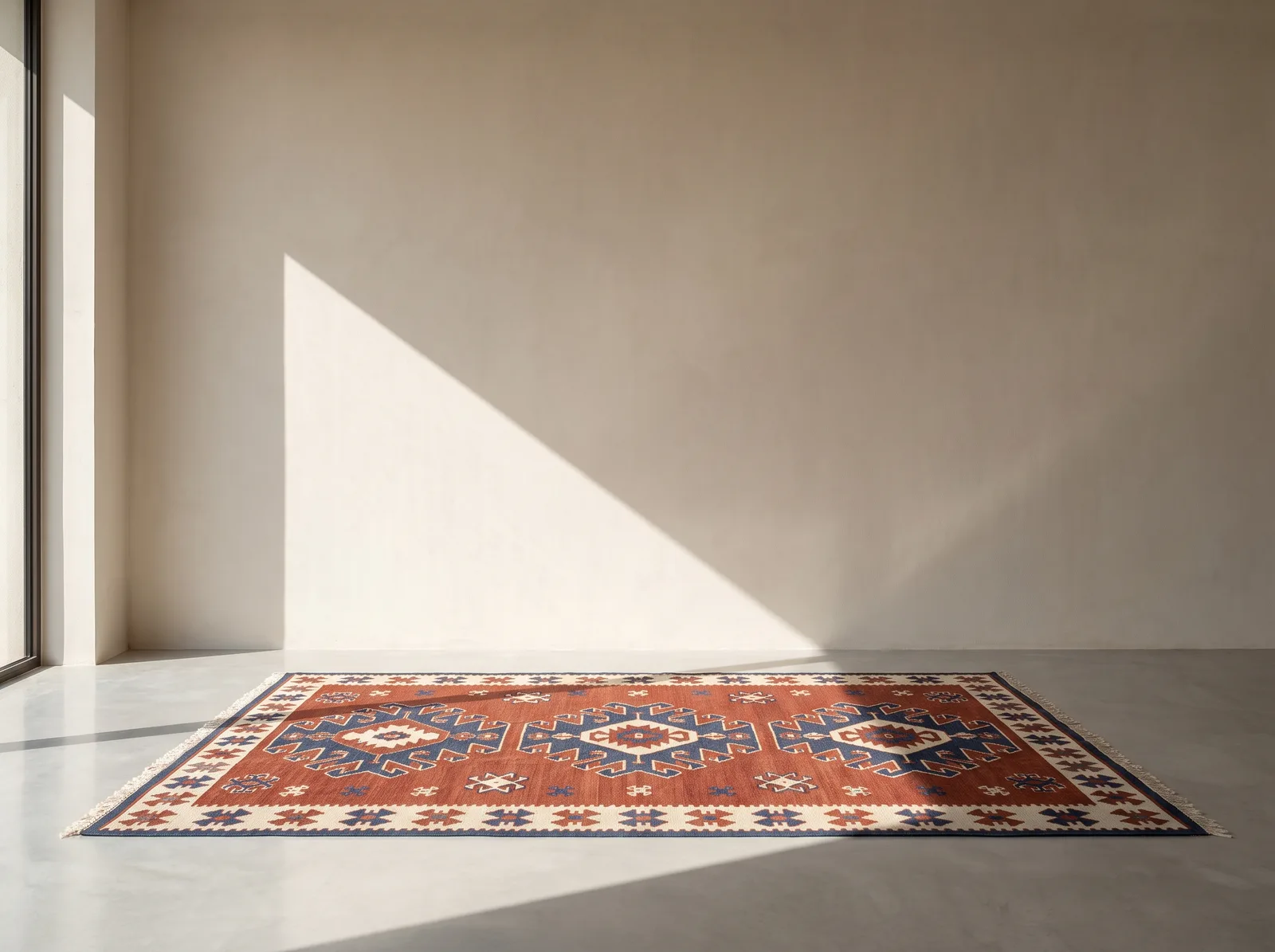
Kilim Rugs: Flatweave Pattern and Everyday Versatility
Anatolia, the Caucasus, and Persia
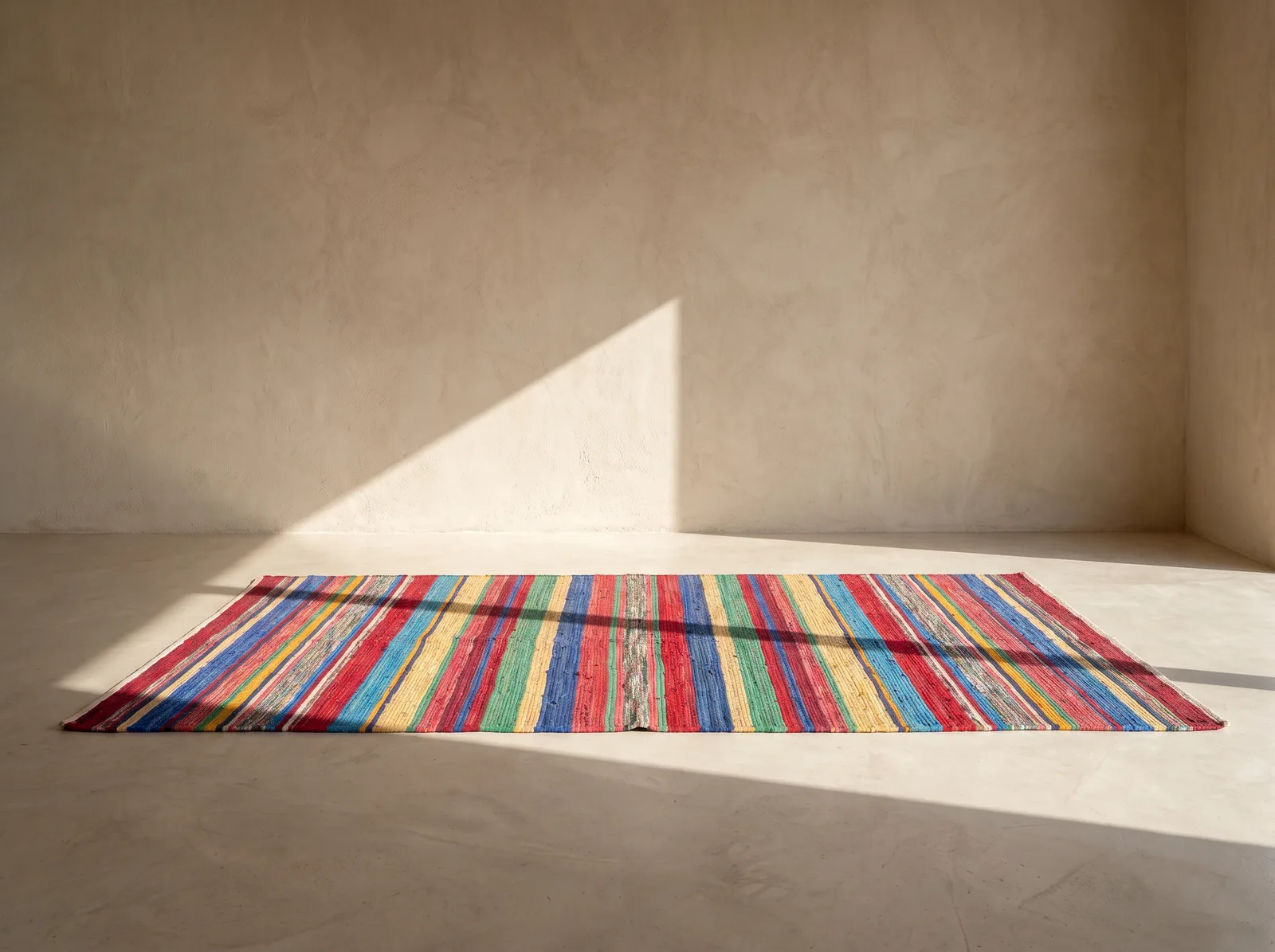
A kilim is a reversible flatweave with a clear graphic structure. Explore regional traditions, materials and practical ways to use one at home.
More Than a Flatweave
At first glance, the kilim seems more modest than a densely knotted Persian rug — flatter, lighter, with sharper geometric edges instead of soft floral patterns. But that apparent simplicity is the result of one of humanity's oldest textile techniques, developed by nomadic peoples across Anatolia, the Caucasus, and Persia, for whom a rug had to be, above all, practical for a life spent moving.
The Difference From a Knotted Rug
Technically, the kilim differs fundamentally from the Persian rug: instead of tying individual knots into a base weave, kilim weavers interlace colored weft threads directly with the warp threads in what's called a slit-weave technique, creating small, characteristic gaps at color transitions. This technique makes the kilim naturally flat, usable on both sides, and significantly lighter than a knotted rug of the same size — a decisive advantage when a rug needs to be regularly packed up, folded, and transported.
A Nomadic Invention
The kilim grew out of the practical demands of nomadic life across the vast steppe and mountain landscapes of Anatolia, the Caucasus, and Persia. Light enough to be carried on the backs of camels or horses, early kilims served not just as floor coverings but as tent walls, door curtains, saddle bags, and storage sacks. This multifunctional use explains why kilim weaving techniques developed independently, in parallel, across very different regions and cultures over thousands of years.
Geometry Instead of Figure
The slit-weave technique naturally favors sharp, geometric shapes over soft, curved patterns, giving the kilim its characteristic graphic clarity. Diamonds, zigzag lines, stars, and stylized animal figures are recurring motifs, many carrying symbolic meaning — fertility signs, protective symbols against the evil eye, or markers of the weaver's tribal affiliation. This restrained, graphic visual language sets the kilim visually apart from the dense, floral patterns of classic knotted rugs.
An Umbrella Term for Many Regions
Strictly speaking, "kilim" isn't a single rug type but an umbrella term for flatweaves spanning a wide geography — from Anatolian kilims with bold reds and blues, to Caucasian variants with especially precise geometry, to Persian kilims, which often incorporate more floral influences from the region's knotted-rug tradition. Distinct kilim traditions also exist in the Balkans, Central Asia, and North Africa, considerably widening the range of colors, patterns, and qualities found within this single rug category.
From Nomad Tent to Design World
Western collectors and designers discovered kilims as early as the beginning of the 20th century, but their major surge in popularity within home interiors came from the 2010s onward, riding the broader Boho trend. Their graphic, often irregular patterning and comparatively affordable prices next to dense knotted rugs made them a popular choice for anyone wanting to combine authentic craftsmanship with a more casual, relaxed interior style.
A Statement for Boho, Eclectic, and Traditional
In Boho interiors, a kilim works almost automatically alongside rattan, macramé, and warm earth tones. In eclectic rooms, a kilim can be layered over a neutral rug as a graphic pop of color — a particularly popular styling technique known as "rug layering." And in traditionally styled interiors, a kilim, much like the Persian rug, honors an authentic, millennia-old craft.
The Kilim in Today's Interiors
Because kilims are flat and light, they work exceptionally well in high-traffic areas like hallways and entryways, where thicker knotted rugs would wear out faster. Smaller formats also work well as runners or, layered over a larger neutral rug, as a colorful accent in living and dining areas. Their reversibility is practical too: if one side wears unevenly, a kilim can simply be flipped.
Ateliology Style Verdict
The kilim proves that practical necessity and artistic expression don't have to be mutually exclusive. Born from nomadic peoples' need for a light, transportable textile, it developed a graphic visual language that has outlasted millennia and still feels as relevant as ever today. That exact connection between raw functionality and visual clarity is what makes the kilim a genuine style piece.
More rug styles
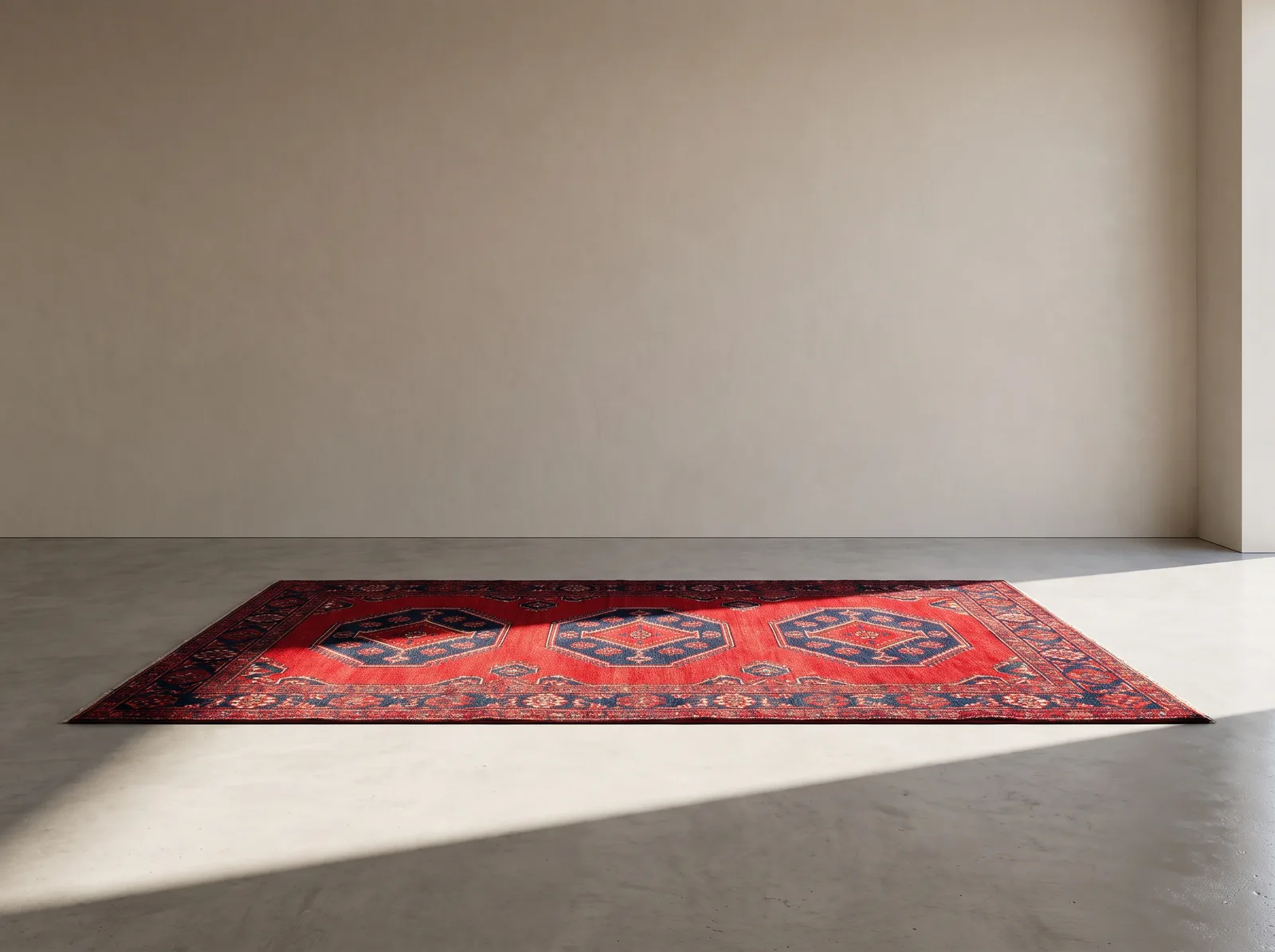 Anatolia, TurkeyTurkish Rug
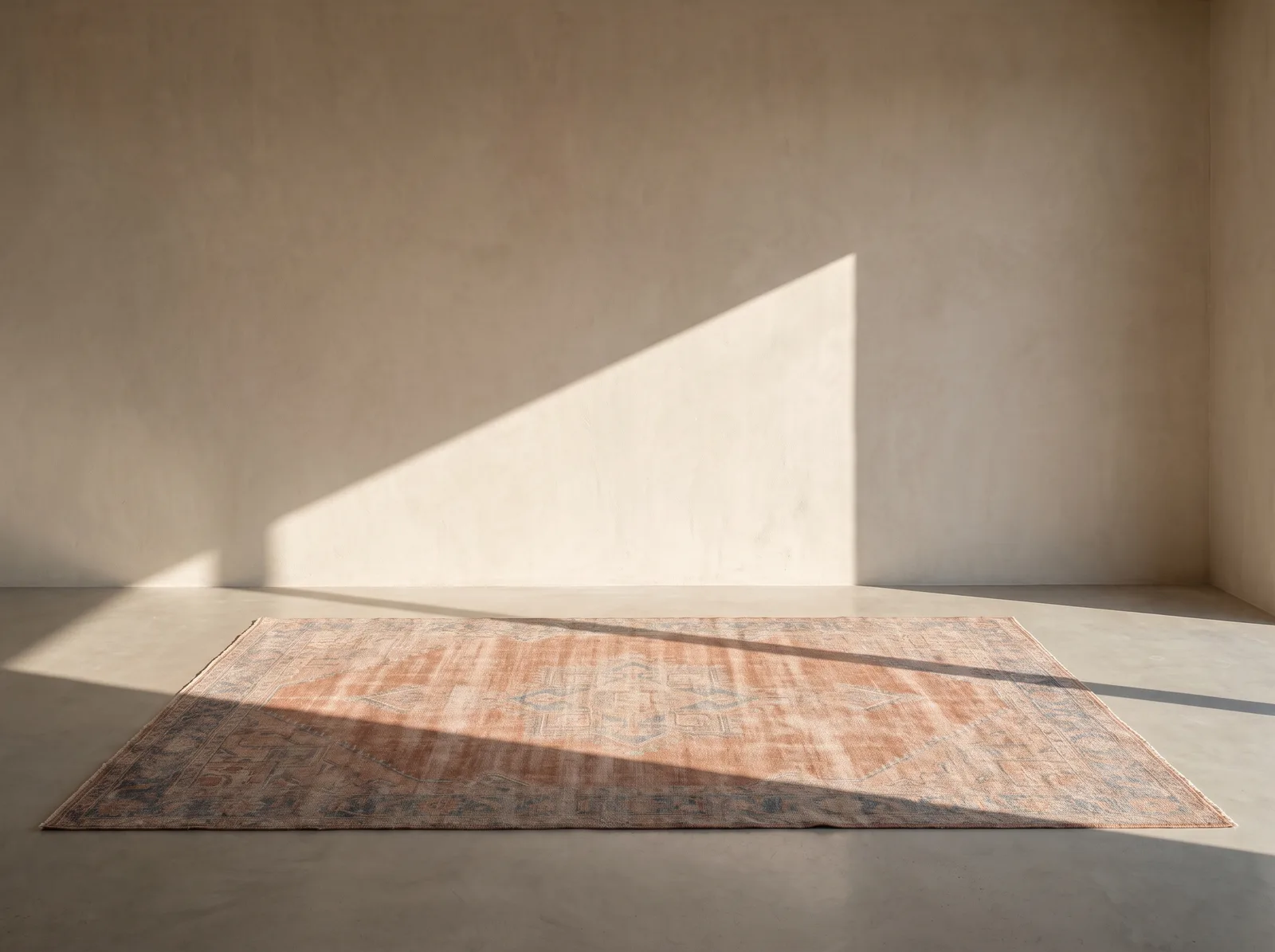 Uşak, Western TurkeyOushak Rug
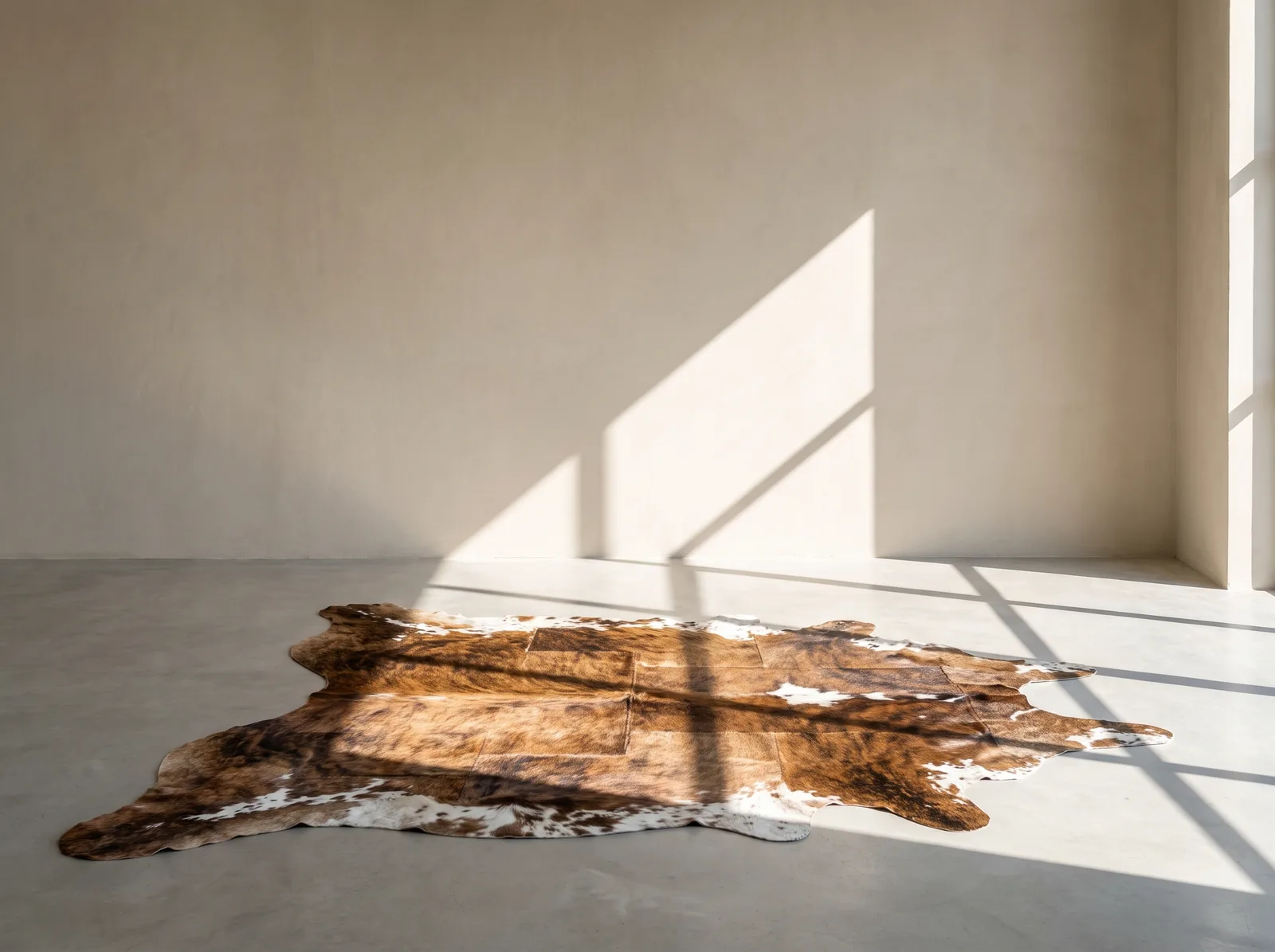 South America, Europe (processing)Cowhide Rug
 North America and ScandinaviaRag Rug