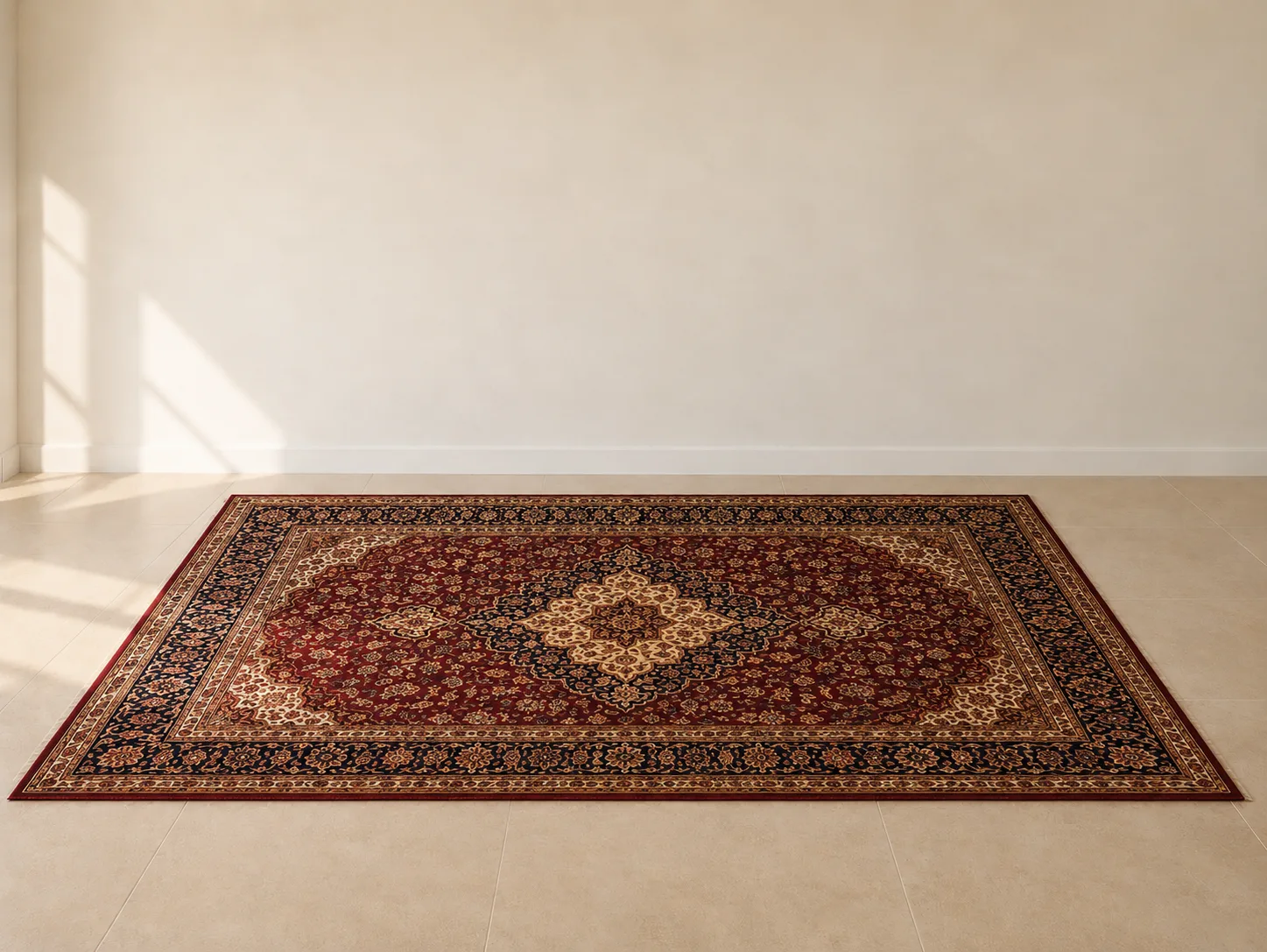
Persian Rugs: Pattern, Craft and Room Character
Iran (Persia)
Hand-knotted Persian rugs bring colour, pattern and regional craft traditions into a room. Explore their history and ways to style them today.
More Than a Floor Covering
Long before rugs were treated as decorative accessories, the Persian rug was already a work of art. Woven by hand, often over the course of many months or even years, each piece carries a density of pattern, color and craftsmanship that few other objects in a home can match. Placed in a room, a genuine Persian rug rarely just fills space — it becomes the quiet center of gravity that everything else in the room seems to respond to. That is the real reason designers keep returning to it: not nostalgia, but the fact that a single rug can give an entire room a sense of depth, history and warmth that furniture alone cannot provide.
A Craft Older Than Most Civilizations
The history of Persian rug weaving stretches back more than 2,500 years. The oldest surviving knotted-pile carpet in the world, the Pazyryk carpet, was discovered frozen in a Scythian burial mound in Siberia and is widely believed to reflect Achaemenid Persian design from around the 5th century BC. That a single woven object could survive for two and a half millennia — and still show a level of technical sophistication that took other cultures centuries longer to develop — says something about how advanced this craft was from a remarkably early point. Persian weaving did not begin as luxury decoration. It grew out of nomadic and rural life, where woven textiles served as flooring, bedding, storage bags and tent dividers long before it became an art form associated with palaces.
The Safavid Golden Age
Persian carpet weaving reached its most celebrated period under the Safavid dynasty, particularly during the reign of Shah Abbas I in the late 16th and early 17th centuries. The Safavid court established royal workshops in cities such as Isfahan, Kashan and Tabriz, employing master weavers to produce carpets as state-sponsored works of art rather than everyday household objects. These carpets became diplomatic gifts sent to European courts, were woven into the architecture of mosques and palaces, and set design standards that carpet-producing regions across the wider region would reference for centuries afterward. It was during this era that many of the medallion layouts, garden motifs and elaborate floral vocabularies now considered classically "Persian" were refined into their most recognizable forms.
The Knot That Makes the Difference
What separates a genuine Persian rug from countless imitations is, quite literally, the knot. Persian weavers predominantly use the asymmetrical knot — often called the Senneh knot — which allows for finer detail and more gradual color transitions than the symmetrical knot used in many Anatolian and Caucasian rugs. Quality is measured in knots per square inch: a coarser tribal piece might contain around 100 knots per square inch, while the finest silk carpets from cities like Qom or Isfahan can exceed a thousand. Every single knot is tied by hand, one at a time, meaning a single carpet can represent months or, for the largest and finest pieces, years of continuous work by one or more weavers. This is part of why an authentic hand-knotted Persian rug behaves so differently from a machine-made reproduction: the slight irregularities, the way colors shift subtly across the field, and the density of pattern are all direct evidence of human hands at work.
A Language Written in Pattern
Because figurative religious imagery is traditionally avoided in Islamic decorative art, Persian weavers channeled their creativity into an extraordinarily rich vocabulary of ornament instead. The central medallion surrounded by corner pieces is probably the most recognizable Persian layout, often set against a dense field of vine scrolls and floral arabesques. The Boteh — a teardrop-shaped motif that would later travel to the West and become known as paisley — appears throughout Persian design history. Garden carpets, or "chahar bagh" designs, lay out the rug as a symbolic paradise garden divided into quadrants by water channels, reflecting Persian garden architecture itself. Even the border, often overlooked, is structured with its own hierarchy of minor and major guard stripes framing the field like a picture within a frame. None of this ornament is arbitrary. It represents centuries of refined visual language, passed down through workshops and weaving families rather than written down.
One Country, Countless Regional Signatures
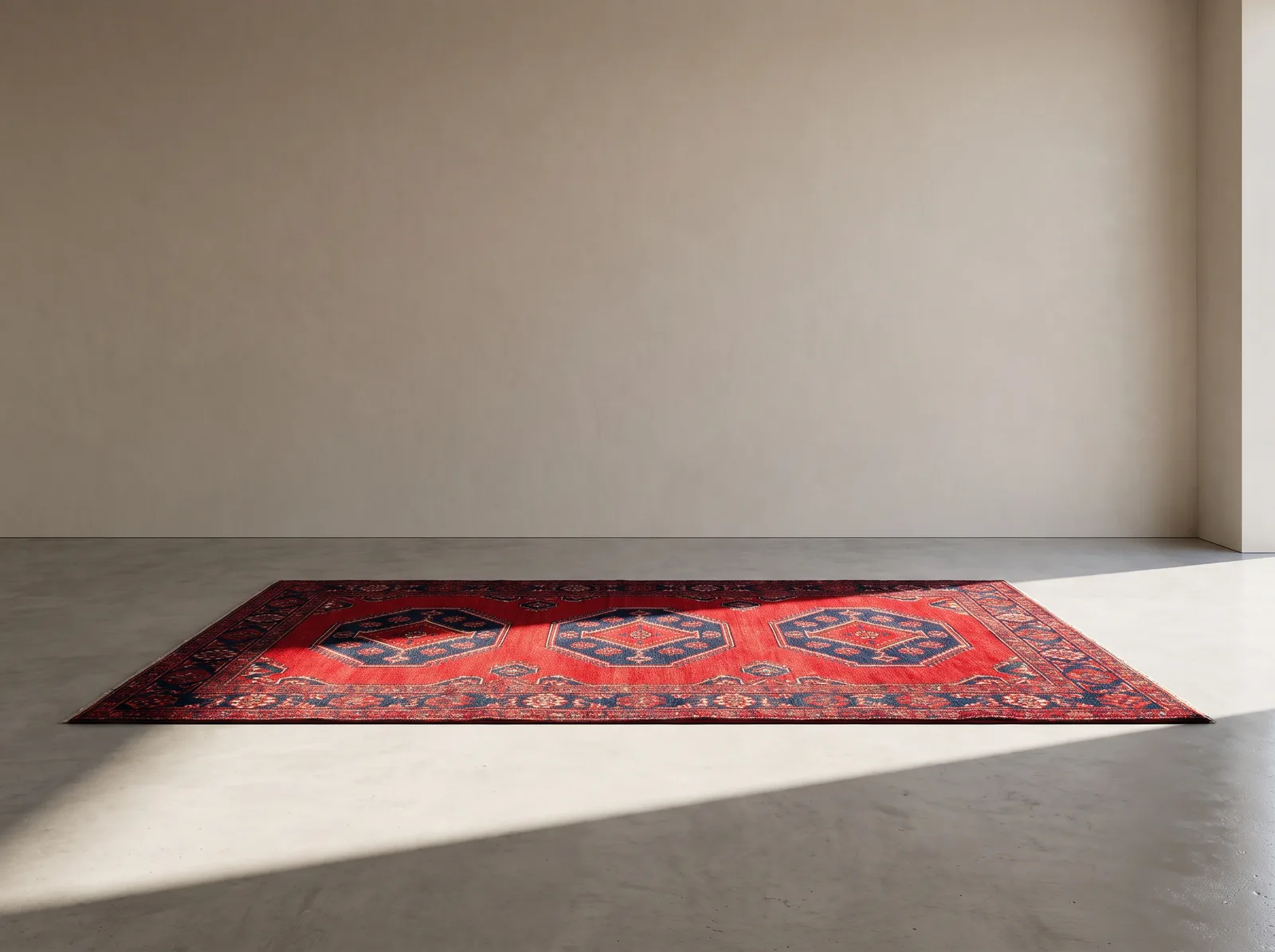
"Persian rug" is really an umbrella term for dozens of distinct regional weaving traditions, each with its own recognizable signature. Tabriz carpets are known for fine, precise medallion work. Isfahan and Qom produce some of the most refined silk pieces, often with cream or ivory backgrounds and exceptionally high knot counts. Kashan is closely associated with the deep red-and-navy medallion carpets that many people picture first when they hear the word "Persian." Heriz rugs, from the northwest, favor bolder, more geometric medallions and a slightly coarser weave that has made them especially popular in Western markets. And alongside the urban workshop traditions sit tribal and nomadic weavings — Qashqai and Bakhtiari among them — made by nomadic groups for their own use, with looser, more improvisational geometric patterns that carry an entirely different, more rustic energy. Learning to recognize these regional differences is part of what makes collecting or simply appreciating Persian rugs so rewarding.
Recognized as World Heritage
In 2010, UNESCO added the traditional skills of carpet weaving in Kashan, along with carpet-weaving traditions in the Fars region, to its Representative List of the Intangible Cultural Heritage of Humanity. The recognition wasn't symbolic. It acknowledged that this is a living craft, passed down within families and workshops across generations, at real risk of disappearing as industrial production and changing economies draw younger generations away from hand-weaving. Every genuine hand-knotted Persian rug in a home today is connected, in a very direct way, to that unbroken chain of craftsmanship — which is part of why these pieces are treated less like furnishings and more like cultural objects worth preserving.
Why It Still Belongs in Modern Rooms
It would be easy to assume that a centuries-old, densely patterned textile has no place in contemporary interiors built around restraint and neutral palettes. In practice, the opposite is true. Designers reach for Persian rugs precisely because modern rooms are so pared back — a single antique or antique-style rug introduces pattern, color and history into a space that would otherwise read as flat or overly uniform. Against pale oak floors, plaster walls or minimalist furniture, a Persian rug does not compete with the room. It grounds it. The contrast between an intricately patterned, centuries-old design language and a stripped-back modern room is, for many designers, exactly the tension that makes a space feel considered rather than generic.
Styling a Persian Rug Today
The versatility of the Persian rug comes from how differently it can be framed depending on its surroundings. In a Modern Organic room, a faded or over-dyed antique Persian rug softens plaster, travertine and linen with just enough pattern to keep the space from feeling too austere. In a Traditional or Classic interior, a fine medallion carpet in rich reds and blues functions exactly as it always has, anchoring formal furniture and symmetrical layouts. In Eclectic and Boho spaces, Persian rugs are increasingly layered — a smaller patterned piece placed over a larger flatweave or jute rug — building texture and visual depth rather than choosing a single statement piece. Even in more minimalist or Scandinavian-leaning rooms, a single well-worn Persian rug placed under a plain sofa or bed frame can act as the only pattern in the entire space, which is often more effective than introducing pattern through several smaller objects.
Ateliology Style Verdict
A Persian rug is one of the few objects in a home that gets more interesting with age rather than less. Its knots were tied by hand, its pattern encodes centuries of visual tradition, and its slight irregularities are proof that no two are ever truly alike. Placed in a modern room, it does not need to match anything — it simply needs space to be seen. That is ultimately what makes the Persian rug more than pattern, more than decoration: it is one of the few pieces in an interior capable of giving a room its soul.
More rug styles
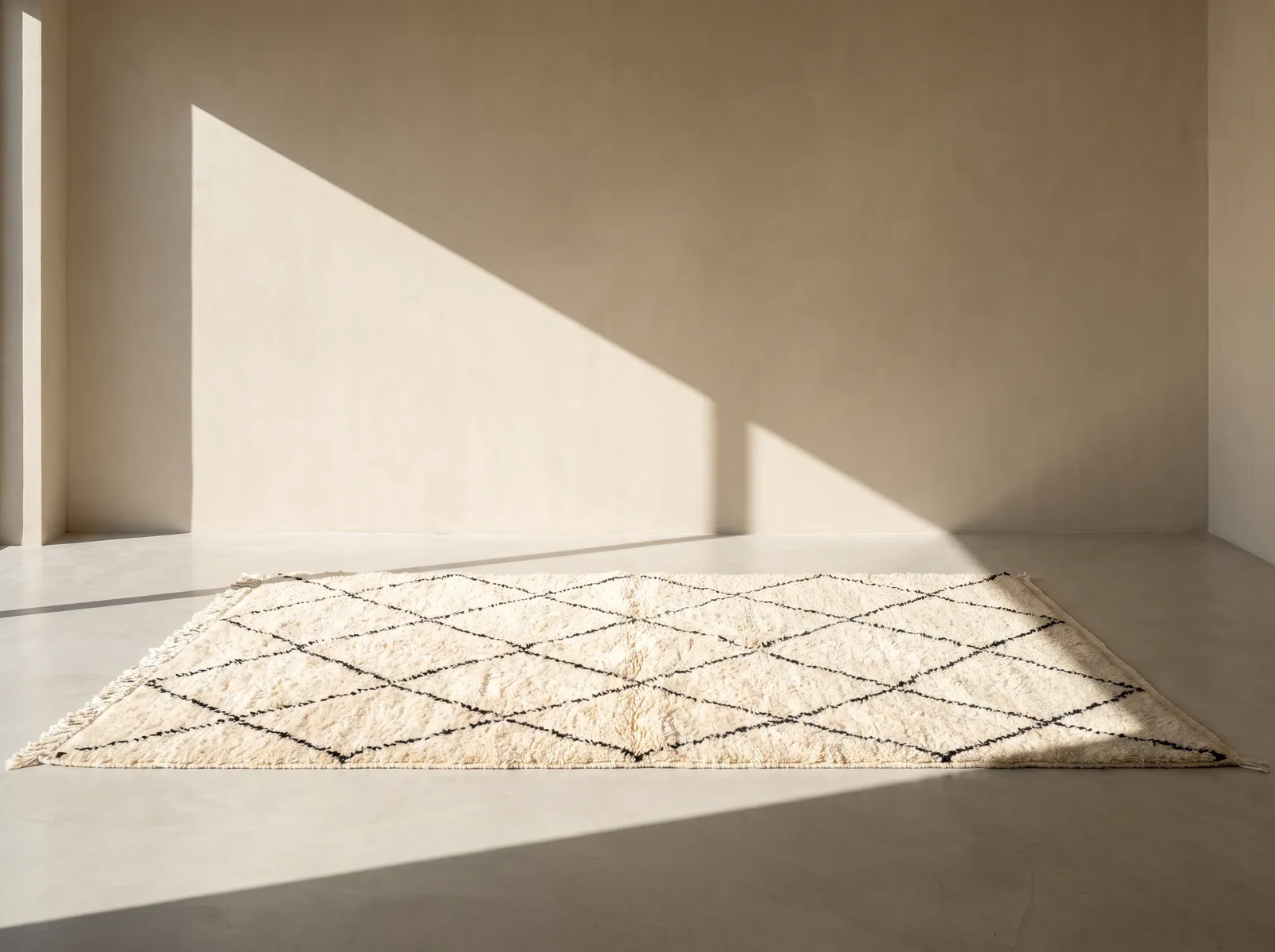 Atlas Mountains, Morocco (Amazigh/Berber tribes)Moroccan Berber Rug
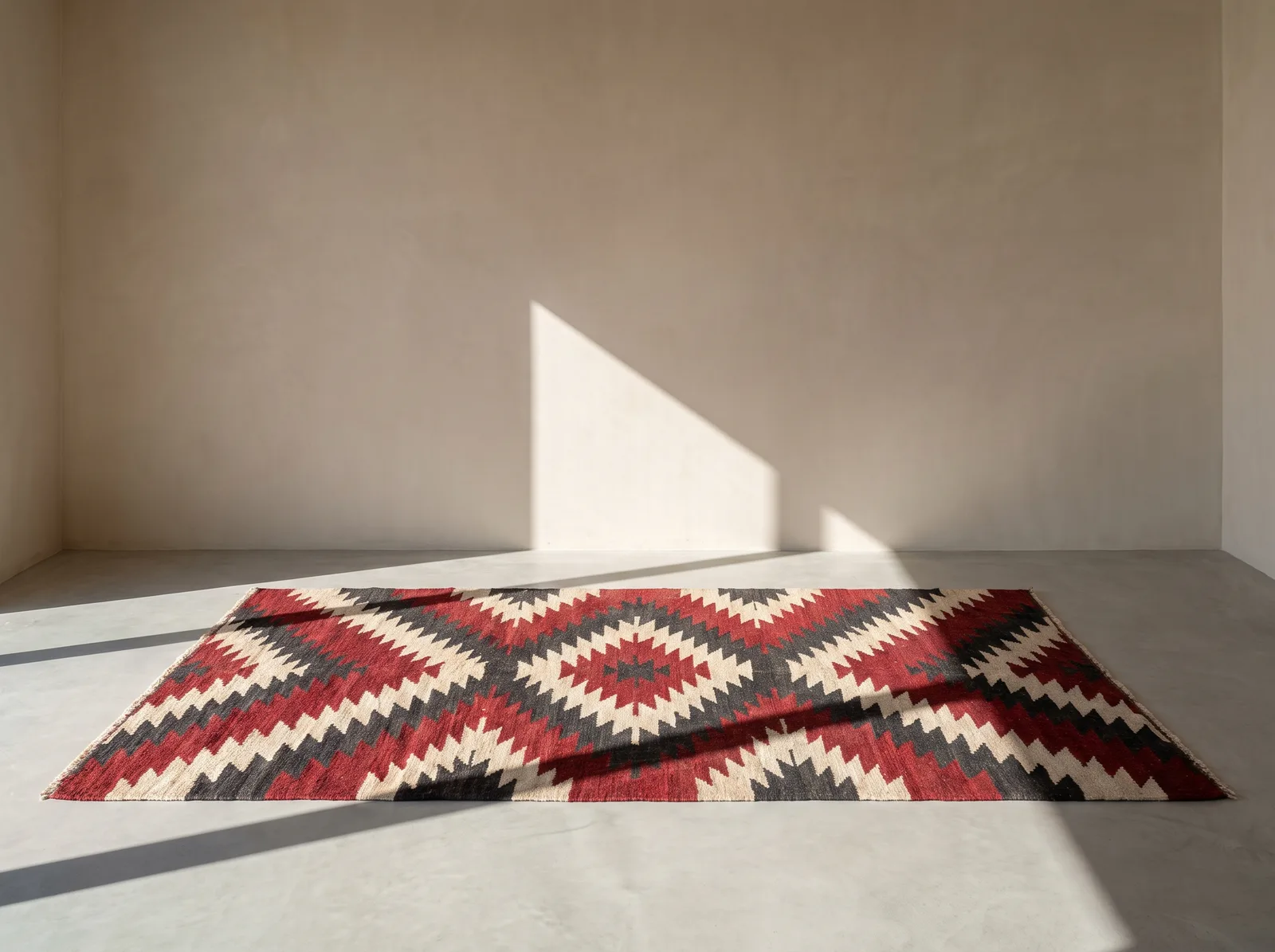 Diné (Navajo) Nation, American SouthwestNavajo Rug
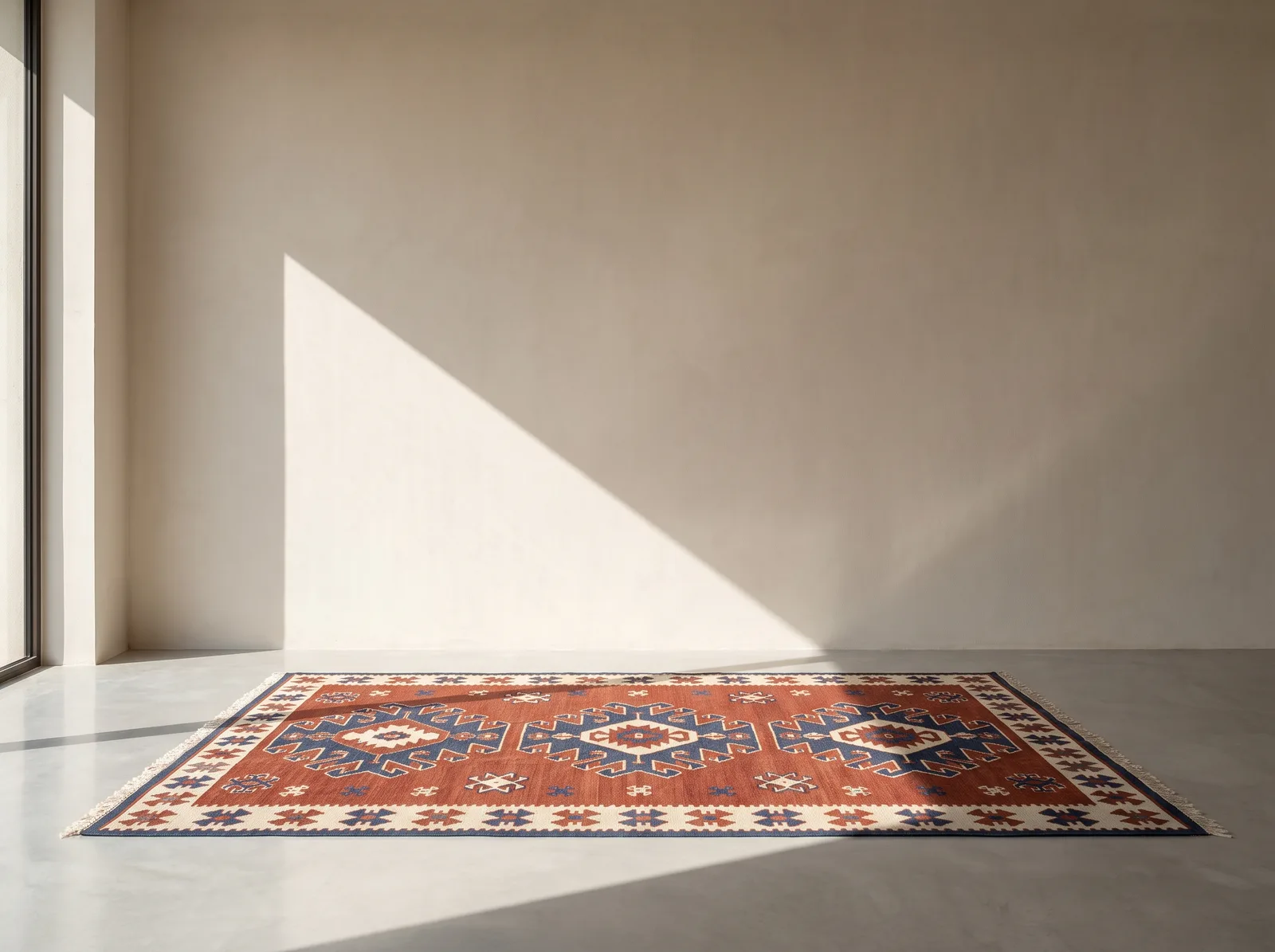 Anatolia, the Caucasus, and PersiaKilim Rug
 Anatolia, TurkeyTurkish Rug