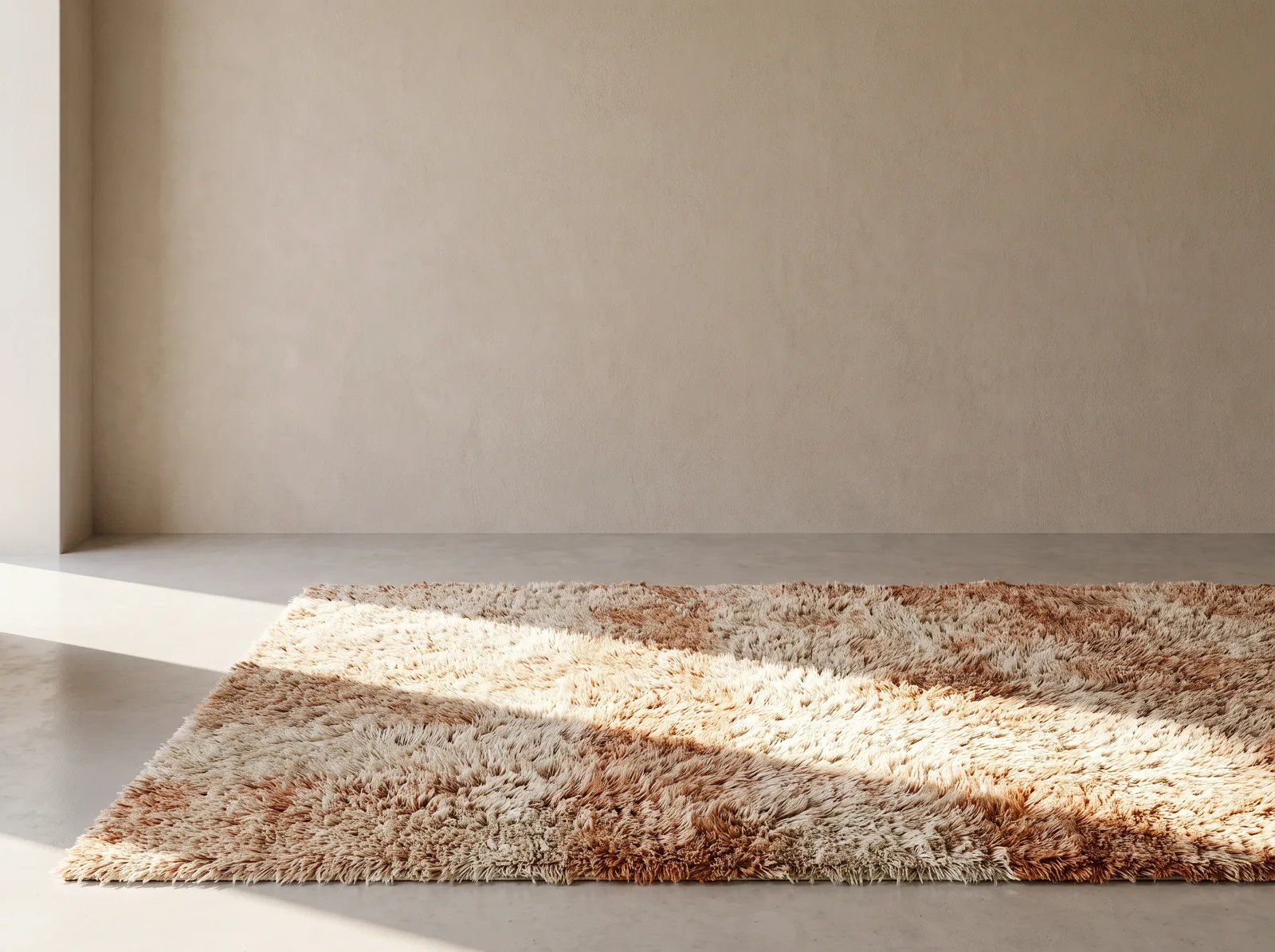
Shag Rugs: Texture, Comfort and 1970s Style
USA/Western Europe, with roots in Greece and Scandinavia
Deep pile gives a shag rug a soft, informal presence. Explore its history, materials, care and the rooms where it works best.
More Than Soft Flooring
A shag rug is defined by a single feature: its unusually deep, dense pile, which makes it feel more like a soft landscape than a conventional floor covering. That texture isn't just an aesthetic detail — it changes how an entire room feels, muffling sound, adding physical warmth, and making a space noticeably more informal. Few other rug types have gone through such a volatile design history: from a status symbol of the 1970s, to a byword for bad taste, to a celebrated comeback object today.
Ancient Roots: Flokati and Rya
Although the shag rug is mostly associated with the 1970s, the idea of a deep-pile textile reaches much further back. The Greek flokati has been woven from undyed sheep's wool for centuries, originally serving as a warm blanket for shepherds in Greece's mountain regions. Parallel to this, Scandinavia developed the rya technique — a coarse, knotted wool rug originally used as a weatherproof bedcover on fishing boats, before becoming a design statement of Finnish and Swedish modernism in the 20th century. Both traditions laid the technical and cultural groundwork for what would later become known in the West simply as "shag."
The American Rug Boom of the 1960s
The shag rug's real breakthrough as a mass phenomenon came in 1960s and 70s America, fueled by new synthetic fibers like nylon and polyester that made a deep pile affordable to produce at scale. The shag rug became a symbol of a loose, hedonistic lifestyle — from the living room to the bathroom, often in bold colors like orange, avocado green, or brown. In hardly any other decade has a single textile become as closely identified with an entire era's lifestyle as the shag rug with the 1970s.
From Design Faux Pas to Comeback
In the 1980s and 90s, the shag rug fell into disrepute: seen as unhygienic and dated, it was widely mocked as the epitome of past-decade bad taste. It wasn't until the broader vintage and retro revival of the 2010s, amplified by interior content on Instagram and Pinterest, that the shag rug experienced a surprising rehabilitation. Reinterpreted in more muted, natural tones rather than bright orange, it found its way back into modern Boho and Vintage interiors — this time as a deliberate style choice rather than a mass-market default.
What Technically Defines a Shag Rug
Technically, a rug is usually classified as "shag" once its pile height reaches roughly 3 to 5 centimeters, though some variants go well beyond that. Modern shag rugs today are made from both natural fibers like wool and synthetic fibers, with wool versions generally being higher quality but also more maintenance-intensive. Unlike flatweaves or knotted rugs with visible pattern work, the shag rug's design focus lies almost entirely on texture and color rather than complex ornamentation.
A Statement for Boho and Vintage
Today, the shag rug fits primarily into two style worlds: Boho interiors, where its soft pile adds extra coziness alongside rattan, patterned textiles, and warm earth tones, and Vintage rooms that deliberately reference the 1970s. In both cases, the key lies in color choice: muted cream, rust, or caramel tones feel contemporary, while bright retro colors anchor the rug firmly to a specific era.
The Shag Rug in Today's Interiors
A shag rug has the most impact in rooms where physical comfort takes center stage — in the bedroom beside the bed, in a reading corner, or in front of a fireplace. In more heavily styled, linear rooms, even a smaller shag rug can serve as a soft counterpoint without overwhelming the overall look. Maintenance matters: high-pile rugs need regular fluffing or vacuuming on the right setting to keep their volume intact.
Ateliology Style Verdict
The shag rug has traveled a rare path: from design statement, to faux pas, and back to statement again. What carries it today isn't nostalgia alone, but the simple fact that few other textiles give a room such immediate physical warmth and softness. That is exactly what makes the shag rug a genuine style piece.
More rug styles
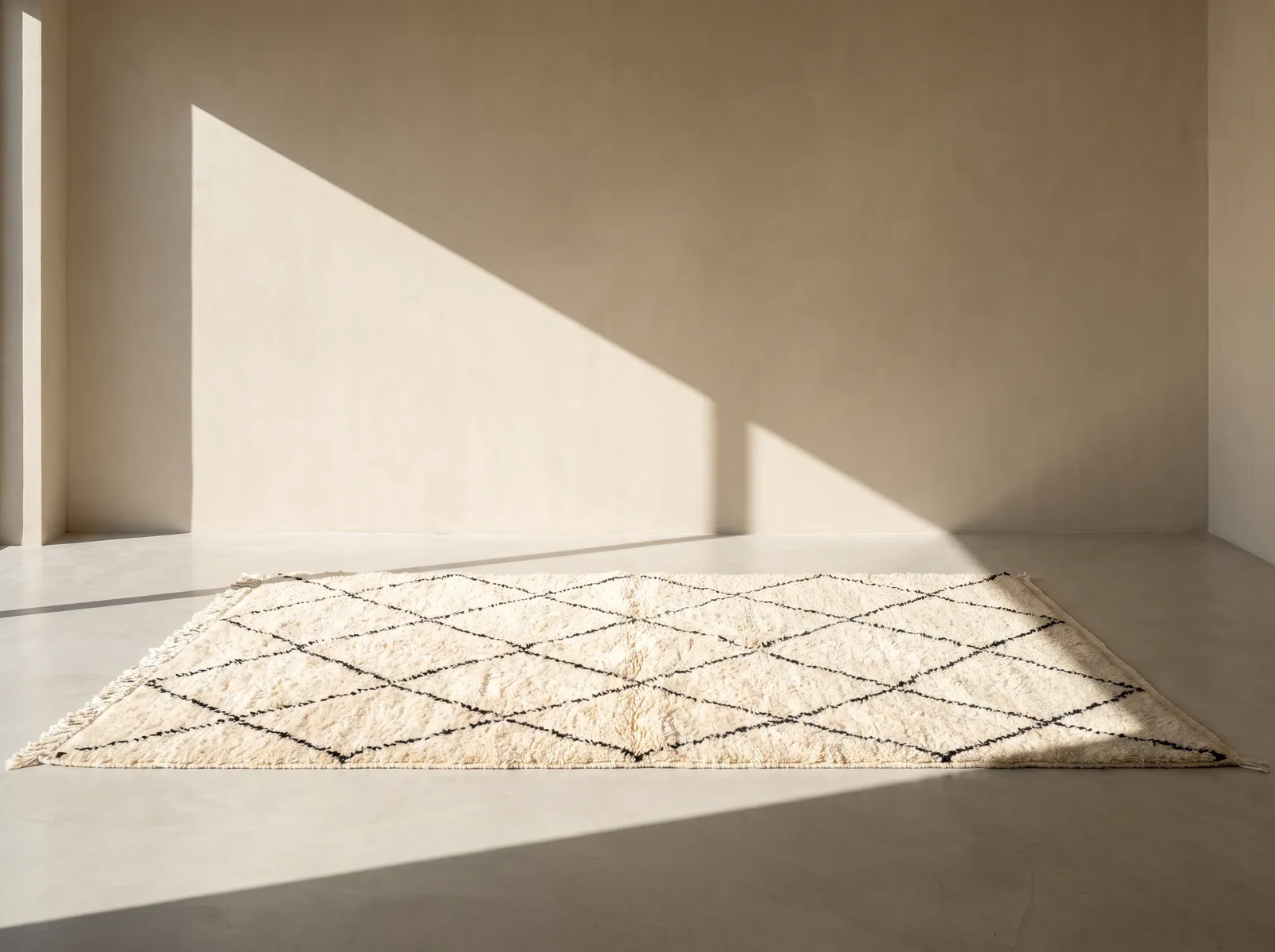 Atlas Mountains, Morocco (Amazigh/Berber tribes)Moroccan Berber Rug
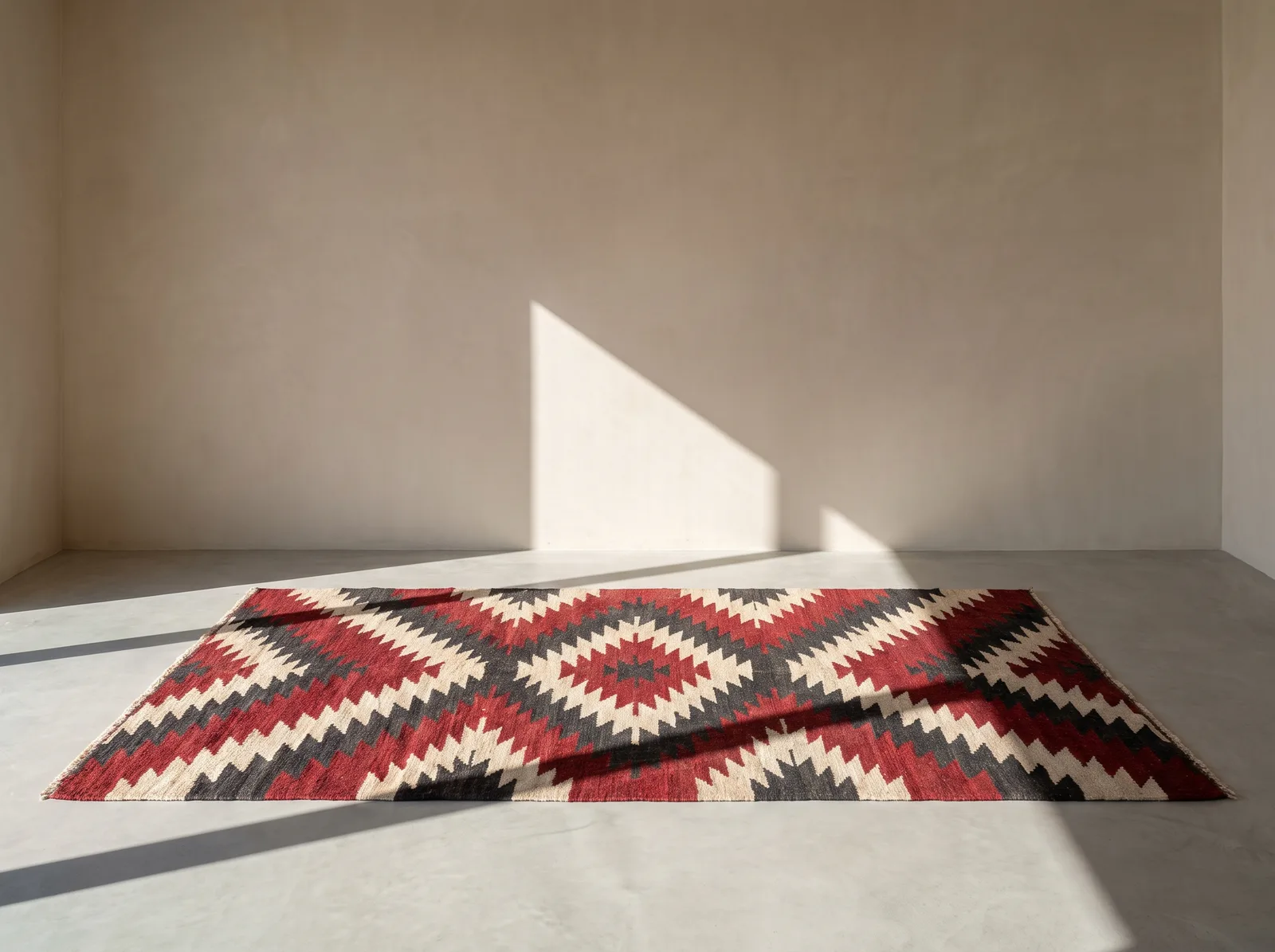 Diné (Navajo) Nation, American SouthwestNavajo Rug
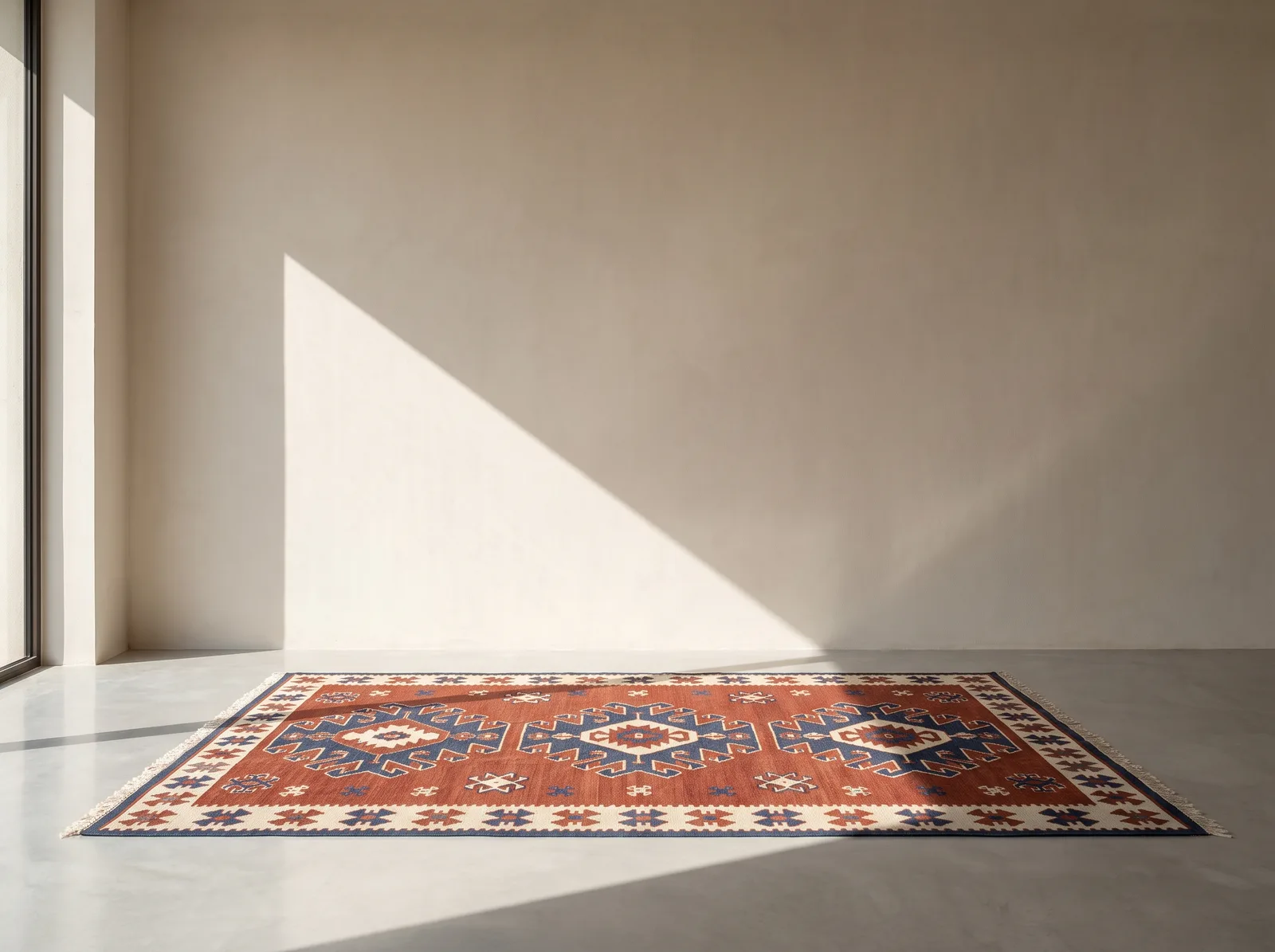 Anatolia, the Caucasus, and PersiaKilim Rug
 Anatolia, TurkeyTurkish Rug