Back to overview
PK22 Lounge Chair
1956 (Danish Modern)
PK22 Lounge Chair

Poul KjærholmFritz Hansen, Denmark

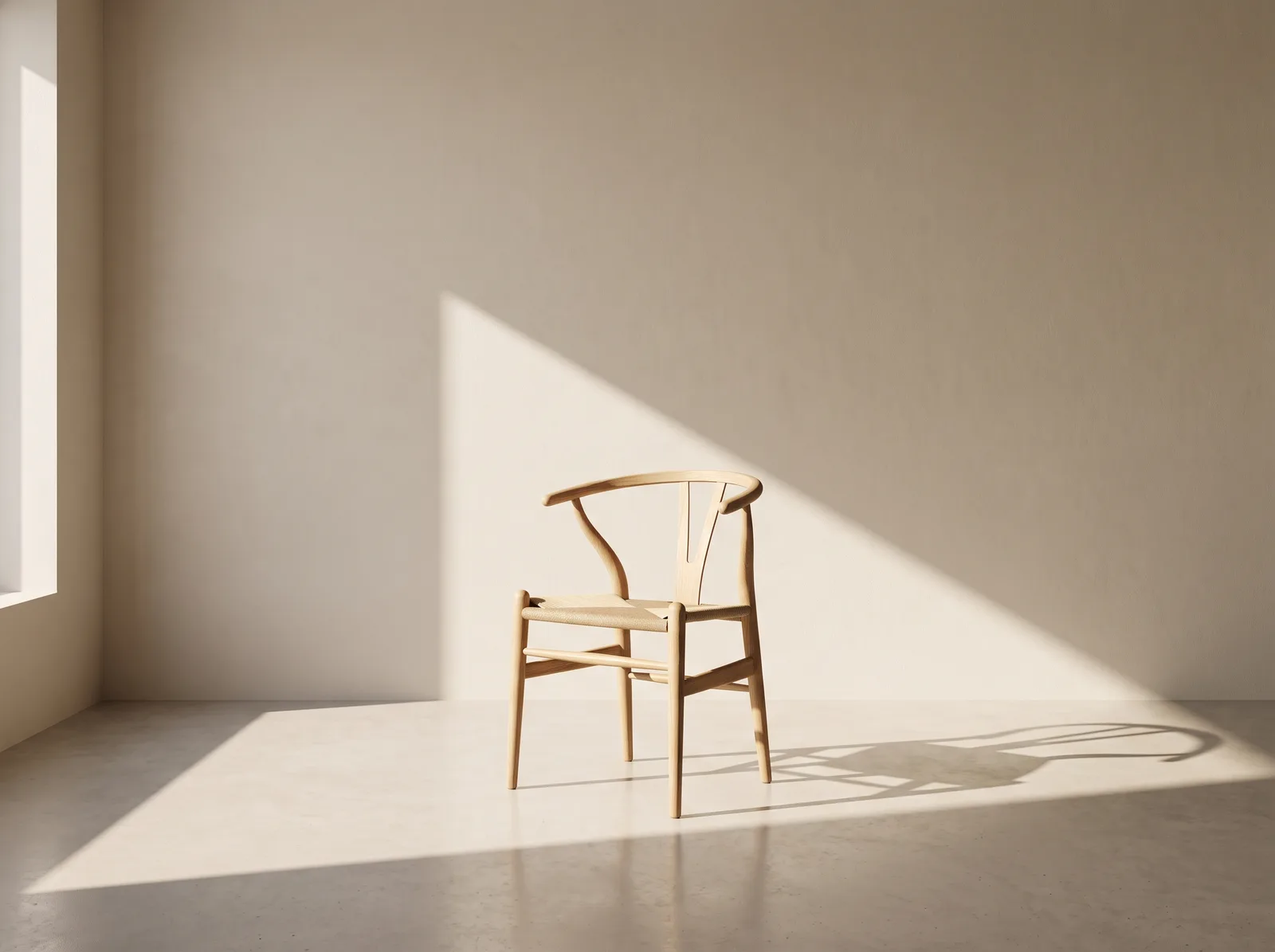
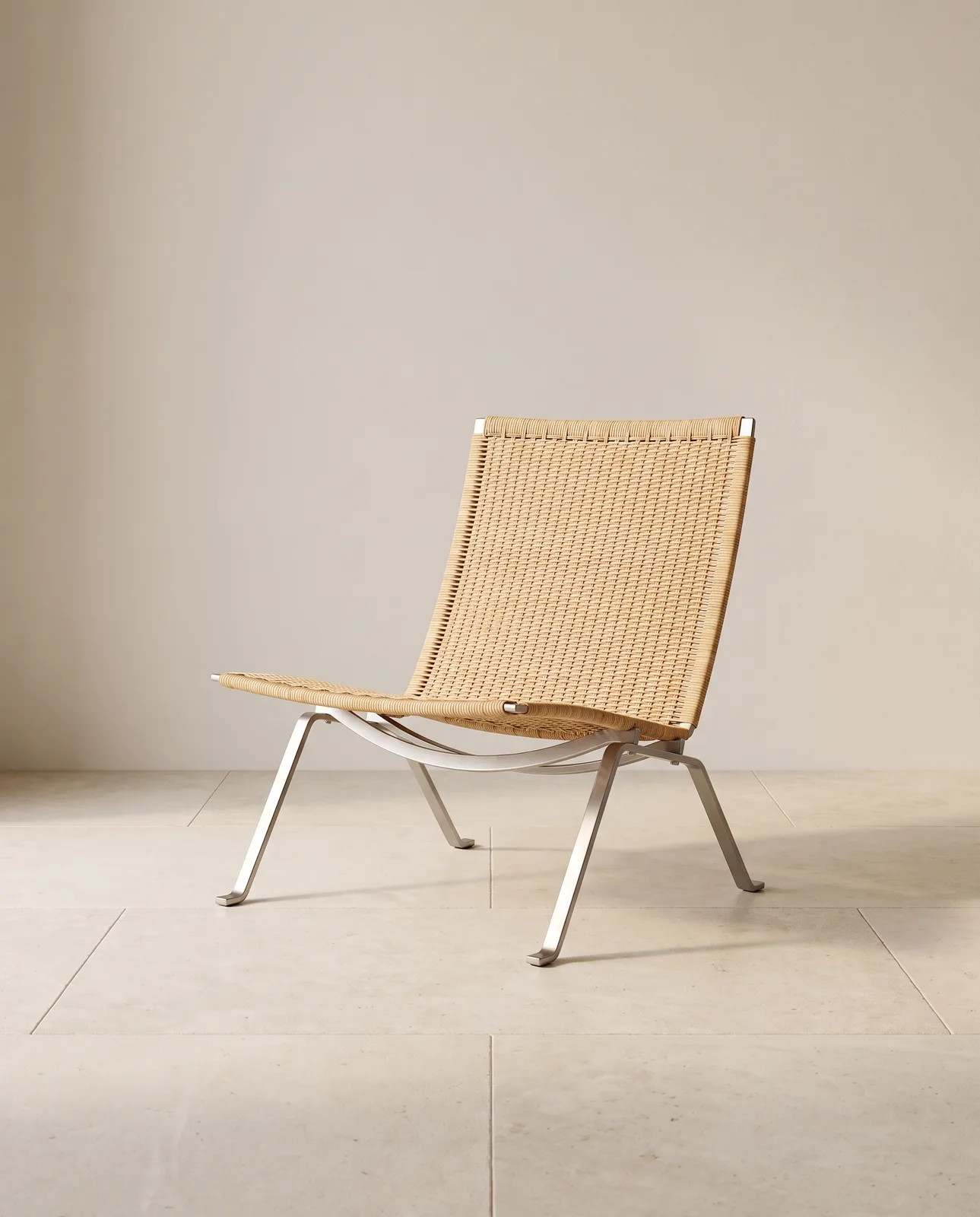
A flat frame of matte steel carries a floating woven-cane seat: Poul Kjærholm's 1956 PK22 deliberately broke with Danish furniture-making's warm wood tradition, favoring industrial materials in their purest form instead.

The outsider of Danish Modern

When Poul Kjærholm designed the PK22 in 1956, Denmark's design scene was dominated by figures like Hans Wegner and Finn Juhl, whose furniture celebrated warm, visibly hand-worked solid wood above all. Kjærholm, originally trained as a cabinetmaker, took a different path: he was drawn to industrial materials — steel, glass, marble — and to the precision of engineering more than to the visible handwriting of joinery. The PK22, first produced by E. Kold Christensen and today by Fritz Hansen, became a deliberate counterpoint within his own design nation.

A flat steel band as the entire construction

The PK22's construction is reduced to the essentials: a single, curved flat-steel profile forms both the four legs and the armrests in one continuous piece, complemented by a second element for the seat and back. Resting loosely on top is a hand-woven cane seat, or alternatively leather, which appears to float above the steel frame. That construction demanded unusually high manufacturing precision for the 1950s, since the flat-steel profile had to be bent exactly right to guarantee stability without any additional bracing.

Industrial elegance instead of Scandinavian warmth

Stylistically, the PK22 barely fits the common idea of "Scandinavian Design" with warm teak and organic forms — it belongs instead to a parallel current one might call "industrial elegance": reduced, almost mathematical forms in cool material, combined with a single natural element, the cane, that gives the whole piece its warmth back. That pairing of industry and nature anticipates ideas that would later play a role in Le Corbusier's furniture and in the Brutalism movement.

Why the low silhouette opens up the room

At a seat height of only about 33 centimeters, the PK22 is among the lowest-slung lounge chairs in design history — a deliberate architectural choice that turns the chair into something closer to a floor piece. Combined with the transparent steel frame, this creates the impression that the room stays visually open above the chair, producing a noticeably airier effect than a tall-backed, heavy chair would in smaller or low-ceilinged rooms.

The PK22 in a style mix

The PK22 works beautifully next to Brutalist materials like exposed concrete and natural stone, since both share the same appreciation for unclad, honest materiality. In a Modern Luxury room with marble and brass, its matte steel frame reads as understated elegance, and next to historicist furniture like a Louis XVI bergère it creates an appealing leap across time between courtly craftsmanship and industrial modernism. In a Japandi interior, too, the chair's low, calm silhouette and natural cane seat fit in surprisingly seamlessly.

Ateliology Style Verdict

The PK22 proves that Danish design doesn't have to mean warm wood. Poul Kjærholm's uncompromising reduction to steel, cane, and a single continuous line made it one of the most rigorous pieces of furniture of its time — and a style piece that holds cool precision and warmth in perfect balance.