Back to overview
Eames Lounge Chair
1956 (Mid-Century Modern)

Eames Lounge Chair

Charles & Ray EamesHerman Miller (USA) / Vitra (Europe)

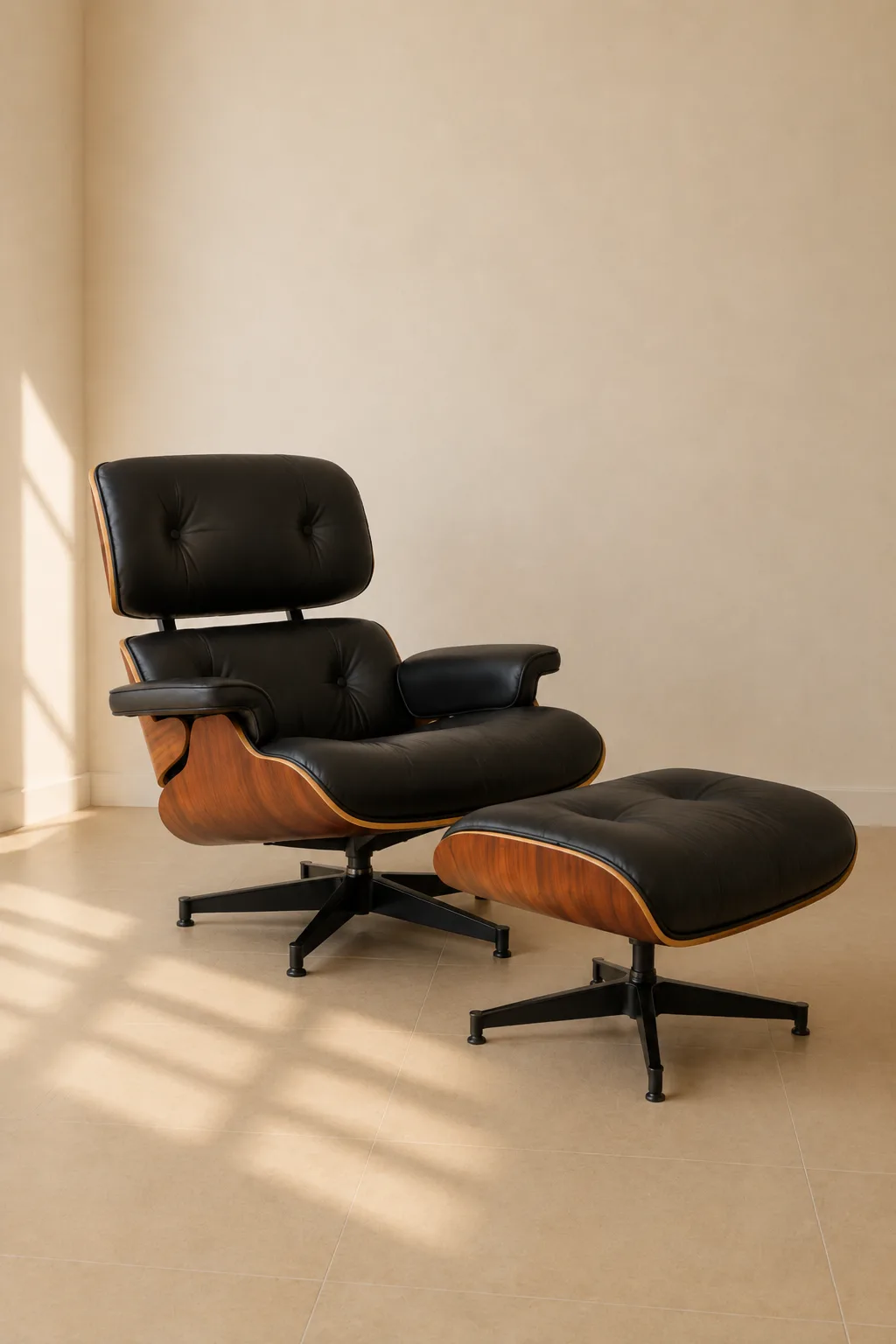
Molded plywood shells, thick black leather cushions, and a silhouette that reinvented the traditional club chair: the Eames Lounge Chair and Ottoman, introduced in 1956, became one of the defining objects of twentieth-century furniture design — and a rare case of a modernist icon that still feels genuinely luxurious.

More Than Just a Chair

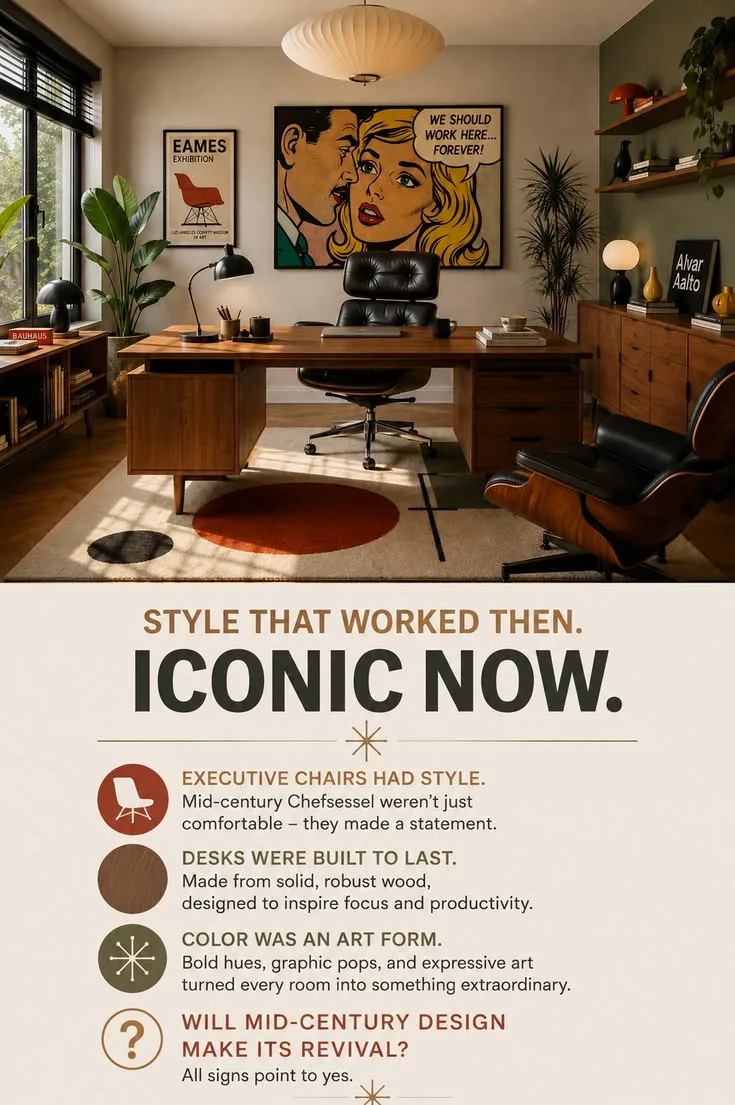
Few pieces of furniture have achieved the cultural status of the Eames Lounge Chair and Ottoman. Designed by Charles and Ray Eames and introduced in 1956, the chair has become one of the defining objects of twentieth-century furniture design. Its combination of molded wood, soft leather and an unusually relaxed silhouette made it immediately recognizable and helped establish a new idea of luxury: less formal, more comfortable and closely connected to modern living. Almost seventy years after its introduction, the Eames Lounge Chair still looks remarkably contemporary. It works in Mid-Century Modern interiors, but it can just as easily become the focal point of a Modern Organic living room, a restrained Brutalist apartment or an eclectic space filled with vintage objects. That versatility is one of the reasons the chair has moved far beyond its original era. It is not merely a piece of furniture. It has become a genuine style piece.

The Story Behind the Eames Lounge Chair

Charles and Ray Eames were among the most influential designers of the twentieth century. Their work was characterized by an interest in new manufacturing techniques, industrial production and the question of how good design could improve everyday life. During the 1940s and 1950s, the Eameses experimented extensively with molded plywood. Their research resulted in chairs such as the LCW and DCW, whose curved wooden shells demonstrated how plywood could be shaped into ergonomic forms. The Eames Lounge Chair represented a different direction. Instead of creating another lightweight and relatively simple chair, Charles and Ray Eames wanted to reinterpret the traditional upholstered club chair. The result was significantly more luxurious than much of their earlier work. The Eames Lounge Chair 670 and Ottoman 671 were introduced in 1956. Rather than copying the heavy appearance of a traditional leather armchair, the Eameses separated the chair into distinct components: three curved plywood shells form the headrest, back and seat, and thick leather cushions appear almost suspended inside these shells. The result feels both substantial and visually light. The chair was originally produced in the United States by Herman Miller, while Vitra later became the authorized manufacturer for Europe and several other markets.

A Modern Interpretation of the Club Chair

Understanding the Eames Lounge Chair becomes easier when it is compared with the traditional English club chair. A classic club chair usually consists of a large upholstered body with thick arms, substantial padding and relatively little visible structure — it communicates comfort through mass. The Eames Lounge Chair communicates comfort differently. Its construction remains visible: the wooden shells are exposed, the cushions remain visually separate, and metal connectors and the five-star base become part of the design. Instead of hiding its construction, the chair celebrates it. This approach is characteristic of modernist furniture design, where materials and structural elements are often allowed to express their actual function. At the same time, the Eames Lounge Chair never becomes cold or overly technical — the warmth of the wood and the softness of the leather balance the industrial components. That tension between technology and comfort is central to its appeal.

The Design Language

The chair can essentially be reduced to three dominant materials: wood, leather, metal. Yet the way these materials interact creates an extremely sophisticated composition. The molded plywood shells give the chair its sculptural character — seen from the side or rear, the curved wood becomes almost as important as the leather upholstery. The leather cushions introduce softness and visual weight. Finally, the metal base gives the chair a precise architectural foundation. There are almost no unnecessary decorative elements; instead, proportion, material and construction become the decoration. This is one of the major differences between the Eames Lounge Chair and more traditional luxury furniture. Luxury is not communicated through carving, ornament or gilding — it is communicated through material quality and engineering.

Why the Eames Lounge Chair Is a Mid-Century Modern Icon

The chair emerged during the period now generally associated with Mid-Century Modern design, particularly the years following the Second World War. Architecture and furniture were becoming increasingly open, functional and informal. Designers experimented with plywood, aluminum, fiberglass and plastics, while architects created homes with larger windows, open floor plans and stronger connections between interior and exterior spaces. The Eames Lounge Chair fits perfectly within this world. It represents several central characteristics of Mid-Century Modern design: organic forms, visible materials, functional construction, innovative manufacturing, reduced ornamentation, emphasis on comfort, and the integration of craftsmanship and industrial production. Yet the chair also differs from many Mid-Century pieces because it feels particularly luxurious. Where many modernist chairs attempted to reduce furniture to the minimum necessary structure, the Eames Lounge Chair embraces comfort and material richness. This contradiction helped make it distinctive.

Why It Is a Style Piece

A style piece is more than an attractive object — it is a piece of furniture capable of influencing the identity of an entire room. The Eames Lounge Chair does exactly that. Place it in an otherwise simple room and the interior immediately acquires a certain architectural character. The curved wooden shell introduces warmth, while the dark leather gives the chair visual presence. Very little additional decoration is required. This makes the chair particularly powerful in contemporary interiors, where fewer but more distinctive objects are often preferable to rooms filled with decorative furniture. Its silhouette is also immediately recognizable: the separated headrest, curved wooden shells, reclining position and five-star base create a form that remains visually distinctive even from a distance. Few chairs achieve that level of recognition.

The Eames Lounge Chair in Contemporary Interiors

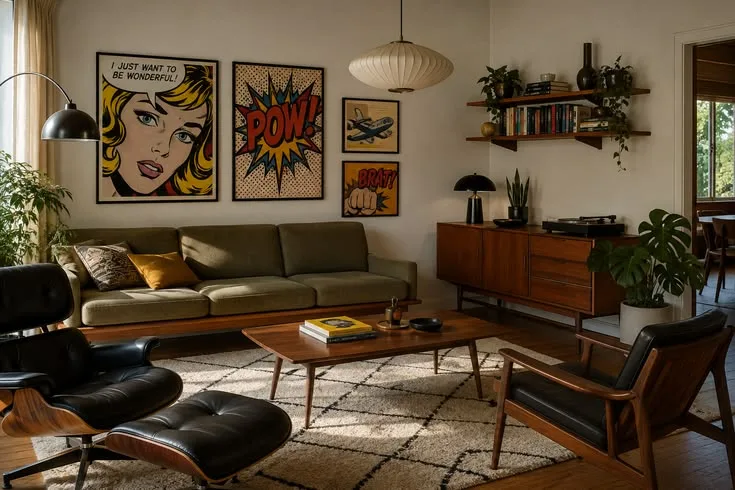
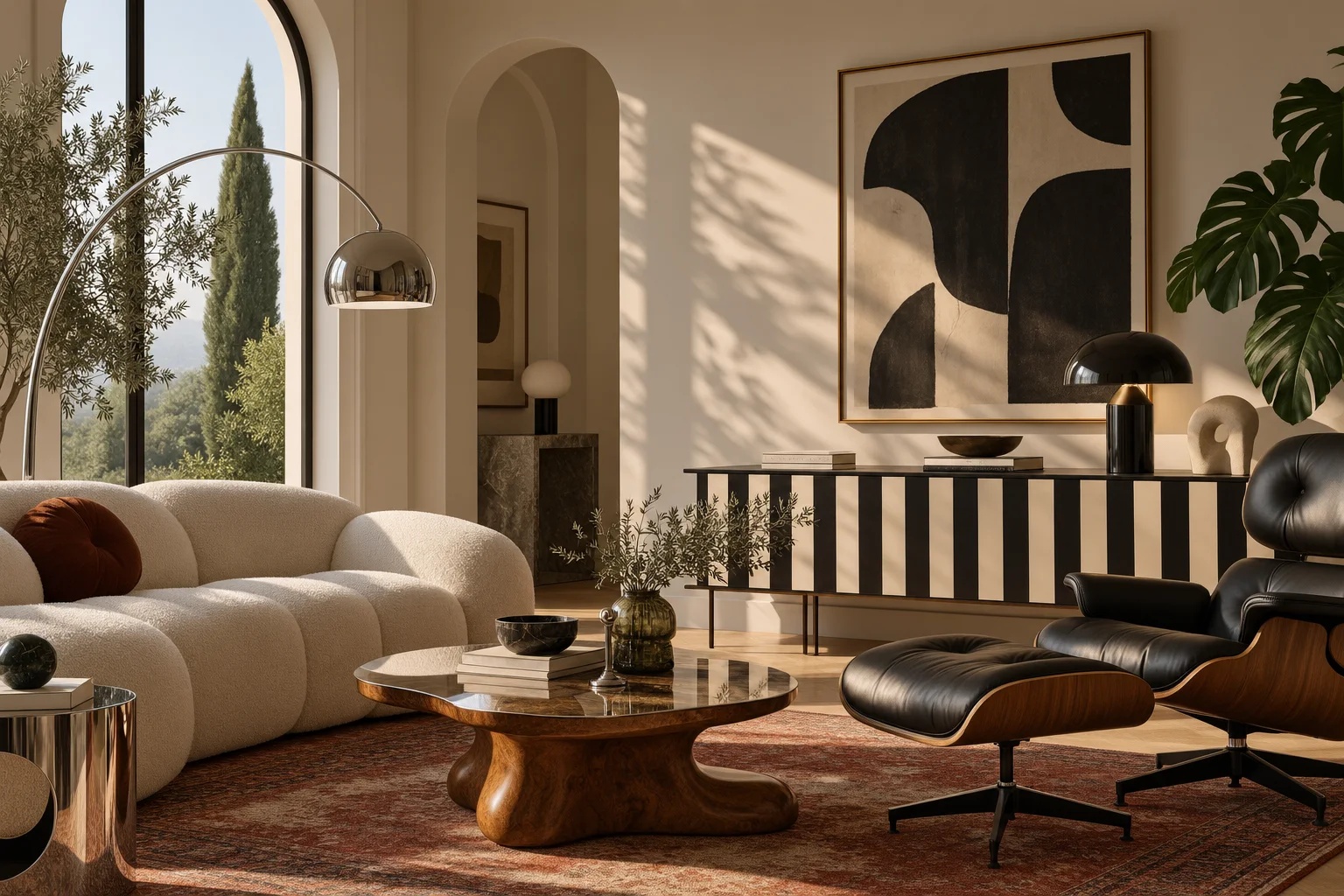
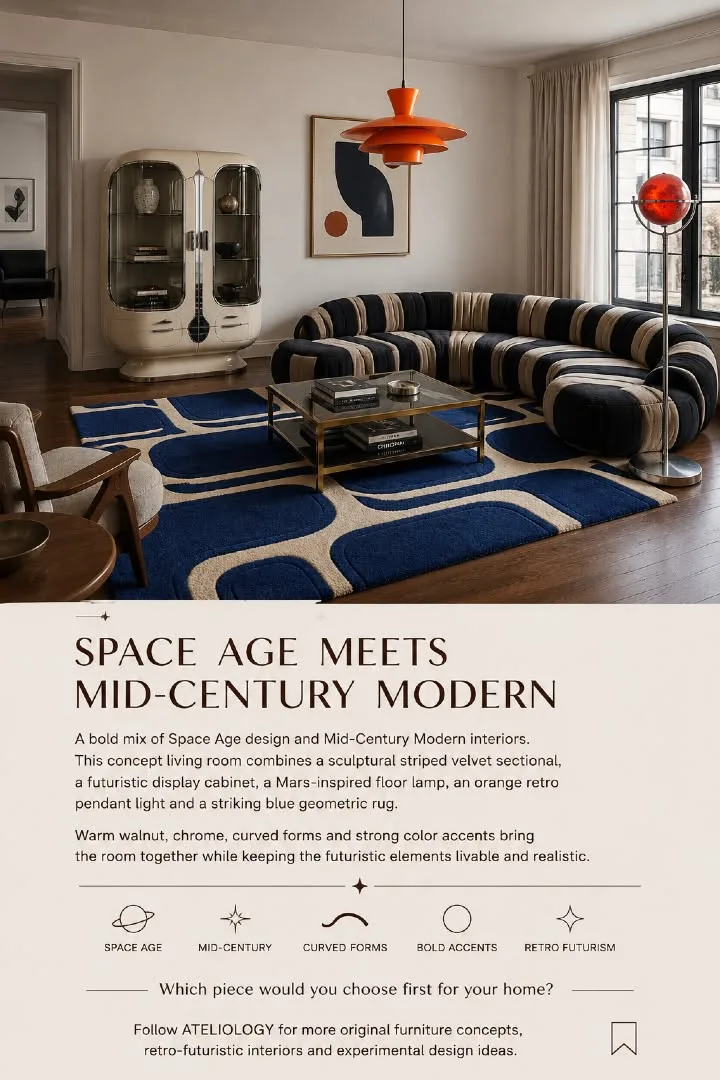
One of the greatest strengths of the Eames Lounge Chair is how easily it can move between different interior styles. In Mid-Century Modern rooms — its natural environment — it pairs with walnut furniture, warm neutrals, large rugs and restrained lighting, with vintage ceramics and sculptural lamps reinforcing the period without turning the room into a historical reconstruction. In Modern Organic spaces, the contrast can be particularly successful: placed against plaster walls, limestone or travertine floors, linen curtains and organic shapes, the leather and walnut introduce depth into otherwise soft beige interiors. In Brutalism, concrete, stone and exposed architectural surfaces create a strong background for the chair, where the warmth of the wood prevents the space from becoming overly cold. In Scandinavian interiors, although visually heavier than typical Scandinavian furniture, the chair can work extremely well when surrounded by light wood, white walls and minimal decoration, becoming the darker anchor within the room. And in eclectic and vintage interiors — perhaps one of the most interesting uses — the chair can coexist with Art Deco lighting, antique cabinets, Space Age objects or contemporary artwork; because it possesses such a strong identity of its own, it does not require every surrounding object to belong to the same period.

A Chair That Looks Good From Every Angle

Another reason the Eames Lounge Chair works so well in modern interiors is its three-dimensional quality. Many armchairs are primarily designed to be viewed from the front — the Eames Lounge Chair is different. Its rear wooden shells are an important part of the design, which means it can be positioned freely within a room rather than pushed against a wall. In an open-plan living area, the back of the chair can almost function like a piece of sculpture. This is particularly useful in contemporary architecture, where furniture often defines different zones within larger spaces.

Why the Design Still Feels Modern

Perhaps the greatest achievement of the Eames Lounge Chair is that it never became visually trapped in the 1950s. The chair contains almost none of the decorative elements that normally reveal the exact period in which a piece of furniture was produced. Instead, the design relies on proportion, material and construction — qualities that age slowly. Its appearance can therefore change depending on its surroundings: in a walnut-filled room it feels distinctly Mid-Century, against raw concrete it becomes almost Brutalist, in a beige limestone interior it can feel Modern Organic, and beside futuristic lighting it can even move toward Space Age design. That adaptability is extremely rare.

Ateliology Style Verdict

The Eames Lounge Chair demonstrates what makes a true furniture icon. It is historically important without needing to exist inside a museum-like interior. It is recognizable without relying on excessive decoration. And despite being strongly connected to Mid-Century Modern design, it continues to work with interiors that developed decades later. Its strongest characteristic is perhaps the balance it creates between opposites: industrial and handcrafted, modern and luxurious, sculptural and comfortable, wood and metal, structure and softness. That balance is what allows the Eames Lounge Chair to survive changing trends. Trends can make certain colors, materials or silhouettes popular for several years — genuine design icons work differently: they can disappear from the mainstream and return without losing their relevance. The Eames Lounge Chair belongs to that small group.