Back to overview
Diamond Chair
1952 (American Modern)
Diamond Chair

Harry BertoiaKnoll, USA

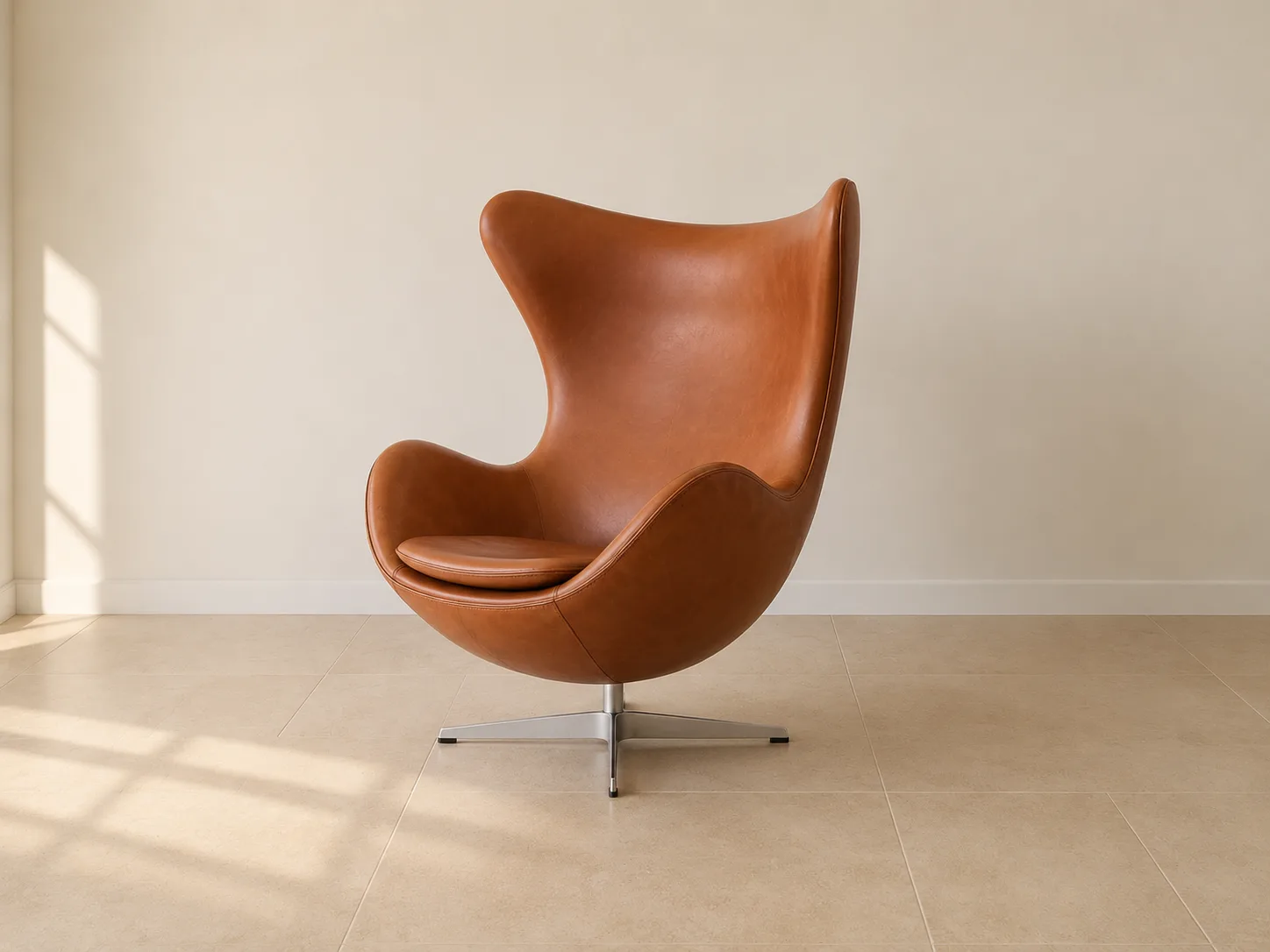
A chair made of bent steel wire that reads almost like sculpture and seems to float weightlessly through a room — the Diamond Chair grew out of its sculptor-designer's conviction that seating should be made mostly of air.

More Than a Chair — a Sculpture

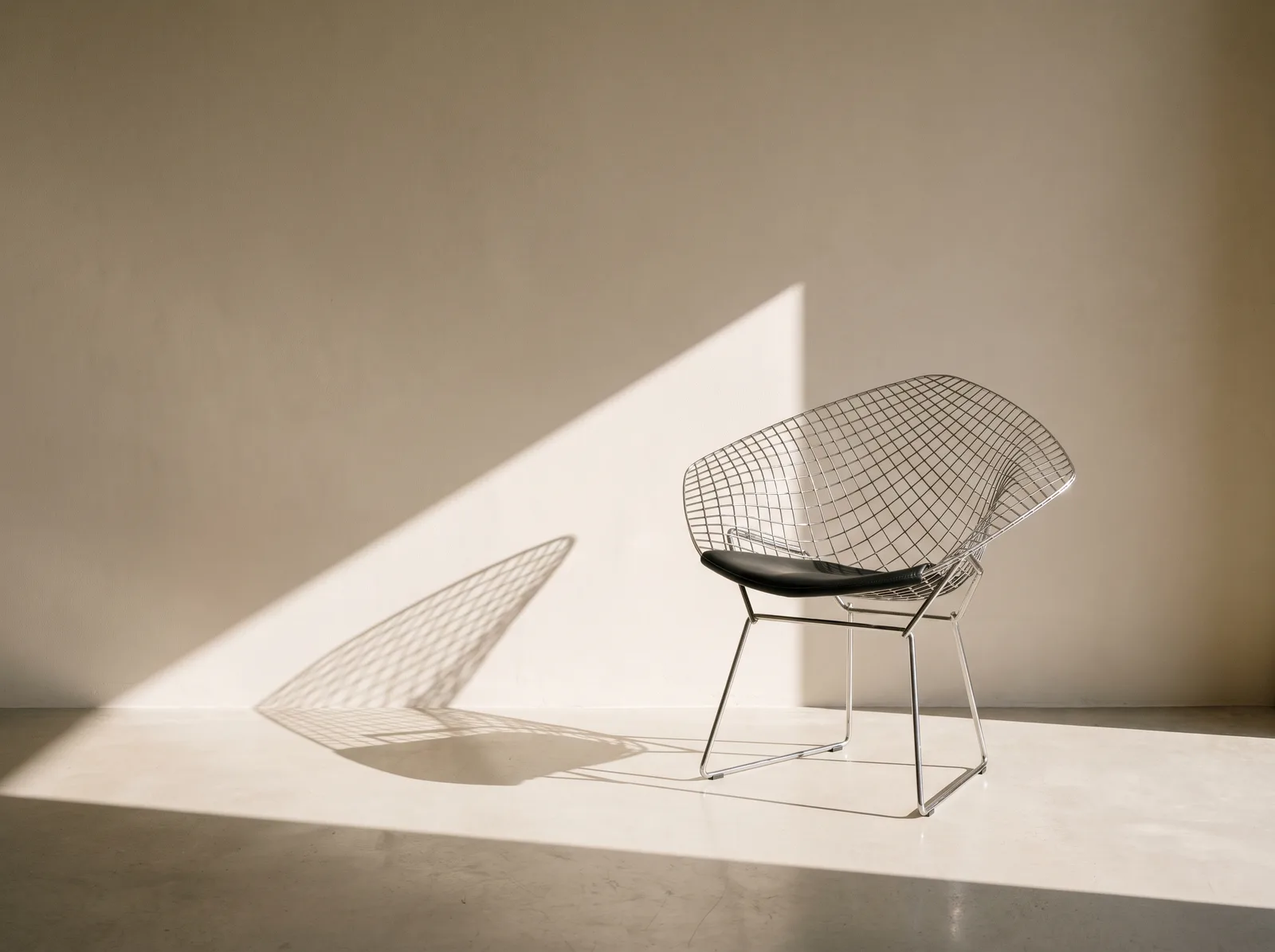
No other chair in furniture history is built so consistently out of negative space as the Diamond Chair. Its seat shell isn't formed from a solid surface but woven from a grid of bent steel wires, making the chair appear almost transparent, letting light and the space behind it pass through unobstructed. Its creator, Harry Bertoia, was primarily a sculptor — and that shows at first glance.

"If You Look at These Chairs, They're Mainly Made of Air"

Harry Bertoia, an Italian-American sculptor and sound artist, was invited by Knoll to experiment with metal and develop his own designs free from commercial pressure. Of this work, Bertoia later said the often-quoted line that his chairs were "mainly made of air, the same as sculpture is. Space passes through them." The Diamond Chair was the direct result of that sculptural approach applied to what was, at heart, a functional piece of furniture.

A Grid of Welded Steel Wire

Constructively, the Diamond Chair consists of a grid of welded steel wires converging into a diamond-shaped, slightly concave shell resting on a slim wire base. This construction was demanding to manufacture, since each individual wire had to be precisely bent and welded to create the seat shell's characteristic, organic-feeling curvature. The chair is optionally offered with a fitted seat cushion that doesn't obscure the silhouette.

American Modern and the Search for Lightness

The Diamond Chair emerged in the early 1950s, a period when American designers used new materials like steel wire and fiberglass to make furniture appear visually lighter and less space-consuming than the solid wood furniture of earlier decades. Bertoia's approach went further than most of his contemporaries by making the seating surface itself a transparent, airy element, rather than simply slimming it down.

From Commercial Success to Financial Independence

The Diamond Chair became one of the biggest commercial successes in Knoll's history, giving Bertoia the financial independence to devote himself almost exclusively to sculpture and sound art from then on. It's now part of the permanent collections of numerous design museums worldwide and stands as one of the rare examples of a single furniture design financially enabling an entire artistic career.

A Statement for Mid-Century and Modern Organic

The Diamond Chair works in Mid-Century interiors as a sculptural counterpoint to warm walnut wood, as well as in Modern Organic rooms, whose rounded form language echoes the organic curvature of the wire shell. Since the chair barely blocks any sightlines, it's especially suited to rooms where visual lightness is called for.

The Diamond Chair in Today's Interiors

The Diamond Chair often works best in a reading corner by a window, where light passes through the wire mesh and underscores the chair's sculptural character. Since the chair barely takes up visual space, it also works well in smaller apartments, where a bulkier armchair would feel too dominant.

Ateliology Style Verdict

The Diamond Chair proves that a piece of seating furniture can be both functional and pure sculpture at once. Born from a sculptor's conviction that space itself is a design material, the chair hasn't lost any of its lightness more than 70 years later. That is exactly what makes the Diamond Chair a genuine style piece.