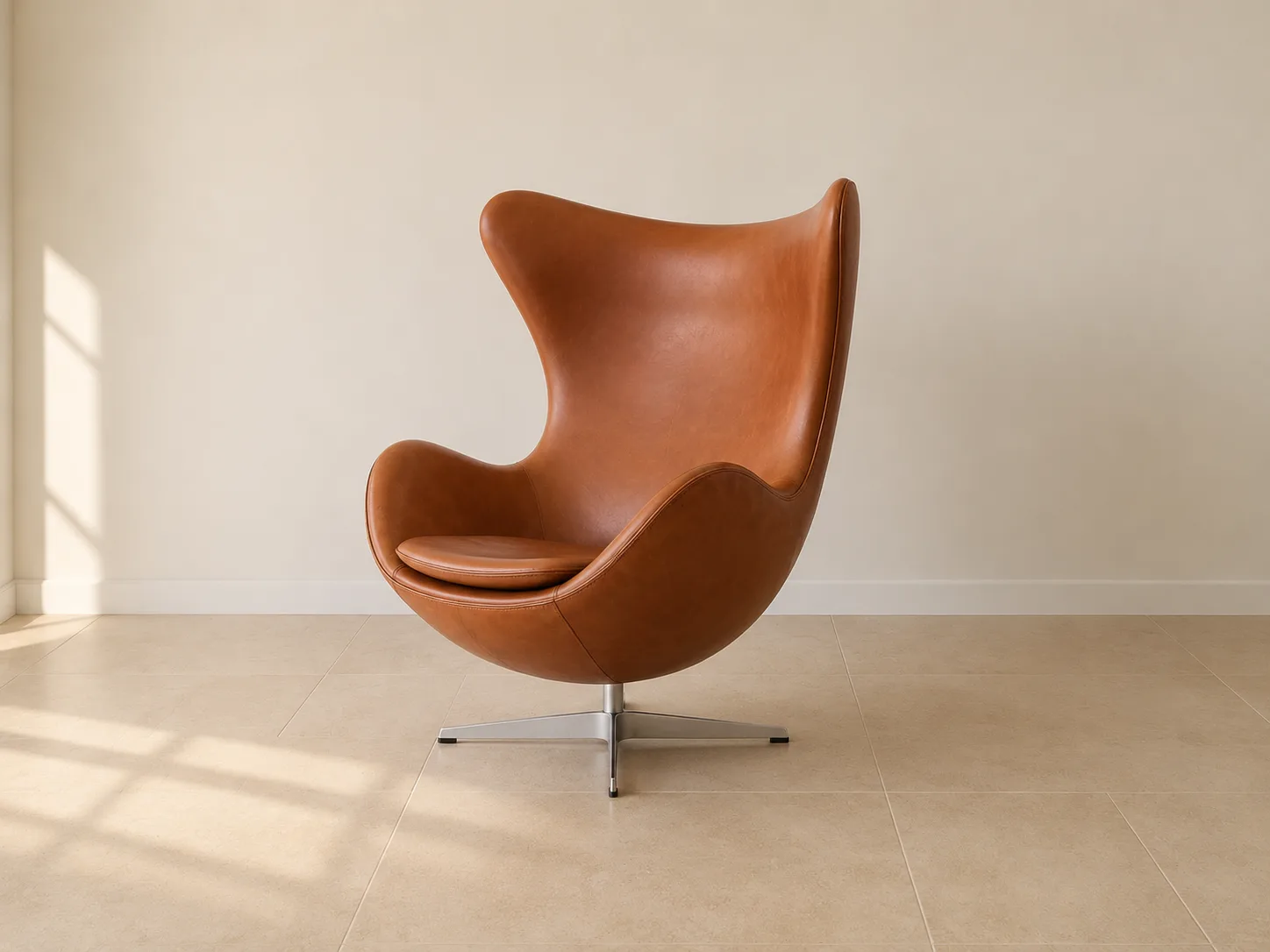
Wassily Chair
Marcel Breuer — Knoll, USA (licensed production)
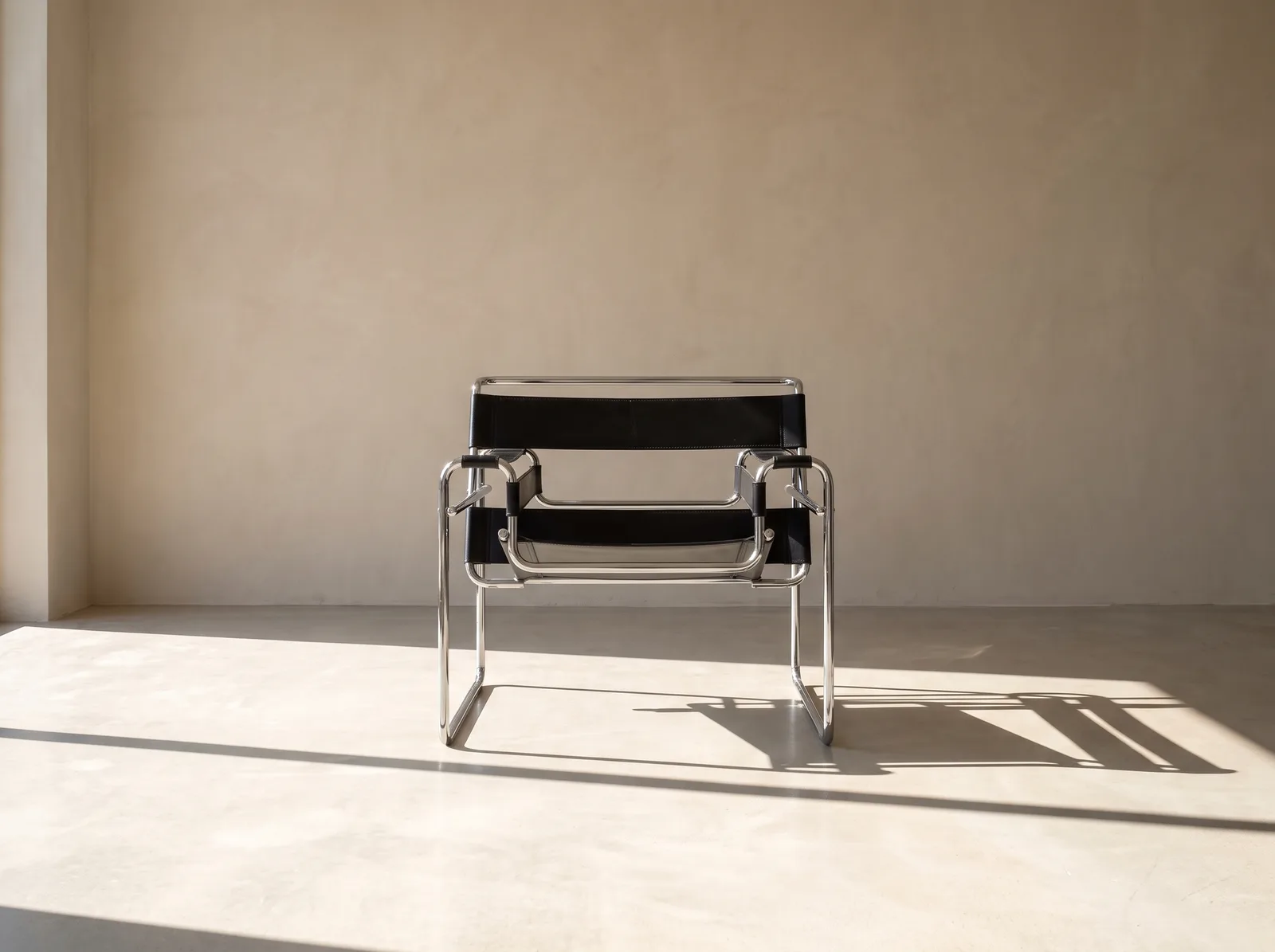
Inspired by bicycle handlebars, designed at the Bauhaus in Weimar: in 1925, the Wassily Chair was the first piece of seating furniture ever made from bent tubular steel — laying the groundwork for the entire modern furniture industry.
More Than a Chair — a Technological Break
The Wassily Chair looks familiar today, but in 1925 it was a shock. A piece of seating furniture with no wood at all, no upholstered frame, built from glossy, bent tubular steel with taut fabric or leather panels forming the seat, back, and arms — nothing like it existed at the time. Marcel Breuer, then just 23 years old and head of the carpentry workshop at the Bauhaus in Weimar, didn't just design a new piece of furniture with this chair — he redefined how a chair could be built.
Inspired by Bicycle Handlebars
According to the well-known story, Breuer got the idea while looking at his new bicycle — an Adler model with bent tubular steel handlebars — and wondering whether the same bending technique could be applied to furniture. Tubular steel was already established in the bicycle and automobile industries at the time but had never been used for seating. Breuer worked with the Berlin company Junkers to bend the tube into the necessary curves, experimenting across several prototypes until the characteristic, interlocking form that still defines the chair today emerged.
Why "Wassily"?
The design was originally simply called "Model B3." It only received the name "Wassily" decades later, when Knoll reissued it in the 1960s — named after Bauhaus master and painter Wassily Kandinsky, who had ordered a prototype for his own Bauhaus faculty house in Dessau and admired the design. The name stuck, even though Breuer hadn't actually designed the chair for Kandinsky — an example of how design history sometimes gets rewritten after the fact.
Bauhaus Principles Cast in Steel
The Wassily Chair is a textbook example of the central Bauhaus idea that form should emerge from function and material rather than applied decoration. Every visible element — frame, tensioned panels, joints — serves a structural purpose without being disguised or concealed. That uncompromising honesty of construction turned the chair into a manifesto for modernism, and influenced generations of later furniture designers who experimented with metal tubing and industrial materials for domestic use.
From Prototype to Museum Piece
After the Bauhaus closed and Breuer emigrated to the United States, the chair largely fell into obscurity for decades. It wasn't until 1962 that Gavina (later acquired by Knoll) brought the Wassily Chair back to market, this time as an officially licensed classic. Since then, it has been part of the permanent collection at the Museum of Modern Art in New York and numerous other design museums worldwide, regarded as one of the earliest and most influential examples of 20th-century industrial furniture design.
A Statement for Mid-Century and Industrial
The Wassily Chair works especially well in rooms that celebrate its industrial origins rather than hide them — in Mid-Century interiors alongside walnut and teak furniture, where the cool steel frame creates a deliberate material contrast, or in Industrial rooms with exposed concrete and metal accents, where it fits seamlessly in. Its black leather and slim chrome frame read equally convincingly in both contexts — restrained enough to never dominate, distinctive enough to be recognized instantly.
The Wassily Chair in Today's Interiors
As a standalone piece in a reading corner or as an accent chair beside a sofa, the Wassily Chair shows its full effect, since it gets enough visual room to let its sculptural construction stand out. In larger, open living spaces, it's often placed deliberately in pairs to create a symmetrical seating arrangement without relying on conventional upholstered furniture. Its low visual mass also makes it a good choice for smaller rooms, where a bulkier armchair would feel too heavy.
Ateliology Style Verdict
The Wassily Chair was the first proof that tubular steel could shape furniture — an idea born from a bicycle handlebar that changed the entire modern furniture industry. A hundred years after its creation, it still feels remarkably contemporary, precisely because it never tried to be anything other than what it is: honest construction, executed without compromise. That is exactly what makes the Wassily Chair a genuine style piece.