Back to overview
Warrings Chippendale Sideboard
c. 1960s/70s (German style-furniture tradition)

Warrings Chippendale Sideboard

Thomas ChippendaleWarrings, Germany (founded 1909)

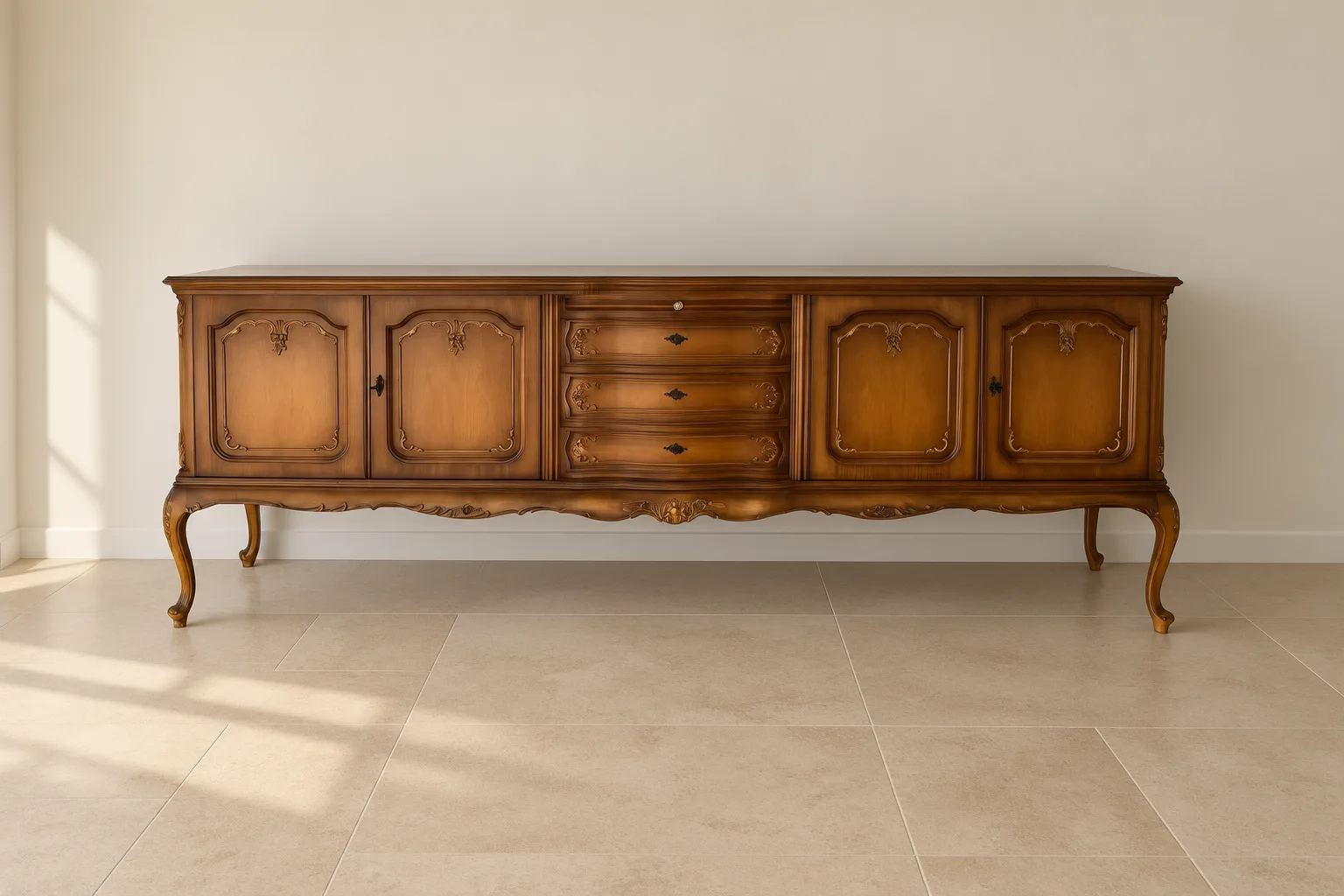
Sweeping cabriole legs, ornamented door fronts, and more than 250 years of design history in one object: the Warrings Chippendale sideboard fuses 18th-century English Rococo with Germany's post-war style-furniture tradition.

The origin of the Chippendale style

The style takes its name from the English furniture designer and cabinetmaker Thomas Chippendale (1718–1779). Around 1748 he moved to London and established his own furniture workshop. His outsized influence, however, came not only from his furniture but from a remarkably modern idea for the time: he published his designs in a furniture catalog. "The Gentleman and Cabinet-Maker's Director" first appeared in 1754, with roughly 160 plates of furniture designs covering nearly every room of an upscale household — an extraordinary form of marketing for an 18th-century furniture maker. The book carried Chippendale's designs far beyond his own workshop and turned his name into a style category. "Chippendale" today doesn't describe furniture he personally made, but an entire visual language shaped by his designs and copied and reinterpreted across generations since.

Chippendale is really a style mix

Strictly speaking, there is no single Chippendale style. Chippendale combined several currents fashionable at the time: French Rococo, elements of Gothic and the Gothic Revival, and European interpretations of Asian design now grouped under the term Chinoiserie. The Metropolitan Museum describes Chippendale's significance less as the invention of an entirely new style than as a skillful synthesis and systemization of several contemporary design ideas. Rococo contributed curved lines, floral ornament, and a playful lightness. Gothic influences showed up in pointed-arch forms and architectural detailing. Chinoiserie brought lattice structures, exotic-looking ornament, and Asian-inspired forms into European furniture design — the Victoria and Albert Museum describes exactly this blend of Rococo, Chinese, and Gothic elements as characteristic of Chippendale's take on English Rococo. That stylistic openness is one reason Chippendale still works so well with modern interiors today: even the original style was never a pure design language, but a fusion.

The era: Georgian England and Rococo

Historically, Chippendale belongs mainly to the middle and second half of the 18th century. In England, that period falls within the Georgian era, specifically the reigns of George II and George III. Internationally, the design is mostly classified as Rococo — in North America, the Metropolitan Museum refers to roughly 1755 to 1790 as a Chippendale or Rococo period. Unlike the monumental Baroque of the preceding century, Rococo became lighter, more playful, and more decorative: symmetry loosened somewhat, plant forms and curved lines gained importance, and furniture increasingly developed into design objects in their own right. Traces of exactly that show up in the Warrings sideboard as well.

The characteristic features of the Warrings sideboard

The most striking feature is the curved cabriole legs — one of the best-known elements of 18th-century furniture. Rather than running straight down, the leg traces an elegant S-curve, which makes the large, wide sideboard feel lighter than its dimensions would suggest. Then there's the curved lower frieze: instead of a simple horizontal line, the body of the piece runs in a wave shape, further emphasized by ornamental carving. The doors show profiled frames and decorative elements, with several drawers in the center giving the front an almost architectural structure. At the same time, strong symmetry keeps the piece from feeling chaotic despite its many ornaments — which is exactly what defines high-quality historicist furniture: decoration and order existing at once.

From England to Germany: the story of Warrings

The sideboard's second story begins much later. The company Warrings was founded in 1909 and grew over the course of the 20th century into a significant German manufacturer of high-quality style furniture. After the Second World War, the company employed more than 300 people at times and became known especially for historically inspired furniture lines — including Baroque, Rococo, and Chippendale-inspired forms. Its craftsmanship standards were notable: as late as the early 2000s, the German newspaper "Welt" reported on the company's production — furniture was hand-glazed and hand-lacquered, surfaces were built up over many work steps, wood carvers produced the ornamental elements, and a large share of the pieces were custom orders. Production was linked, among other places, to the Tann site in the Rhön region; a present-day restoration workshop specializing in Warrings furniture describes that manufactory as one of the original production sites for Warrings style furniture. The sideboard therefore belongs to a furniture culture that played an important role especially in post-war Germany.

The piece's second era: post-war style furniture

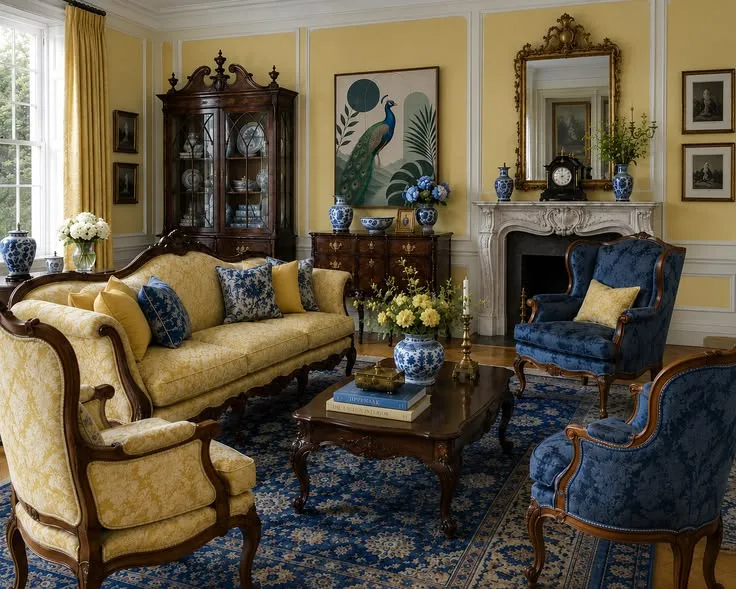
Historicist style furniture was especially popular in German living rooms during the 1950s, '60s, and '70s. While design history today is often associated with Bauhaus, Mid-Century Modern, or Space Age, a very different living trend existed alongside it: high-quality furniture deliberately meant to convey security, tradition, prosperity, and craftsmanship. Chippendale, Baroque, and Rococo furniture fit that social context very well. A Warrings sideboard was therefore never just a cabinet — it was often also a visible sign that its owner valued a representative home and long-lasting furnishings. Comparable Warrings Chippendale pieces are often attributed to the 1960s and '70s today; individual surviving pieces are documented, for example, with purchases made directly from Warrings in the 1970s. For the piece shown here, though, without a maker's label, model designation, or further documentation, I wouldn't claim a specific production year — stylistically, however, it fits well within this German style-furniture tradition of the mid-to-late 20th century.

Why it's becoming relevant again today

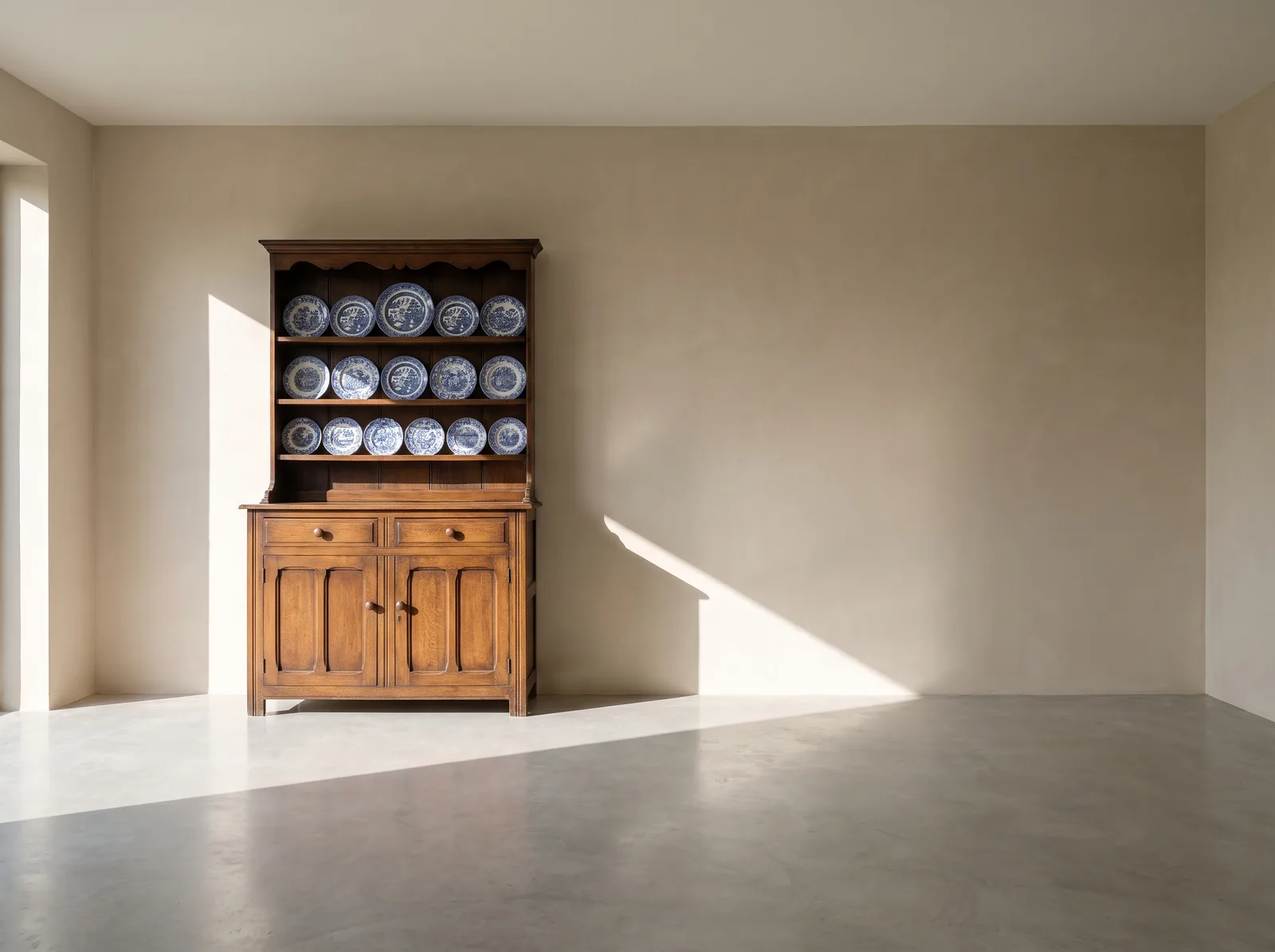
This is where the third phase in the life of such a piece begins. What decades ago might have been combined with an entire Chippendale wall unit, heavy curtains, and wall-to-wall carpet can be staged completely differently today. The sideboard is lifted out of its original context: instead of ten historicist pieces, suddenly only this one stands in the room — and its effect changes entirely as a result. Against a calm cream, sand, or greige wall, the elaborate silhouette reads almost like a sculpture; a modern light fixture or an abstract artwork above it heightens the contrast further. The piece shifts from being part of a historical furniture set to being a statement piece.

Especially interesting in a style mix

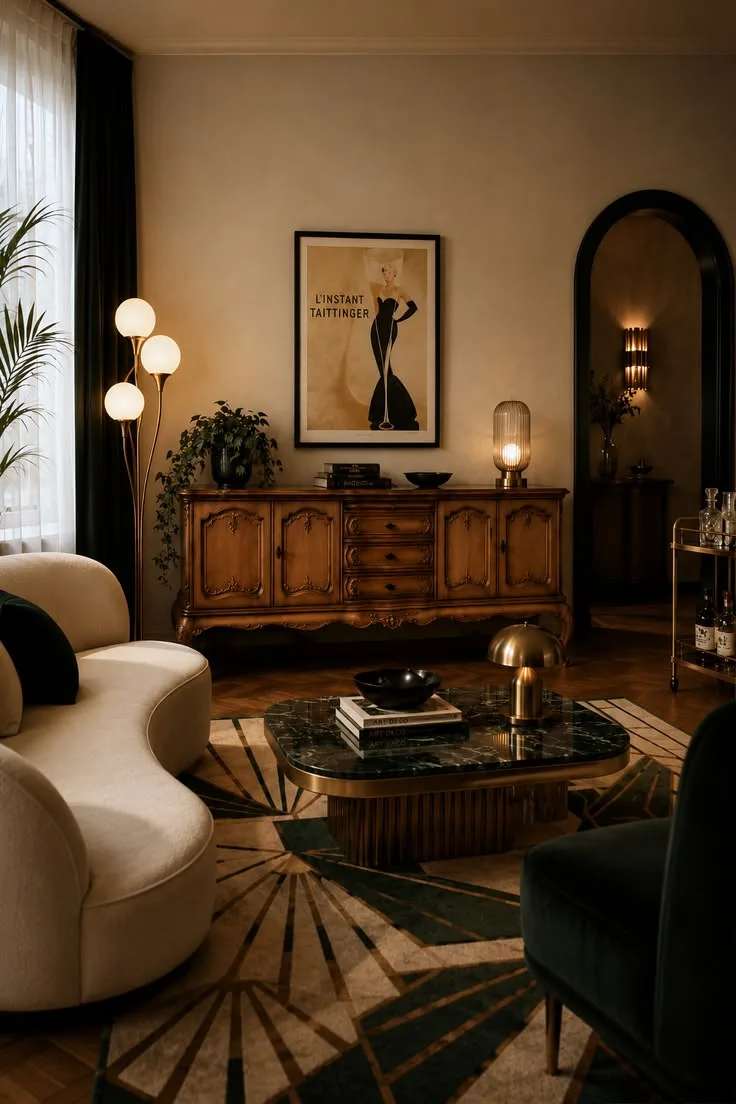
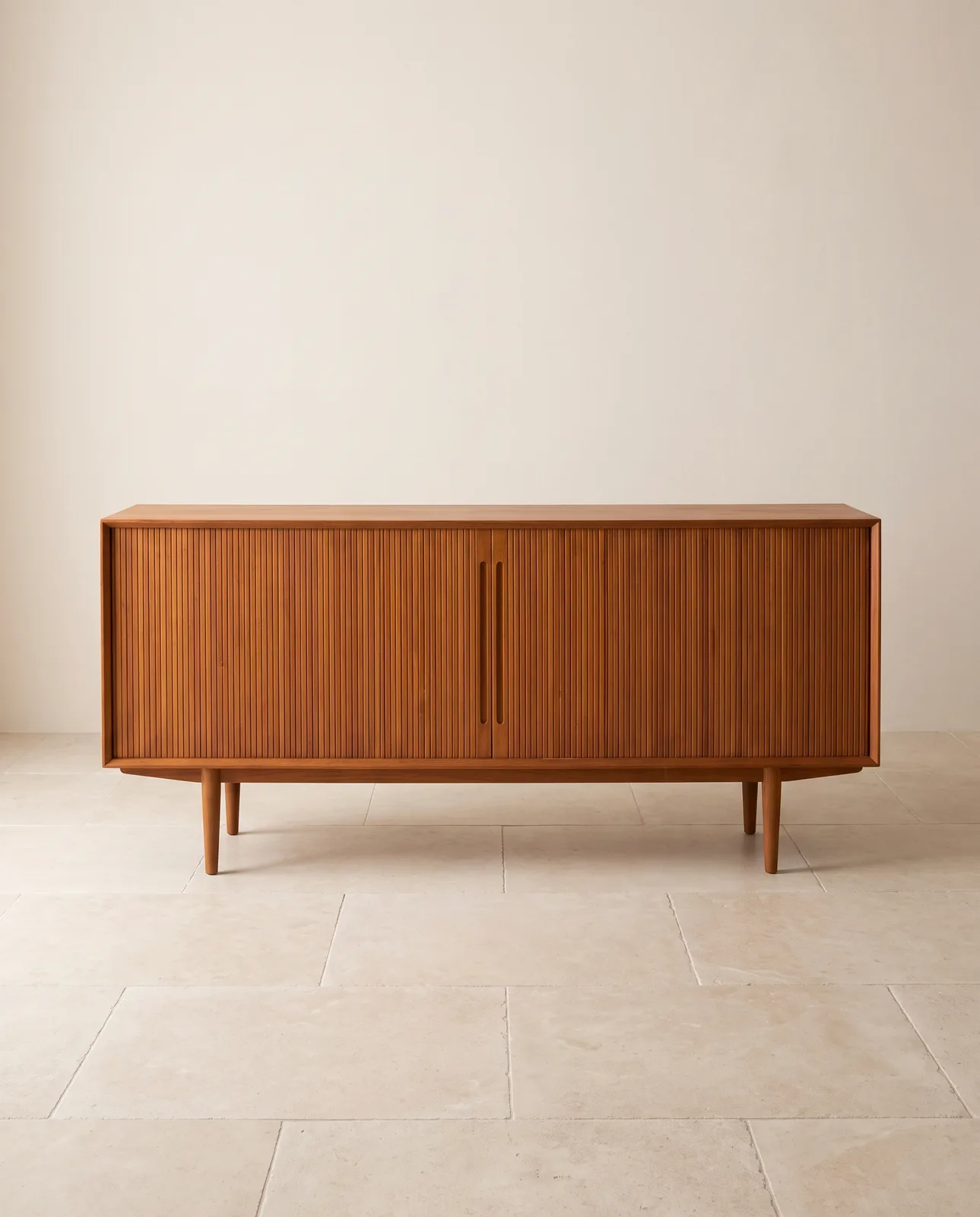
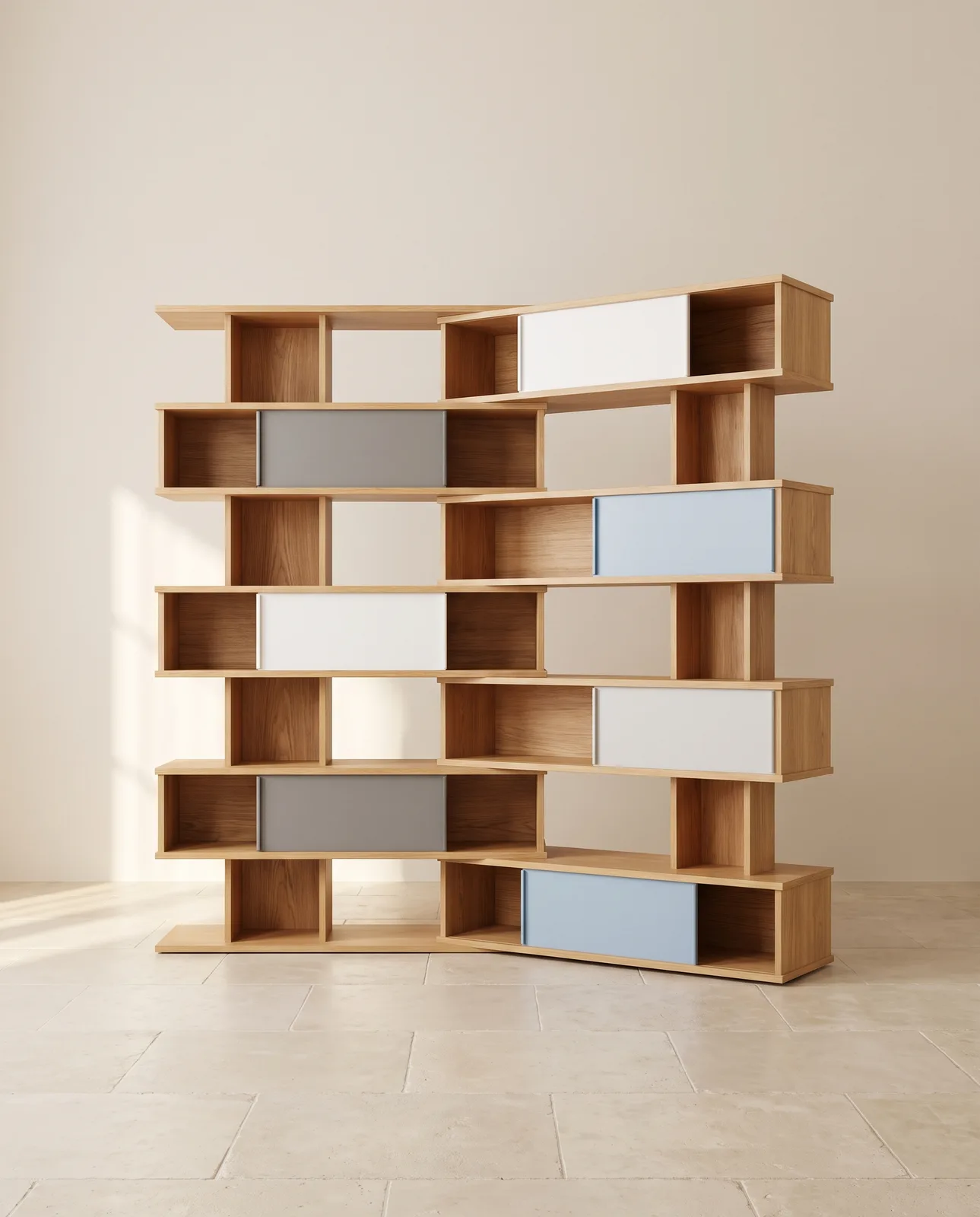
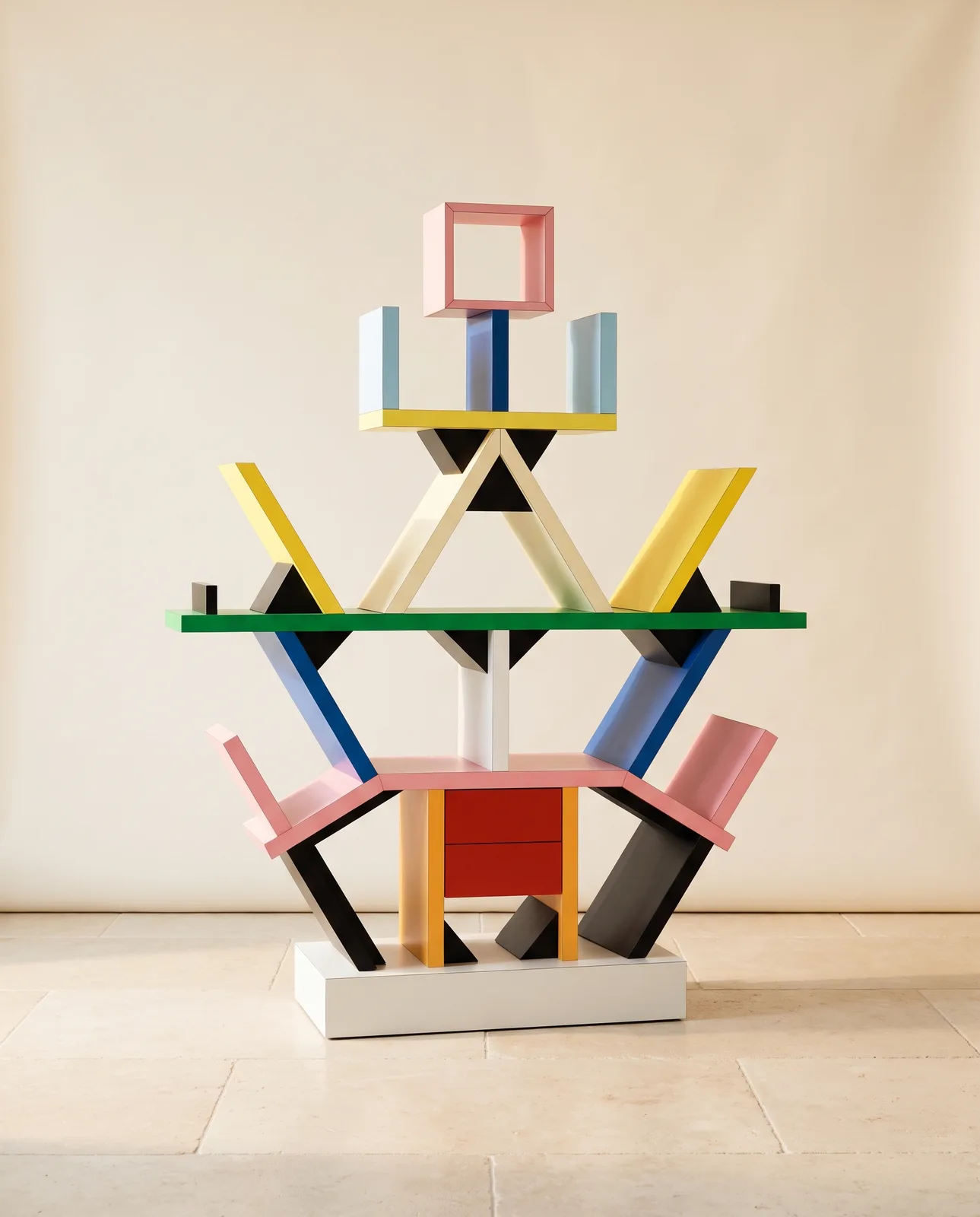
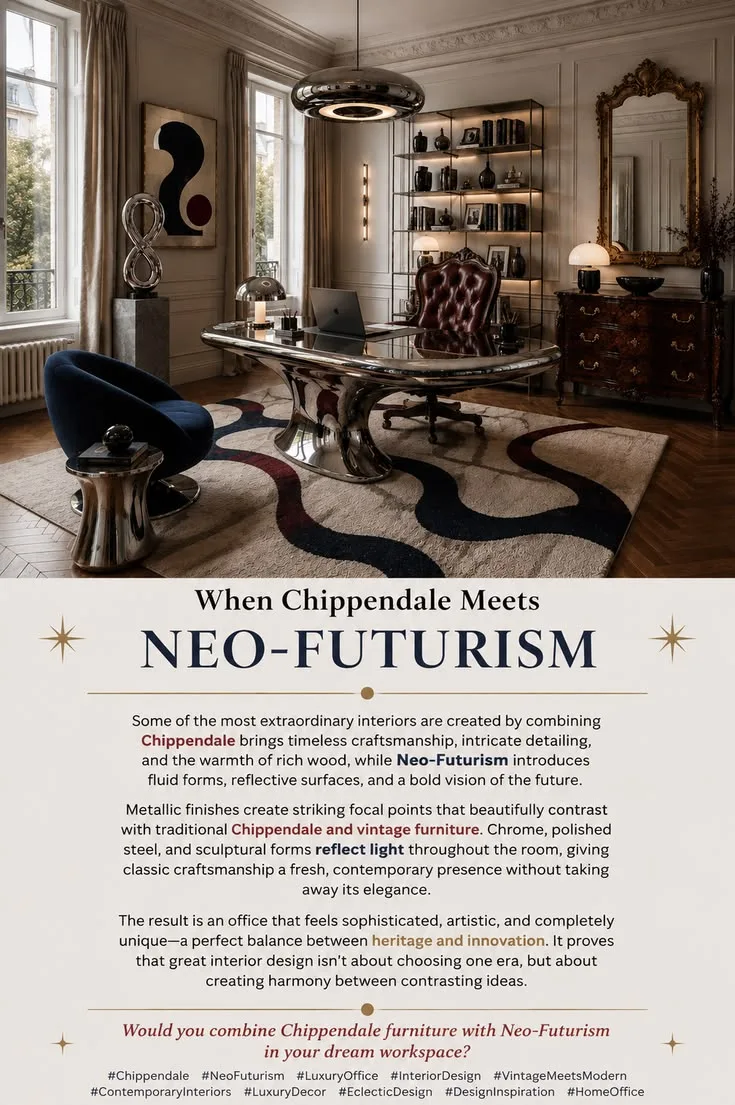
That's exactly what makes the sideboard so well suited to interiors that mix different eras. Paired with Modern Organic, it creates a very harmonious contrast: limewash plaster, linen, natural stone, and calm colors reduce the surrounding space, while the dark wood adds warmth. Paired with Mid-Century Modern, two different interpretations of high-quality furniture-making meet. A Space Age × Chippendale interior is even more compelling: a futuristic plastic chair or a chrome lamp next to an ornamental wood sideboard creates real temporal tension. Brutalism, too, works surprisingly well — concrete, raw materials, and geometric forms form a counterpoint to the delicate carving and curved legs. It's precisely these combinations that keep the piece from reading as old-fashioned.

Why this sideboard is a genuine style piece

The Warrings Chippendale sideboard has something many modern pieces deliberately lack: a strong design identity. You recognize its silhouette instantly. The cabriole legs, the carving, the profiled front, and the warm wood speak simultaneously of 18th-century English Rococo and 20th-century German furniture culture — and that's exactly where the piece gets its depth. It is neither an original Georgian piece nor simply a vintage sideboard, but a reinterpretation of a historical design language that has since become part of design history in its own right. And perhaps that's exactly where its greatest quality lies today: in a modern interior, a piece like this no longer has to prove its historical authenticity. Its job is different — it brings ornament, craftsmanship, history, and contrast into a room. While many contemporary pieces are designed to recede as much as possible, this Warrings sideboard does the opposite: it wants to be seen. And that's why today it functions not just as storage, but as a genuine style piece — a piece of furniture a whole room can be built around.

Related style