Vodder Teak Sideboard
Arne Vodder — Sibast / Sundby Møbelfabrik, Denmark
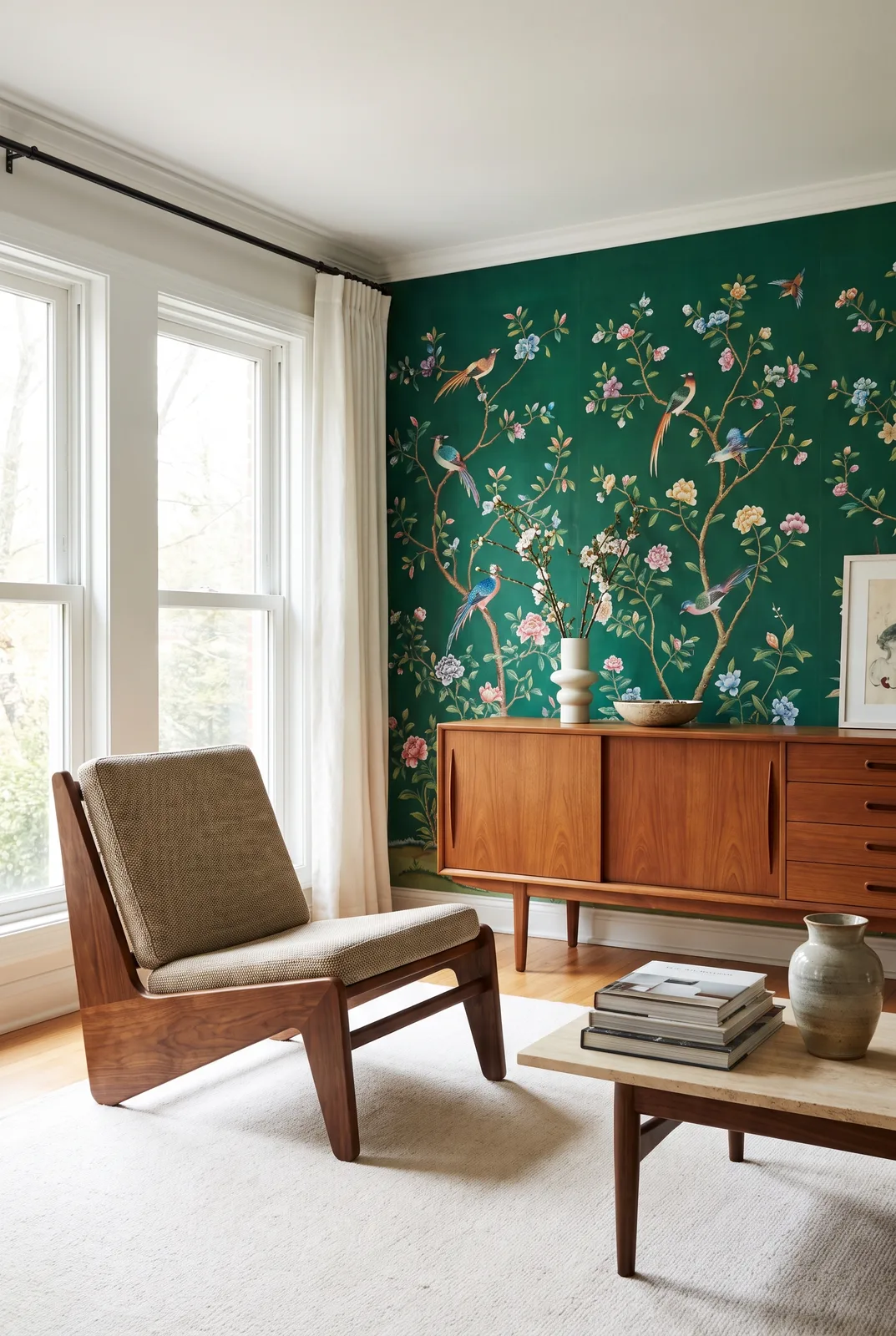
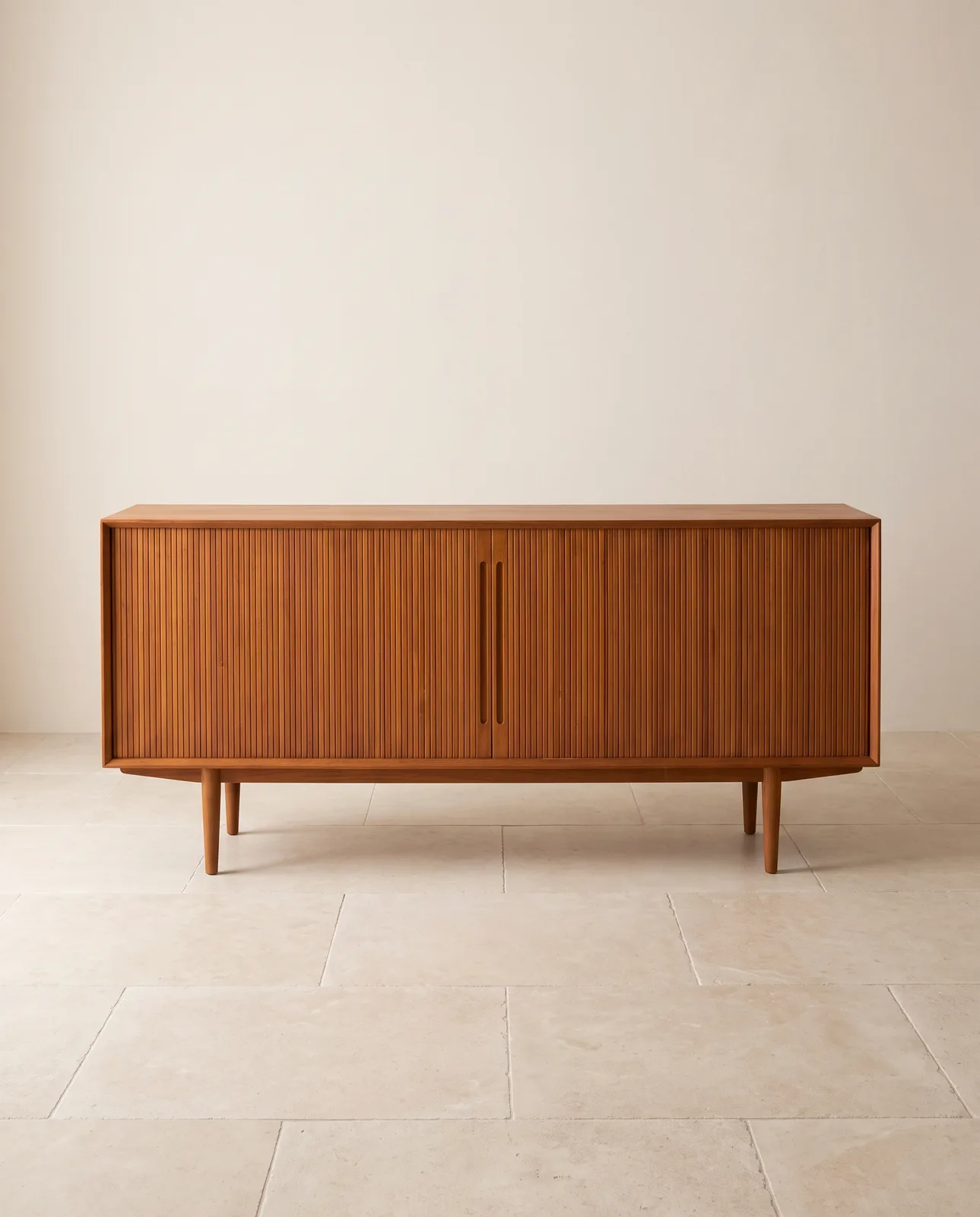
Warm teak, slim tapered legs, and sliding doors that glide silently past each other: Arne Vodder's sideboard stands as a textbook example of the Danish furniture exports that carried Scandinavian design into living rooms worldwide during the 1960s.
A designer in the shadow of the big names
Arne Vodder studied under Finn Juhl and, during the 1950s and '60s, was one of Denmark's most productive furniture designers, yet he never became as internationally famous as contemporaries like Hans Wegner or Finn Juhl himself — partly because he worked more for commercial series production than for limited showpieces. That's exactly what made his designs, including sideboards for manufacturers like Sibast and Sundby Møbelfabrik, a cornerstone of the Danish furniture export that turned "Scandinavian Design" into a global selling point during this era.
Tapered legs and silent sliding doors
Vodder's sideboards are characterized by slim, tapered wood legs that visually lift the otherwise solid body off the floor, and by a considered sliding-door system in which multiple door panels glide silently past each other on tracks instead of swinging outward — practical in smaller rooms, where hinged doors would block the floor space in front of the piece. The warm, often deliberately symmetrical teak grain on the fronts further underlines the craftsmanship of the Danish furniture industry of the time.
Danish Design as an export good
During the 1950s and '60s, Danish furniture design was deliberately marketed as an export product, backed by international exhibitions and a growing middle class in the US and Western Europe eager for Scandinavian living culture. Sideboards like Vodder's embody that era especially clearly: functionally considered, made from quality natural material, yet designed for mass production — a balance that made Denmark one of the most influential furniture-exporting nations of the post-war period.
Why teak never really went out of fashion
Teak was central to the post-war Danish furniture industry because it was durable, easy to work, and had a warm, reddish-brown tone quite different from the paler birch and oak that had dominated before. That warm wood color still makes Vodder sideboards versatile connectors between different living styles today — they read as neither starkly modern nor old-fashioned, but instead convey a kind of timeless, warm permanence.
The Vodder sideboard in a style mix
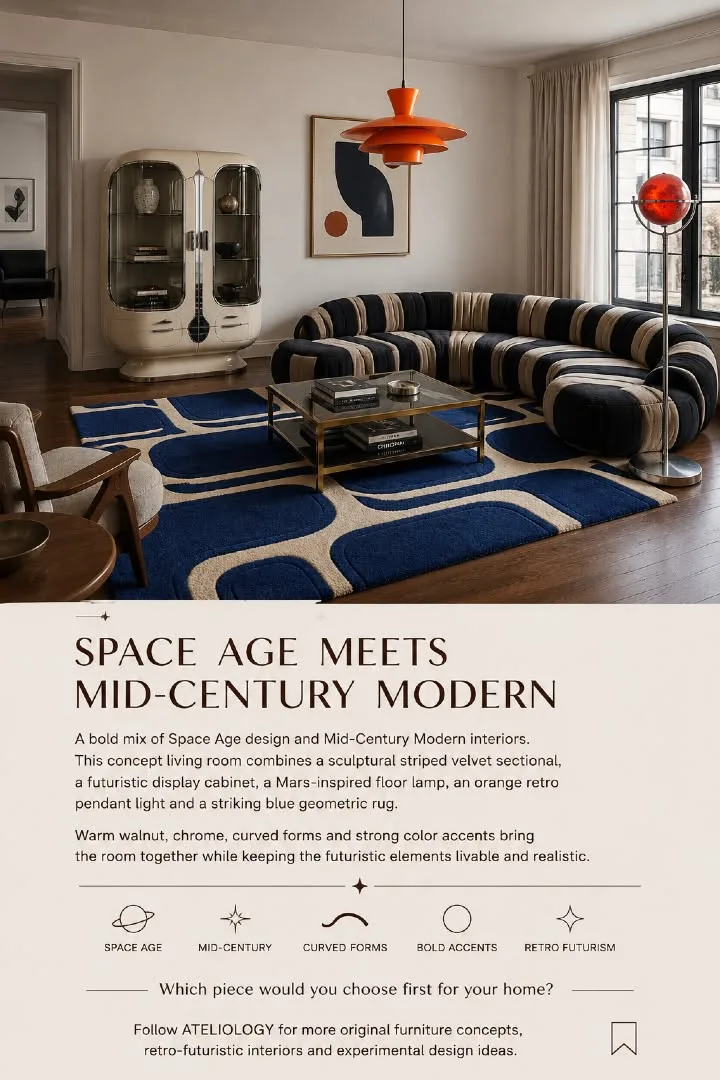
The sideboard works beautifully as a warm counterweight to cooler styles: next to Space Age objects in chrome and glass, it supplies the wooden base many futuristic interiors need; in a Brutalist room of exposed concrete, an appealing contrast emerges between raw concrete and polished teak; and in a Japandi living room, its clean, reduced form slots seamlessly into that room's material language.
Ateliology Style Verdict
The Vodder sideboard shows that not every design classic depends on a famous name — sometimes consistently good, production-ready design is enough. Its warm materiality and clear construction make it one of the most reliable style pieces of Danish furniture Modernism.