Ultrafragola Mirror
Ettore Sottsass — Poltronova, Italy
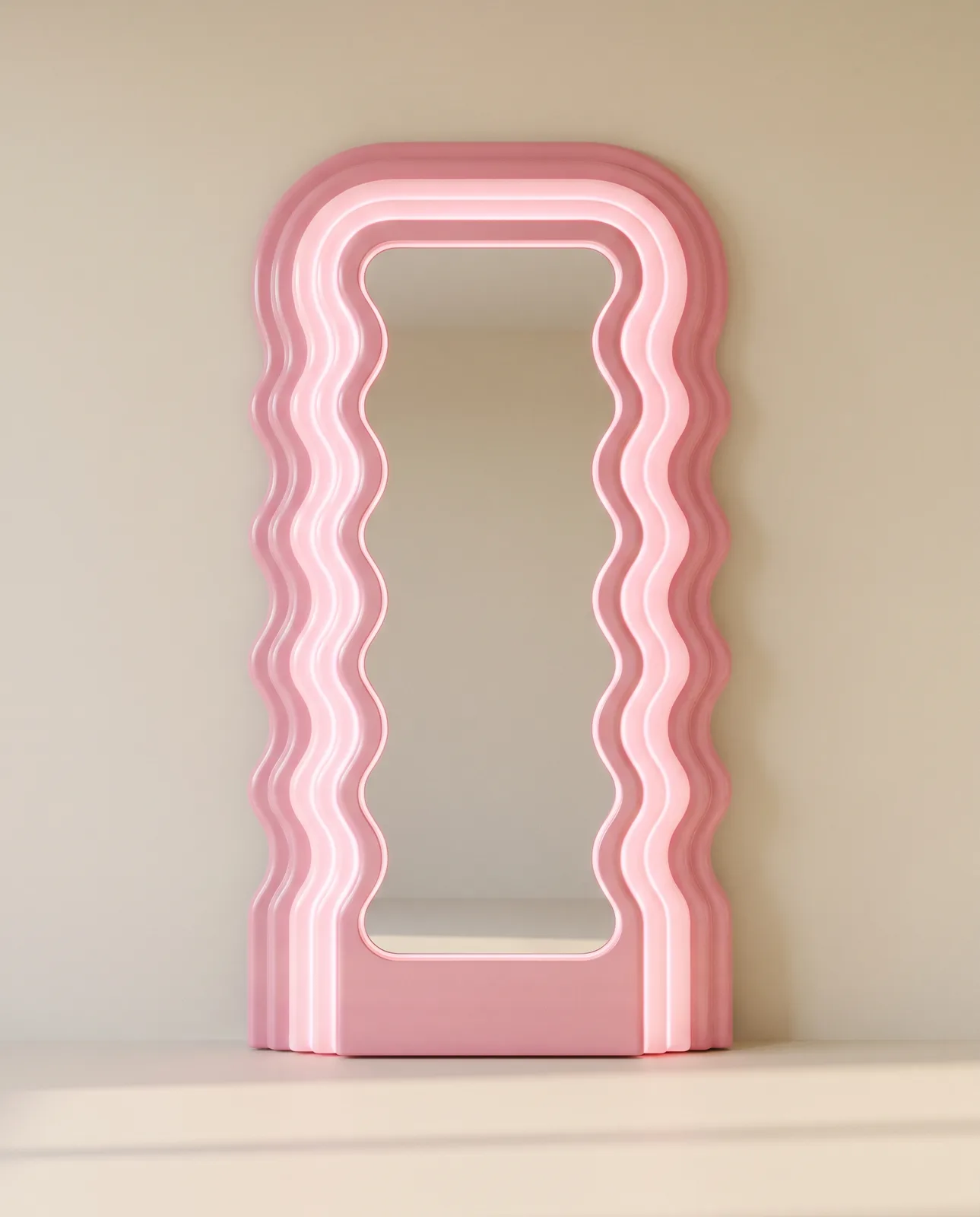
A mirror frame of wavy, undulating pink acrylic with integrated backlighting: in 1970, Ettore Sottsass turned an everyday bathroom object into a strawberry-colored light sculpture — one that, decades later, became the most photographed mirror on social media.
A forerunner of the Memphis movement
The Ultrafragola was created in 1970 for manufacturer Poltronova, a full decade before Ettore Sottsass co-founded the Memphis Group in 1980 — and it already displays many of the ideas that would later become the movement's trademark: bold, unnatural colors, playful rather than geometrically strict forms, and a deliberate break with the then-prevailing idea that good design had to be restrained and neutrally functional. The name "Ultrafragola" plays on the Italian word for strawberry ("fragola"), a direct nod to the object's vivid pink tone.
Acrylic as a plastic, moldable material
The mirror is made from thermoformed pink acrylic shaped into several continuous wave lines — an advanced application, for 1970, of a material that had previously been used mostly industrially and rarely decoratively. Fluorescent tubes integrated into the frame backlight the acrylic from within, making the wave lines themselves appear to glow. That combination of forming and integrated lighting was technically unusual for its time and remains a key reason for the object's high recognizability today.
Radical Design and the critique of Functionalism
The Ultrafragola belongs to the Italian "Radical Design" movement of the late 1960s and early '70s, which deliberately rebelled against the internationally dominant Functionalism. Rather than defining furniture primarily through its usefulness, designers like Sottsass treated objects as carriers of ideas, irony, and cultural critique. A mirror whose wavy, glowing frame claims almost more attention than the reflection itself is, in that sense, also a deliberate provocation against the idea that an everyday object should stay unobtrusive.
From niche object to social-media phenomenon
For decades, the Ultrafragola remained a relatively obscure design object for connoisseurs. Only with the rise of Instagram and the rediscovery of Postmodernism and "Millennial Pink" in interior design did the mirror become, from the late 2010s onward, one of the most photographed pieces of furniture around — its glowing pink, warmly backlit frame provides an almost ideal photo backdrop, turning it into a symbol of maximalist, color-forward interior design.
The Ultrafragola in a style mix
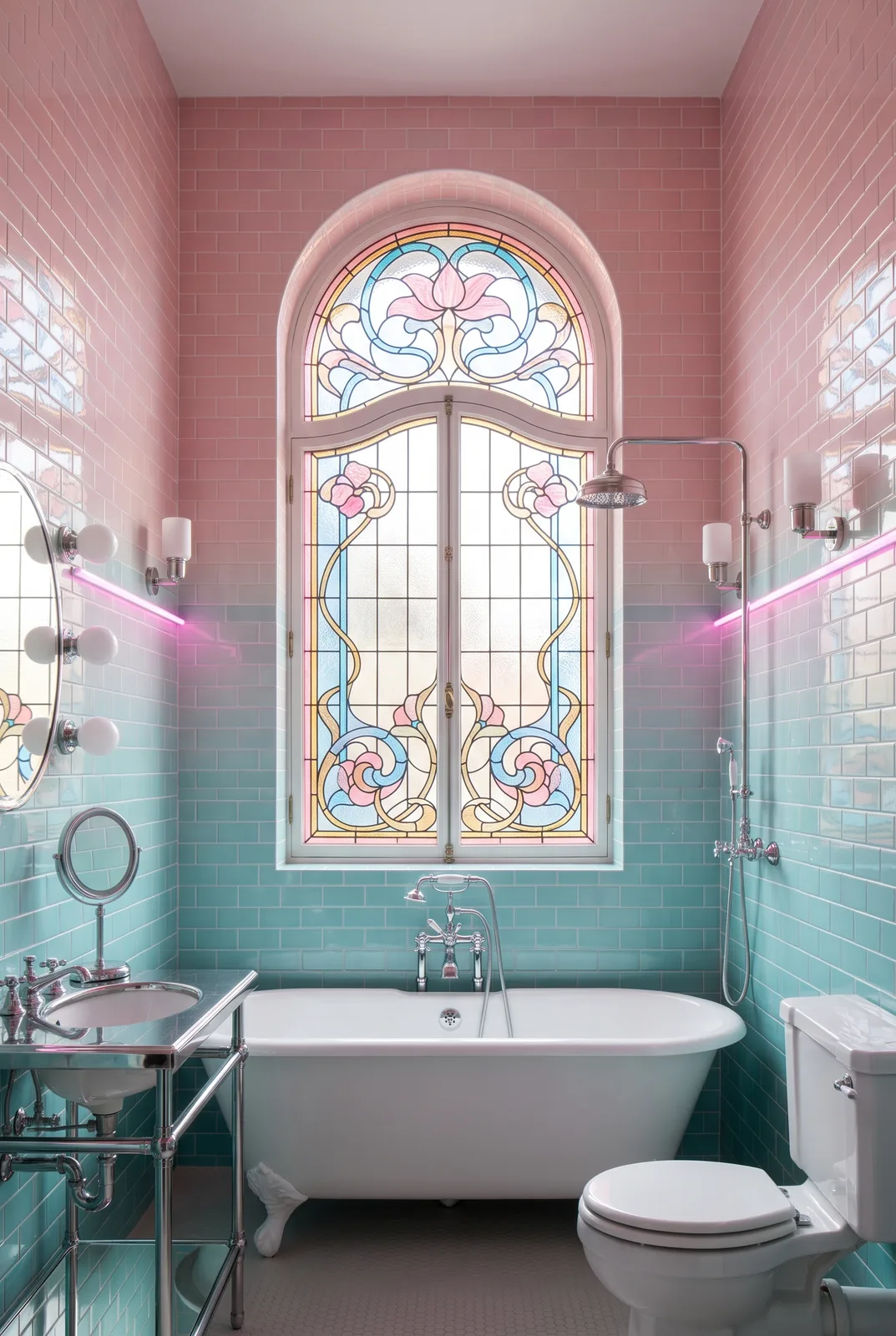
The mirror makes its strongest impression as a deliberate color break: in an otherwise neutral, pale bedroom, it becomes the single, unmistakable statement; next to Art Deco elements in black and gold, an appealing contrast emerges between historic elegance and postmodern playfulness; and in a Vaporwave × Art Nouveau bathroom, it adds its characteristic glow to that room's pastel-pink-and-teal color world.
Ateliology Style Verdict
The Ultrafragola proves that an everyday object like a mirror can become a work of art in its own right without losing its function. Ettore Sottsass's combination of plastic form and integrated light made it one of the most defining style pieces of Radical Design — and, decades later, a genuine icon object.