Back to overview
Eames Hang-It-All
1953 (American Modern)
Eames Hang-It-All

Charles & Ray EamesHerman Miller, USA

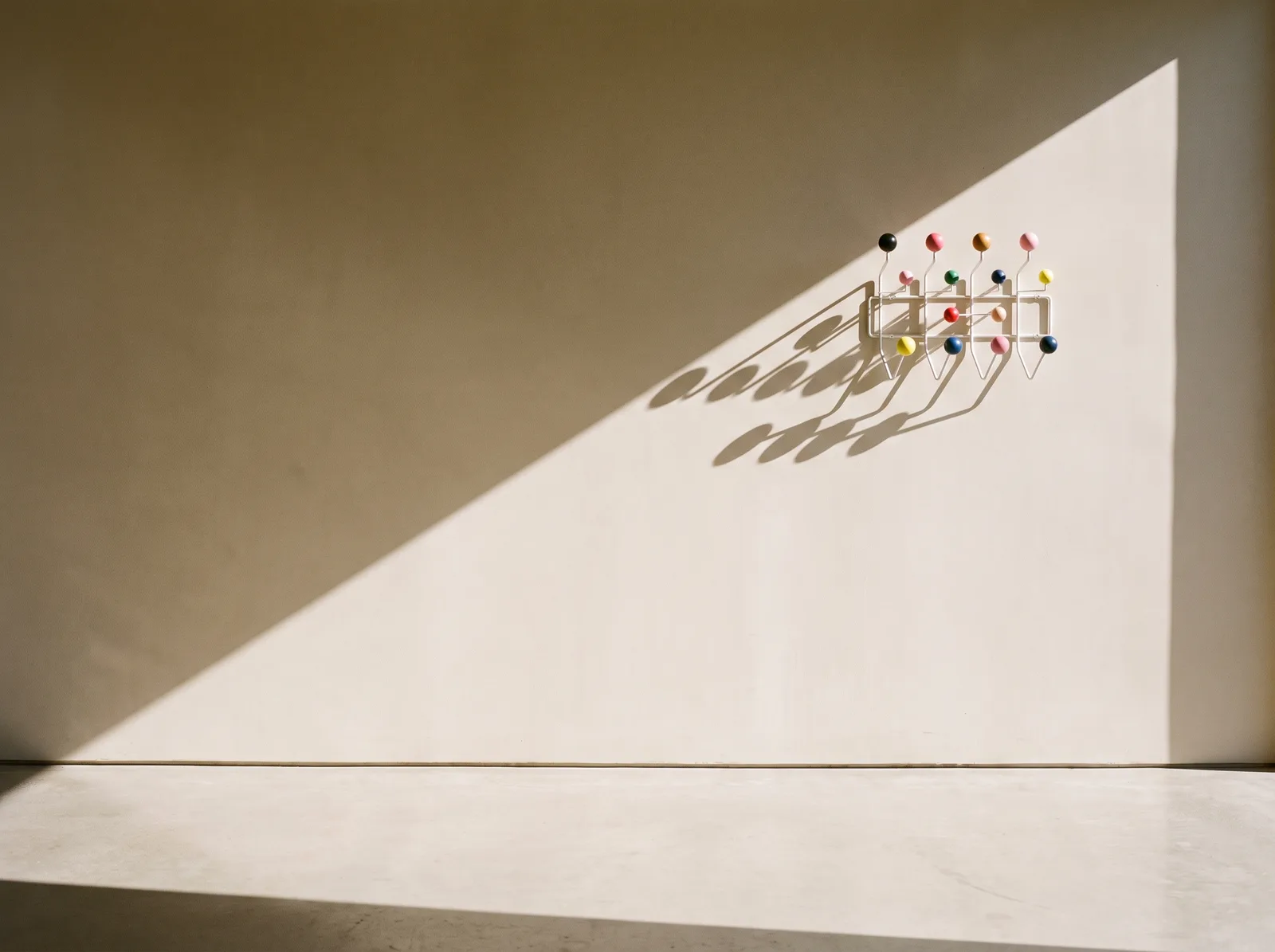
Fourteen colorful wooden balls on a white wire frame turned a simple coat rack, in 1953, into one of the most cheerful wall objects of American post-war modernism.

More Than a Coat Rack

The Hang-It-All consists of fourteen colorful wooden balls mounted on a white, bent wire frame, serving as hooks for coats, bags, and hats. What was conceived as a purely functional storage object became, through its childlike, almost playful form language, a standalone piece of wall art that combined function and joy.

Designed for Children, Loved by Everyone

Charles and Ray Eames originally designed the Hang-It-All in 1953 with children in mind — a low-mounted coat rack that even small hands could easily use to hang up jackets and hats. The bold colors and the round, harmless shape of the wooden balls were deliberately designed to be child-friendly, but the object quickly found favor with adults too, who discovered it as a standalone decor element for the whole household.

Reusing Material Techniques

Constructively, the Eameses drew on their experience with wire frames, already developed for other furniture designs like the Eames Wire Chair. The colorful wooden balls were turned and lacquered separately before being attached to the ends of the wire — a simple but effective manufacturing method still used largely unchanged today.

A Byproduct of the Eames Furniture Philosophy

The Hang-It-All emerged during a period when Charles and Ray Eames systematically explored how everyday household objects could be designed using the same materials and manufacturing principles they already applied to their better-known furniture pieces. This approach — not limiting design to large furniture but consistently thinking through smaller everyday objects too — was characteristic of the couple's entire body of work.

From the Nursery to the Museum

The Hang-It-All is now part of the collections of major design museums and continues to be produced by Herman Miller in its original form. It stands as an example of how a seemingly simple object designed for children can become a design classic across generations, finding its place equally in museum collections and children's rooms.

A Statement for Mid-Century and Pop Art

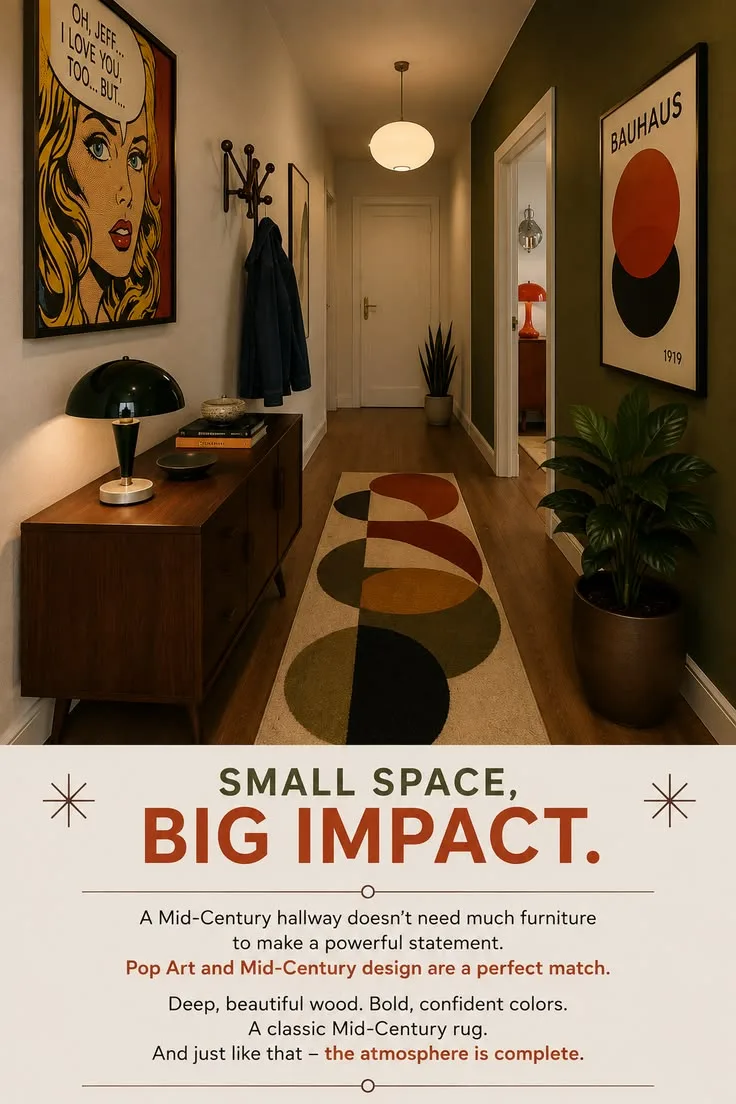
The Hang-It-All works in Mid-Century interiors as a playful accent alongside calmer wood furniture, as well as in Pop Art rooms, where its bold, primary colors harmonize with other graphic elements. In both contexts, it brings a light-hearted, cheerful note into the room.

The Hang-It-All in Today's Interiors

Mounted in an entryway or hallway, the Hang-It-All reliably serves its original function as a coat rack while also standing on its own as a wall object. Mounted in a children's room, it stays true to its original audience and works just as well there as it does in an adult entryway.

Ateliology Style Verdict

The Hang-It-All proves that even an everyday object designed for children can become a lasting design icon. More than seventy years after its creation, it remains a statement that function and joy don't have to be mutually exclusive. That is exactly what makes the Hang-It-All a genuine style piece.