Back to overview
Nelson Ball Clock
1948 (American Modern)

Nelson Ball Clock

George Nelson (Irving Harper)Vitra / Howard Miller, USA

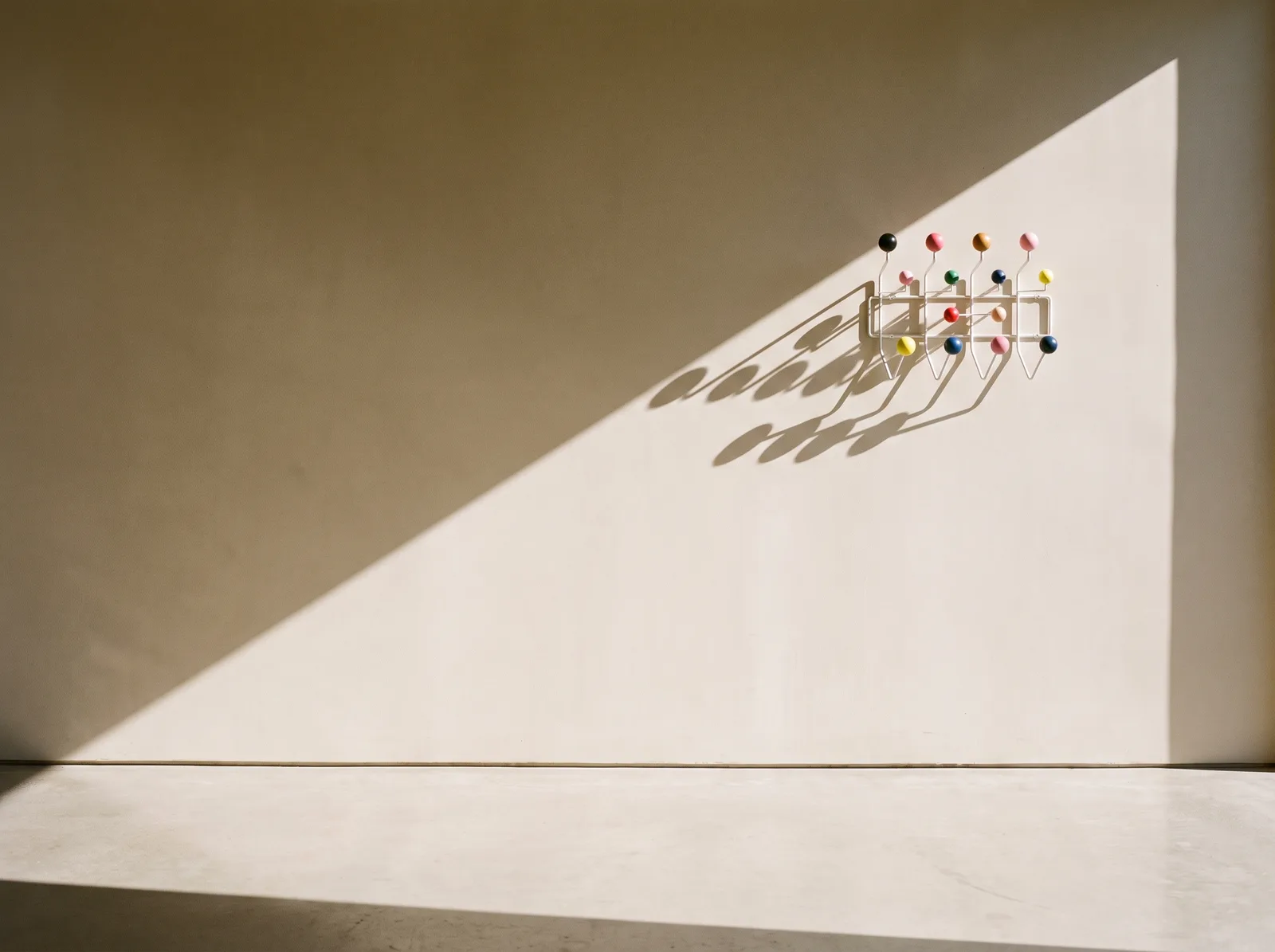
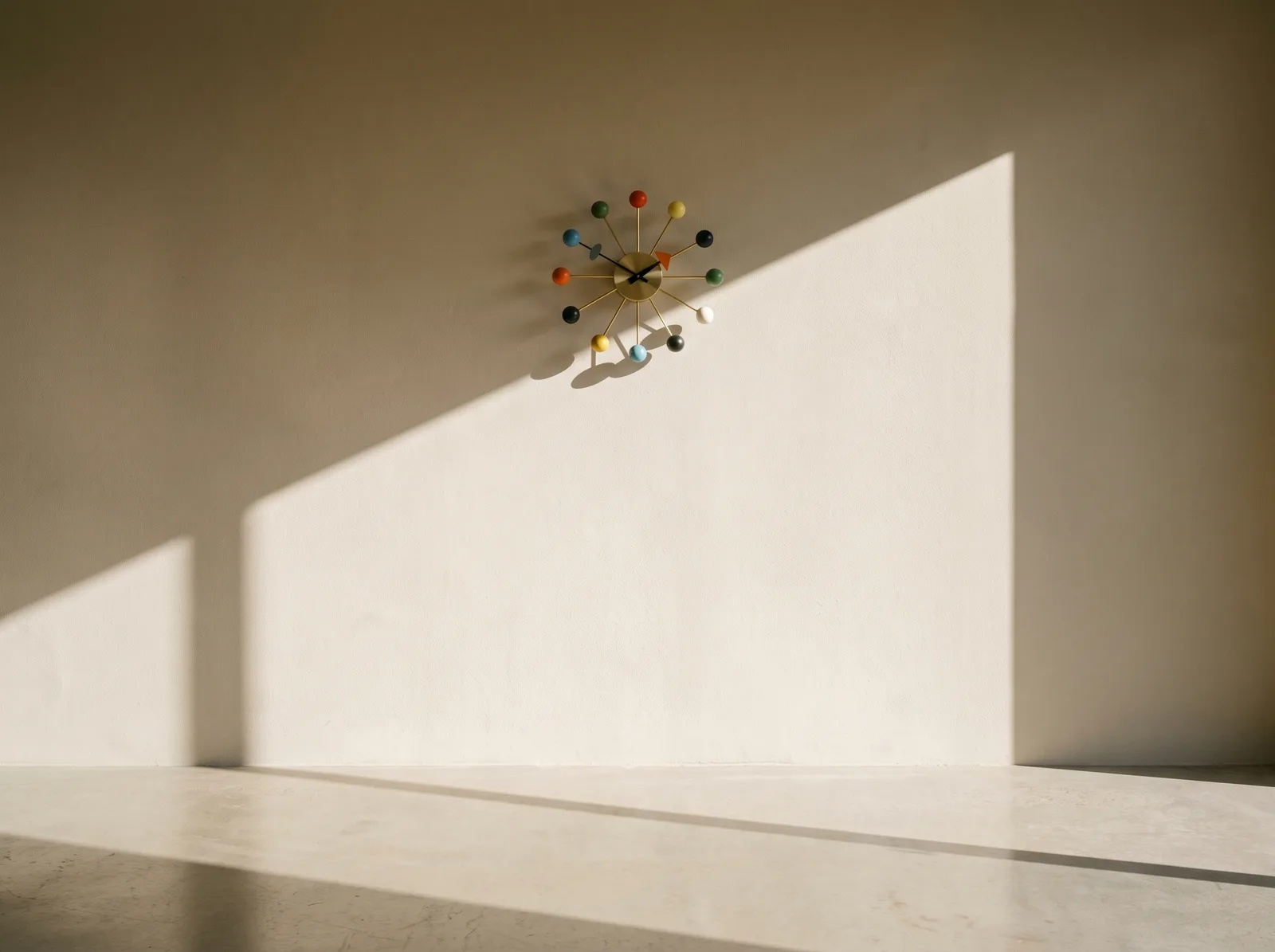
Twelve slim brass rods, each tipped with a colorful wooden ball instead of a number — in 1948, the Nelson Ball Clock turned an everyday wall clock into one of the most photographed symbols of American post-war modernism.

More Than a Wall Clock

Instead of a classic clock face, the Nelson Ball Clock displays time through twelve thin brass rods radiating from a central hub, each ending in a colorful wooden ball. This playful, almost childlike abstract design turned a purely functional object into one of the best-known symbols of post-war "Atomic Age" design.

Born From a Legendary Late-Night Session

According to legend, the design emerged during a late-night design session at George Nelson's office, reportedly involving Nelson himself, designer Irving Harper, and architect Isamu Noguchi — partly fueled by a drink or two, as later accounts suggest. The exact authorship remains disputed to this day, though it's widely acknowledged that Irving Harper, a close collaborator of Nelson's, made the decisive creative contribution.

A Design Office as an Idea Factory

In the 1940s and 50s, George Nelson ran one of the most influential American design offices while simultaneously serving as design director at Herman Miller. His office often functioned as a collective idea factory, where individual designs were published under Nelson's name even though the actual creative work frequently came from staff members like Harper — a common practice of attribution at the time, though one viewed critically today.

Constructive Simplicity as a Design Principle

Constructively, the Nelson Ball Clock consists of remarkably few elements: a central clock mechanism, twelve thin metal rods, and an equal number of colorful wooden balls. This reduction to a few clearly identifiable components was characteristic of many designs from Nelson's office and aligned with the broader post-war American effort to visually simplify everyday objects while making them more playful.

A Symbol of the Atomic Age

The ball-tipped rods and radiating arrangement of the Nelson Ball Clock inevitably evoke atomic models and molecular structures — a visual language widely associated with 1950s "Atomic Age" aesthetics, reflecting that era's fascination with science and progress. The clock is now part of the collections of major design museums and continues to be faithfully produced by Vitra.

A Statement for Mid-Century

The Nelson Ball Clock works as an instantly recognizable wall element in nearly any Mid-Century interior, adding a playful but never childish accent alongside walnut furniture and geometric textures. Its pared-back form language also makes it easy to combine with other design icons from the same era.

The Nelson Ball Clock in Today's Interiors

The clock works best on a fairly plain, calm wall, where its sculptural silhouette doesn't have to compete with other decor objects. In hallways or above a sideboard, it functions both as a working timepiece and as a standalone piece of wall art.

Ateliology Style Verdict

The Nelson Ball Clock proves that even an everyday object like a wall clock can become a lasting design icon when form and playfulness are cleverly combined. More than 75 years after its creation, it remains emblematic of the optimism of American post-war modernism. That is exactly what makes the Nelson Ball Clock a genuine style piece.