Togo Sofa
Michel Ducaroy — Ligne Roset, France
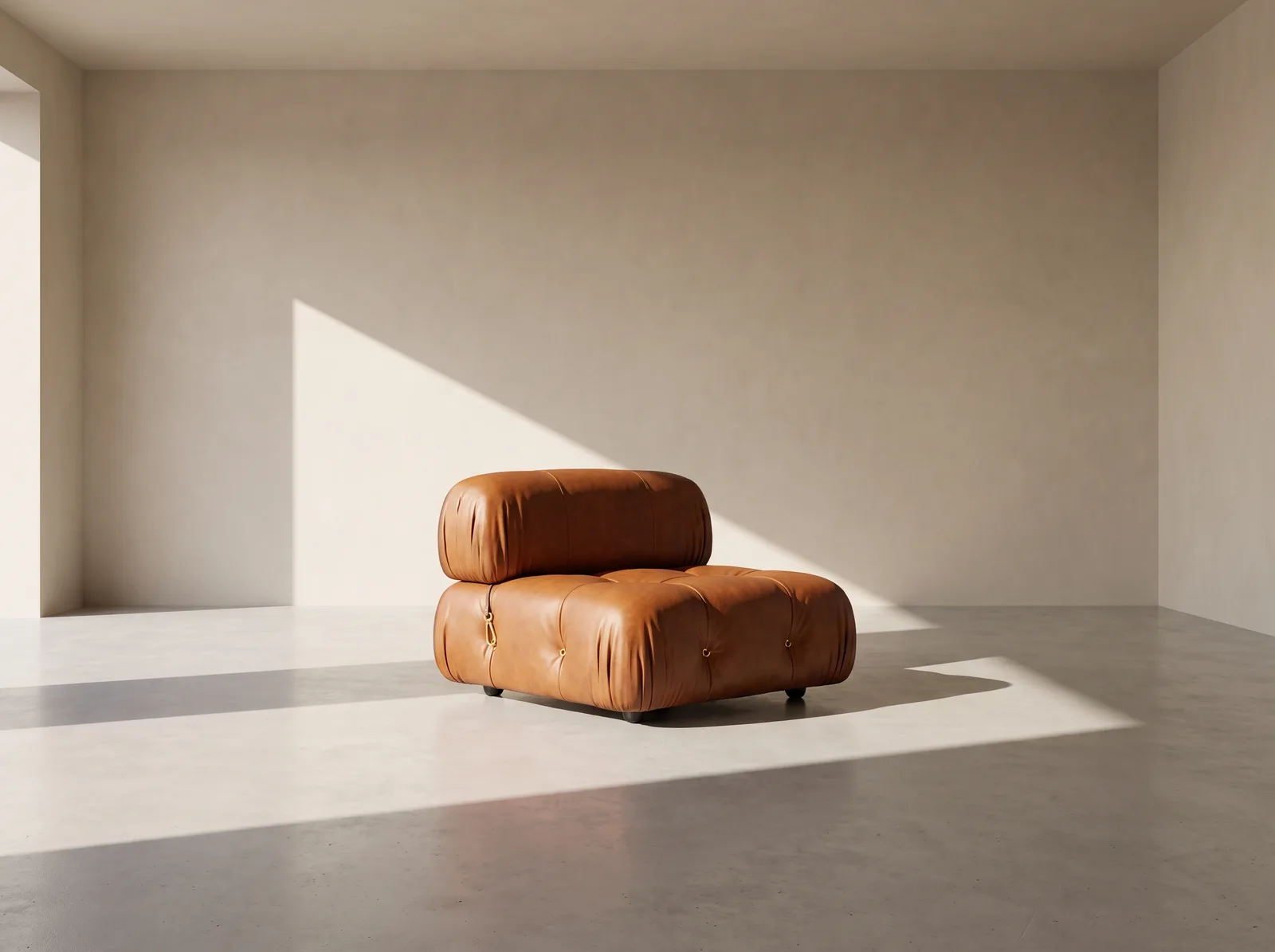
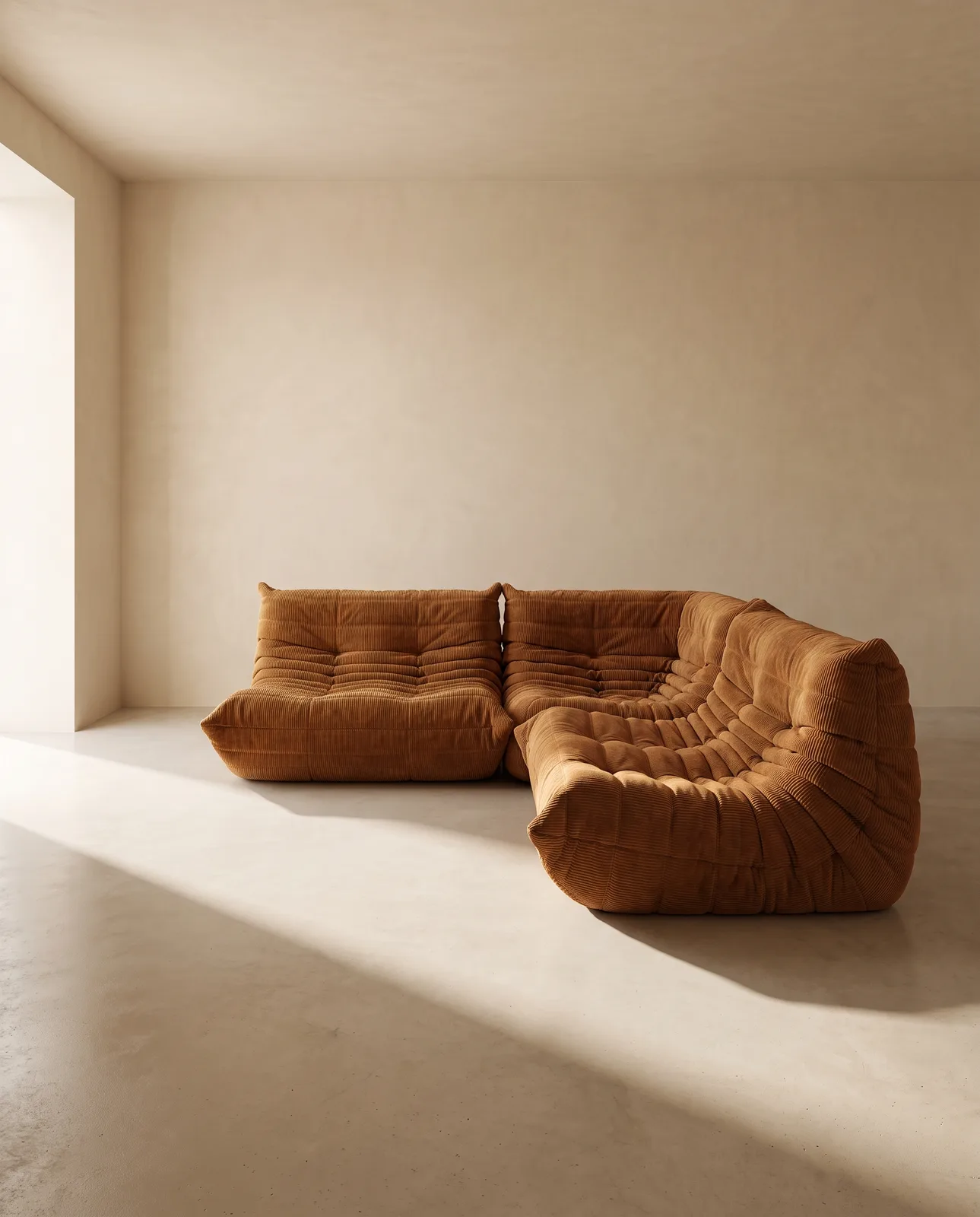
No wood, no metal, no visible frame — just stacked, quilted foam cushions that pool across the floor like a crumpled tube of toothpaste. The Togo Sofa broke every rule of classic sofa construction in 1973, and went on to become Ligne Roset's best-selling piece of all time.
More Than a Sofa
There are very few pieces of seating furniture recognizable by silhouette alone, even to people who've never heard their name. The Togo Sofa is one of them. Its rolling, stacked folds of upholstery look almost organic — almost like a living thing that has settled into a corner of the room. That unusual, almost anti-furniture appearance is exactly what makes the Togo one of the most idiosyncratic designs in seating history — and a piece that has never really gone out of fashion since its 1973 introduction.
The Story Behind the Togo
The Togo Sofa was designed by French designer Michel Ducaroy, who spent decades working for the French family firm Roset — known today as Ligne Roset. According to the often-told story, Ducaroy found his inspiration in a crumpled, folded-up tube of toothpaste: the soft, irregular creases that form when you roll up a tube became the shaping principle behind an entirely new seating concept. Ligne Roset introduced the Togo in 1973 — a name chosen, like many of the company's pieces, simply after a country. What initially looked like an experimental niche product quickly became a commercial success and one of the defining objects of 1970s French furniture design.
A Radical Construction Without a Frame
The truly revolutionary part of the Togo isn't visible — it's on the inside. It has no supporting frame of wood or metal at all, a first in the history of upholstered seating. Instead, the Togo is built entirely from several layers of foam at different densities, stacked on top of each other, wrapped in a zippered cover, and held in shape by its characteristic quilting. As a result, the sofa literally "sits" on the floor rather than standing on legs. For the early 1970s, this was an almost anarchic break with the Western upholstery tradition, in which a rigid frame was considered essential. Ducaroy proved otherwise — and in the process created one of the most comfortable seats of his era.
From Bestseller to Design Icon
The Togo didn't just become a critical success — it became, and remains, the best-selling piece of furniture in Ligne Roset's history, with several million units sold since its introduction. It now sits in the permanent collections of major design museums, including the Centre Pompidou in Paris, and is one of the rare pieces of seating furniture that is both an exceptional commercial success and a museum-recognized object. Unlike many design icons that quietly disappeared from production after their debut, the Togo has been manufactured continuously for more than fifty years — today available in a huge range of fabrics and leathers, far beyond its original corduroy options.
A Modular System
The Togo was never conceived as a single, fixed sofa — it was designed as a modular seating system from the start. Alongside the classic two- and three-seater, there is a single armchair, a corner unit, a chaise-longue variant, and a matching pouf, all sharing the same characteristic quilting and soft proportions. These modules can be combined freely into larger seating landscapes, which makes the Togo unusually adaptable to different room sizes and shapes. That flexibility was unusual in 1973 and played a major role in the sofa's ability to work across very different living situations, from compact apartments to generous lofts.
Boho, Retro, and the Return to the Mainstream
Stylistically, the Togo emerged at a moment when French furniture design was breaking away from the strict modernism of the post-war years and experimenting with softer, more informal, almost hedonistic forms — an aesthetic now often associated in hindsight with Boho and 1970s postmodernism. After a period of relative quiet in the 1990s and early 2000s, the Togo experienced a remarkable renaissance starting in the 2010s, driven heavily by interior content on Instagram and Pinterest. Today it appears just as comfortably in nostalgic, playful Boho interiors as in deliberately eclectic, cross-style rooms — a rare case of a piece of furniture surviving multiple design waves and becoming even more relevant along the way.
Why the Togo Sofa Is a Style Piece
A Togo Sofa changes the feel of a room almost instantly. Its soft, rolling shapes deliberately contrast with the straight lines that dominate most modern interiors, immediately introducing a playful, relaxed note. Unlike many design classics that work primarily through restraint, the Togo does the opposite: it visibly claims space, stands out through its form, and practically invites you to sink into it. In more pared-back, linear rooms especially, a single Togo can supply exactly the amount of looseness and warmth that keeps a space feeling lived-in rather than museum-like.
The Togo Sofa in Today's Interiors
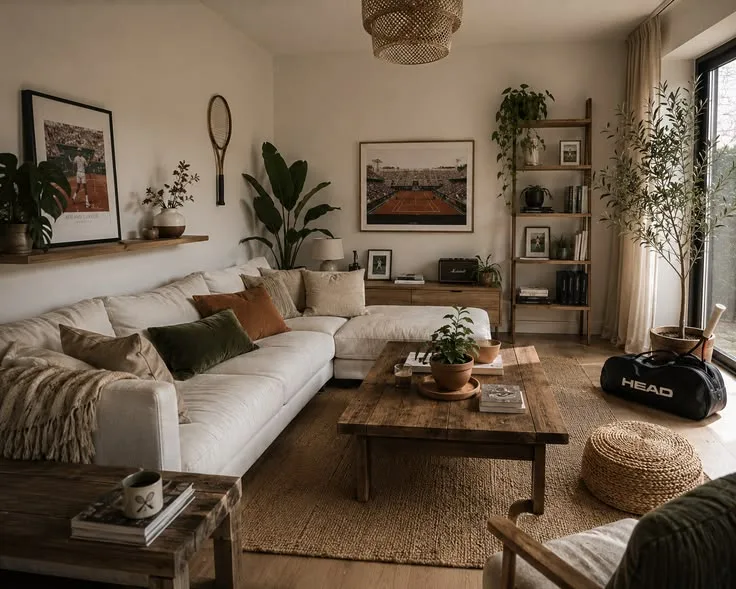
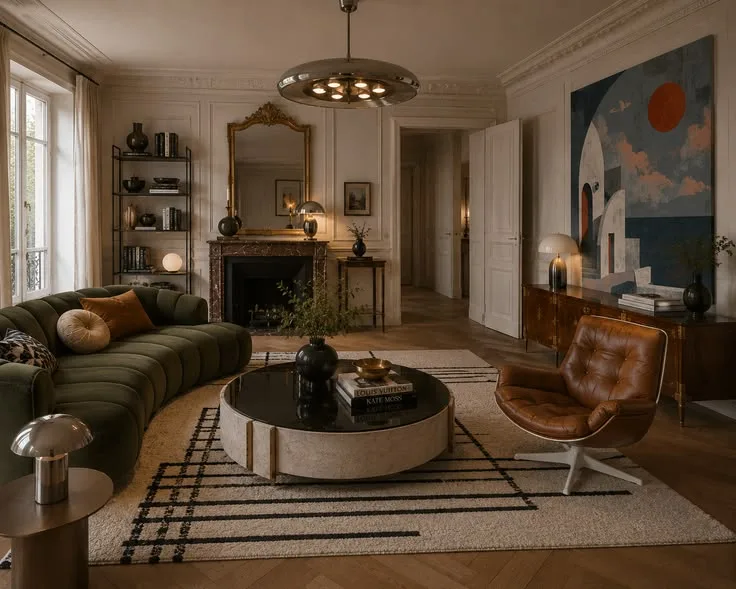
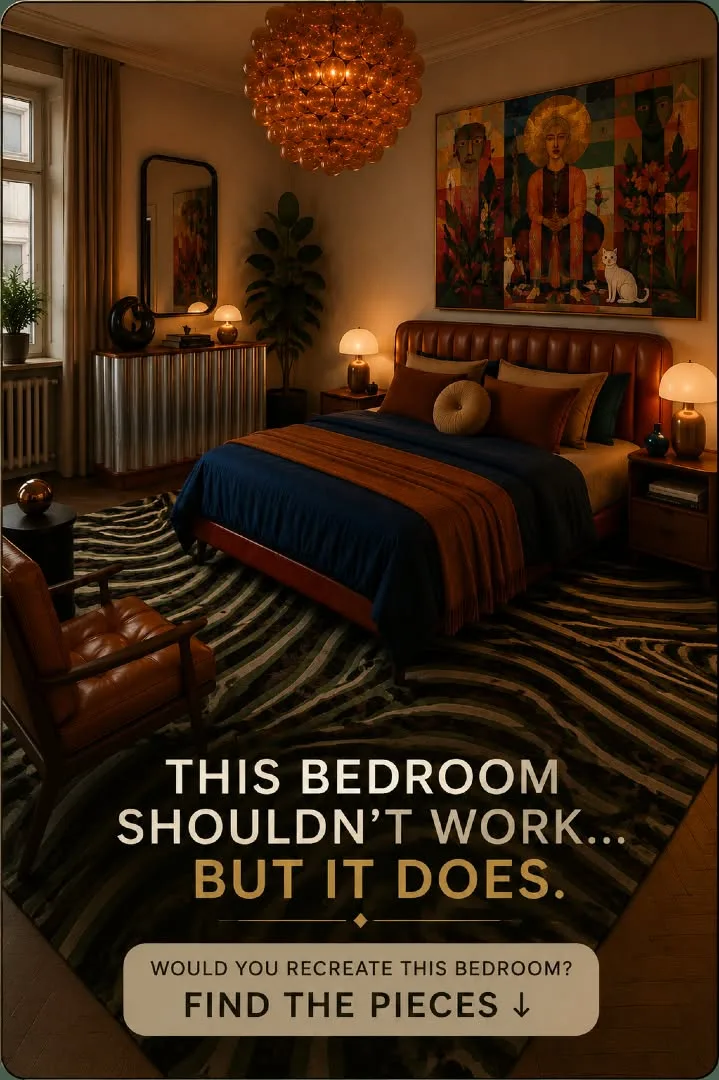
The Togo's versatility shows especially clearly in how well it pairs with different interior styles. In Boho spaces it works almost predictably well, surrounded by rattan, warm earth tones, and patterned textiles. In eclectic rooms, a Togo in an unusual color — mustard yellow or terracotta, for example — can be used deliberately as a point of contrast next to stricter, more linear furniture. In vintage-leaning interiors with walnut furniture and 1970s accessories, it slots seamlessly back into its original era. And even in more restrained Modern Organic rooms, a neutral, sand-colored corduroy Togo can supply exactly the softness the space needs without overwhelming the overall look.
Why the Design Remains Timeless
The Togo owes its longevity not to nostalgic appeal but to the consistency of its underlying concept: form and construction are completely aligned in this sofa. There is no disguised structure, no hidden frame, no compromise between appearance and function — the soft, folded silhouette is literally the direct result of how the sofa is built. It's exactly that honesty of construction that has kept the Togo feeling fresh across five decades, regardless of which colors or fabrics happen to be trending at any given moment.
Ateliology Style Verdict
The Togo Sofa proves that a radical constructive break with convention can not only work, but become the best-selling piece of furniture in an entire company's history. With no frame, no legs, shaped purely from stacked foam, it still reads as a statement nearly fifty years after its introduction — playful, comfortable, and unmistakable. That exact combination of radical simplicity and instant recognizability is what makes the Togo a genuine style piece.