PH5 Pendant Lamp
Poul Henningsen — Louis Poulsen, Denmark
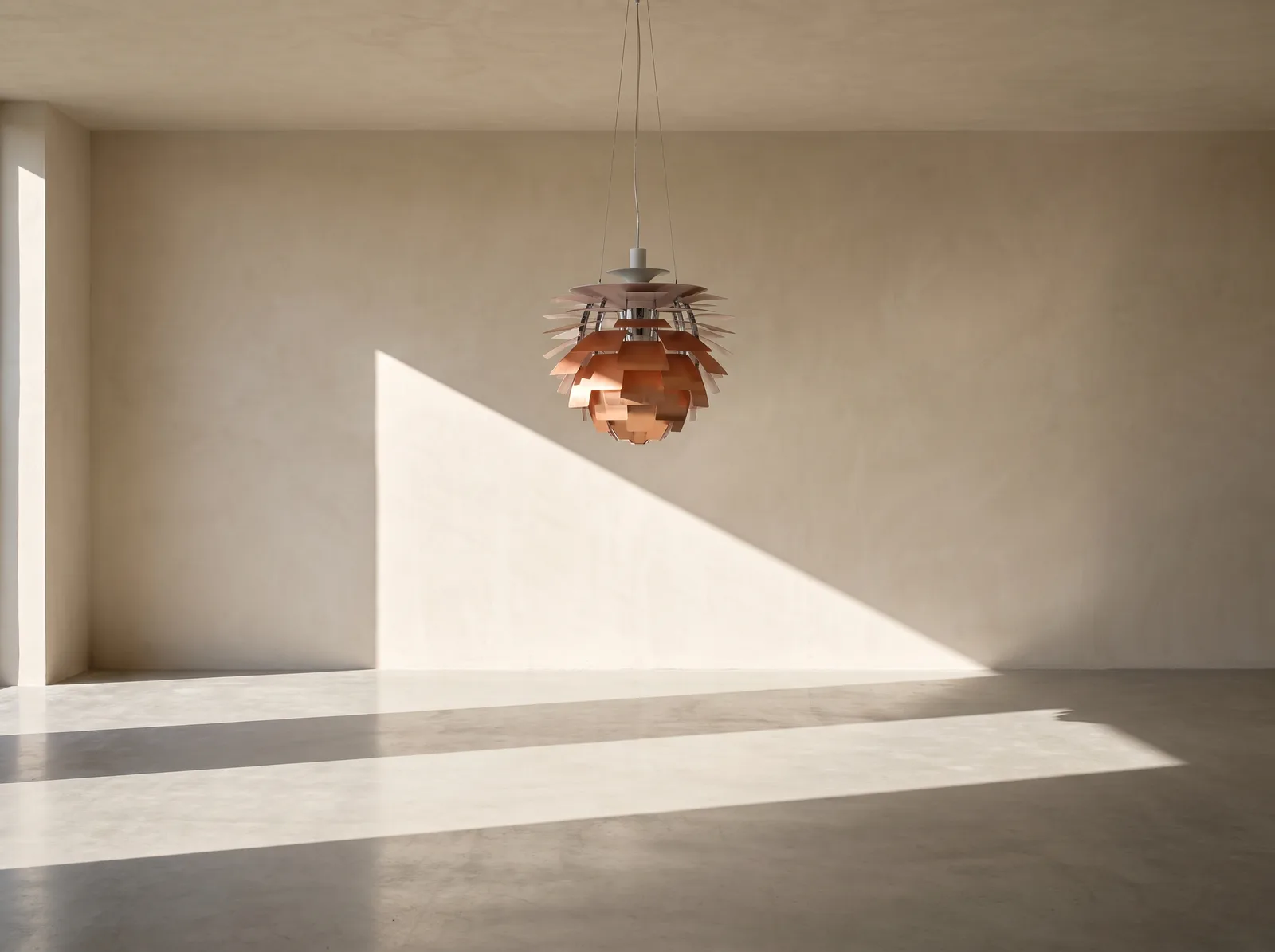
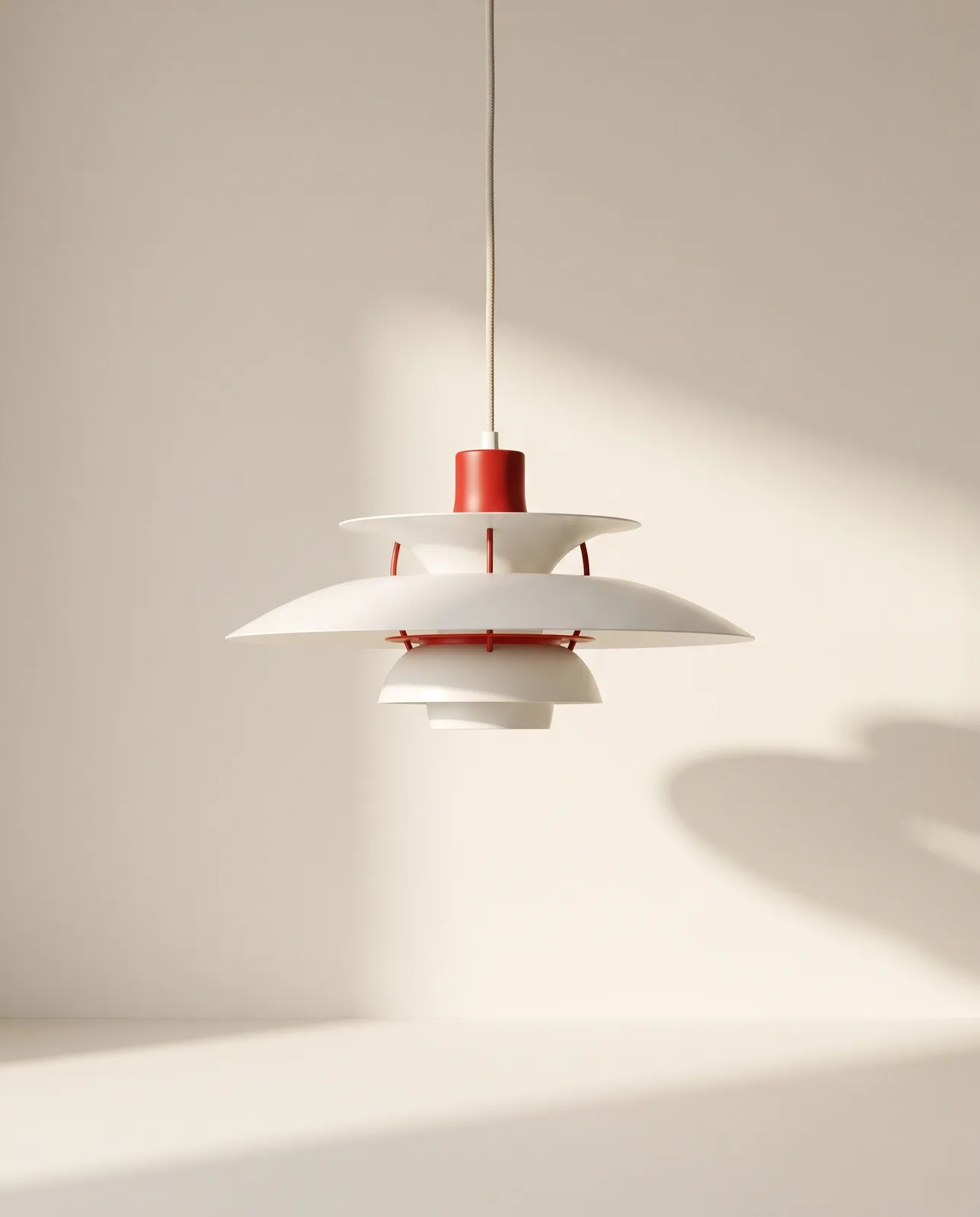
Several nested, staggered metal shades that make the bulb itself disappear entirely: Poul Henningsen's 1958 PH5 solved a genuinely physical problem — glare-free, warm light — and became one of design history's best-selling lamps in the process.
An engineer of light, not just a form-giver
From the 1920s onward, Poul Henningsen systematically tackled a problem most lighting designers of his era simply ignored: bare electric bulbs glared directly into the eye and cast hard, unpleasant shadows. Henningsen, neither an architect nor a classically trained industrial designer, approached the problem almost scientifically, developing several lamp series over the decades that all built on the same underlying principle: layered, precisely calculated shades that redirect light multiple times before it reaches the room. The 1958 PH5 is the most consistent and commercially successful expression of that principle.
Three shades, no direct line to the light source
The PH5 is built from three nested metal shades of different sizes, plus a small red and a small blue accent shade inside that fine-tune color temperature and light distribution. From no angle — below, the side, or slightly above — can the bulb itself be seen directly, eliminating glare entirely. At the same time, the light is redirected so that both the table below and the ceiling above receive even illumination — a distribution Henningsen worked out through numerous prototypes and mathematical calculations of the shade curves.
Functionalism with a social ambition
Henningsen's work exemplifies Danish Functionalism, which treated technical precision not as an end in itself but as a means to better, healthier living. Unlike many design classics born mainly from aesthetic considerations, the PH series was from the outset also conceived as a critique of the poor, glaring lighting common in homes and public spaces of the time. That combination of social ambition and technical solution still gives the PH5 a design seriousness that goes beyond pure formal aesthetics.
Red and white as the classic combination
The PH5 is now offered in numerous color variants, but the classic combination of white outer shades with a visible red inner shade remains the best known. That small, barely visible color accent inside shifts the light's color only minimally, but produces a warmer overall impression than pure white — a detail most viewers never consciously notice, yet one that contributes substantially to the lamp's cozy effect. Mounted above a dining table, the PH5 becomes, in effect, the mood-setter for an entire room.
The PH5 in a style mix
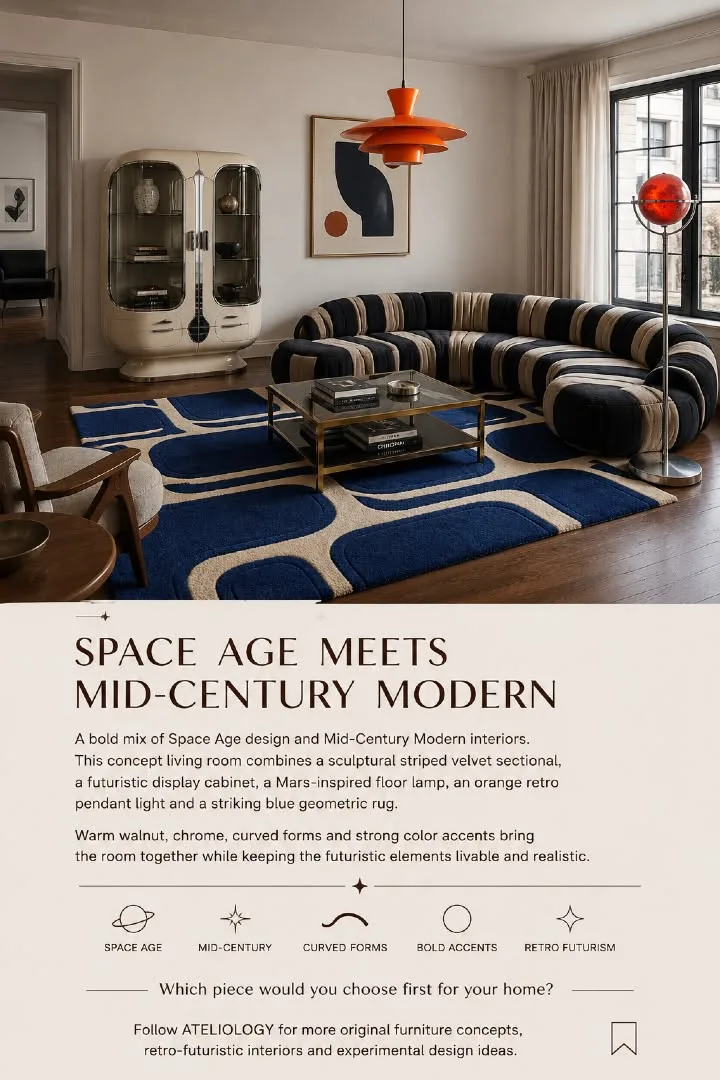
Above a dining table, the PH5 works in almost any stylistic context: in a Traditional dining room with dark wood, it adds Scandinavian clarity to the classic mood; in a Modern Organic room with natural stone, it provides a calm, sculptural focal point; and next to Memphis or Pop Art elements, a bold colorway can become a loud statement in its own right. Its geometric clarity also makes it a reliable bridge between two otherwise very different design worlds in the same room.
Ateliology Style Verdict
The PH5 proves that the most rigorous solution to a technical problem can, at the same time, become one of design history's most beautiful objects. Poul Henningsen's decades-long study of glare-free light remains unmatched today — a style piece that fuses function and form inseparably.