Back to overview
Flowerpot Lamp
1968 (Space Age / Pop Art)
Flowerpot Lamp

Verner Panton&Tradition, Denmark

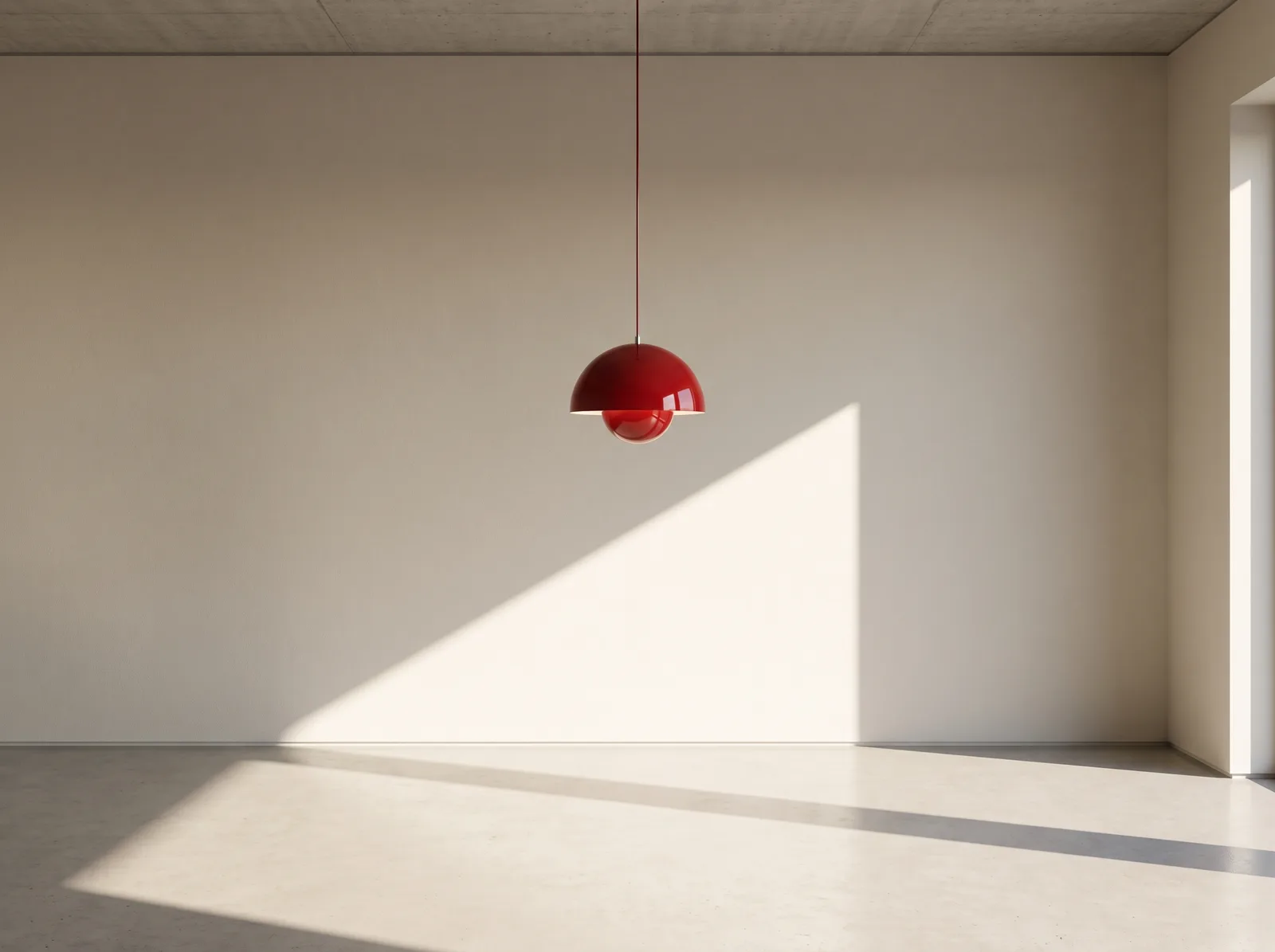
Two inverted metal hemispheres joined into an hourglass silhouette in bold color — introduced in 1968, the Flowerpot lamp brought Verner Panton's radical world of color into one of the most copied lamp shapes in design history.

More Than a Pendant Lamp

The Flowerpot lamp reduces the idea of a light fixture to two simple, inverted hemispheres joined by a narrow neck into an hourglass-shaped silhouette. That radical simplification, combined with bold, saturated lacquer colors, made the lamp one of the most instantly recognizable lighting objects of the 20th century.

Verner Panton and the Break From Scandinavian Purism

Verner Panton, a Danish designer and one of the most radical figures of the Space Age movement, designed the Flowerpot lamp in 1968 at a time when he was deliberately turning away from the restrained, natural-toned form language of classic Danish Modern. Instead of wood and muted tones, Panton embraced plastic, lacquered metal, and bold color — a break that initially isolated him within the Danish design scene but made him an international figurehead of Pop design.

Two Hemispheres, Countless Color Variations

Constructively, the Flowerpot lamp consists of two identically shaped, lacquered metal hemispheres mounted on a slim steel rod — a deliberately simple construction that puts the entire design focus on form and color. Since its introduction, the lamp has been produced in dozens of color variants, from muted grey to bright orange and pink, making it easy to adapt to different room concepts.

From Commercial Setback to Comeback

Despite its popularity today, the Flowerpot lamp was not an immediate commercial hit — Panton's radical aesthetic didn't find universal appreciation in the 1970s. It was only with &Tradition's reissue starting in the 2000s, supported by a broader revival of interest in Space Age design, that the lamp became the global sales success it is today.

A Symbol of the Pop Art Era

The Flowerpot lamp is now part of the collections of major design museums and is considered one of the defining objects of the Pop Art movement in furniture design. It's regularly cited as a reference point for the optimistic, colorful design language of the late 1960s and influenced numerous later lamp designs with similarly reduced, geometric form language.

A Statement for Space Age and Pop Art

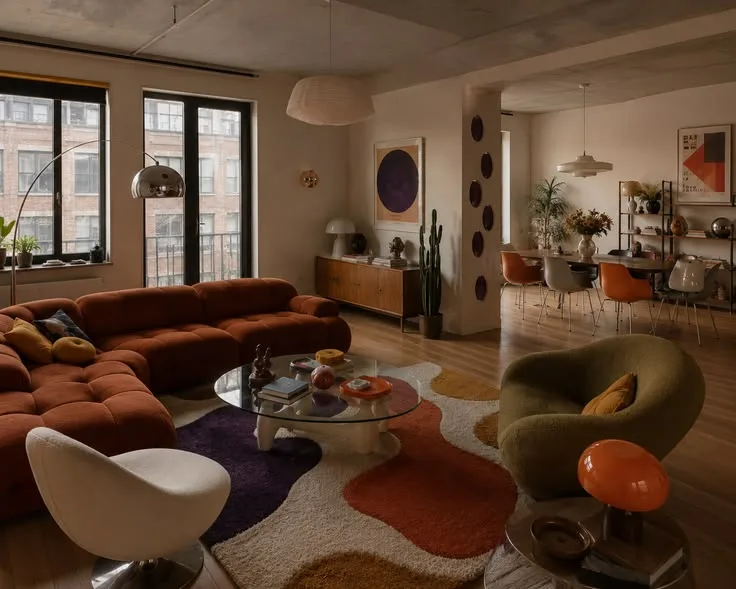
The Flowerpot lamp naturally fits into Space Age interiors, where its geometric reduction underscores the room's futuristic form language, as well as into Pop Art rooms, where a bold color choice like orange or red works as a deliberate focal point.

The Flowerpot Lamp in Today's Interiors

The Flowerpot lamp shows its full effect as a pendant over a side table, or hung in clusters of different sizes and colors. A smaller table version also works well as a colorful accent on a sideboard, without requiring the full drama of the larger pendant version.

Ateliology Style Verdict

The Flowerpot lamp proves that radical reduction and bold color together can produce one of the most recognizable silhouettes in design history. More than fifty years after its introduction, it remains a statement of Panton's uncompromising vision of color and form. That is exactly what makes the Flowerpot lamp a genuine style piece.