LC10-P Table
Le Corbusier, Charlotte Perriand, Pierre Jeanneret — Cassina, Italy (licensed production)
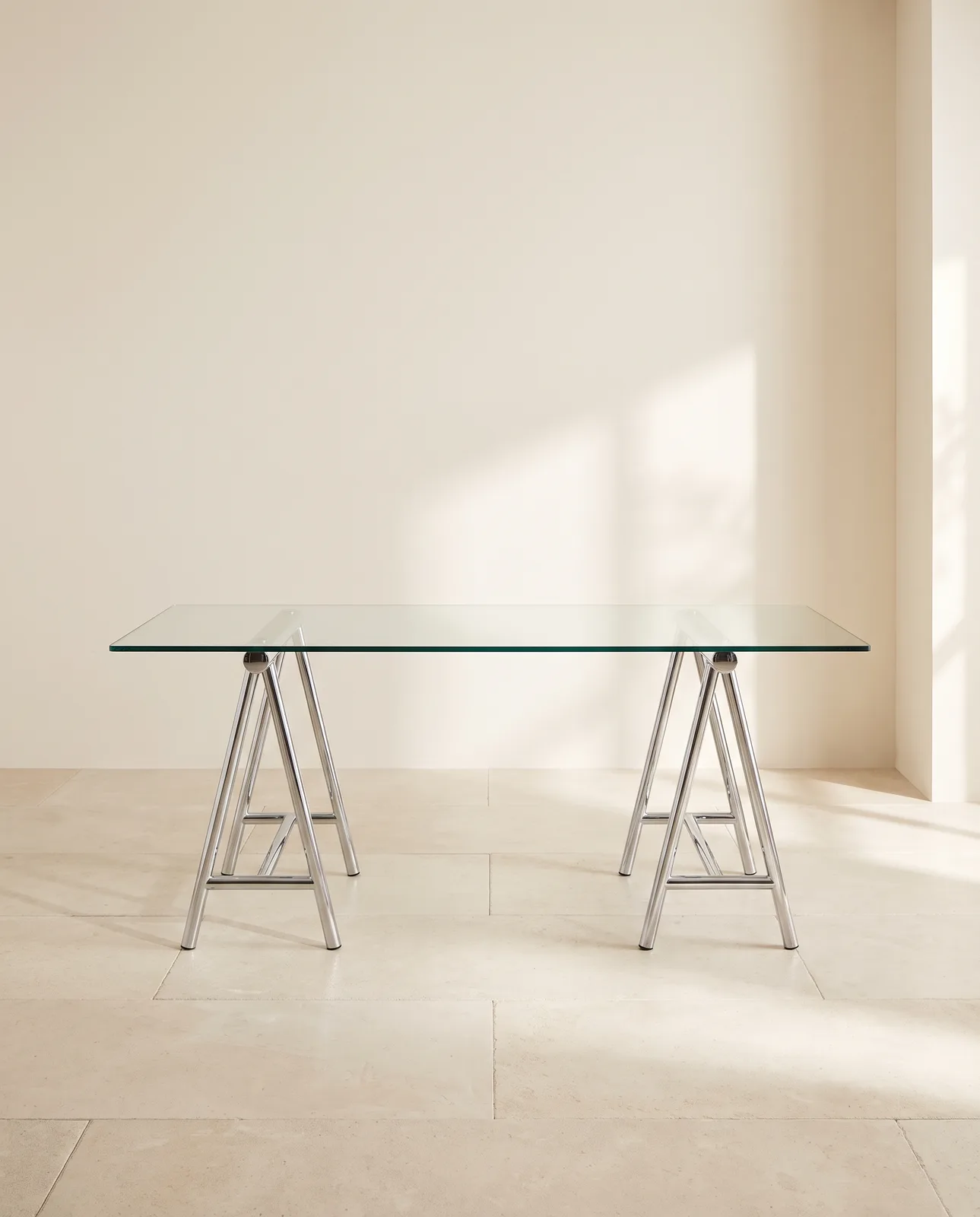
A sheet of glass resting on a rectangular frame of chromed tubular steel — that's all the LC10-P needs to have counted, since 1928, as one of the most reduced table designs in furniture Modernism.
A table for the "Equipement de l'habitation"
The LC10-P emerged in 1928 within the same body of work as the LC4 chaise longue and the LC3 sofa: the joint furniture program by Le Corbusier, Charlotte Perriand, and Pierre Jeanneret, presented in 1929 under the title "Equipement de l'habitation." While the seating pieces in the series renegotiated comfort and construction, the table pursued a different goal: reducing a table to exactly two components — a supporting structure and a surface.
Rectangular tubing instead of a round profile
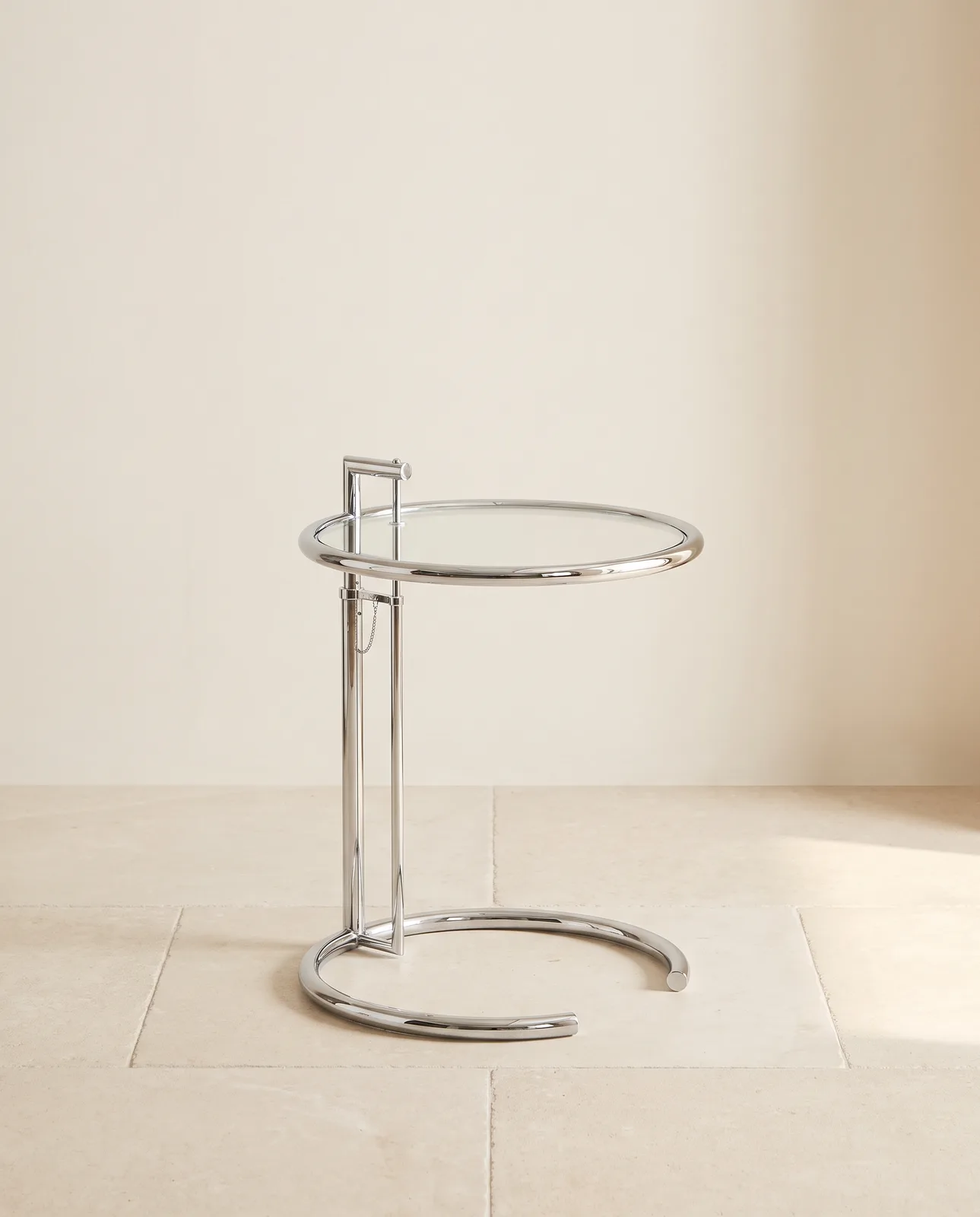
Unlike many tubular-steel pieces of the era, which favored round tube profiles, the LC10-P's frame uses square steel tubing, giving the table a more severe, architectural presence. A thick glass plate simply rests on this plain trestle base, with no fixed fastening — gravity and the glass's own weight are enough to keep it stable. That principle of "resting rather than joining" also appears, in similar form, in Eileen Gray's E1027 table, and was a deliberately reductionist statement for the 1920s.
Architecture in miniature
The LC10-P reads as a direct transposition of architectural principles into a piece of furniture: support and load are clearly separated, and both remain visible, very much in the spirit of Le Corbusier's famous "Five Points of a New Architecture," which called for, among other things, freestanding supports instead of load-bearing walls. The table carries that principle down to furniture scale — the glass top, in a sense, "floats" above the steel frame, much as a building appears to float above its supports.
Why transparency becomes a strategy here
The glass top isn't merely a material choice but a deliberate design decision: because the tabletop stays fully transparent, the steel frame beneath becomes the piece's actual formal statement, while the table itself claims almost no visual space. In smaller rooms, or alongside already busy furniture ensembles, the LC10-P therefore reads as considerably more restrained than a table with an opaque wood or stone top.
The LC10-P in a style mix
As part of the Corbusier series, the LC10-P forms a coherent ensemble with the LC4 chaise longue and the LC3 sofa, but it also works as a standalone piece in entirely different contexts: in a Japandi room with plenty of natural wood, the glass top's transparency adds visual lightness; in a Brutalist interior of exposed concrete, the cool steel tubing forms a fitting material family; and next to ornamental Louis XVI furniture, an interesting break emerges between historic craftsmanship and industrial clarity.
Ateliology Style Verdict
The LC10-P shows how far a table can be reduced without losing presence. Its clear separation of support and surface makes it one of the most consistent examples of architectural thinking translated directly into furniture design — a quiet but remarkably effective style piece.