Nelson Bubble Lamp
George Nelson (Werksdesign: William Renwick) — Herman Miller / Modernica, USA
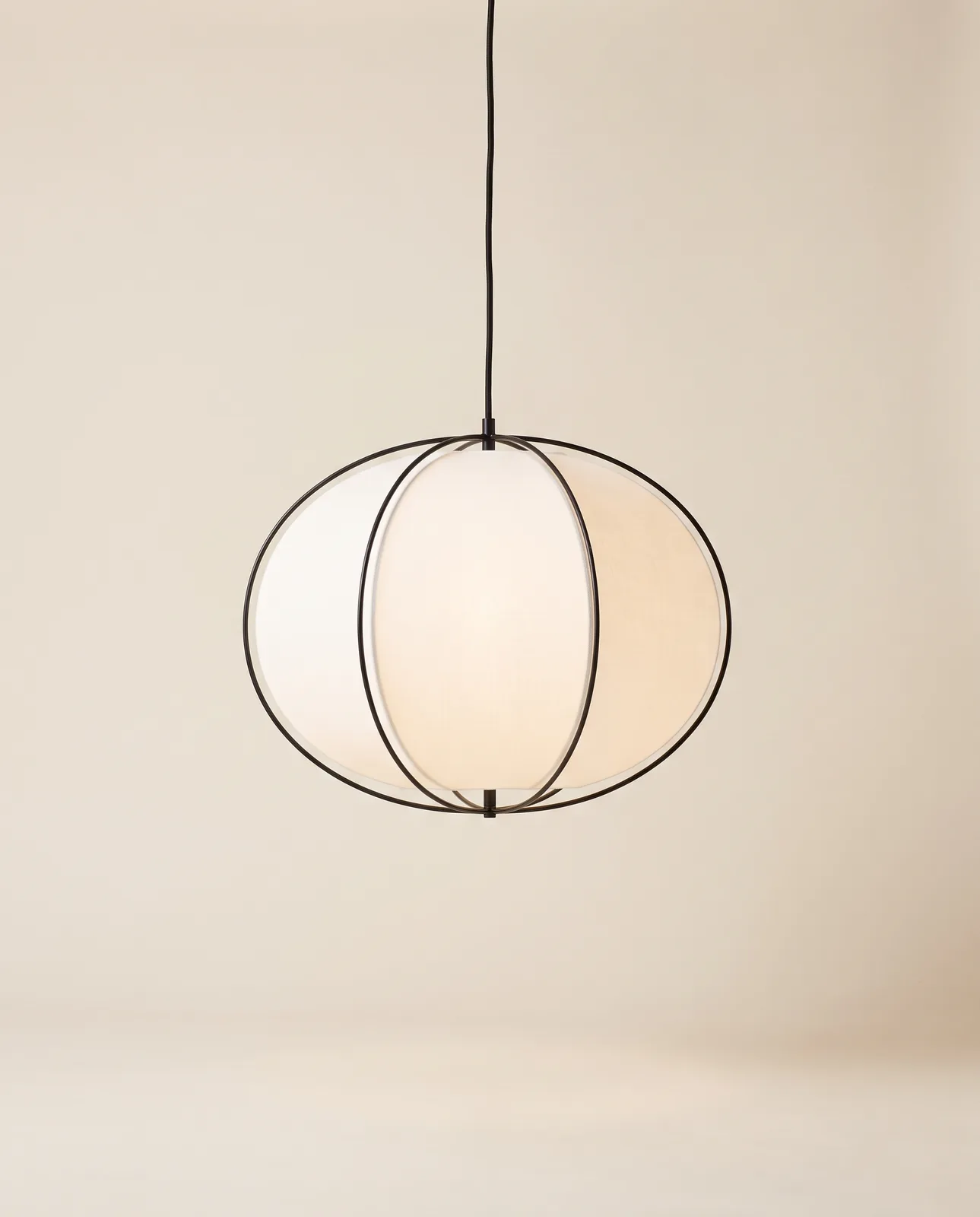
A glowing, weightless sphere of sprayed plastic fiber over a slender steel skeleton: the Bubble Lamp was created in 1947 as an affordable American answer to expensive Japanese paper lanterns — and became a design icon in its own right.
An answer to expensive paper lanterns
The Bubble Lamp was developed in 1947 at George Nelson's design office, with the actual technical development largely driven by his associate William Renwick. The starting point was a popular but relatively expensive import in the American market: Japanese paper lanterns made from washi paper, which produced a soft, diffuse light but were fragile and labor-intensive to make. Nelson's team looked for a sturdier, industrially reproducible alternative that could achieve the same floating, glowing effect.
Sprayed plastic over a wire skeleton
The solution borrowed a technique originally developed to mothball U.S. Navy warships: a self-hardening plastic resin sprayed in liquid form over a wire frame, where it cures into a thin but stable shell. Sprayed over a delicate steel-wire skeleton, this produces a closed but light-permeable shell in sphere, saucer, or cigar shapes that, lit from within, gives off a soft, cloud-like glow — far more durable and weather-resistant than paper, but with a remarkably similar diffuse light effect.
Mass-market design for the post-war middle class
Stylistically, the Bubble Lamp belongs to the American Mid-Century Modern movement, which was explicitly about affordable, good design for a broad public — the same stance Charles and Ray Eames pursued with their molding techniques. As design director at Herman Miller, George Nelson himself shaped many of the principles that defined that movement: industrial manufacturing techniques weren't meant to be disguised but confidently deployed as a design tool in their own right. The Bubble Lamp shows exactly that — its manufacturing technique is its actual design feature.
A lamp that softens the room
Because the plastic shell heavily diffuses the bulb's light inside, it produces a very soft, shadow-free glow without the hard edges of a bare bulb or a directional spotlight. Combined with its floating, almost bodiless silhouette, that makes the Bubble Lamp a piece that changes a room's atmosphere rather than architecturally dominating it — a clear contrast to more sculptural lamps like the PH5 or the Serge Mouille wall lamp.
The Bubble Lamp in a style mix
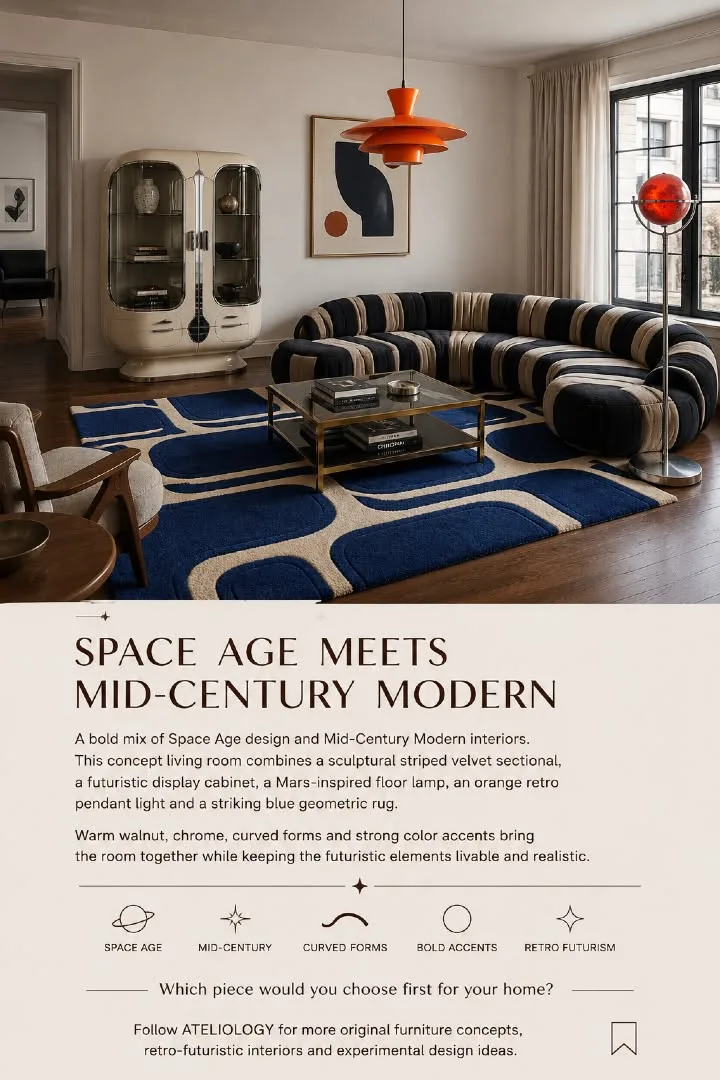
The Bubble Lamp works especially well wherever soft, diffuse light is needed without the fixture itself feeling visually heavy: over a dining table in a Boho living room with rattan and plants, as a pendant in a Space Age room full of glossy surfaces, or as a calm counterpoint in a color-saturated Memphis interior. In a Coastal Grandmother room with pale, natural materials, it fits in effortlessly, too.
Ateliology Style Verdict
The Bubble Lamp proves that a preservation technique developed for warships can become one of furniture history's most accessible and beloved lamps. Its floating lightness and soft glow make it a style piece that transforms a room without ever dominating it.