French Provincial Cane Sideboard
Designer undocumented · French Provincial style — Workshop and place of manufacture undocumented
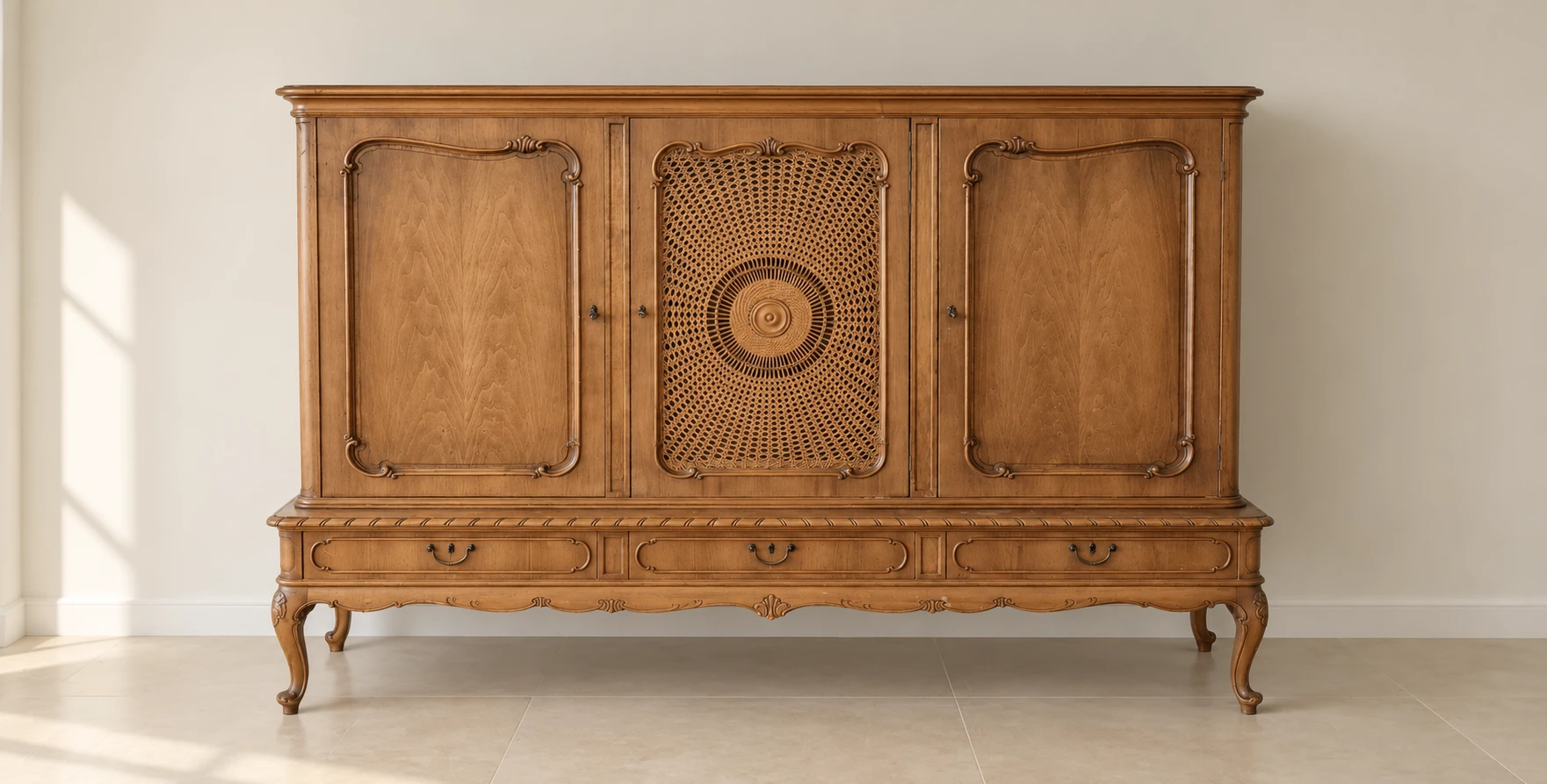
Curved legs, carved framing and a woven centre give this French Provincial-style sideboard its character. Explore the details and ways to place it in a modern room.
French Provincial style and its influences
Curved lines and carved details recall eighteenth-century Louis XV furniture. French Provincial covers regional French furniture and later interpretations of those forms. The pictured sideboard fits that visual tradition, but its workshop and production date are not established.
Curved legs and a woven centre
Cabriole legs visually lift the cabinet. A radiating cane pattern draws attention to the centre, while doors and drawers organise the front. Timber, weaving and fittings offer different textures within a warm palette.
Historical style does not prove age
Furniture forms are revived over many generations. A Louis XV-style sideboard need not date from the eighteenth century. Maker's marks, joints, hardware and materials can help establish the history of an individual piece.
Cane as a design element
Cane weaving appears on seats, backs and furniture fronts. Its open structure lightens a solid cabinet, while the radiating pattern here adds a focal point. On an older piece, inspect tension, breaks and previous repairs.
Combine it with contemporary furniture
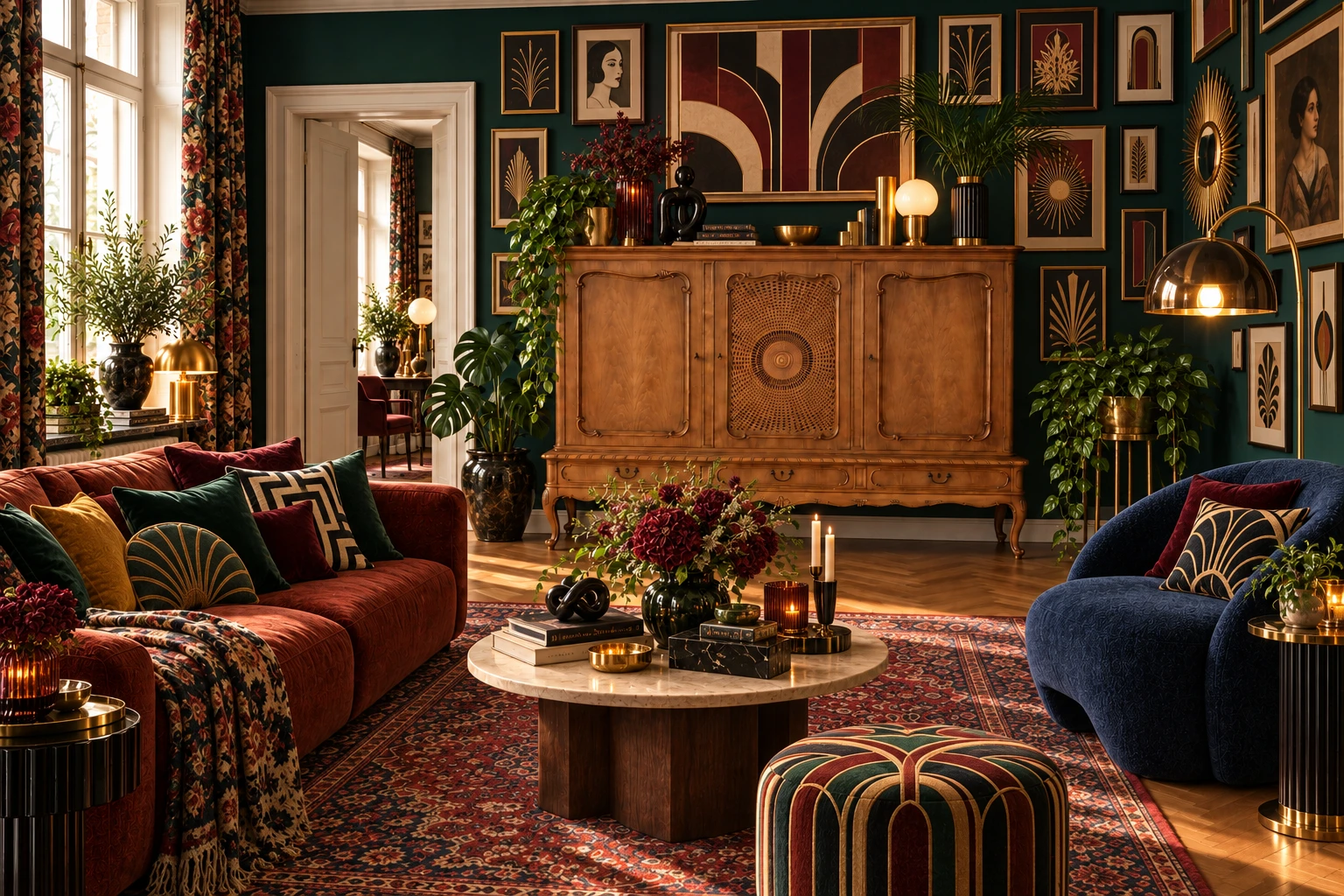
A plain wall and quiet rug give the carving space. Linen and ceramics connect with its textures; a metal lamp or glass table brings contrast. Repeating one colour or timber tone helps the sideboard sit among other pieces.
One piece, several possibilities
The lower edge, woven centre and carved transitions reward a closer look. Keep the timber visible or explore how colour changes the form. The digital studies below offer five interpretations of the same piece.
See it styled in a real room
Inspiration · Furniture Reimagined · 01
One vintage cabinet. Five new looks.
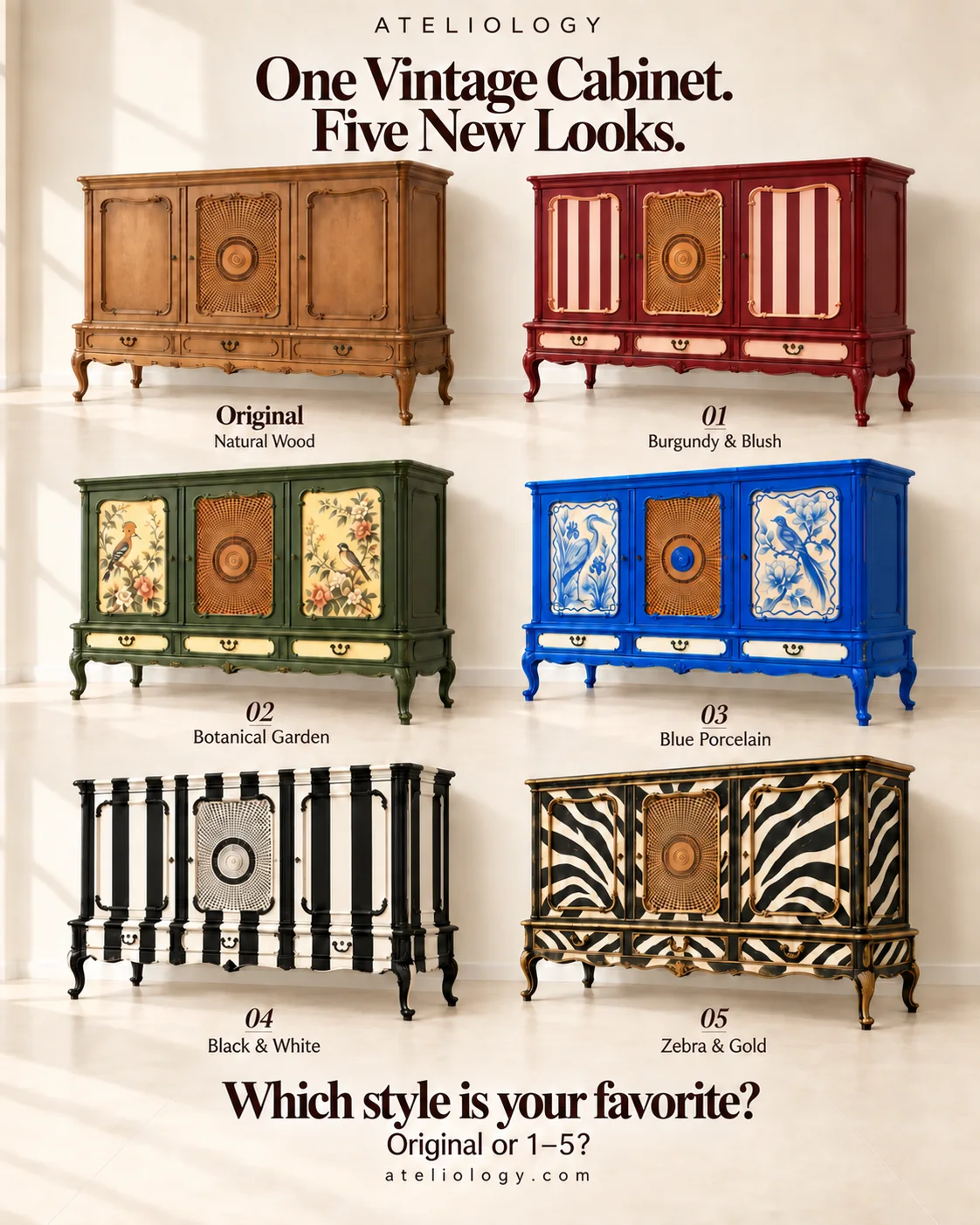
A vintage piece does not have to belong to just one decorating style. Its curved legs, carved door frames and sunburst cane center can keep their character while color and pattern give the cabinet a very different mood. For this first Furniture Reimagined story, we explored five finishes, from gentle botanical painting to bold graphic stripes.
Keeping the original wood is a design choice too: it lets the grain and craftsmanship take the lead. The images below are AI-assisted digital design studies, not documented restorations or product finishes available to buy.
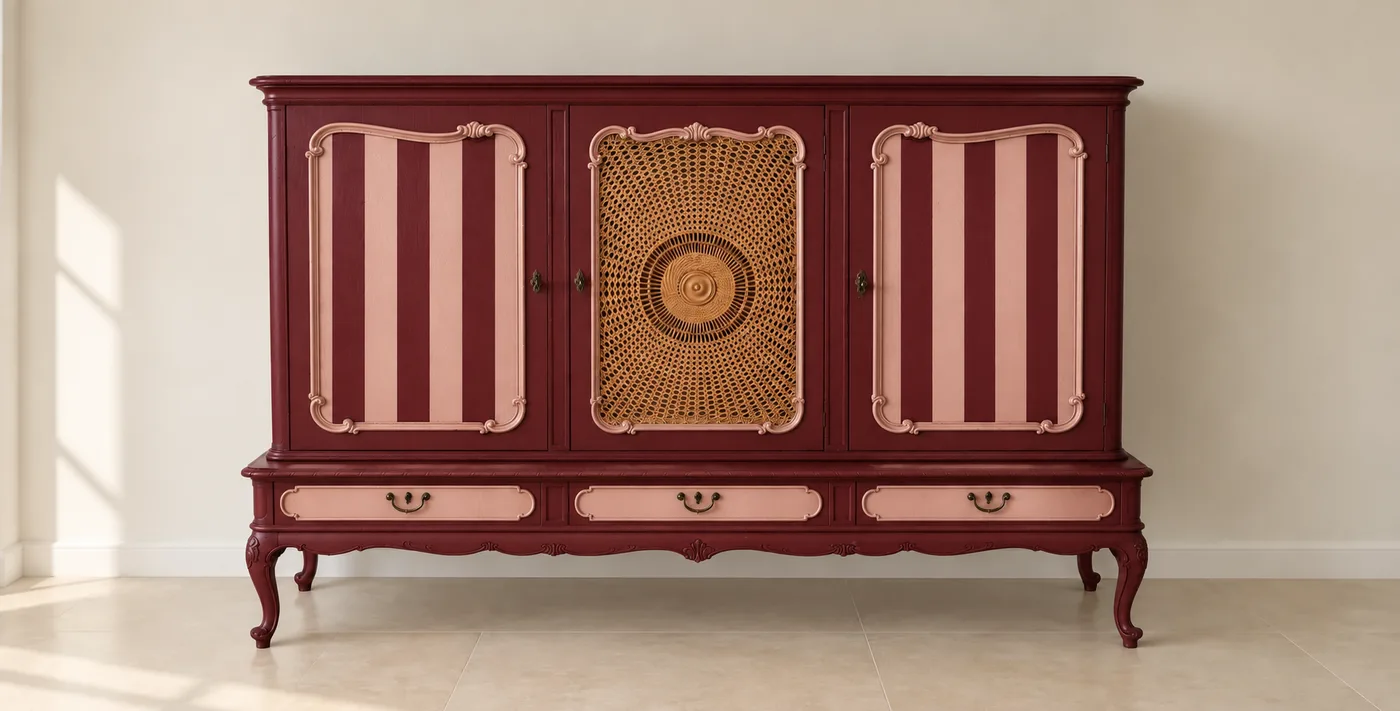
01 · Burgundy & Blush
Burgundy gives the carved frame depth, while blush stripes bring a playful rhythm to the door panels. Keep the surrounding wall quiet and repeat one of the two colors in a cushion or artwork. The natural cane provides a warm pause between the stripes.
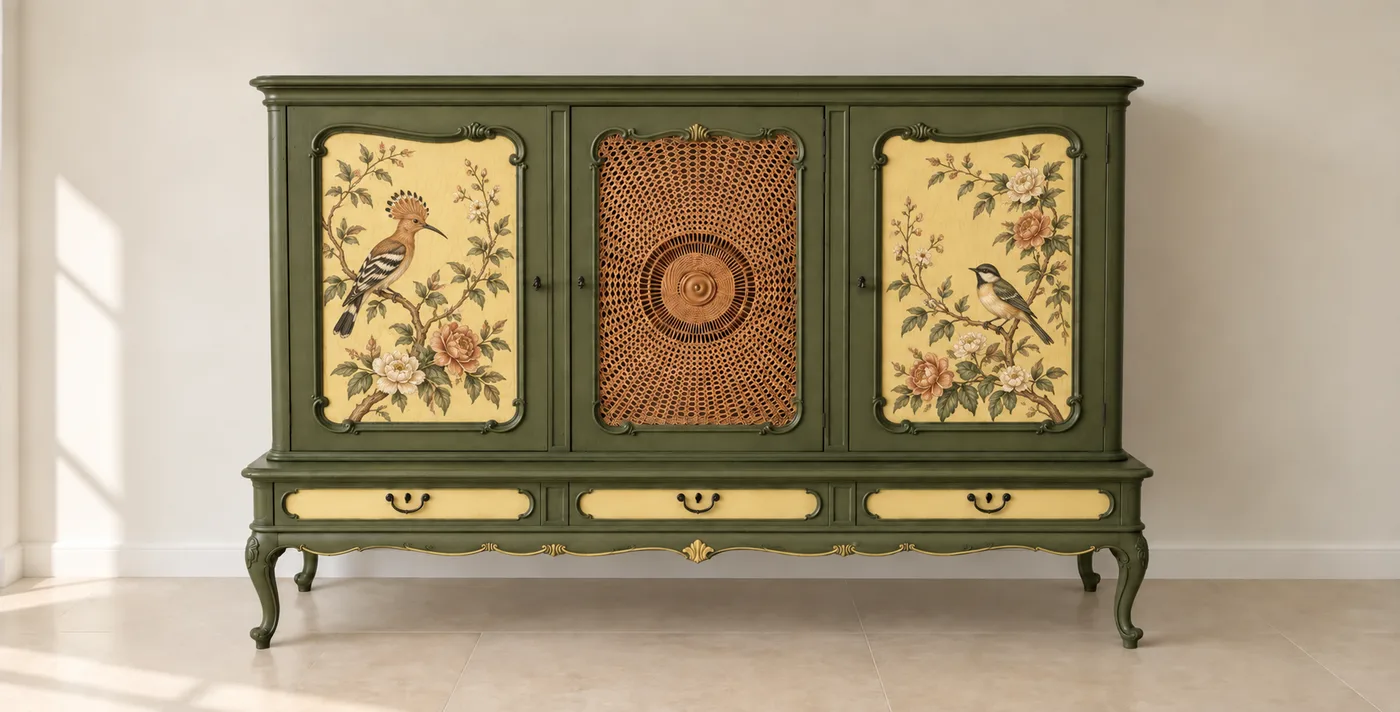
02 · Botanical Garden
Olive green and butter yellow turn the cabinet into a backdrop for painted birds and flowering branches. The pictures sit inside the existing door moldings, so the decoration works with the furniture rather than hiding its shape. Linen, aged wood and a leafy plant would make natural companions.
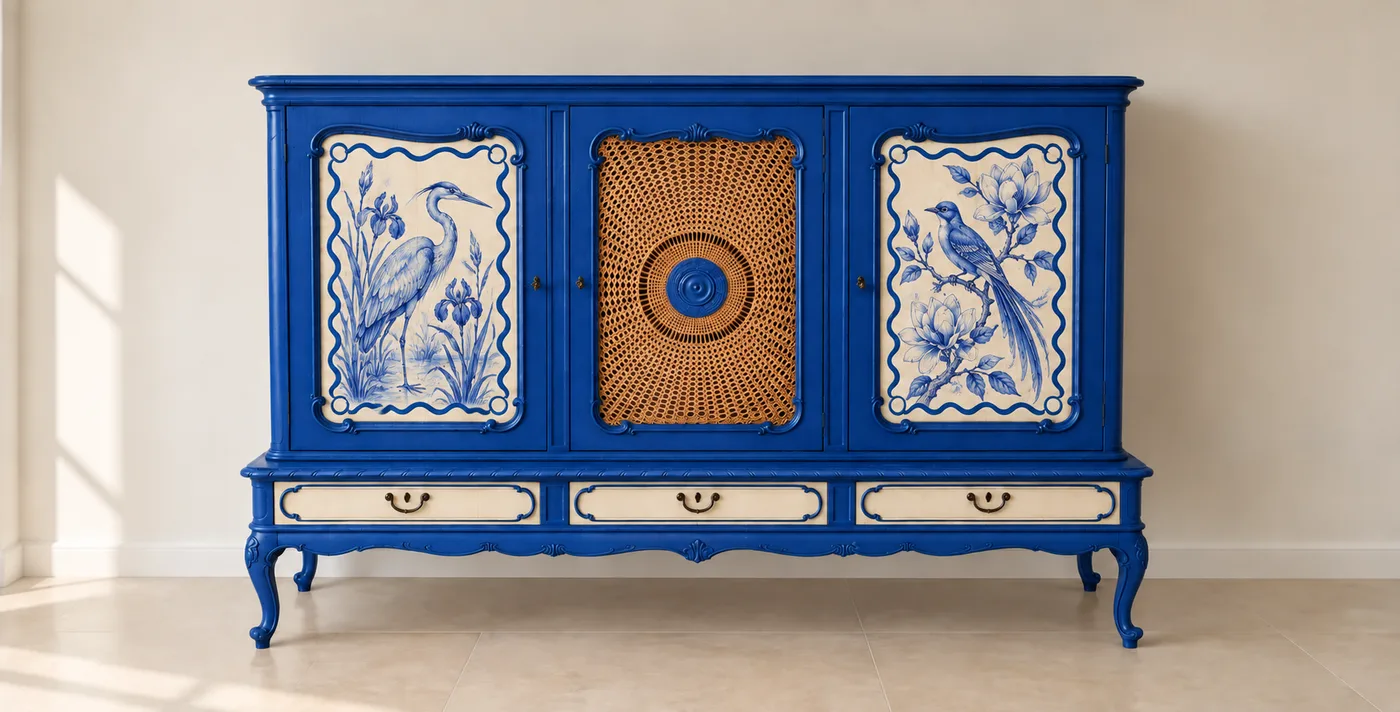
03 · Blue Porcelain
Cobalt blue and cream borrow the visual language of blue-and-white ceramics. A heron, irises and flowering branches make the two door panels feel like a pair of painted pictures. Pair this look with warm wood or woven textures to soften the crisp contrast. The name describes the palette; the cabinet is not porcelain.
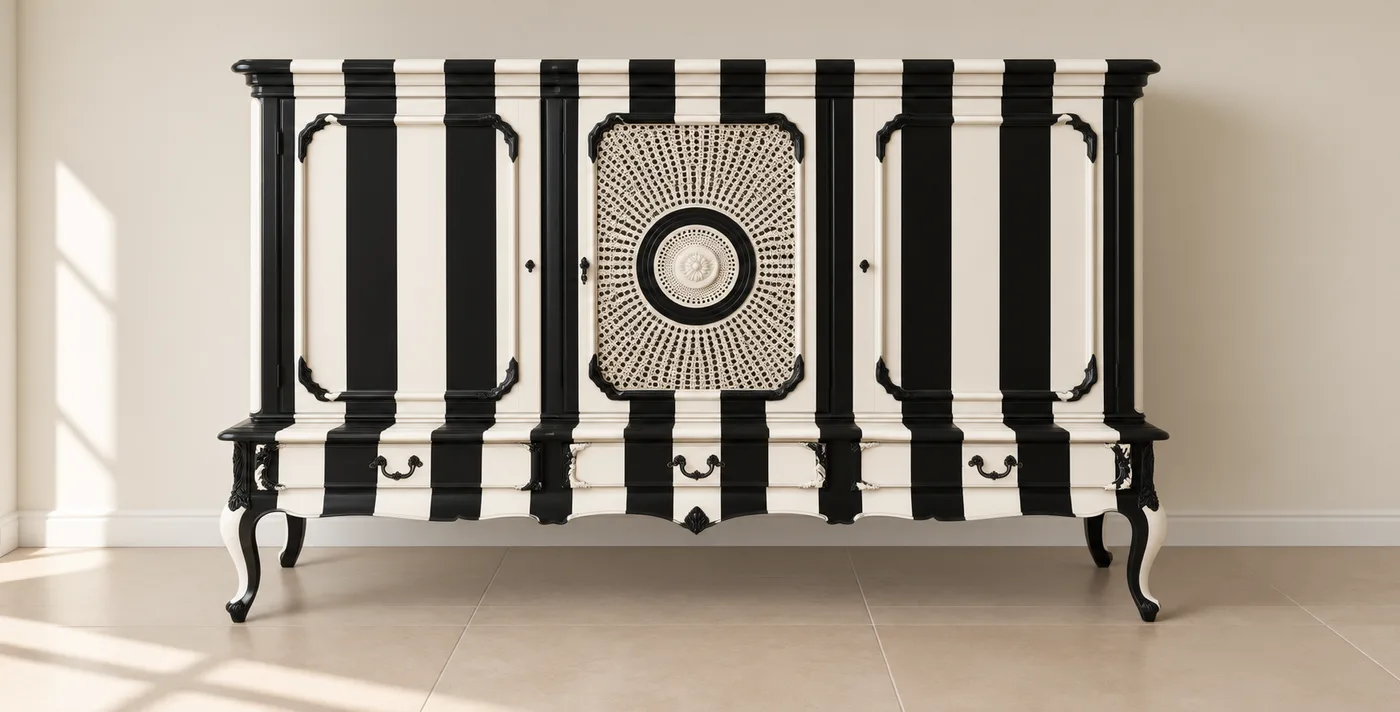
04 · Black & White
Broad vertical stripes make the ornate silhouette feel surprisingly graphic. Here the pattern runs across the facade, including the moldings and drawers, while the pale cane center breaks up the repetition. Give this version space: a plain wall and a simple rug let the stripes do the work.
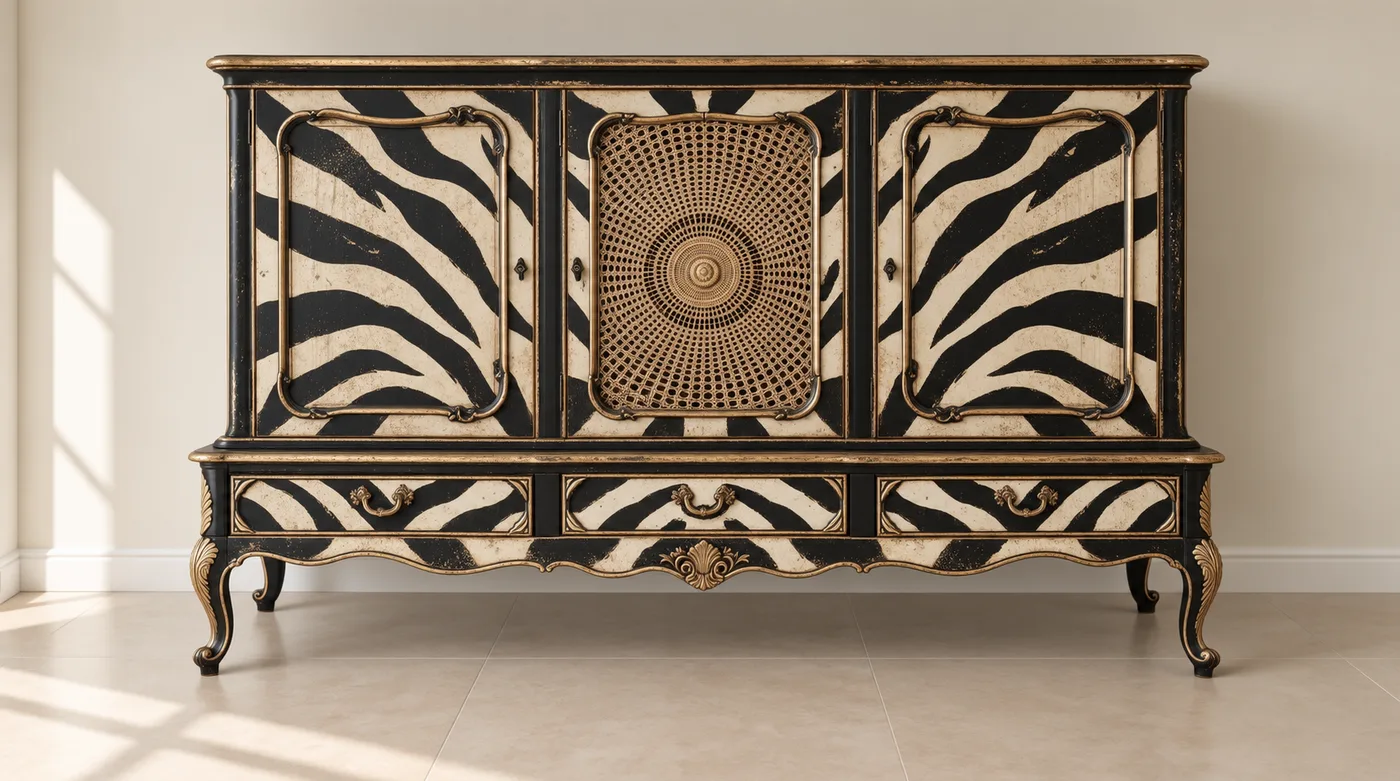
05 · Zebra & Gold
An irregular zebra pattern follows the door fields, with antique-gold accents picking out the carved edges. The worn-looking finish makes this the most theatrical interpretation. In a room, choose one supporting accent such as burgundy velvet or a brass lamp instead of repeating animal prints everywhere.
How to adapt the idea to your own furniture
Start with the shape: which edges deserve emphasis, and which surfaces should stay quiet? Two related colors and a motif confined to the door panels are a useful starting point. Before changing a real piece, check its age, condition and existing finish; a potentially valuable example deserves a restorer’s assessment. Give the cane and original hardware particular care.
Explore the room around the piece through eclectic interiors and vintage decorating ideas.
Which would you choose: natural wood or one of the five new looks?
More design classics
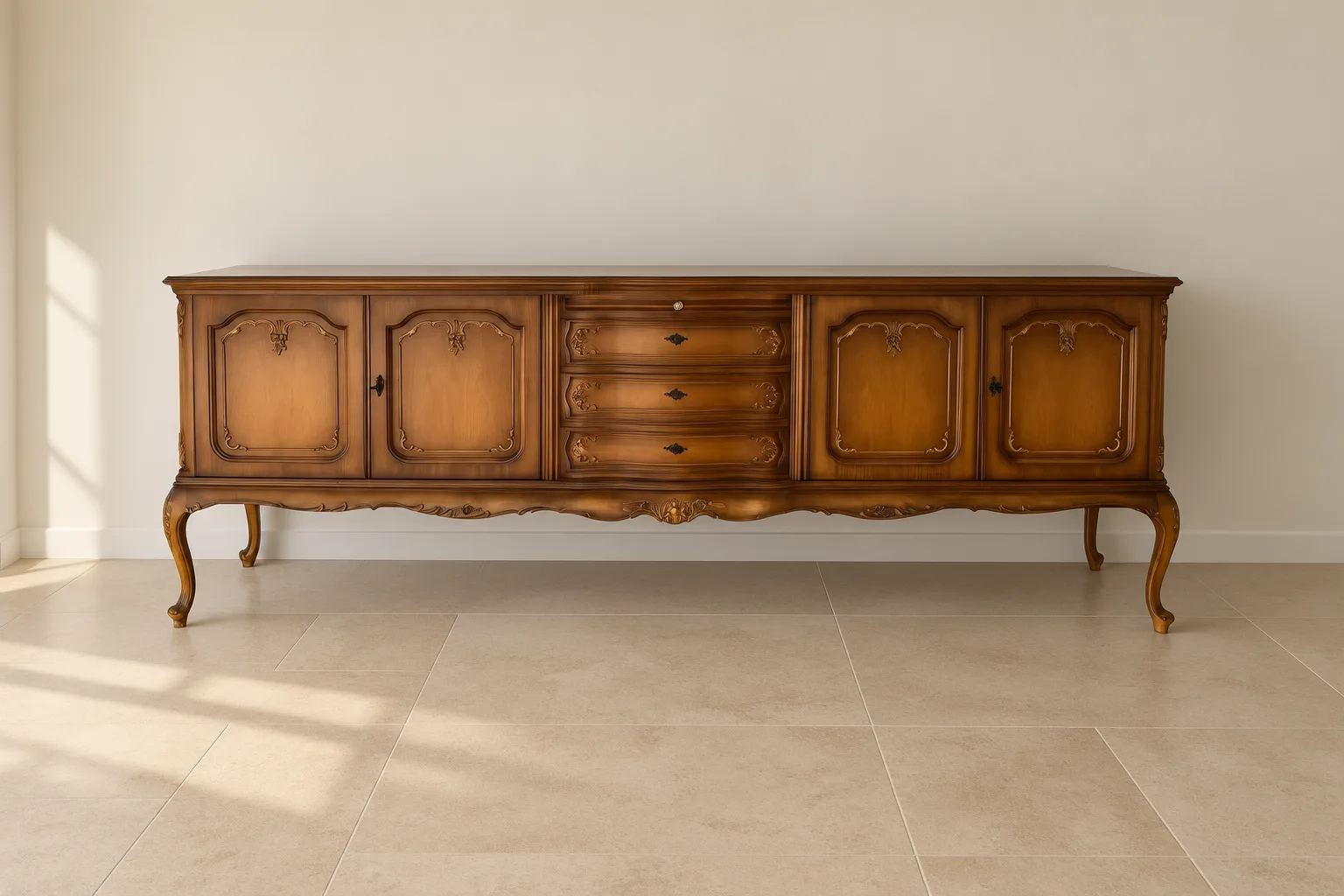 Twentieth-century revival furniture · exact date undocumentedWarrings Chippendale Sideboard
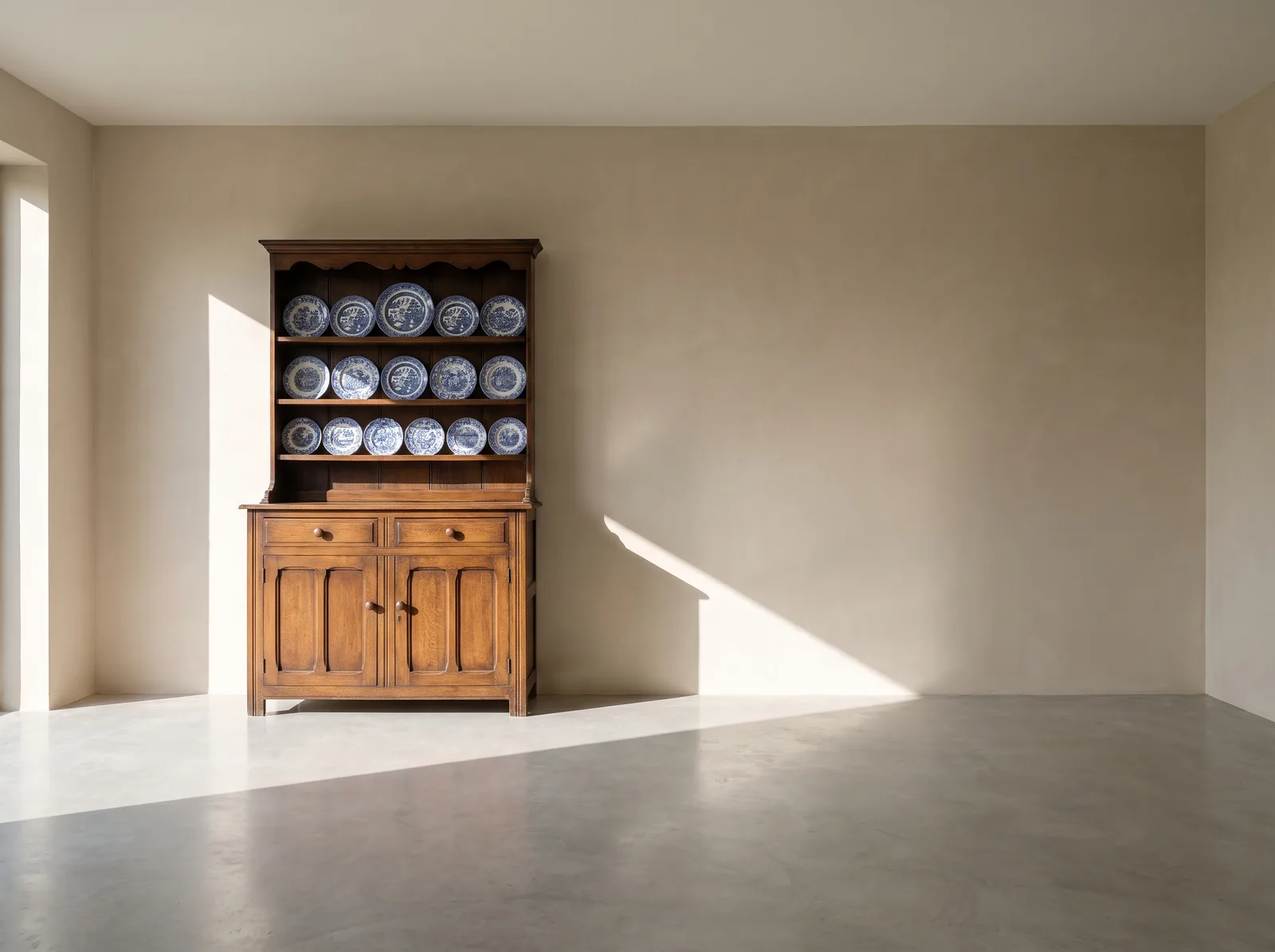 British furniture tradition · individual piece undatedWelsh Dresser
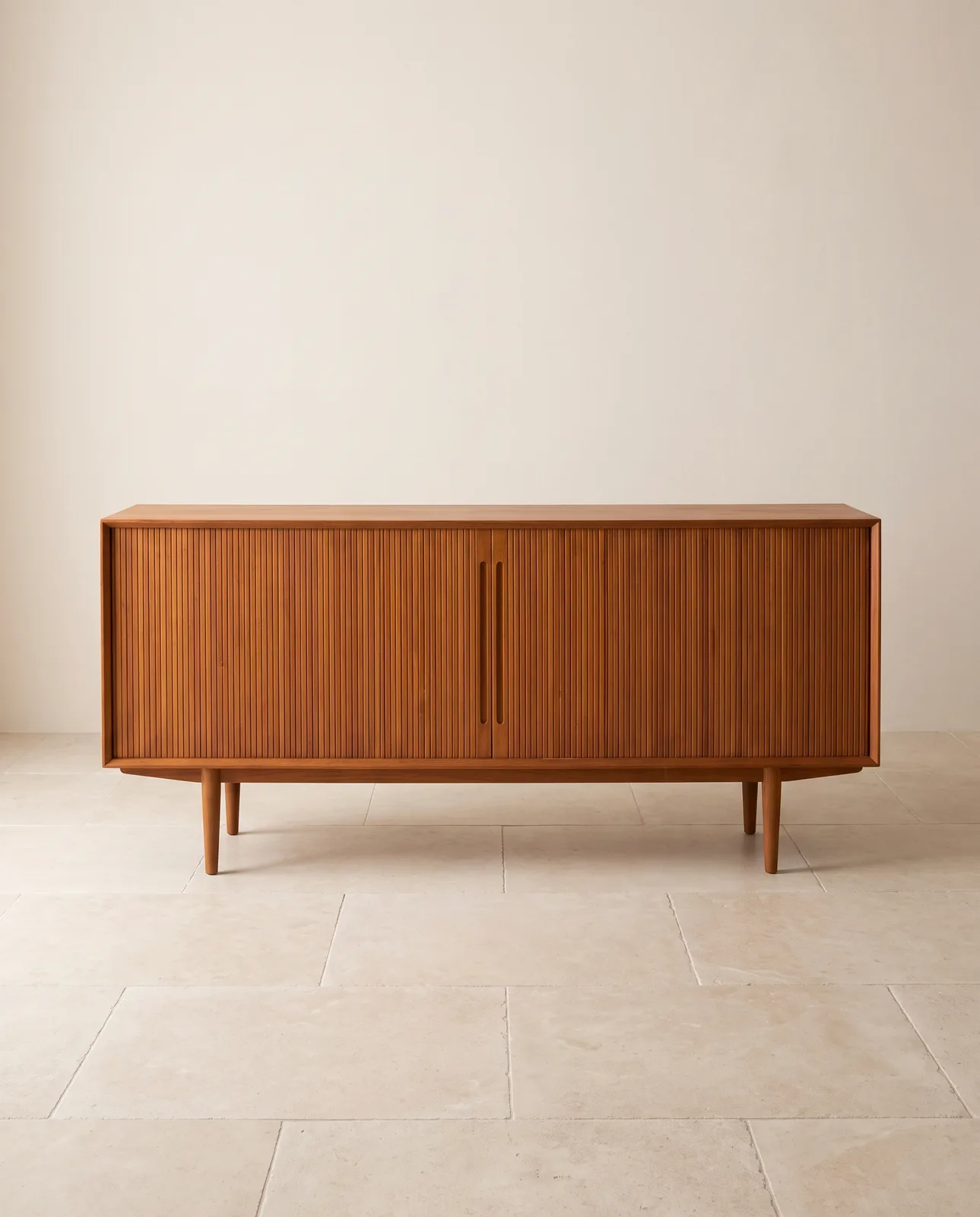 Danish modernism · model and date unconfirmedVodder Teak Sideboard
 1952–1956 (Modernism)Nuage Bookshelf