Back to overview
Ball Chair
1963 (Space Age)

Ball Chair

Eero AarnioAdelta, Finland

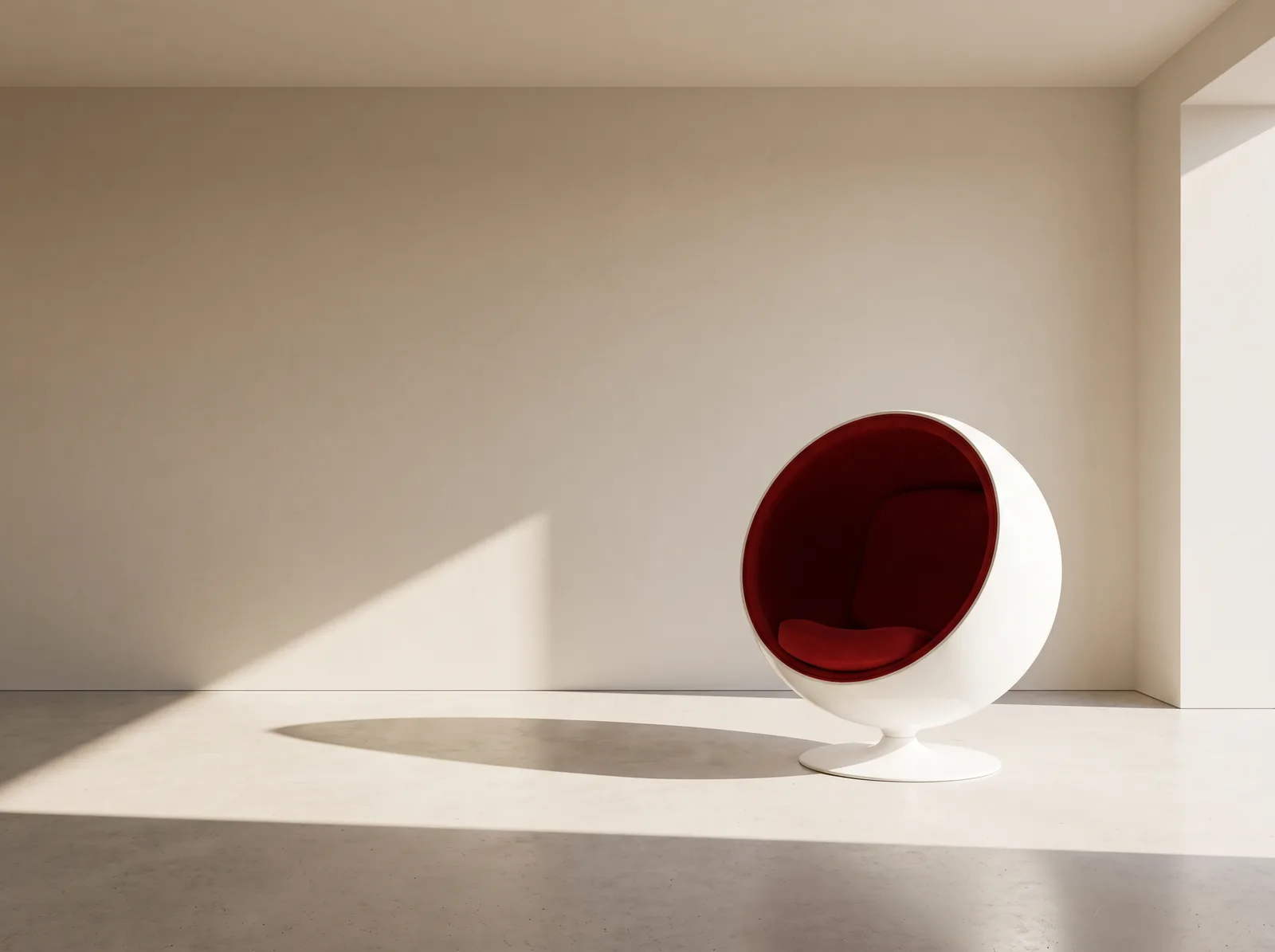
A perfect sphere on a slim pedestal, softly upholstered inside like a small world of its own — the Ball Chair made its designer, Eero Aarnio, an overnight icon of Space Age design in 1963.

More Than an Armchair — a World of Its Own

Few pieces of furniture embody the idea of a private retreat as thoroughly as the Ball Chair. Its perfectly round, glossy outer shell opens into a softly upholstered, almost cave-like seat inside that dampens sound and limits the outward view to a narrow opening. Sitting in a Ball Chair means literally sitting inside your own small world.

Born From Finnish Craftsmanship

Eero Aarnio designed the Ball Chair in 1963, initially for his own home, because he couldn't find an armchair that matched his vision of a self-contained, sculptural piece of seating. The design was created using the still-limited fiberglass-processing capabilities available in Finland at the time — Aarnio had the spherical shape formed through painstaking manual work, long before corresponding manufacturing techniques became industrially widespread.

The International Breakthrough at the Cologne Furniture Fair

The international breakthrough came in 1966 at the Cologne Furniture Fair, where the Ball Chair caused a sensation and made Aarnio famous practically overnight. Press and public alike responded enthusiastically to a piece of furniture that looked so radically different from anything seen before — round instead of angular, enclosed instead of open, a small-scale dwelling rather than a classic armchair.

Fiberglass and the Possibilities of the Space Age Era

The Ball Chair emerged right at the cultural peak of the Space Age, when the space race and new material technologies sparked a broad fascination with round, futuristic forms. Fiberglass, a material from the aerospace industry, made it possible for the first time to produce large-scale, freestanding hollow forms like the Ball Chair's spherical shell — a construction that would have been nearly impossible with traditional wood or metal.

From Niche Product to Pop Culture Icon

The Ball Chair found its way into numerous films, TV shows, and music videos of the 1960s and 70s, becoming a visual shorthand for future-optimism and retro-futurism. It's now part of the collections of major design museums and continues to be faithfully manufactured by Adelta today — a rare example of a piece of furniture that became both a design icon and a pop culture symbol.

A Statement for Space Age and Pop Art

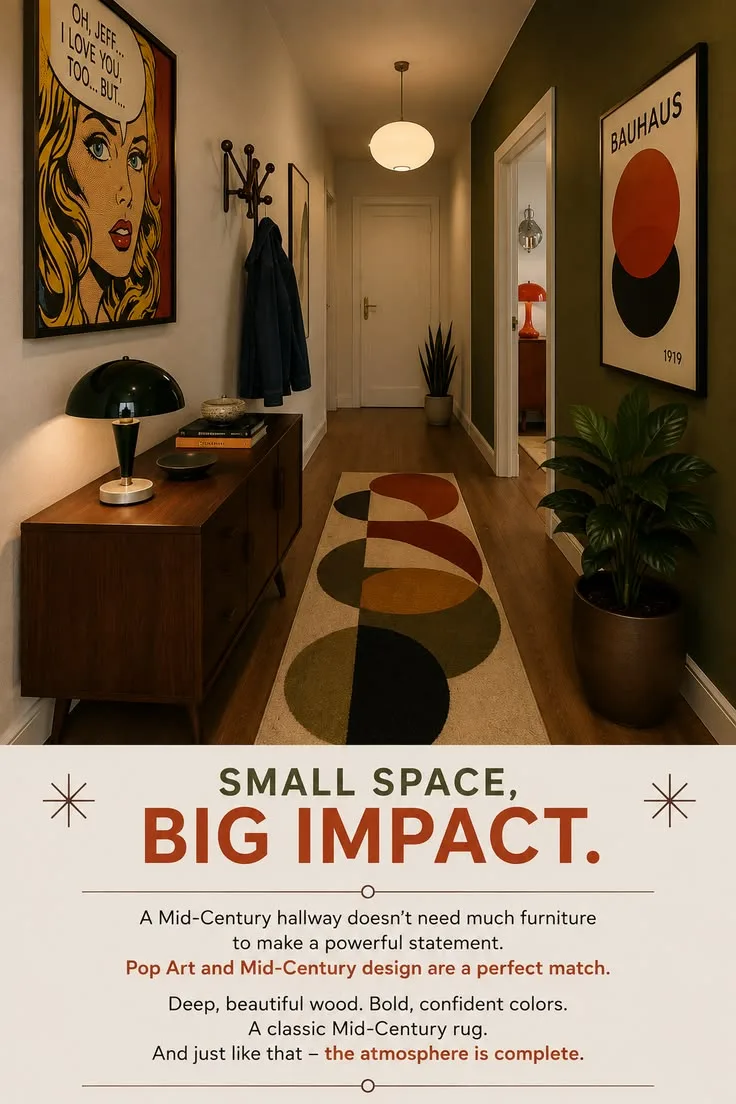
The Ball Chair visibly claims space and attention, which is why it works best in Space Age interiors, where it reads as a logical continuation of futuristic form language, as well as in Pop Art-driven rooms with bold blocks of color, where its sculptural roundness offers a counterpoint to flat patterns.

The Ball Chair in Today's Interiors

Since the Ball Chair takes up considerable space, it works best as a standalone statement piece in the corner of a larger living room, with enough distance to take in its full silhouette. Built-in lighting inside some models further enhances the sense of retreat during evening hours.

Ateliology Style Verdict

The Ball Chair proved that an armchair could be a piece of furniture, a sculpture, and a personal retreat all at once. Born from a private need for a self-contained piece of seating, it became one of the most recognizable silhouettes in design history. That exact combination of radical form and intimate function is what makes the Ball Chair a genuine style piece.