Japandi in Navy Blue: How Bold Color Can Still Feel Calm
Navy brings depth to pale Japandi interiors. These concepts pair deep blue with wood, natural textures and simple shapes.
What Is Japandi?
Japandi combines influences from Japanese and Scandinavian design. Both traditions value simplicity, functionality and a strong relationship with natural materials, although they approach these ideas from slightly different perspectives.
Scandinavian interiors tend to emphasize warmth, comfort and practical everyday living. Japanese interiors introduce an appreciation for restraint, imperfection, negative space and natural beauty.
The result is an interior that feels minimal without becoming sterile.
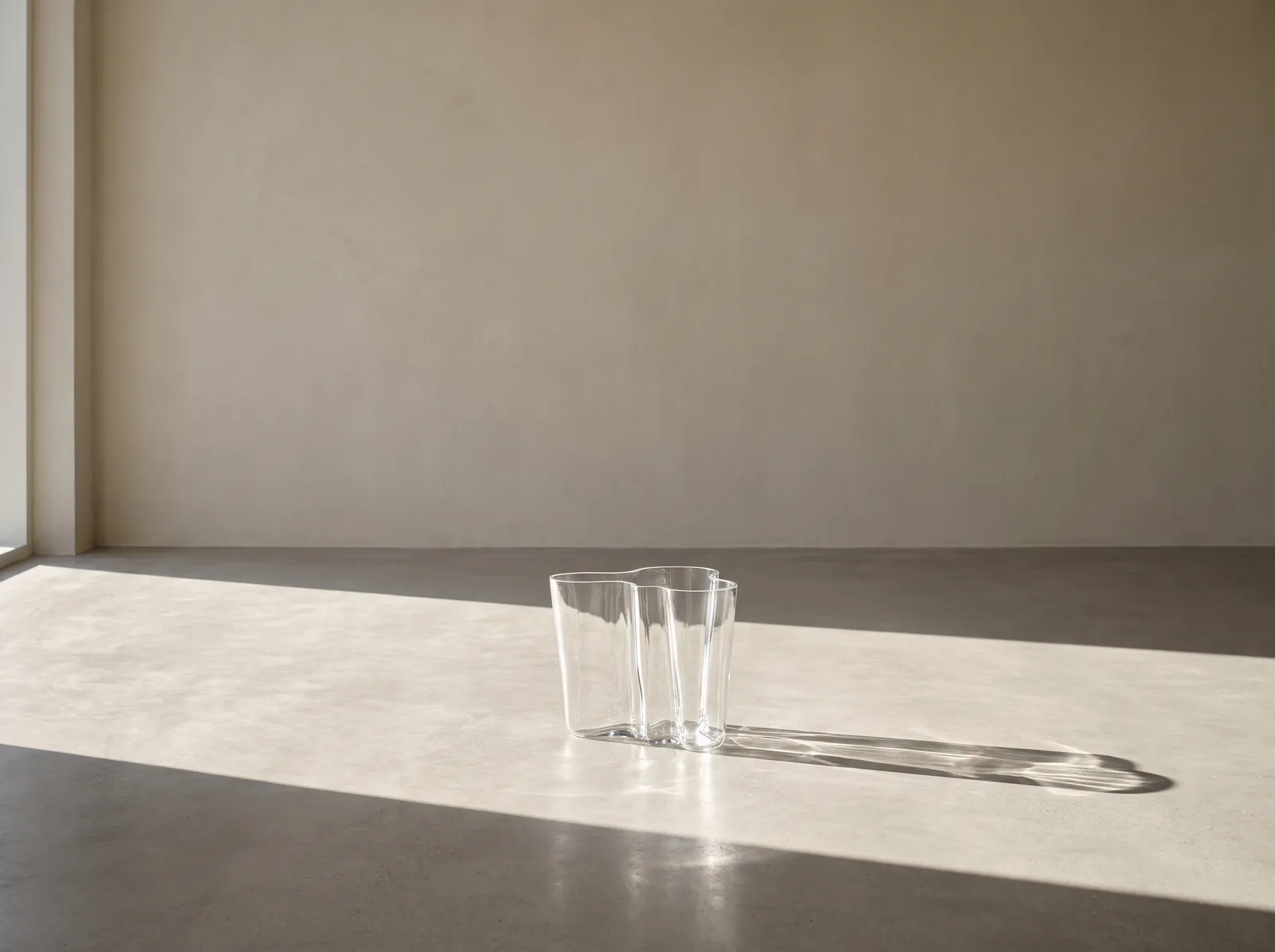
Instead of filling a room with decorative objects, Japandi focuses attention on a smaller number of carefully selected pieces. A beautifully proportioned chair, a solid wood table or a handmade ceramic vase can become part of the visual identity of the room.
The Core Elements of Japandi
Natural materials form the foundation. Oak, ash, walnut, linen, wool, ceramics, stone, paper and other tactile surfaces introduce warmth without requiring excessive decoration.
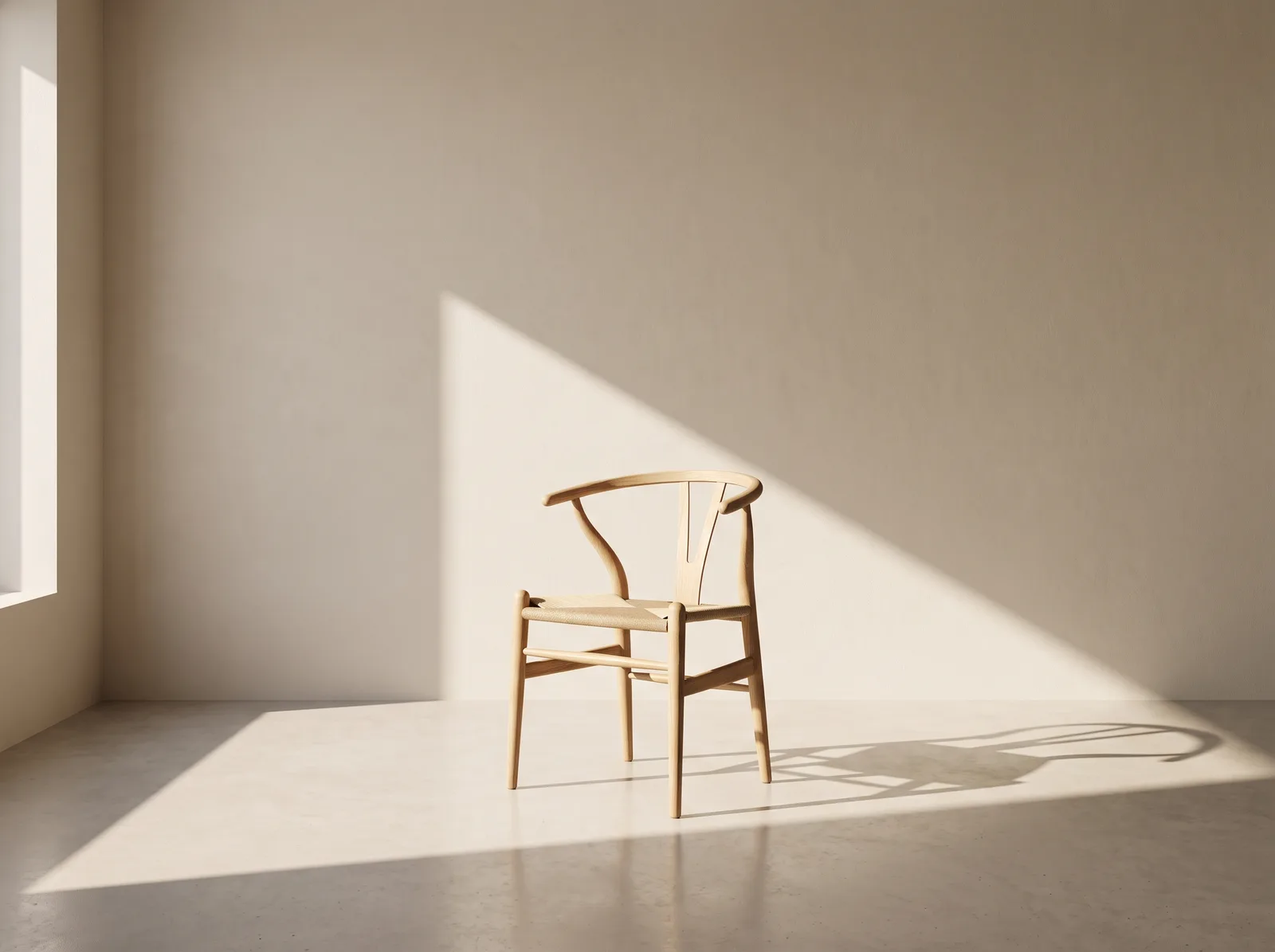
Furniture usually follows simple, low and balanced proportions. Low sofas, platform beds, understated lounge chairs and substantial wooden tables create the grounded appearance frequently associated with Japanese interiors.
Another important element is negative space. Not every wall, corner or surface needs to contain something. Empty space allows individual pieces to breathe and makes the room feel calmer.
Finally, Japandi favors quality over quantity. Rather than assembling many visually competing objects, the goal is to choose fewer pieces with strong materials, useful functions and timeless forms.
Japandi Doesn't Have to Be Beige
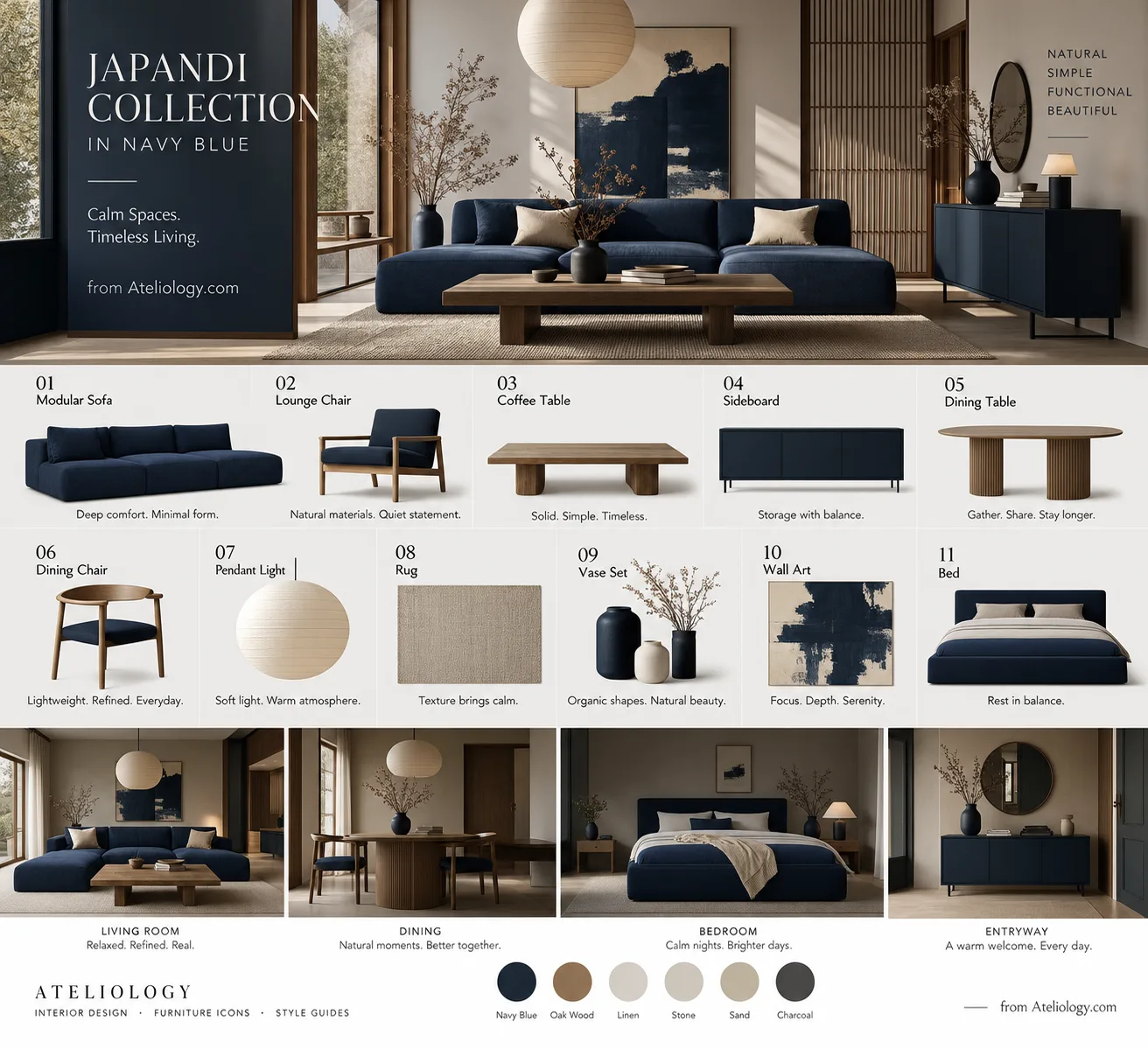
This is where our Navy Blue Japandi Collection takes a different direction.
A common interpretation of Japandi reduces the entire aesthetic to beige, cream and light wood. These colors certainly work, but they are not a requirement.
A strong color can coexist with a quiet interior.
The key is not necessarily how saturated the color is, but how many colors and competing elements are present at the same time.
Deep navy works particularly well because it has visual weight without the harshness of pure black. Against oak, linen, warm white and natural stone, navy can appear sophisticated and architectural rather than loud.
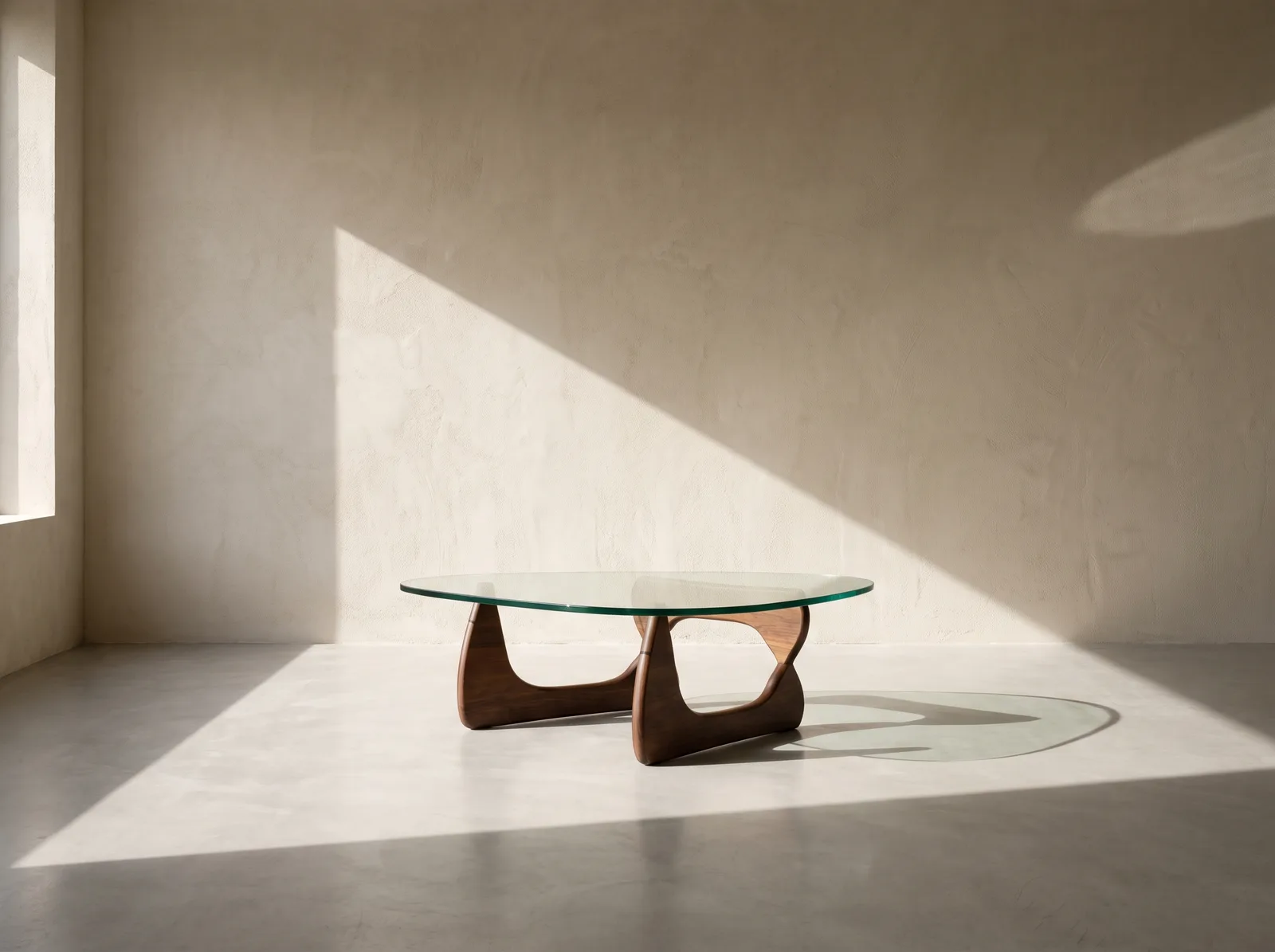
A large navy sofa, for example, can become the visual anchor of an otherwise restrained living room. There is no need to compensate with additional statement colors. The surrounding furniture can remain simple: a solid oak coffee table, an off-white wool rug, a paper pendant lamp and a few ceramic objects.
The result remains unmistakably calm.
The Navy Japandi Palette
For this collection, the palette is deliberately limited:
Navy Blue · Oak · Linen · Stone · Sand · Charcoal
Navy provides depth. Oak introduces warmth. Linen and sand soften the contrast, while stone and charcoal create subtle transitions between the lightest and darkest elements.
This approach is especially effective when navy appears only in selected larger pieces — such as the sofa, bed or sideboard — rather than being repeated everywhere.
The contrast itself becomes the decoration.
Creating a More Elevated Japandi Interior
A sophisticated Japandi room does not require expensive objects everywhere. What matters more is visual consistency.
Choose furniture with clear silhouettes and avoid unnecessary ornamentation. Combine matte surfaces with visible natural textures. Allow wood grain, linen fibers, ceramics and stone to provide detail instead of adding more decorative objects.
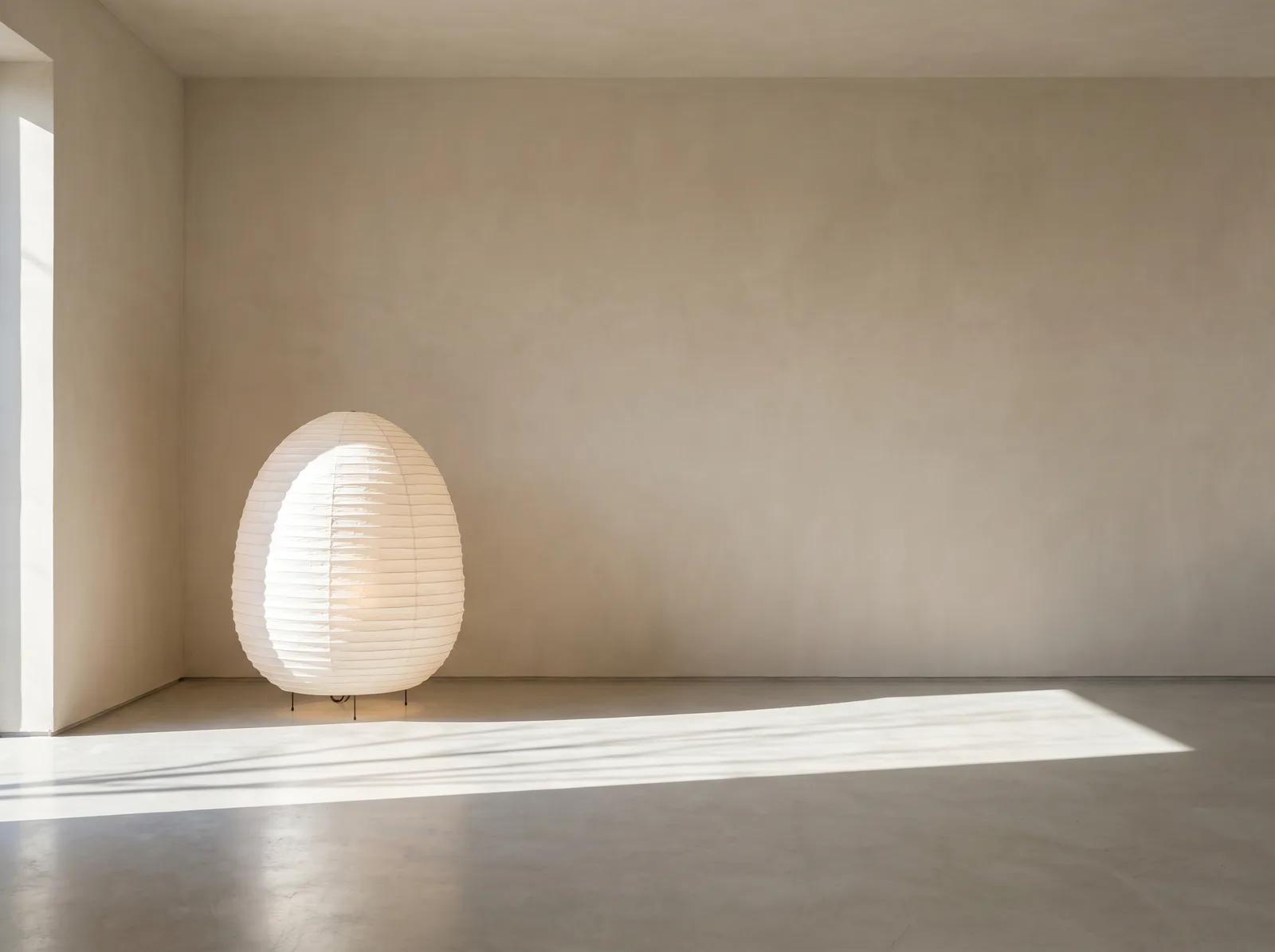
Lighting should also remain warm and understated. Paper lanterns and simple diffused lamps complement the style particularly well because they soften the stronger navy elements.
Artwork can introduce another layer of blue, but it should remain visually restrained. One large abstract piece often works better than a crowded gallery wall.
The same principle applies to accessories: fewer, larger and more intentional objects usually create a stronger result than numerous small decorations.
A Different Kind of Minimalism
Japandi does not have to mean living inside a completely beige room. Its underlying principles leave considerably more room for personality.
By combining deep navy blue with warm wood, natural textiles, simple forms and generous negative space, a Japandi interior can be colorful without becoming busy, minimal without becoming bland, and luxurious without relying on excessive decoration.
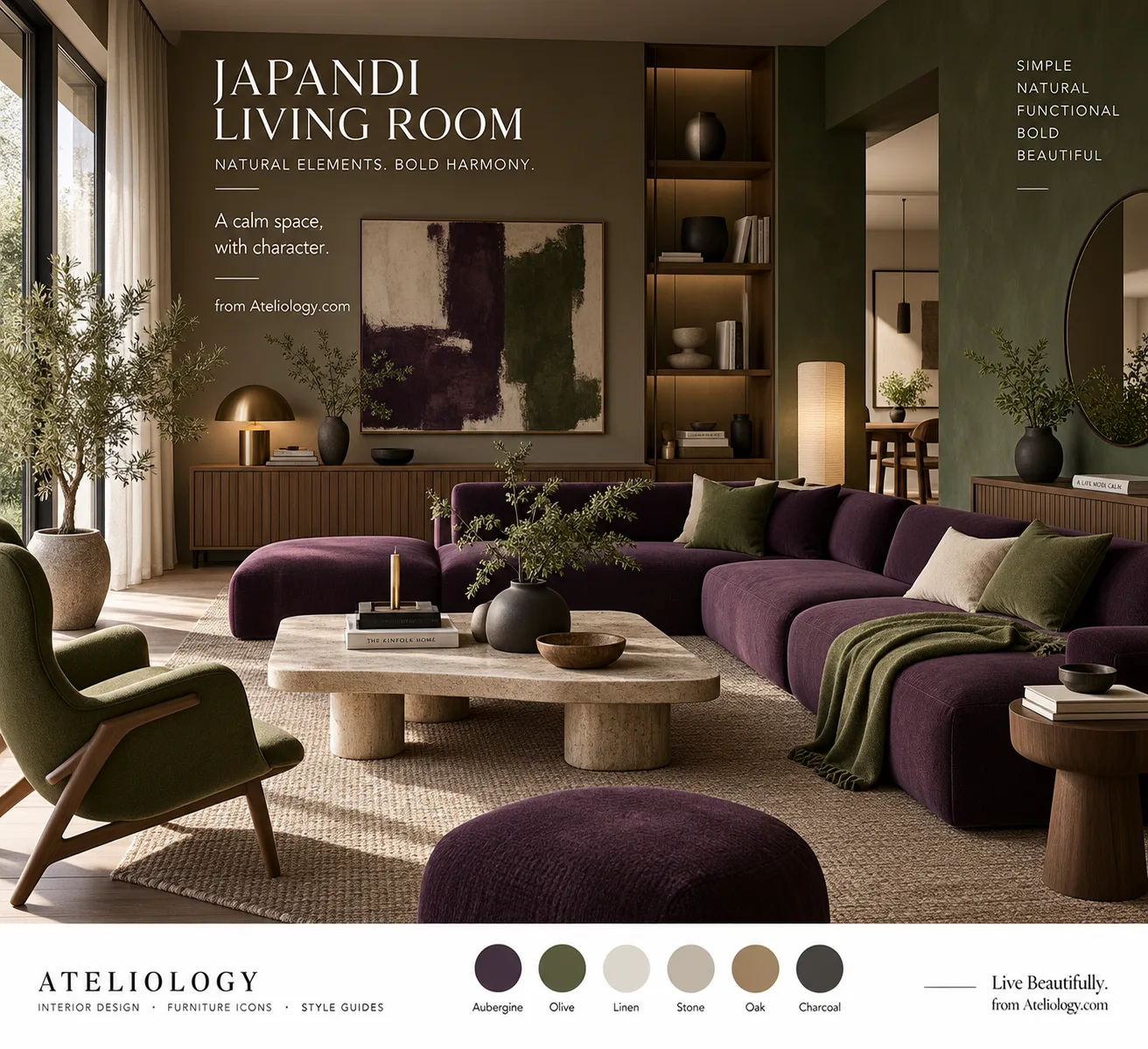
The strongest color in the room does not have to disturb its tranquility. Sometimes, it is exactly what gives a quiet space its character.
Ateliology — Japandi Collection in Navy Blue
Natural materials. Intentional forms. A stronger kind of calm.
The Japandi Style Guide
Japandi brings Japanese-influenced restraint together with Scandinavian comfort. Explore timber, gentle colour contrasts and useful furniture arranged with room to move and live.
Quiet colours with some contrast
Pale and dark timber, understated fabrics and ceramics offer several starting points. Cream and sand gain definition beside dark brown. The mix need not be entirely beige or low to the floor; proportions in your room matter more.
Make space for the things you value
Closed cupboards hold everyday items while an open shelf leaves room for a bowl or picture. Arrange furniture around clear doorways and routes. Personal objects can stay visible without occupying every available surface.
Make comfort part of the plan
Try low chairs and beds before deciding; seat height and ease of getting up need to suit you. In a home office, the desk, chair and task lighting matter more than a minimal outline. Textiles and an additional lamp make the room comfortable in the evening.