Buying guide · Bedroom
Wood, metal or upholstered: which bed is right for you?
You don't buy a bed for five minutes in the showroom. You buy it for many years. Eight years is almost 3,000 nights, plus Sunday mornings in bed, TV evenings and that one chapter that turns into three. No wonder choosing between wood, metal and upholstery feels harder than picking the bedding.
Each material has its own character. A metal bed is easy: a damp cloth is all it needs. A wooden bed feels warm and natural, but it's heavy. And an upholstered bed is almost like a sofa you can sleep on. This guide helps you find the bed that suits your everyday life. You'll also learn what helps against squeaks and stains, how high your bed should be and why a tape measure is worth it before you buy.
Advertising: this guide contains affiliate links. If you buy through them, Ateliology earns a small commission. It doesn't cost you more. The room images are AI images based on real products. The shop's details are what count.
The short answer: which bed suits whom?
- Metal bed: for you if you like things light, airy and easy to clean, or you need an affordable bed for a guest room or your first flat.
- Wooden bed: for you if you love natural materials, want a sturdy bed for many years and don't mind a few extra kilos on moving day.
- Upholstered bed: for you if you read, watch TV or have breakfast in bed and like leaning against a soft headboard.
| Metal bed | Wooden bed | Upholstered bed | |
|---|---|---|---|
| Cleaning | Wipe and done | Oil, wax or wipe, depending on the finish | Vacuum regularly, treat stains per the care label |
| Leaning back | Hard and cool, needs a cushion | Firm, feels warm | Soft, ideal for reading |
| Look | Light and airy | Warm and natural | Cosy and soft |
| Noise | Squeaks when screws loosen | Creaks when screws loosen | Fabric muffles, but the frame beneath can still creak |
| Moving house | Light, quick to take apart | Heavy, usually a two-person job | Wide frames need space |
| Dust and pet hair | Hardly a problem | Smooth surfaces, easy to clean | Collect in the fabric and seams |
| Suits | Industrial, Vintage, Grandmillennial | Japandi, Modern Organic, Boho | Modern Luxury, Hollywood Regency, Hygge |
Which bed suits you? The quick test
Answer the four questions on instinct and note the letter each time. At the end, count which letter comes up most. There are no wrong answers.
- What do you do in bed apart from sleeping? A: Nothing, lights out. B: A book now and then, sometimes a film. C: Breakfast, series, laptop, pretty much everything.
- How much do you like cleaning? A: As little as possible. B: A bit of care is fine. C: I don't mind vacuuming.
- How often do you move? A: Fairly often, every kilo counts. B: Rarely, the bed should stay for a long time. C: Don't mind, as long as it's cosy.
- How should your bedroom feel? A: Airy and tidy. B: Natural and warm. C: Soft and a little luxurious.
Mostly A: a metal bed suits you. Mostly B: look at wooden beds. Mostly C: you'll love an upholstered bed. Mixed? Completely normal. The sections below will help. A wooden bed with a large back cushion is often a good middle ground.
Frame or covering? What the words mean
In the showroom, wood, metal and velvet sound like three equal categories. They aren't. Wood and metal describe the frame of the bed. Velvet, velour or cord describe the fabric an upholstered bed is covered with. Under that fabric there's again a frame made of wood, engineered wood or metal.
When comparing prices, check what's included: is there a slatted base? Do you still need a mattress? A deal is only a good deal once you know exactly what will be delivered.
Metal beds: pros and cons
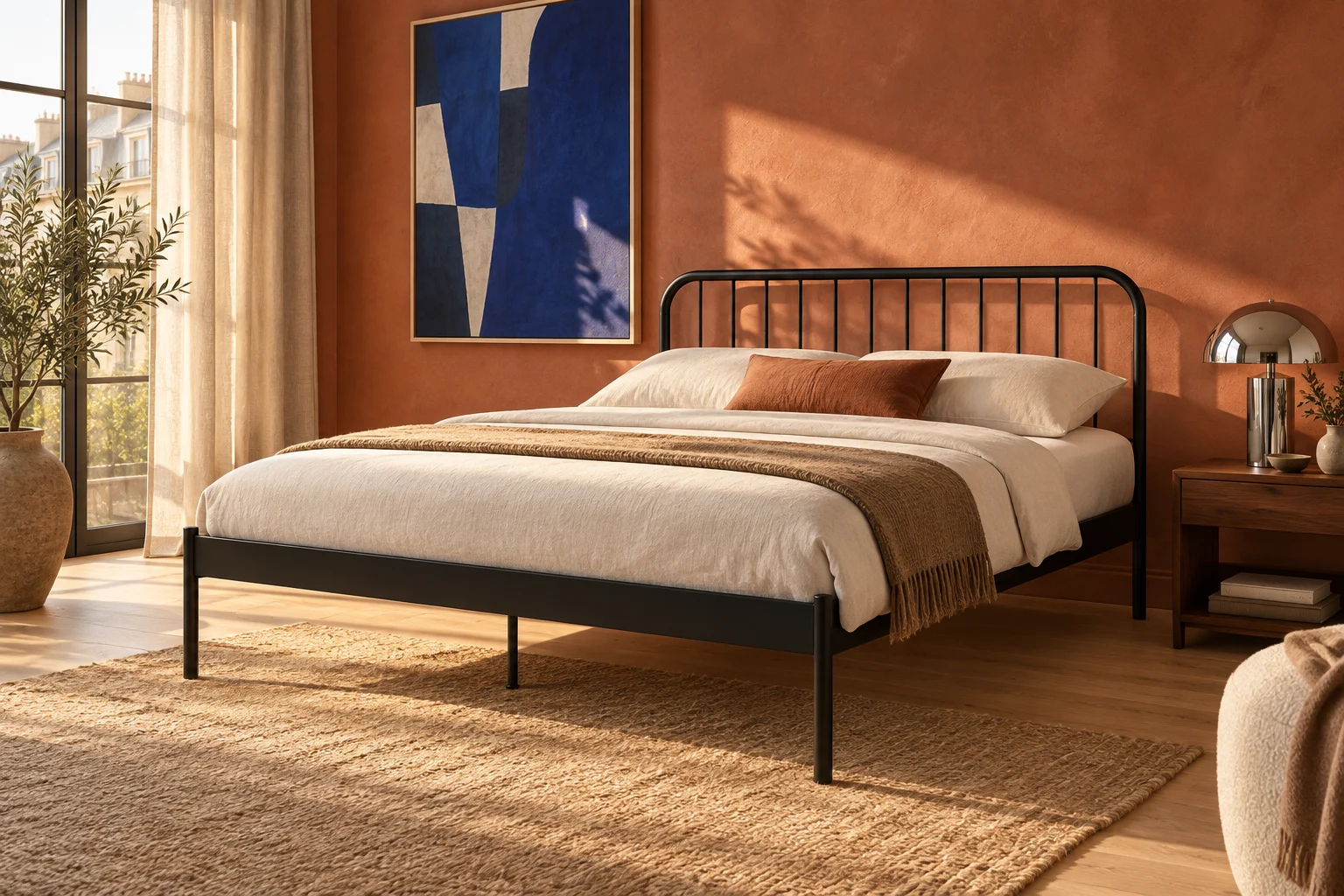
A metal bed is ideal if you don't want to spend much time cleaning. The smooth frame has no seams where hair or crumbs can collect. A slightly damp cloth is usually enough. The thin bars make small rooms feel airier. And metal beds are often quite affordable.
- Pros: easy to clean, easy to carry, airy look, often affordable.
- Cons: hard and cool to lean against, can squeak when screws loosen.
The biggest drawback shows when you lean back: metal is hard and feels cool. You won't sleep any colder, though. If you like reading in bed, you'll need a large back cushion that doesn't slip between the bars.
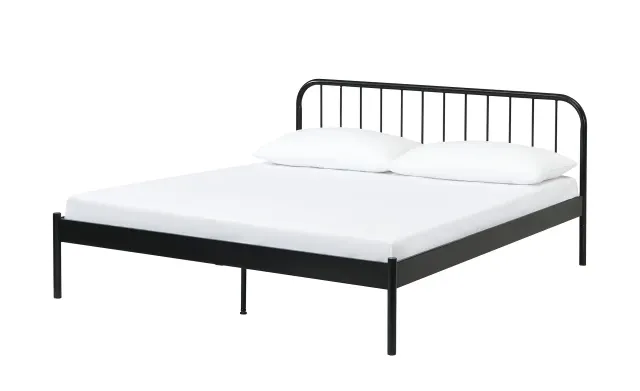
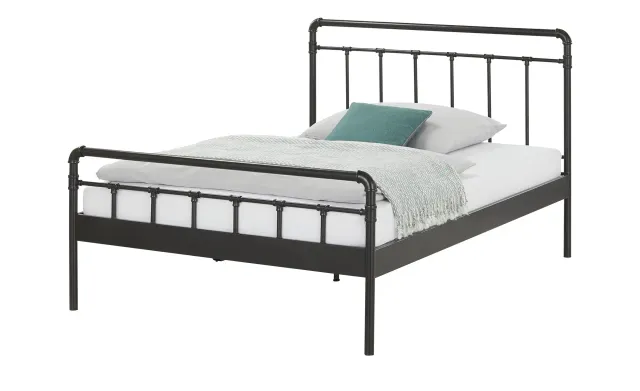
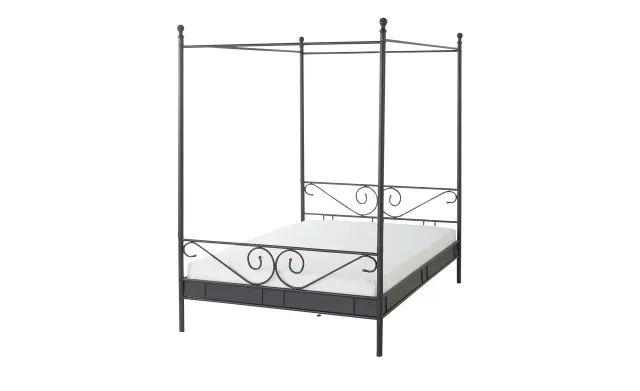
Check the measurements too. For example, the black metal bed below has only 11 cm of space under the frame. That looks airy, but a 20 cm storage box won't fit. If you want to keep bedding under there, you'll need low under-bed boxes.
Do metal beds squeak? Five tips against noise
Whether a bed squeaks depends less on the material and more on how well everything is joined. Wooden beds creak too when something has come loose. This helps:
- Tighten the screws: screws loosen, especially in the first few weeks. Tighten them as the assembly instructions say.
- Check the middle leg: the leg in the middle should touch the floor. On uneven floors, felt pads help.
- Check the slatted base: it often rubs against the frame. Felt strips on the support rails make it quieter.
- Check the sprung slats: the flexible wooden slats of the base sit in slat caps at each end. If a slat is loose or a cap is broken, every movement creaks.
- Go easy on oil: only use oil or spray on metal parts, and only if the manufacturer allows it. It stains wood, rugs and bedding.
A metal bed for the guest room
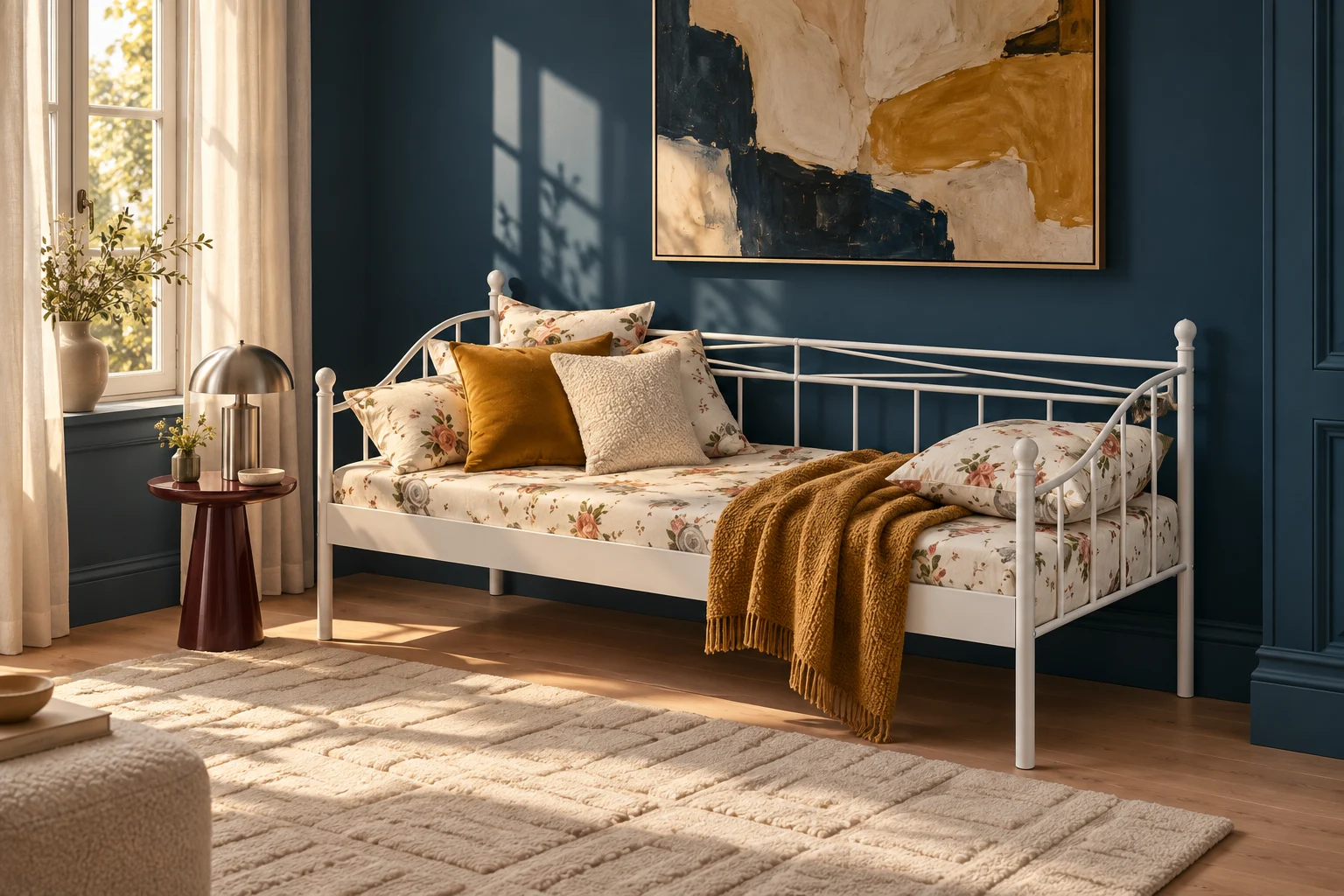
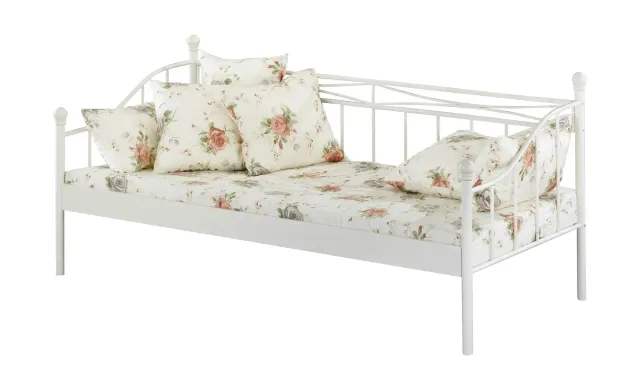
Should the guest room also work as an office or reading corner? Then a daybed is a good solution. By day it's a sofa with a few cushions, at night a bed for guests. Check what's included: with the white 90 × 200 cm daybed below, for example, the mattress and slatted base are not.
Wooden beds: pros and cons
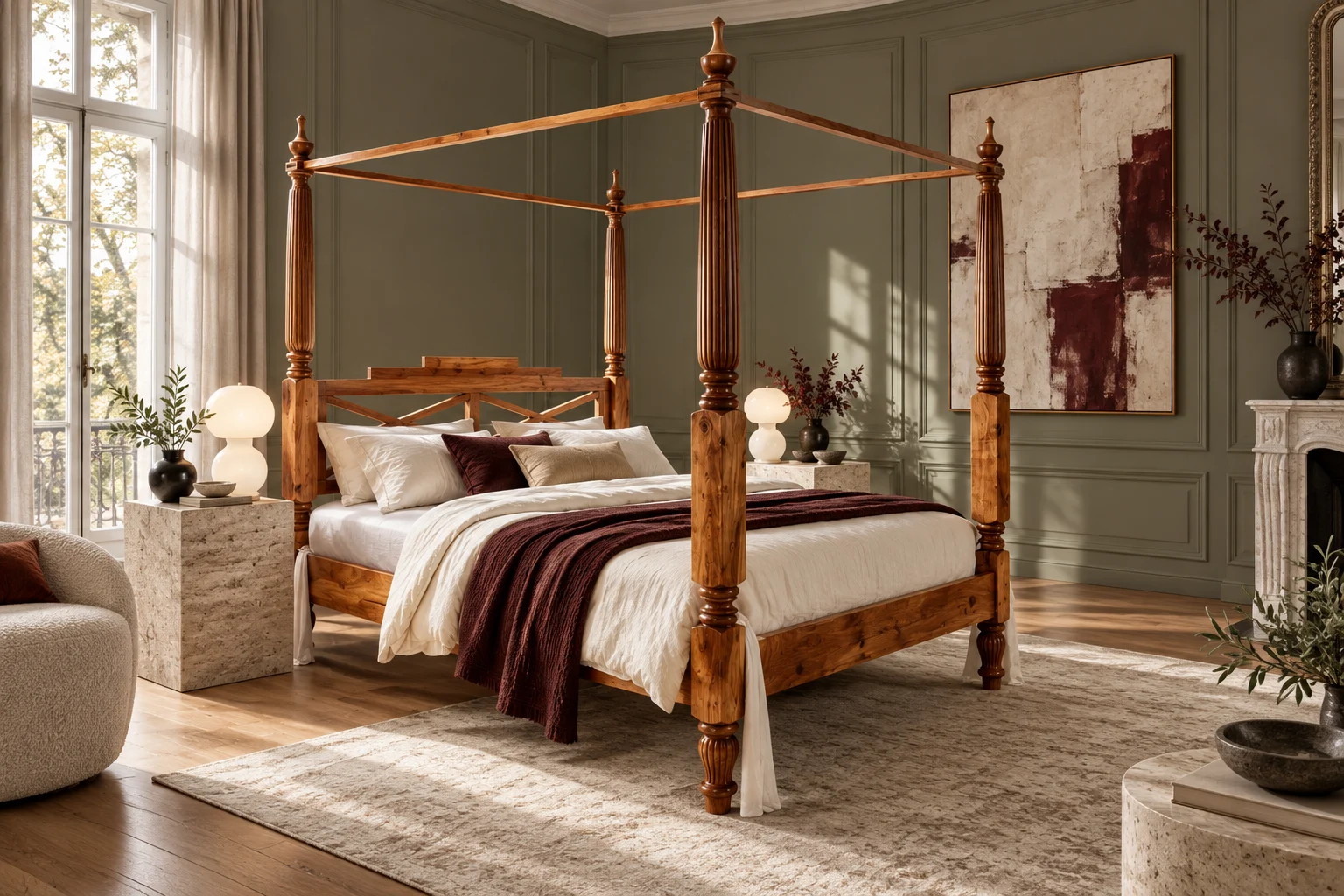
A wooden bed brings warmth to the bedroom. The grain, the natural pattern in the wood, makes every bed a little unique. Wood feels warmer than metal and is very sturdy. With some finishes, scratches can even be repaired. It isn't indestructible, though.
- Pros: warm, natural look, very sturdy, lasts a long time, scratches often repairable.
- Cons: heavy, hard work when moving, care depends on the finish.
Not all wood is cared for the same way. Oiled wood needs furniture oil, waxed wood needs wax. Lacquered wood only needs a slightly damp cloth. So don't just oil every wooden bed. The Hesse consumer information service has a good overview (in German).
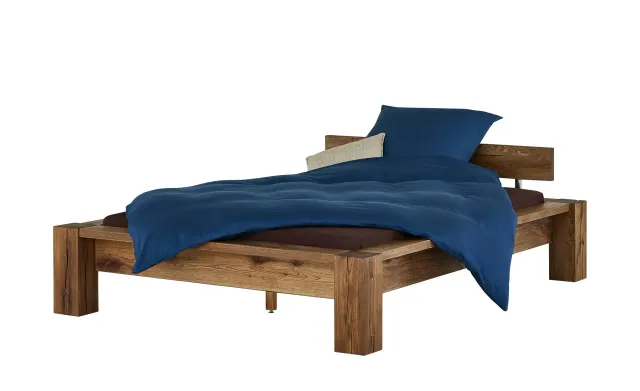
Think about the height of your room too. The acacia four-poster below is 224 cm tall. Under a sloping ceiling, that gets tight quickly. In return, there's 31 cm of space under the frame, enough room for boxes.
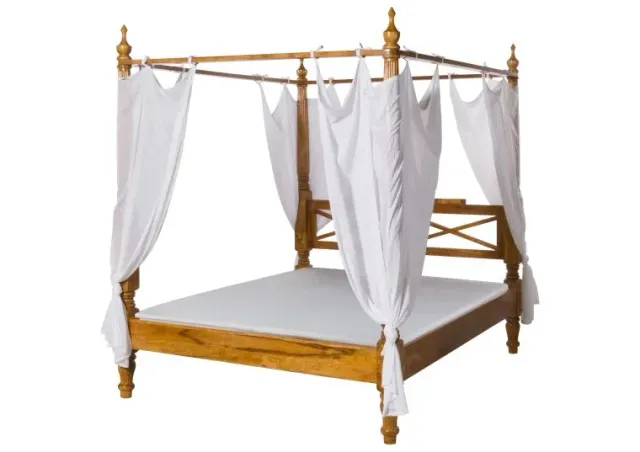
A wooden bed with room for boxes
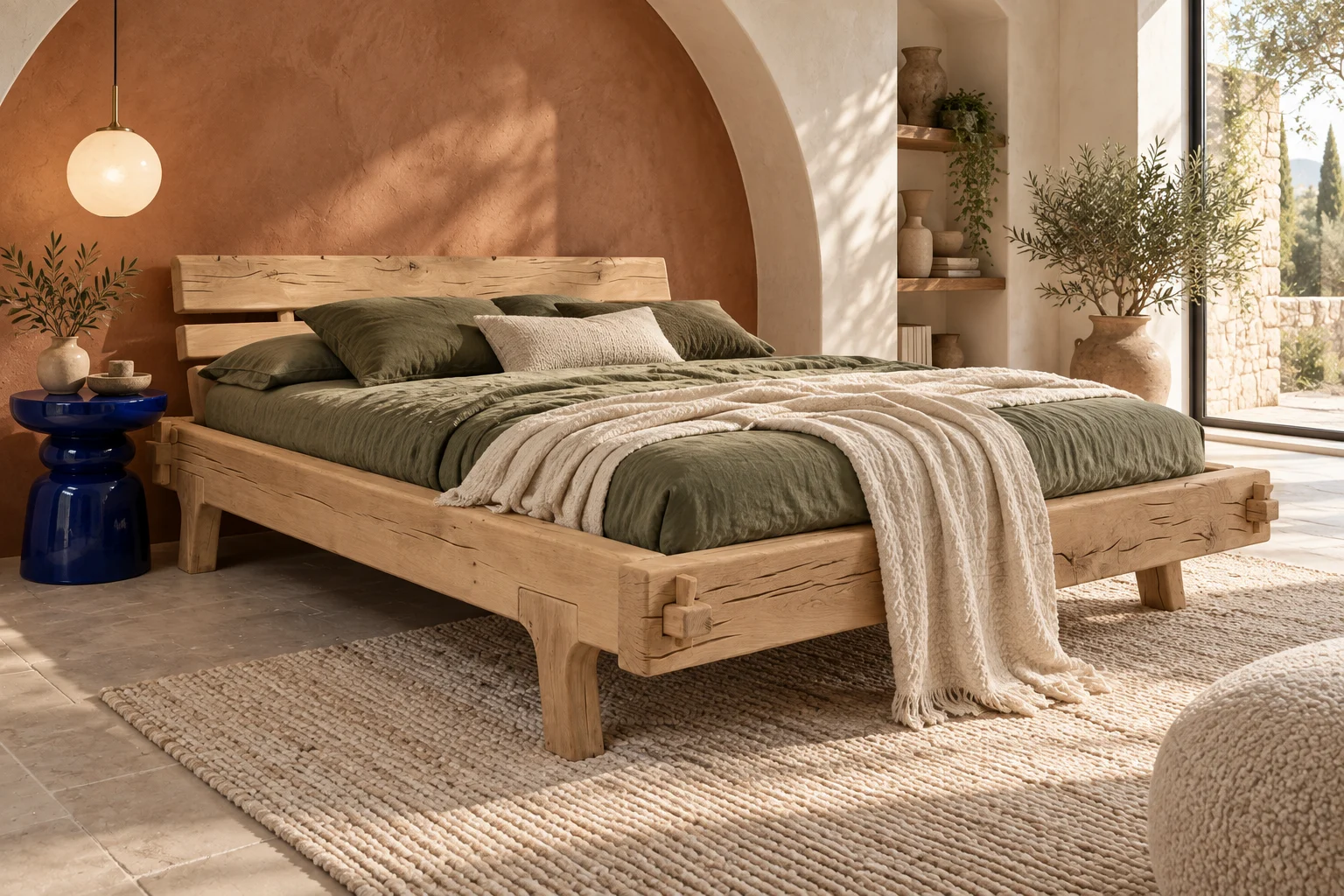
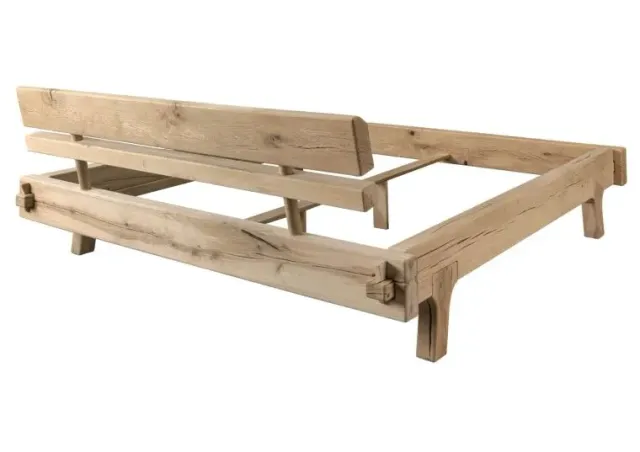
You like wood but not a canopy? Then an oak beam bed is a lovely choice. The example below has 23 cm of space under the frame. Measure your box anyway, because supports can get in the way. Think about floor space too: with its wide beams, a bed with a 200 × 200 cm sleeping area needs 224 × 228 cm in total. And get help with assembly, because solid oak is heavy.
Upholstered beds: pros and cons
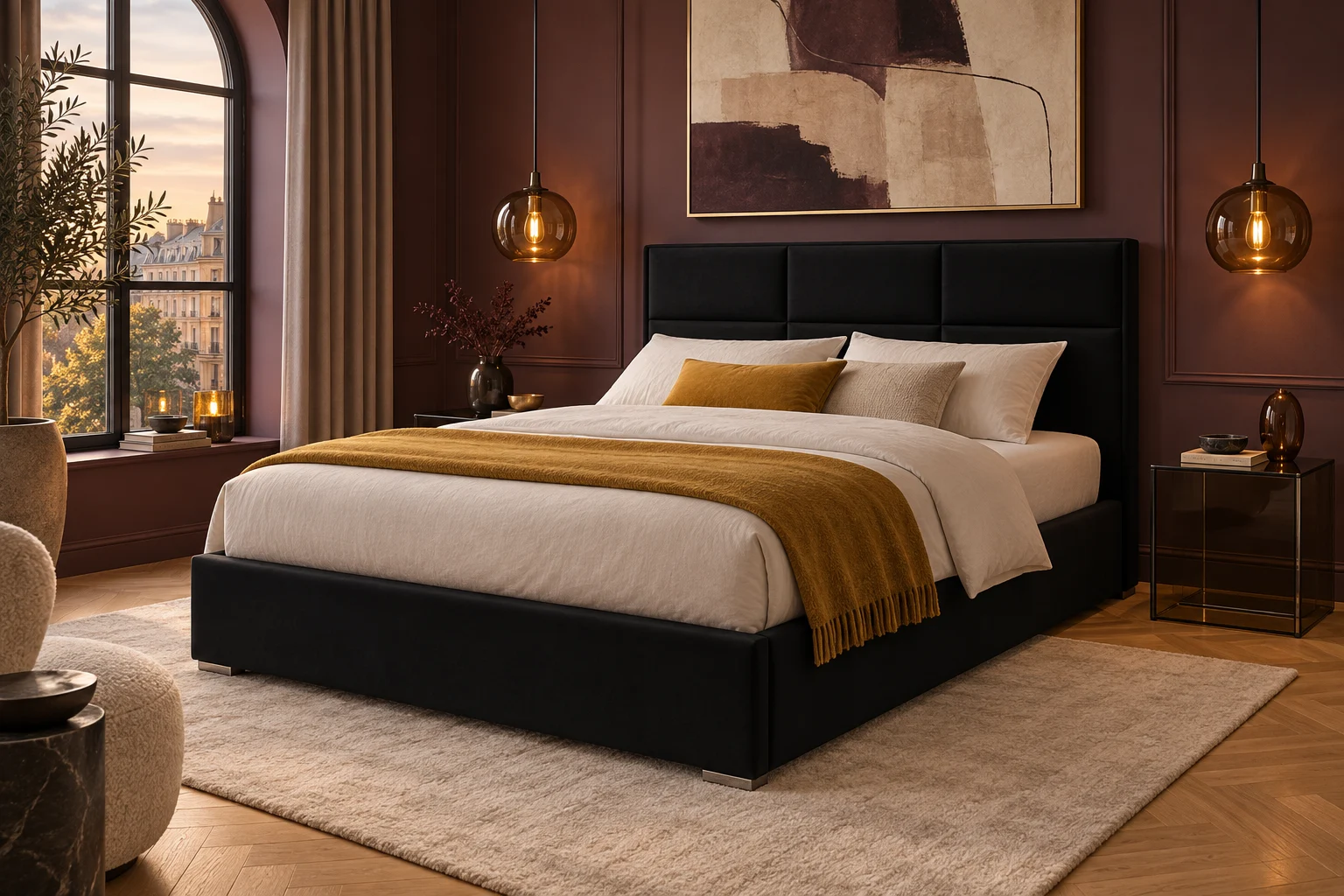
An upholstered bed is perfect if you like reading or watching TV in bed. The soft headboard is comfortable to lean against, and the fabric adds colour to the room. Try sitting on it before you buy: is the headboard high enough? Is it comfortable? And is there still enough padding for your back above a thick mattress?
- Pros: comfortable to lean against, cosy look, lots of colours and fabrics, often with storage.
- Cons: more care, dust and hair collect in the seams, stains are more work.
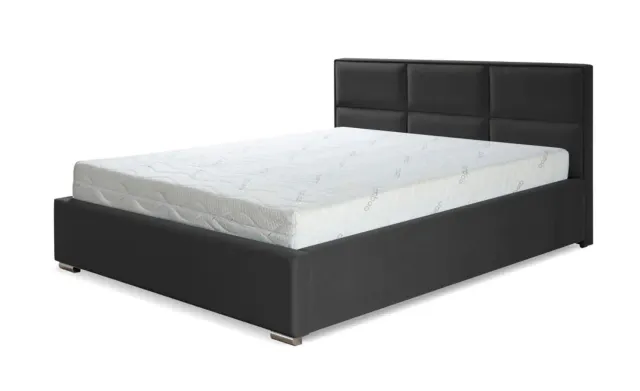
Many upholstered beds have a storage box inside the bed. That's handy for winter duvets. In return, there's usually hardly any space under the bed; with the black upholstered bed below, for example, only 5 cm.
Cleaning an upholstered bed: keep the fabric looking good
Don't worry: you don't have to wash your bed all the time. Most covers stay on the bed. These rules keep the fabric looking good for longer:
- Vacuum regularly: ideally with a soft upholstery nozzle, including the seams.
- Blot, don't rub: lift fresh stains straight away with a light-coloured cloth.
- Test first: try any cleaner on a spot nobody can see.
- Little water: velvet and velour don't like getting wet. Only use steam if the care label allows it.
- Removable isn't the same as washable: a cover only goes in the washing machine if the label says so.
Every fabric is a little different, as IKEA's velvet care guidance shows, for example. When in doubt: the care label knows best.
Velvet, velour, cord or woven fabric?
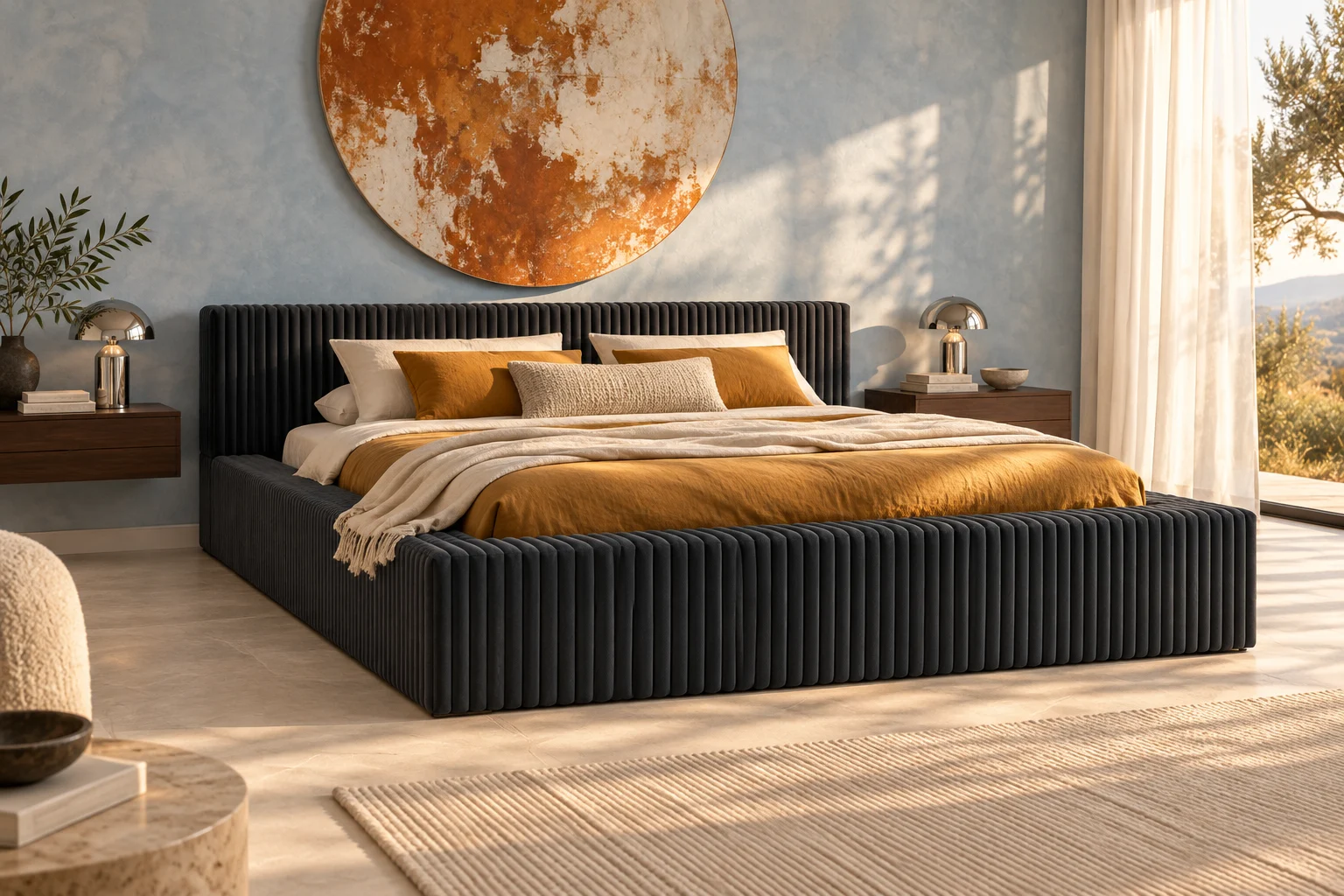
Velvet and velour have short, soft fibres. Depending on which way they lie, the fabric looks lighter or darker. Sometimes a pressure mark looks like a stain but isn't one. Cord has fine ridges. It looks lovely, but dust collects in the grooves. Woven fabrics are often the easiest.
Order a fabric sample and put it where the bed will stand. Do you still like the colour in the evening? Does the fabric feel good? If you have pets, avoid fabrics with loops or a coarse texture, where claws easily get caught.
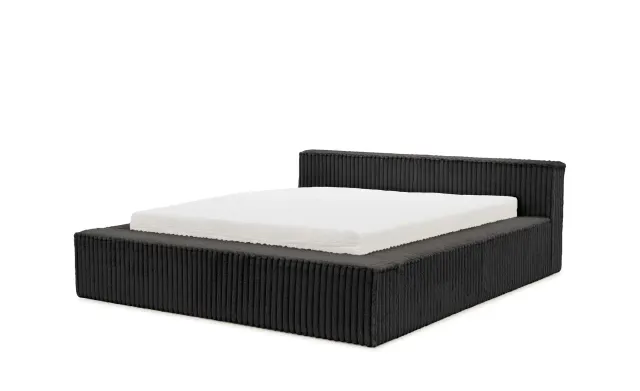
With upholstered beds, check the outer dimensions too. Wide edges look generous but need space. The dark grey cord bed below turns a 180 × 200 cm sleeping area into a bed measuring 222 × 243 cm. The storage box and slatted base are included, the mattress isn't.
Upholstered bed or box spring: what's the difference?
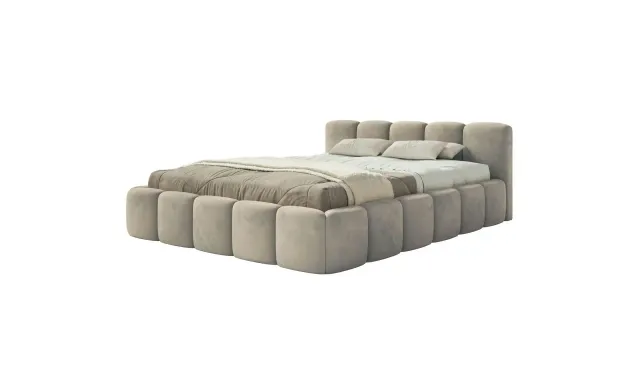
Many people mix them up because box spring beds are often covered in fabric too. The difference is inside. An upholstered bed is a padded frame with a slatted base and a mattress in it. A box spring bed has no slatted base. Instead, the mattress lies on a sprung base, the box. On top there's usually a thin extra layer, the topper.
That's why box spring beds are usually higher and feel like a hotel bed. An upholstered bed is more flexible: you choose the mattress and slatted base yourself and can swap them later. If you like sleeping low or want to keep your mattress, an upholstered, wooden or metal bed usually suits you better.
Which bed suits your interior style?
The bed is the largest piece of furniture in the bedroom, so it has a big effect on how the room feels. These pairings almost always work:
- Black metal bed: clear and simple, suits Industrial or works as a contrast in a bright period flat.
- Ornate metal or four-poster bed: romantic and nostalgic, perfect for Grandmillennial and Vintage.
- Light wooden bed with a low frame: calm and natural, ideal for Japandi and Modern Organic.
- Velvet upholstered bed: with gold and mirrors it suits Hollywood Regency, in dark colours Modern Luxury.
- Soft upholstered bed with lots of cushions and throws: as cosy as the Hygge style.
You'll find more ideas for the whole room in our bedroom inspiration.
The right bed height: just sit on it
You notice your bed height every morning when you get up. Rules of thumb based on body height are imprecise, because people of the same height have different leg lengths. And a mattress gives a little when you sit on it.
The best test is simple: sit sideways on the bed, with the mattress on it. Your feet should rest flat on the floor, and you should be able to stand up without a swing. A good first reference is the seat height of a chair you like sitting on. The Betten.de bed-height guide recommends the same (in German).
Many retailers call beds with a sitting height from about 50 to 55 cm "comfort height". They're good for older people or if your knees or hips give you trouble, because getting up is easier.
When buying online, work out the sitting height from the shop's specs. Usually you'll find the frame height and the insert depth. The insert depth is the distance from the top of the frame down to the support rails the slatted base rests on. You subtract it, because that's how deep the base and mattress sit inside the frame:
Sitting height = frame height − insert depth + slatted base + mattress + topper
For example: the frame is 45 cm high and the insert depth is 20 cm. The slatted base is 7 cm, the mattress 22 cm and the topper 5 cm. That gives 45 − 20 + 7 + 22 + 5 = 59 cm. You'll sink in a little when sitting.
Note: some retailers measure the insert depth to the top of the slatted base. In that case, leave the base out of the sum. If the retailer gives the height of the lying surface directly, just add mattress and topper. If the description doesn't say how it was measured, it's worth asking.
Storage under the bed: will the box really fit?
Product photos often seem to show plenty of space. Then at home the box gets stuck. What matters is the clearance, the distance between the floor and the underside of the bed frame. Cross bars, supports in the middle or a thick rug can get in the way too.
If your box is 20 cm tall, look for a bed with 20 to 25 cm of clearance. Exactly 20 cm is too tight. Measure the box with lid, handles and wheels and add a little room. If a robot vacuum should fit under the bed, measure it too.
Checklist: before you order
- Little cleaning? A smooth metal or wooden frame.
- Lots of reading or TV in bed? An upholstered headboard or a large back cushion.
- A bed for many years? Solid wood where scratches can be repaired.
- Need storage? A storage box or enough space under the bed for your boxes.
- Moving often? A light bed that's quick to put together and take apart.
- Measured everything? The bed's outer dimensions, not just the sleeping area, plus door widths and the stairwell.
Finally, add mattress, slatted base, delivery and assembly to the price. If you can sit comfortably, reach your storage easily and cope with the care, you've found your bed. You can start picking out the nice bedding right now, of course.
Prices last checked on 28 September 2026. Dimensions as stated by the retailers. The products are an editorial selection, not a test.
Bed buying: frequently asked questions
Which is better: a wooden bed or a metal bed?
Neither is better in general. A metal bed is lighter, easier to clean and often cheaper. A wooden bed looks warmer, is very sturdy and scratches can often be repaired. Your everyday life, your budget and how often you move are what matter.
Upholstered bed or box spring bed: what's the difference?
An upholstered bed is a padded frame with a slatted base and mattress. A box spring bed has a sprung base instead of slats, with a mattress and usually a topper on top. That's why box spring beds are usually higher. With an upholstered bed you can choose mattress and slatted base more freely.
Do metal beds squeak?
No more than other beds when everything fits well. Usually it's loose screws, a middle leg that doesn't touch the floor or a slatted base rubbing against the frame. Tightening the screws and adding felt strips to the supports often helps.
Are upholstered beds suitable for allergy sufferers?
Fabric collects more dust than a smooth frame. If you react to house dust, a metal or wooden bed is often easier. If you vacuum it regularly, an upholstered bed is easy to look after too. If you have an allergy, it's best to ask your doctor.
What is the right bed height?
The height at which your feet rest flat on the floor when sitting and you can stand up easily. Many retailers call beds from about 50 to 55 cm sitting height "comfort height". Older people often find this more comfortable. The best way is to try it, with the mattress.