Which Sofa Material Suits Your Home?
Velvet, linen, microfiber or leather? Compare sofa upholstery by feel, care and everyday use, and learn what fabric test ratings mean.
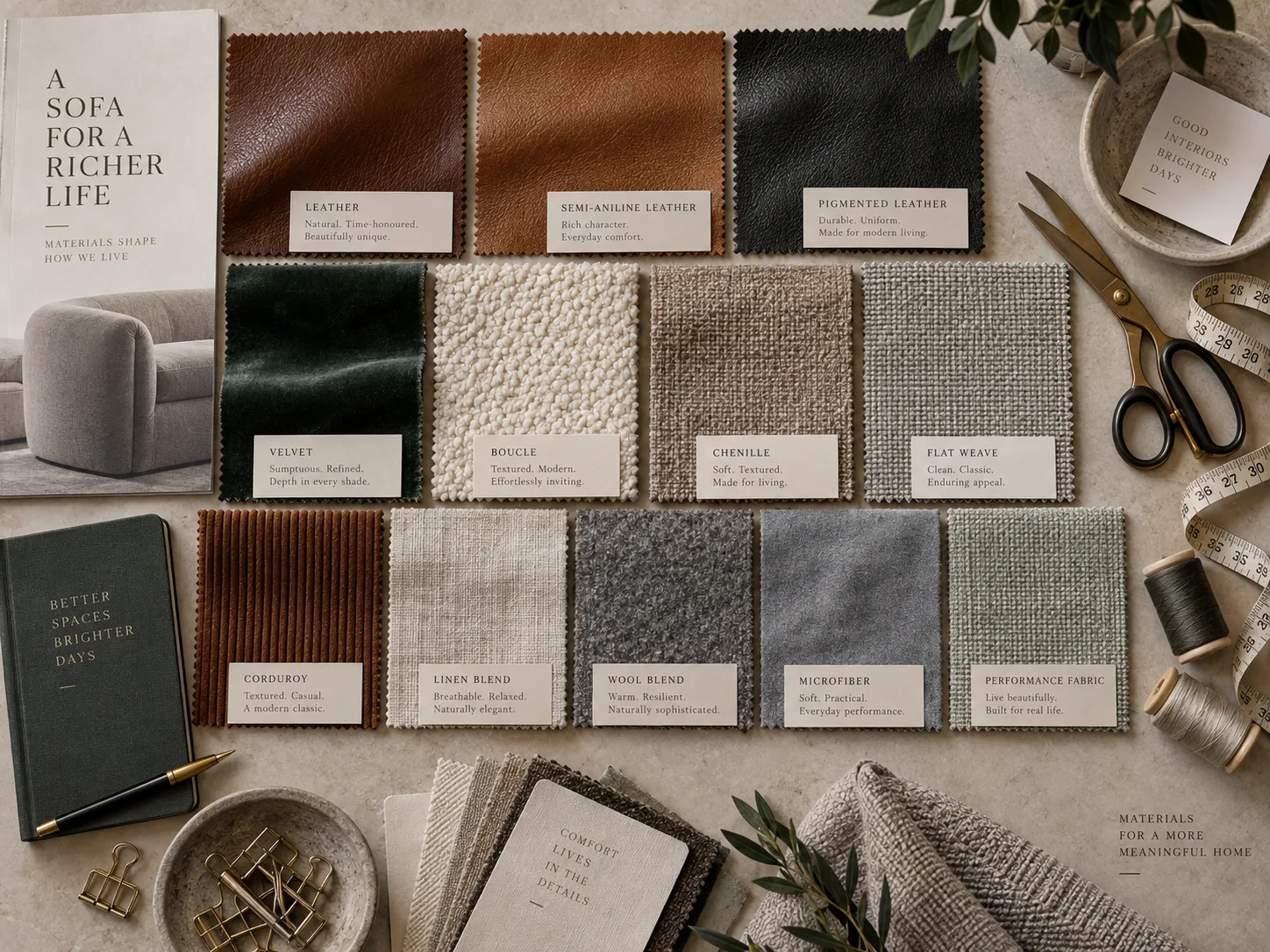
A sofa covering is something you use every day.
It needs to feel comfortable, work with the room and suit your daily habits.
A sample helps with the first impression; technical information helps with the longer-term choice.
Martindale, pilling and lightfastness describe different properties. Read together, they help distinguish two fabrics that look similar.
This guide explains those terms and compares the main upholstery and leather types.
Start with how you use the sofa. Do children or pets sit on it? Is it beside a window? Would a washable cover help? These questions reveal which properties matter most to you.
They also make the range of materials easier to navigate.
Understand the upholstery specification
Names such as chenille and bouclé mainly describe construction or surface. They do not establish the quality of an individual fabric. Ask for fibre composition, test results and care instructions.
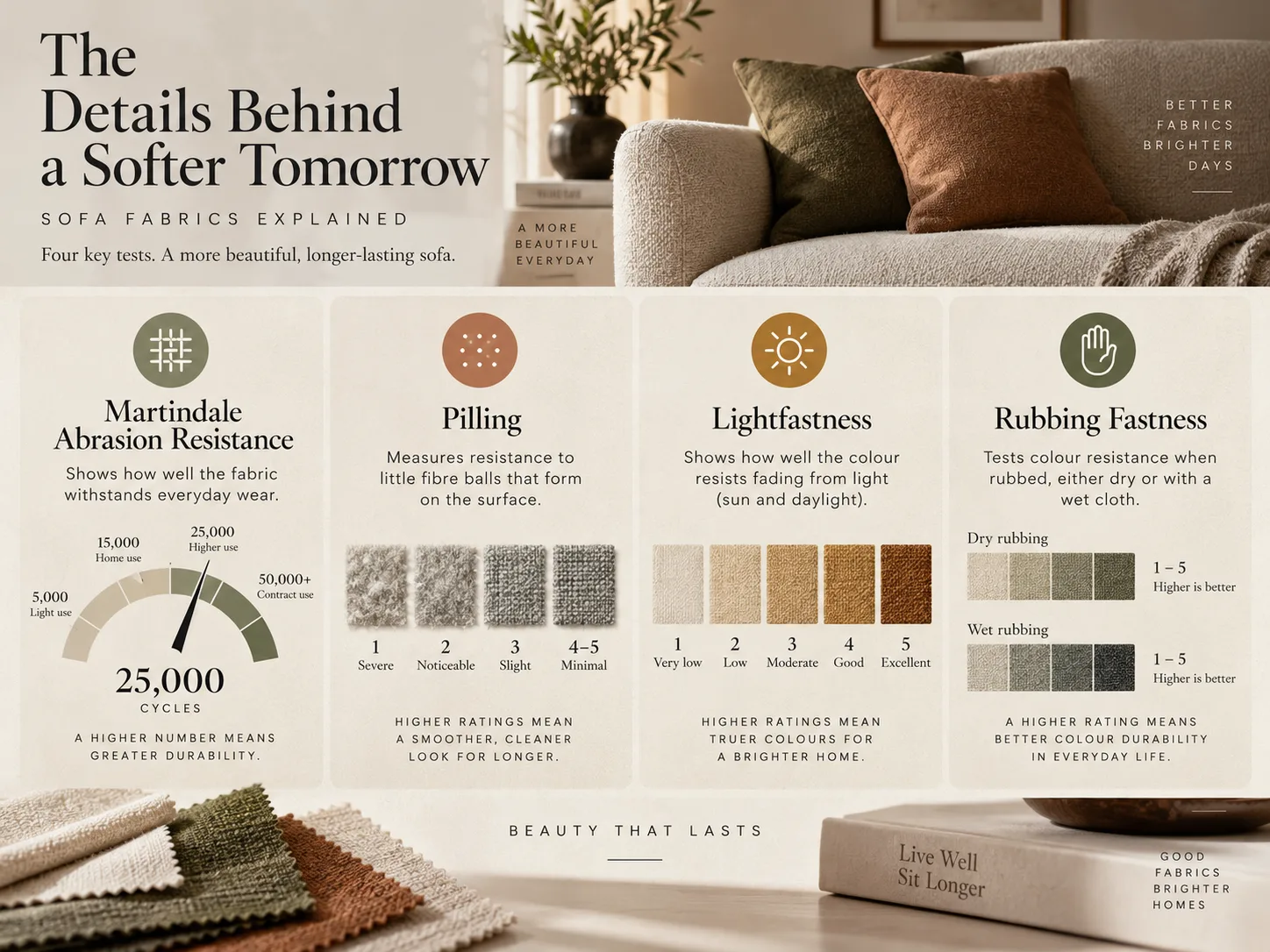
Martindale: abrasion resistance
The Martindale test assesses abrasion under controlled conditions and reports a number of cycles. It describes performance in that test, rather than the number of years a sofa will last at home.
| Martindale rating | Broad, non-binding guidance on use |
|---|---|
| Under 10,000 | Decorative / light use |
| 10,000–20,000 | Light domestic use |
| 20,000–30,000 | Normal household use |
| 30,000–50,000 | Heavy domestic use |
| 50,000+ | High abrasion resistance in the test |
| 100,000+ | Very high abrasion resistance in the test |
Treat this table as a rough guide, not a universal purchasing standard. Ask whether the particular fabric is suitable for your intended use and compare the test method as well as the result.
A result of 100,000 cycles does not mean twice the lifespan of a fabric rated at 50,000. Staining, pilling, light exposure and the construction of the sofa can matter just as much.
Pilling: changes to the surface
Pilling occurs when small fibre balls form on a textile. The usual test scale runs from 1 for severe pilling to 5 for no visible pilling, describing the effect under specified test conditions.
| Pilling rating | Meaning |
|---|---|
| 1 | Severe pilling |
| 2 | Noticeable |
| 3 | Moderate |
| 4 | Slight |
| 5 | Virtually none |
A rating of 4 or 5 is a useful indication. Compare it alongside the test method and other material information. Fibres from clothing and blankets can also contribute to pilling during use.
Lightfastness: resistance to fading
Lightfastness describes how well a colour resists light exposure. It deserves particular attention when the sofa is near a window.
On the blue-wool scale, ratings run from 1 to 8, with higher values indicating greater resistance. Check the test method and compare results on the same basis.
Even a good rating does not prevent fading indefinitely. Suitable shading reduces direct sunlight; view fabric samples in the room's actual lighting too.
Rubbing fastness: can colour transfer?
Rubbing fastness measures potential colour transfer to other materials, with dry and wet conditions tested separately. This can be especially relevant to dark, strongly coloured upholstery.
The usual grey-scale rating runs from 1 to 5, with 5 the best result. Remember that clothing, including dark denim, can also transfer colour onto a pale sofa.
Compare sofa fabrics
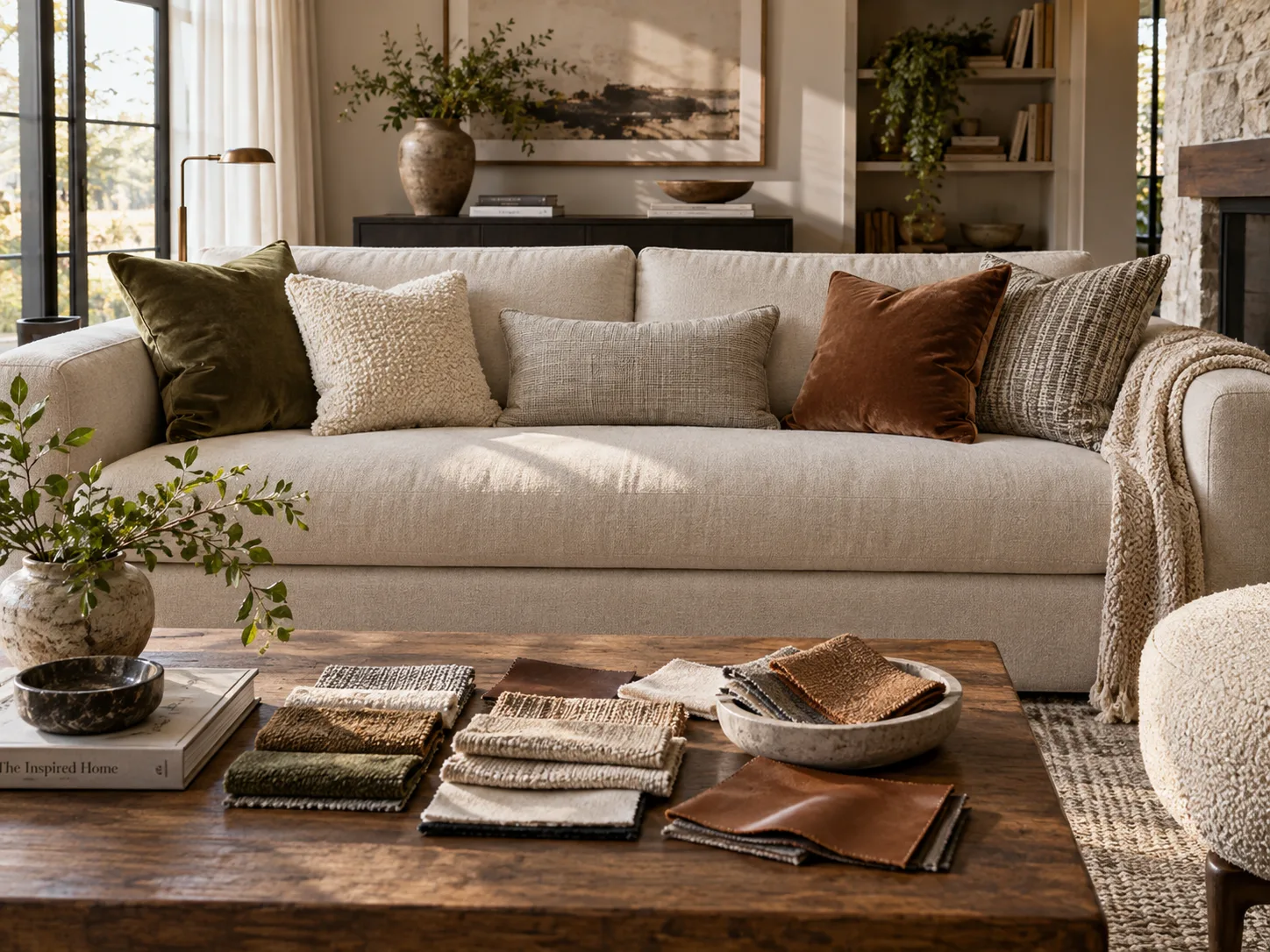
Flat weave: a clear surface with many variations
Flat weave has a relatively even surface. Densely woven versions may be easy to vacuum and offer fewer snagging points than large, open loops. Durability still depends on fibre, weave and construction, so check the specification of the actual fabric.
- Consider for:
- Clean sofa lines and a relatively smooth surface.
- Check:
- Weave density, snagging and the care instructions for the chosen fabric.
Chenille: softness with a subtle sheen
Chenille yarns create a soft, slightly fuzzy surface that can suit generous upholstered forms. Light changes the appearance of the colour. Use a sample to decide whether you like pressure marks and changes in pile direction; abrasion and pilling performance vary by quality.
- Consider for:
- Soft upholstery with a gently varied surface.
- Our assessment:
- A useful option when the feel and documented performance both suit your needs.
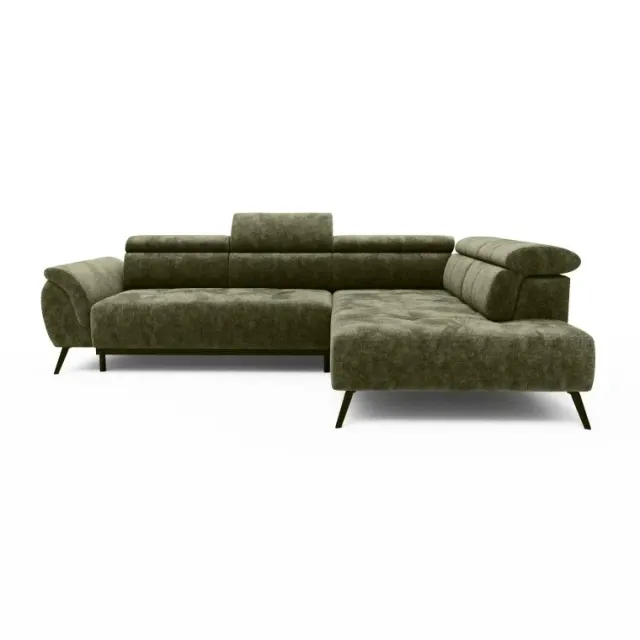
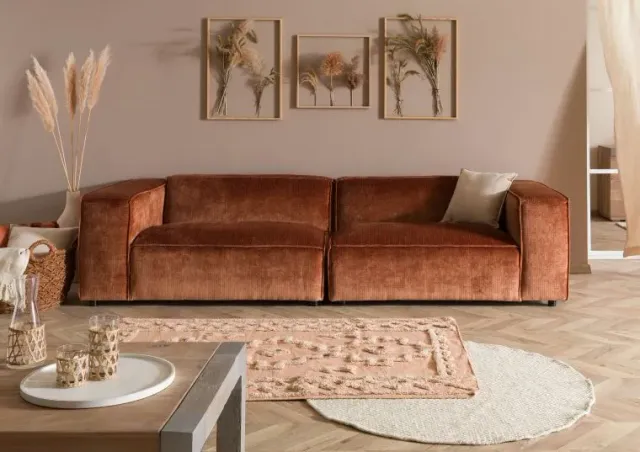
Velvet and velour: colour with depth
A short pile catches light in different directions, bringing depth to blue, green or burgundy. Velvet is not necessarily delicate: robust upholstery grades exist. Pressure marks and pile direction can still be part of its appearance, so compare test results and recommended cleaning methods.
- Consider for:
- Expressive colour and a surface that changes with the light.
Bouclé: a textured surface
Bouclé's small loops and irregular texture are particularly visible on rounded furniture and pale, plain colours. Open loops may catch claws or sharp objects. Check weave density and cleaning options rather than treating the fabric name as a durability rating.
- Consider for:
- Rounded furniture and a distinctly tactile finish.
- Less suited to:
- Places where claws or sharp objects may catch the open loops.
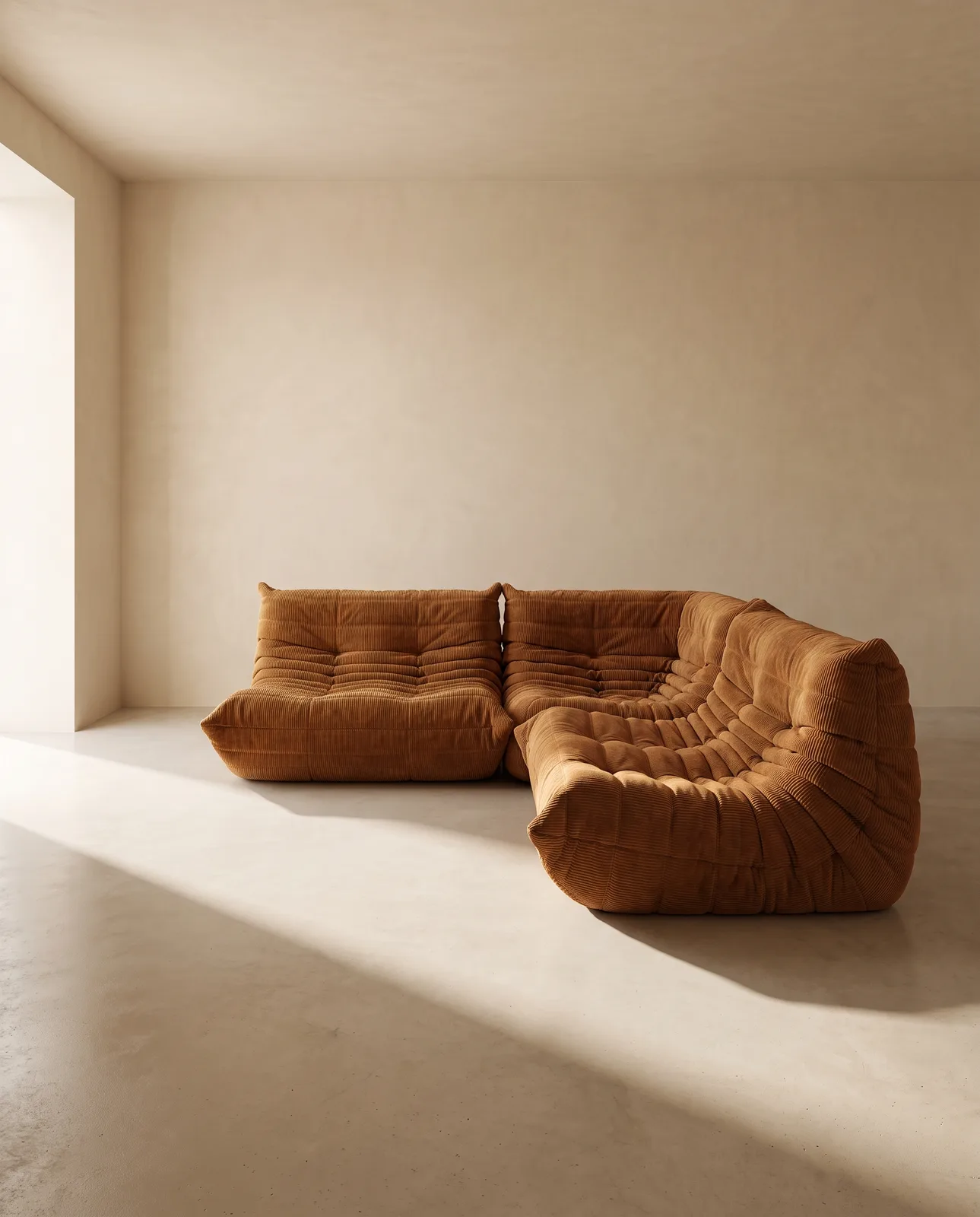
Corduroy: soft ribs with a relaxed feel
Corduroy's ribs can be fine and discreet or broad and pronounced. They work well with low, informal seating. Dust and crumbs can collect in the grooves; check the maker's guidance for vacuuming and dealing with pressure marks, alongside the fabric's test results.
- Consider for:
- Generous sofas and relaxed interiors with a retro reference.
Microfibre: fine fibres, different properties
Microfibre describes very fine fibres, not one uniform grade of upholstery. Dense versions can have a smooth surface, but stain resistance depends on material, construction and any finish. Compare samples and ask about cleaning and hair removal. No covering is immune to claws.
- Consider for:
- A dense surface with documented suitability and cleaning guidance.
- Keep in mind:
- Feel and finish vary widely; compare a sample with the care instructions.
Microsuede: a matt, suede-like textile
Microsuede is a microfibre material with a softly brushed surface resembling suede. It suits simple forms and muted colours. Whether water or cleaning products may be used depends on the care instructions for the particular covering.
- Consider for:
- A matt, leather-like appearance on a textile base.
Linen: natural texture and visible creases
Linen brings a slightly irregular surface and creasing that can suit relaxed rooms with timber and natural tones. Blends may change stability or care requirements, but they are not automatically tougher. A removable cover is machine washable only when the manufacturer expressly allows it.
- Consider for:
- Natural texture and a deliberately relaxed, creased appearance.
Cotton: familiar, versatile and often blended
Cotton has a familiar feel and absorbs moisture. Its response to stains, light and wear depends on the finished fabric. Other fibres can change those properties. Compare the complete textile rather than cotton percentage alone, and look for clear cleaning guidance, especially for pale colours.
- Consider for:
- A comfortable feel; machine washing only where specifically approved.
Wool: texture for a quieter palette
Wool and wool blends can give muted colours a rich surface, and durable upholstery grades are available. Check the feel against your skin and the specified cleaning method. Unsuitable temperatures or products can alter the material.
- Consider for:
- Tactile surfaces and restrained colours.
Performance fabrics: ask what is demonstrated
Performance is a broad label for advertised properties such as easier cleaning or greater stain resistance. It does not establish a single quality level or immunity to spills. Ask for evidence of the relevant properties, approved cleaners and limitations.
- Consider for:
- Specific requirements supported by clear information about the individual fabric.
Compare leather finishes
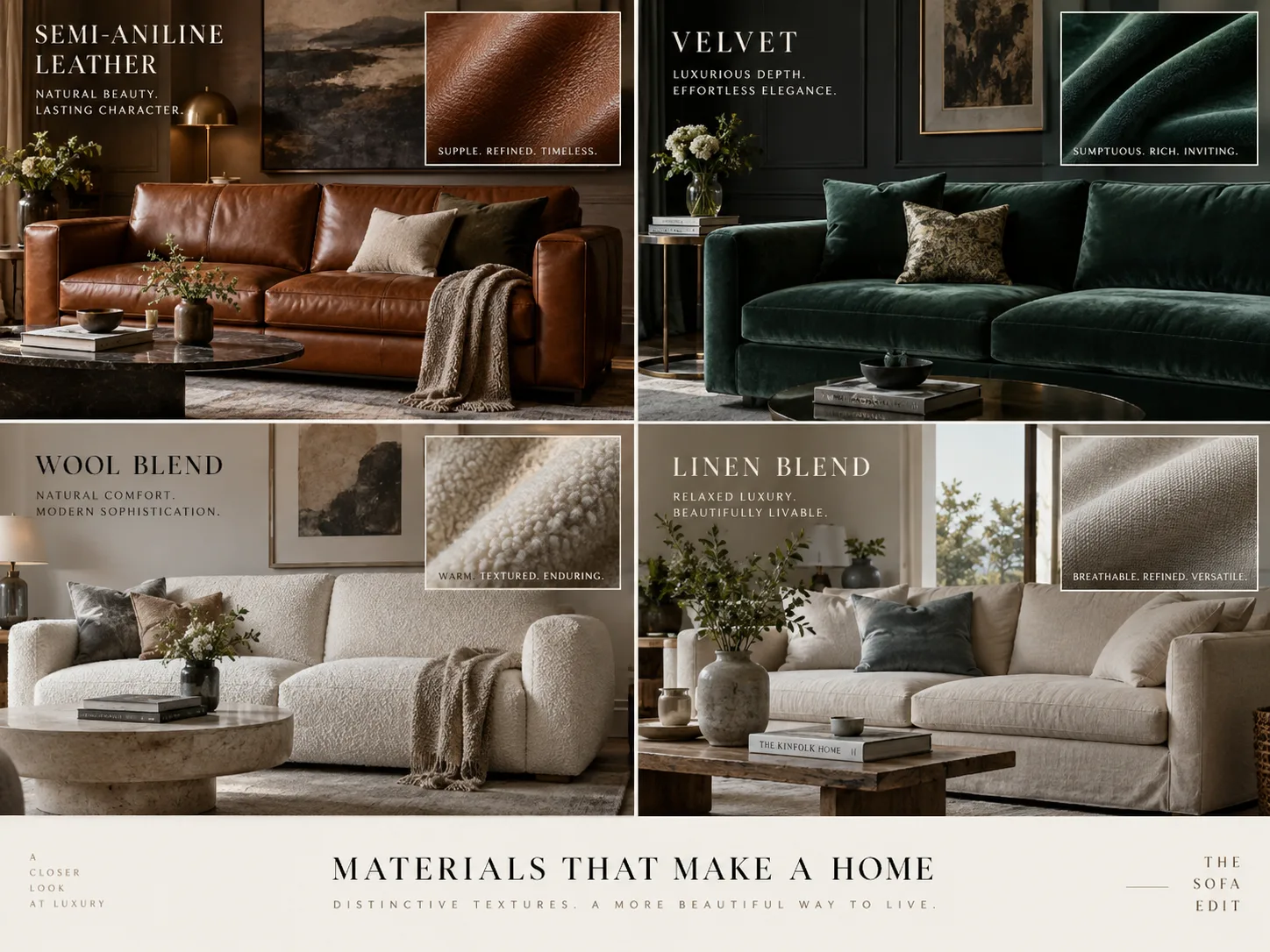
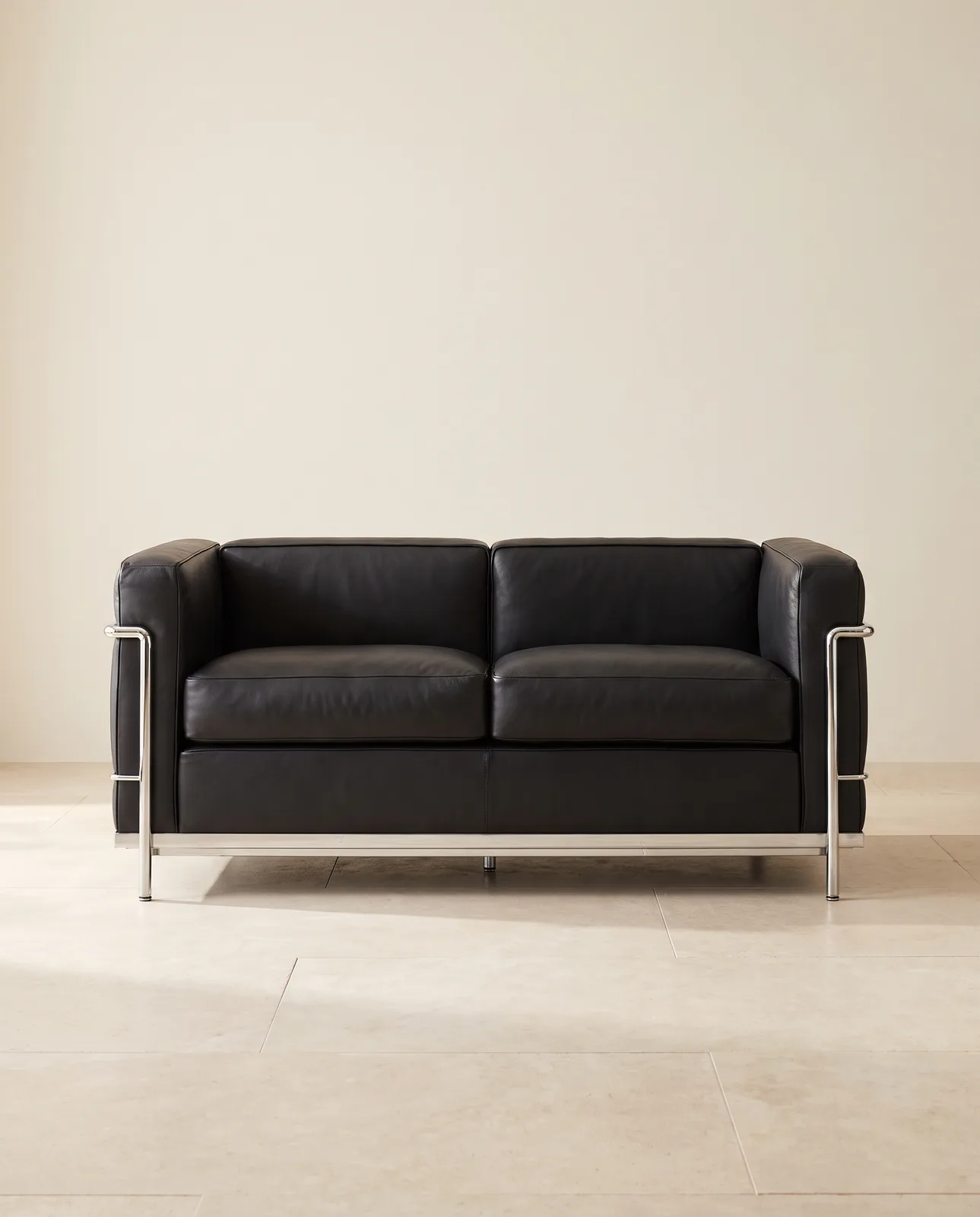
The surface treatment makes a substantial difference to leather upholstery. It affects how much natural texture remains visible and how the surface responds to liquids and use. Compare samples with their care instructions.
Aniline leather: a visible natural surface
Aniline leather keeps much of the hide's natural texture visible. Marks and patina form part of its character, and liquids, sunlight or scratches may affect an open surface. Compare the actual leather and care guidance before choosing it for a frequently used sofa.
- Consider for:
- People who enjoy natural variation and developing patina.
Semi-aniline leather: character with added protection
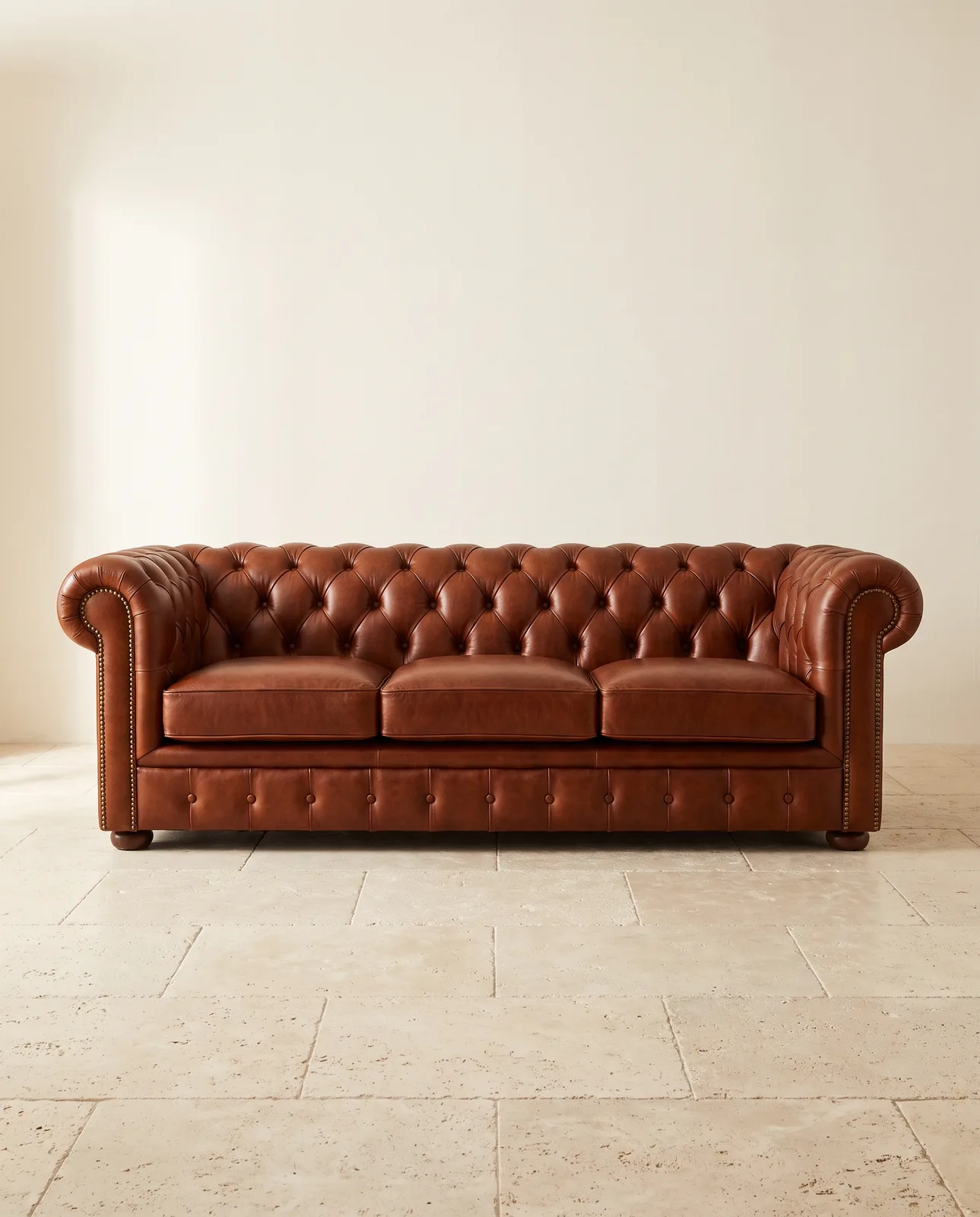
A light protective surface treatment leaves natural texture visible while adding some protection. It can offer a middle ground between open aniline leather and more heavily pigmented finishes. The degree of protection depends on the specific leather.
- Consider for:
- Visible natural structure with an additional protective finish.
Pigmented leather: colour and surface protection
Pigmented leather has a more covering colour layer and protective finish. This can make routine cleaning easier, but claws, heat and unsuitable cleaners can still damage it. Follow the instructions for the chosen leather rather than assuming all coated surfaces behave alike.
- Consider for:
- A more uniform leather surface with documented care requirements.
Faux leather: compare the whole construction
Faux leather combines a backing with a leather-like surface. Coatings and workmanship vary, as do resistance to wear, moisture and ageing. Ask about construction, care and warranty terms. A vegan claim needs information about the complete covering, not just its outer layer.
- Consider for:
- A leather-like appearance; compare construction and ageing performance carefully.
Sofa upholstery at a glance
The stars are broad editorial assessments, not product tests. Quality, finishes and care requirements vary within each group. Check the particular upholstery; no material is universally stain-proof or claw-proof.
| Material | Durability | Cleaning | Pets | Decorative effect | Maintenance |
|---|---|---|---|---|---|
| Performance Fabric | 5 / 5 | 5 / 5 | 5 / 5 | 4 / 5 | Low |
| Microfiber | 5 / 5 | 5 / 5 | 5 / 5 | 3 / 5 | Low |
| Pigmented Leather | 5 / 5 | 5 / 5 | 3 / 5 | 4 / 5 | Low |
| Chenille | 4 / 5 | 4 / 5 | 4 / 5 | 4 / 5 | Medium |
| Flat Weave | 4 / 5 | 4 / 5 | 4 / 5 | 3 / 5 | Low |
| Semi-Aniline Leather | 4 / 5 | 4 / 5 | 3 / 5 | 5 / 5 | Medium |
| Velvet | 4 / 5 | 3 / 5 | 3 / 5 | 5 / 5 | Medium |
| Corduroy | 4 / 5 | 4 / 5 | 4 / 5 | 4 / 5 | Medium |
| Wool Blend | 4 / 5 | 3 / 5 | 3 / 5 | 5 / 5 | Medium |
| Linen Blend | 4 / 5 | 3 / 5 | 3 / 5 | 4 / 5 | Medium |
| Bouclé | 3 / 5 | 2 / 5 | 2 / 5 | 5 / 5 | High |
| Aniline Leather | 3 / 5 | 2 / 5 | 2 / 5 | 5 / 5 | High |
| Faux Leather | 3 / 5 | 5 / 5 | 3 / 5 | 3 / 5 | Low–Medium |
Find a covering for your daily life
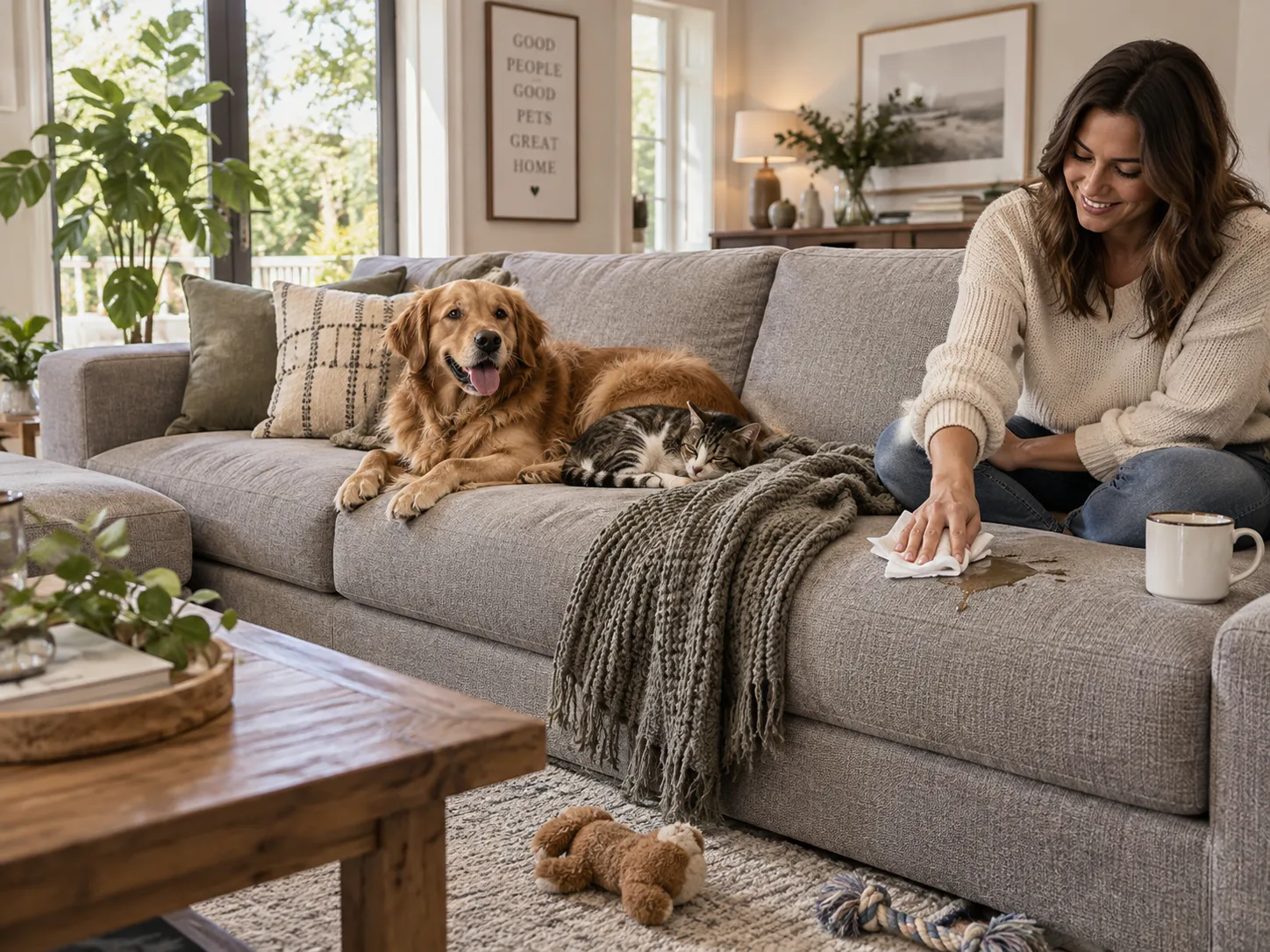
These considerations can help narrow the choice.
- With children, clear care instructions and documented cleaning options are particularly useful. Compare suitable densely woven fabrics, microfibres and protected leathers.
- Cat claws can catch open loops. Dense, smooth surfaces may be more practical, but no sofa covering is claw-proof.
- With dogs, compare hair removal, stain treatment and any washable-cover options. Check the instructions for the specific material.
- For an expressive surface, velvet, chenille, wool and leather offer different textures. Use a reasonably large sample to judge the effect.
- For a sunny position, include lightfastness and shading in the plan from the start.
Take time to compare. Colour, texture and comfort are easier to assess on a large sample or a display sofa than in a small photograph.
Ask about composition, abrasion, pilling, lightfastness and care. Check whether covers are removable and whether replacements are available.
The aim is a covering whose appearance and upkeep suit you beyond the first impression.
Your upholstery checklist
Compare samples and test ratings, read the care instructions and check suitability for your household. The stars above are broad editorial assessments, not test results or guarantees for individual products. Quality and finishes vary within every material group.
The right upholstery feels good to use and can be cared for in a way that works for you. With those points covered, colour and texture remain a personal choice.
Explore more Ateliology guides and style ideas.