Memphis: A One-of-a-Kind Interior Design Style Unlike Any Other
Bold colors, geometric shapes and unexpected patterns: discover Memphis design and ways to bring it home one accent at a time.
Where Does Memphis Actually Come From?
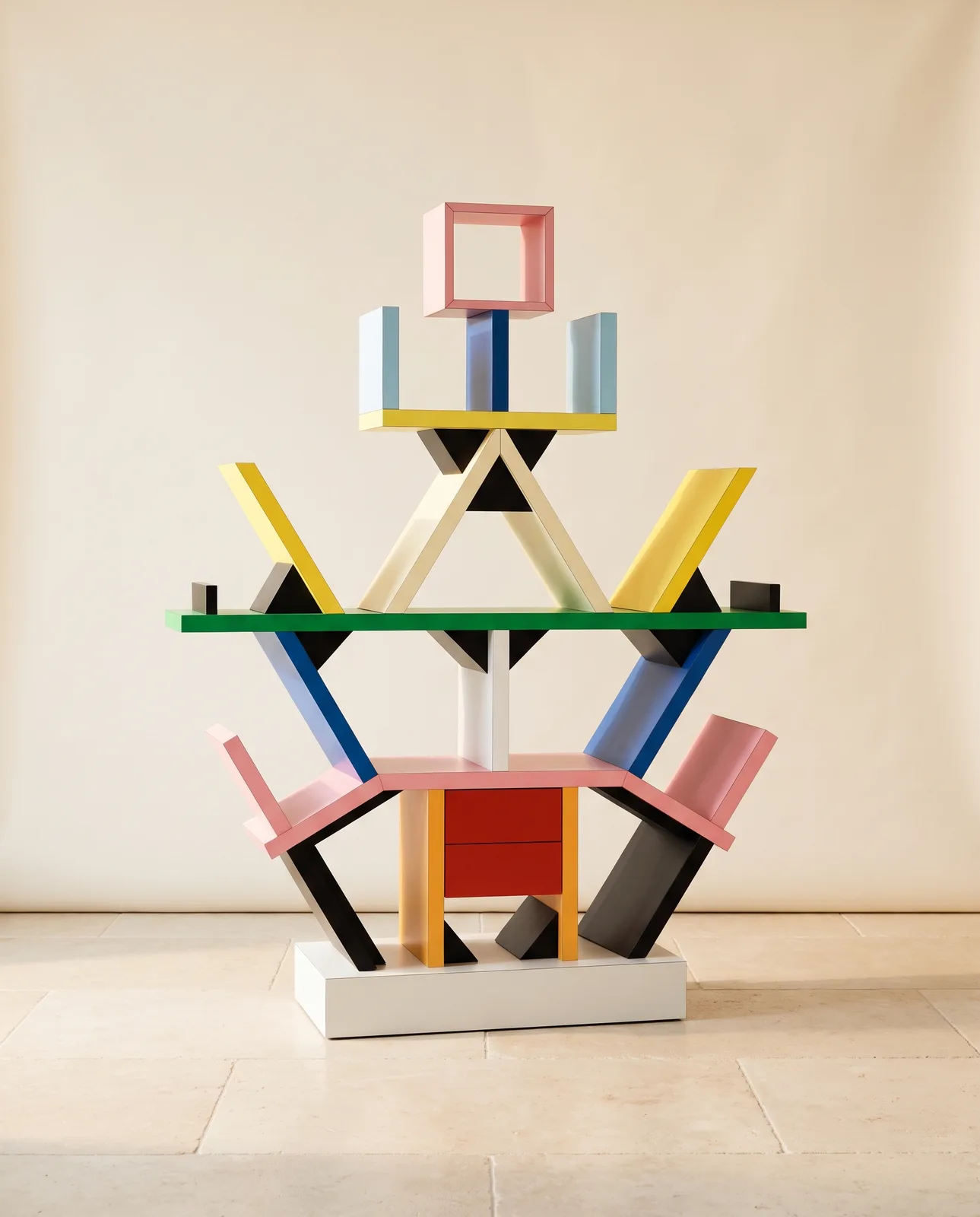
The story begins in Milan in the early 1980s. Around the Italian architect and designer Ettore Sottsass, a group of young designers formed the Memphis Group — a collective fed up with sober functionalism and the strict rules of so-called good taste. Their furniture wasn't meant to simply be practical. It was meant to surprise, irritate, delight, and ideally spark an argument.
And that's exactly what it still does today.
What Actually Defines Memphis
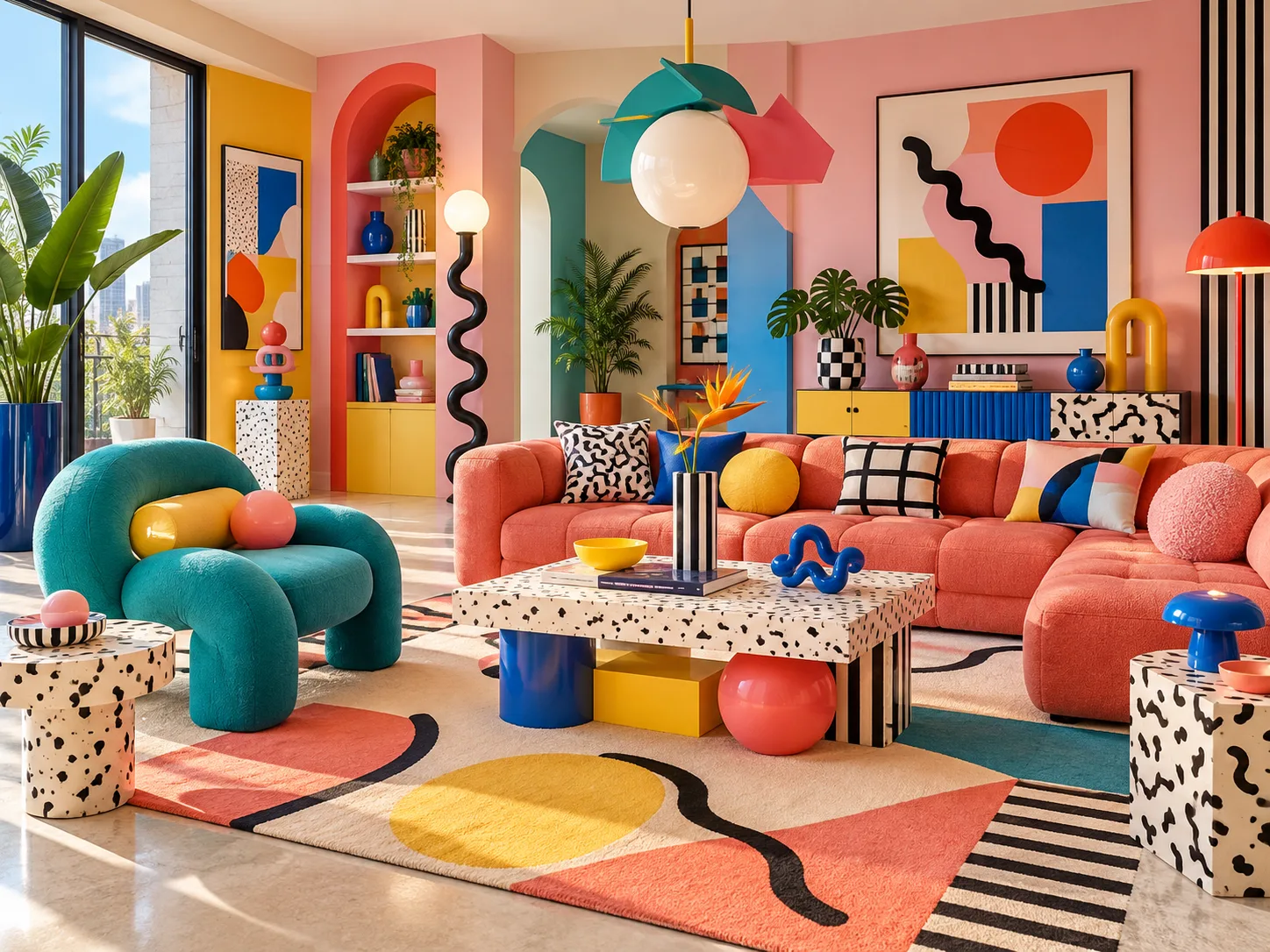
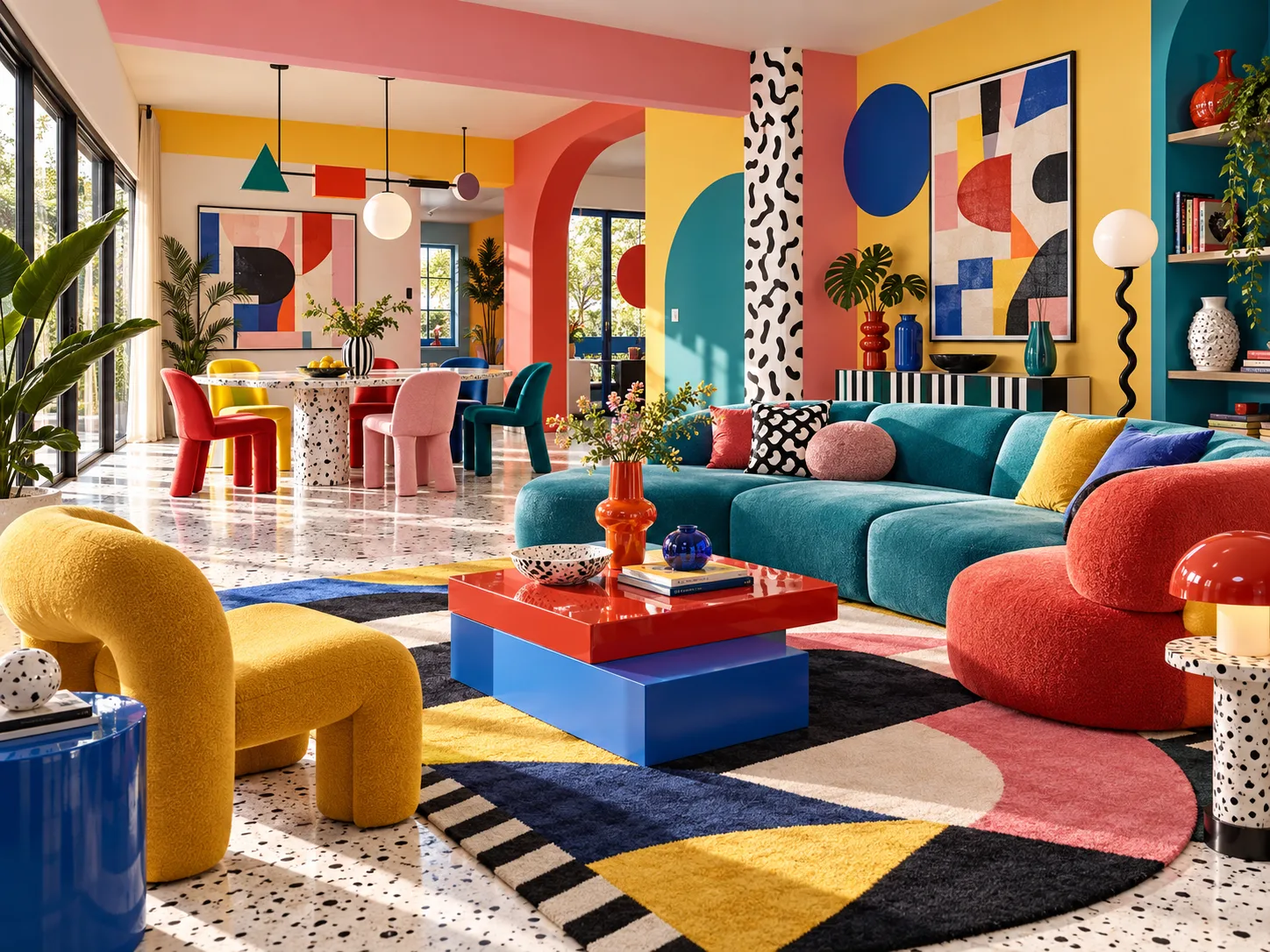
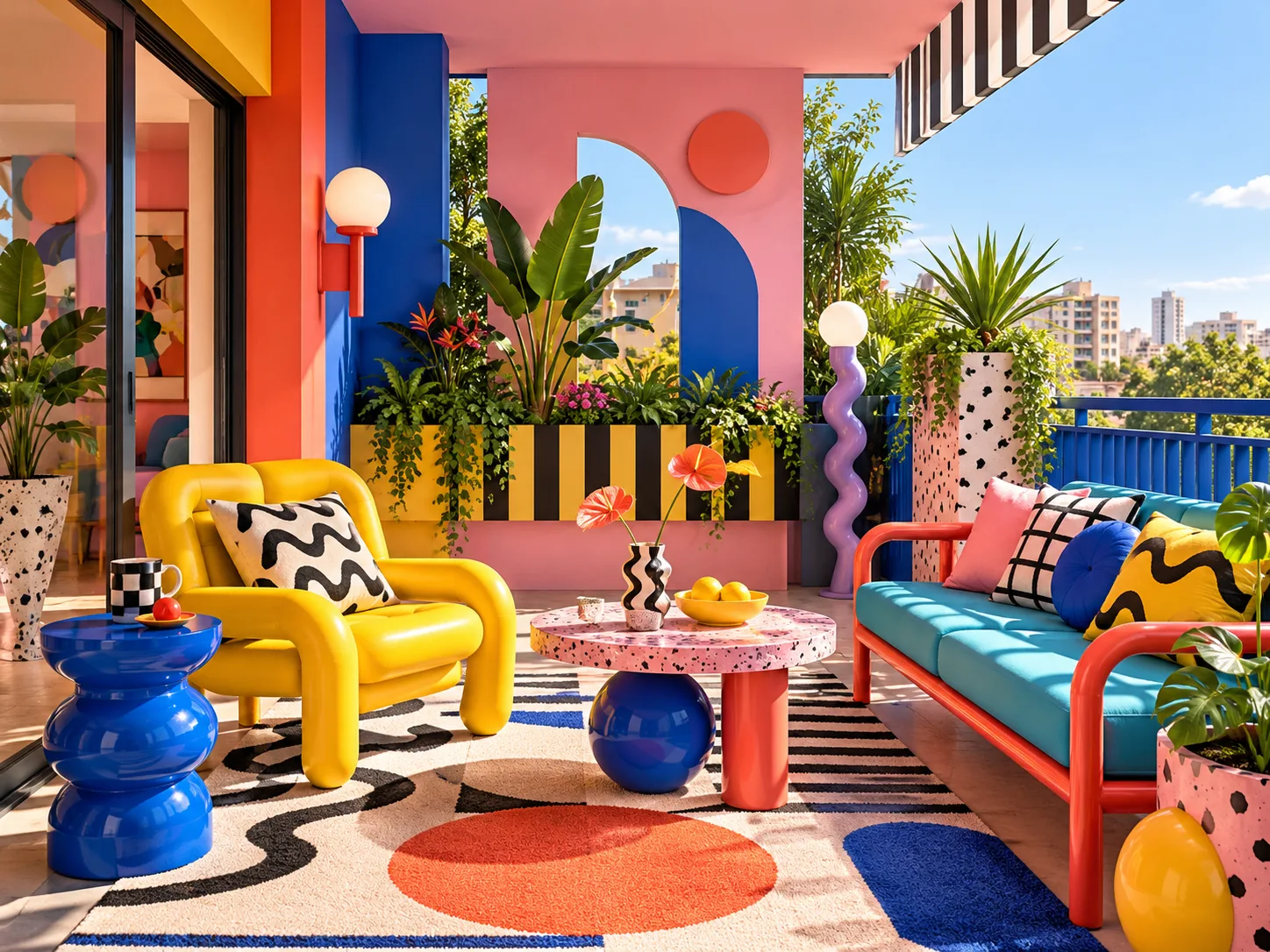
Typical Memphis colors are bold: cobalt blue, red, yellow, turquoise, pink. Add black-and-white contrasts, dots, stripes, zigzags, circles, triangles, and asymmetrical shapes. A table can look like a small sculpture, a lamp like a cartoon object, and a shelf like a geometric construction that just happens to also hold books. Materials are combined just as fearlessly: laminate meets metal, plastic meets glass, terrazzo meets glossy surfaces.
That sounds like chaos. Sometimes it is. But good Memphis design is surprisingly deliberate.
The style thrives on tension. Round shapes meet hard edges, playful patterns meet plain surfaces, cheap materials meet near-luxurious staging. Memphis takes design seriously, but never reverently — and that's exactly its charm. Where other styles chase harmony, Memphis chases friction.
Not for Everyone — But It Can Be Dosed
Naturally, that's not for everyone.
If what you want from a home is mostly calm, natural tones, and visual restraint, a living room fully committed to Memphis probably won't make you especially happy. A yellow armchair next to a pink sideboard, a black-and-white striped lamp above it, and a rug of circles and zigzags below: it can look fantastic. It can also look like a geometry textbook decided to throw a party.
The good news: nobody has to commit to Memphis completely.
Today, the style works especially well used in moderation. A single Memphis armchair can become the focal point of an otherwise calm living room. A sculptural table lamp brings humor to a minimalist sideboard. A graphic rug can give a neutral room exactly the dose of energy it was missing.
If you'd rather ease in carefully, start with two or three characteristic pieces and deliberately keep the rest of the room quieter. Off-white, beige, light wood, or a restrained gray give the bold colors room to breathe. Plants also work surprisingly well with Memphis, since their organic shapes make a pleasant counterpoint to all that geometric rigor.
The Dining Room
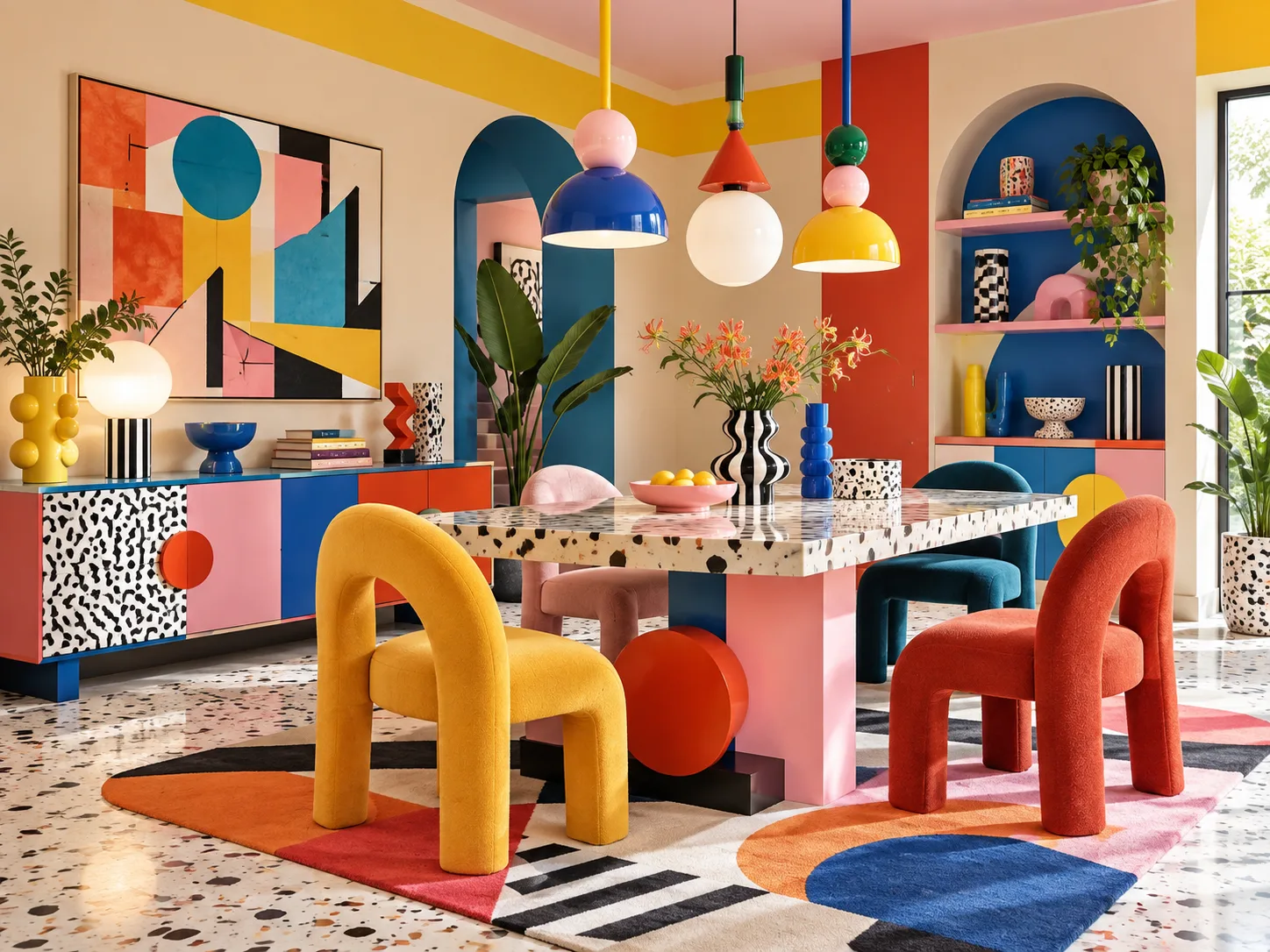
The dining room can afford to be a little bolder. Differently colored chairs around a plain table instantly feel more playful. Pendant lamps with spheres, cones, or asymmetrical shapes pick up the design language without turning the room into an eighties film set.
The Bedroom
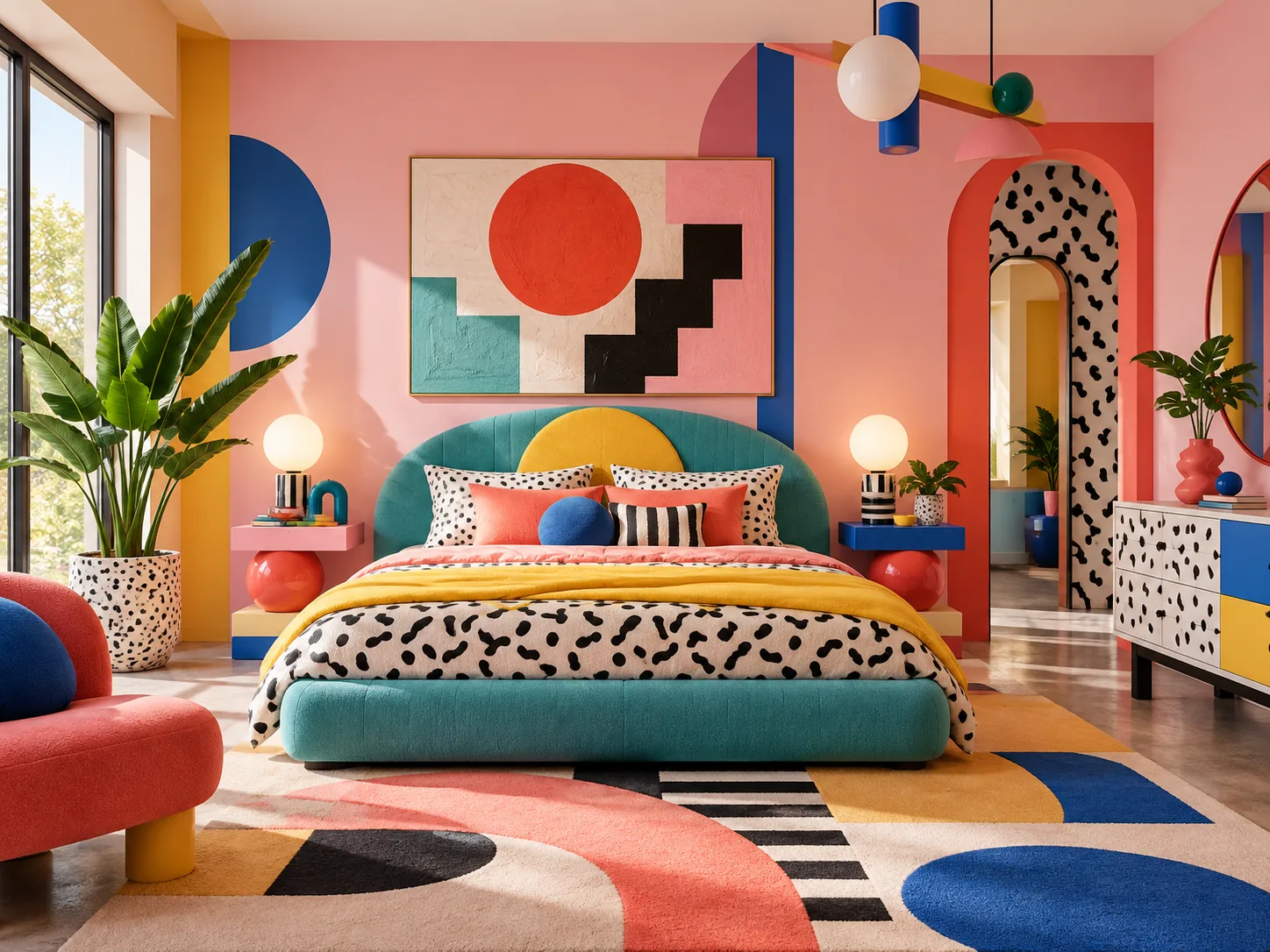
In the bedroom, Memphis should tone it down a little. A geometric headboard, two colorful nightstands, or one graphic artwork are often plenty. That way, the room stays lively without losing its calm.
The Hallway
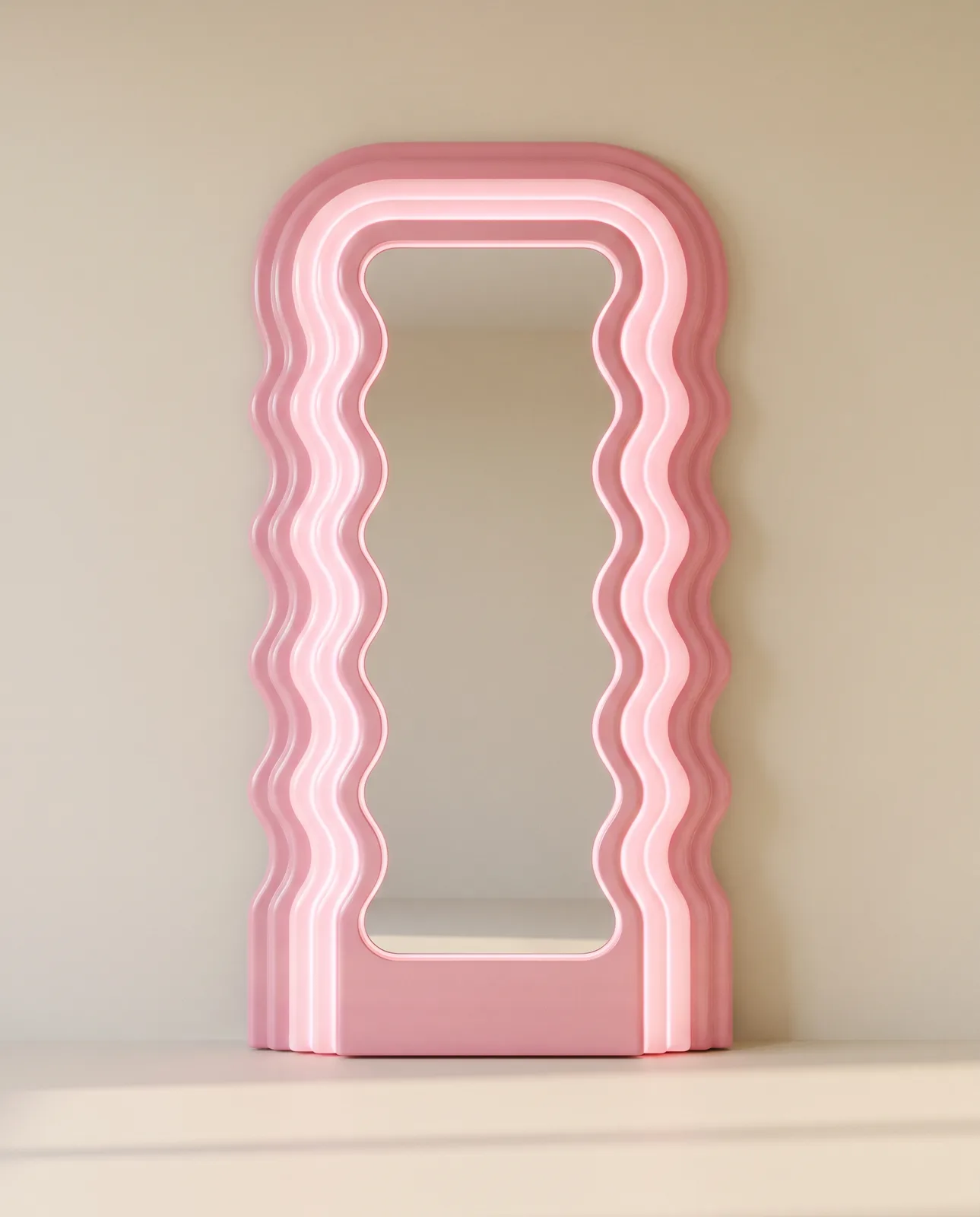
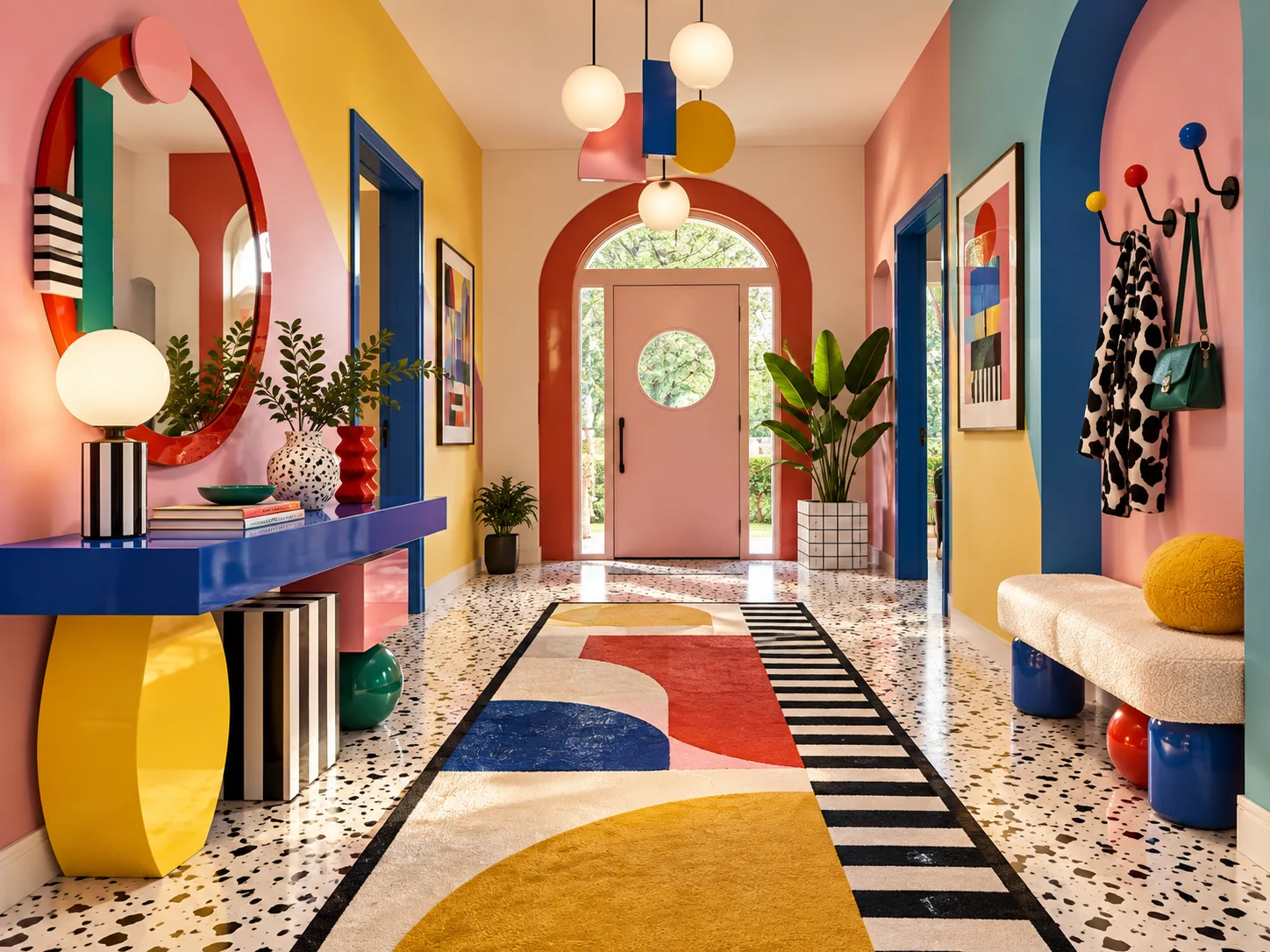
Memphis is also particularly well suited to hallways. Spaces that usually get treated as purely functional can handle color and humor surprisingly well. A bold mirror frame, an unusual console table, or a striped wall section can suddenly turn a passageway into a small entrance.
The Balcony
The idea even works on a balcony. Colorful outdoor furniture, striped planters, and a few graphic textiles carry the style outside. Out there, Memphis is almost allowed to overdo it a little.
Why Does This Style Still Occupy Us?
Why does this style still occupy us more than forty years after it began?
Maybe because so many homes today look strikingly alike. Beige sofa, light rug, round coffee table, a few dried flowers — nice, but often predictable. Memphis pushes back against that perfectionism with something else: personality.
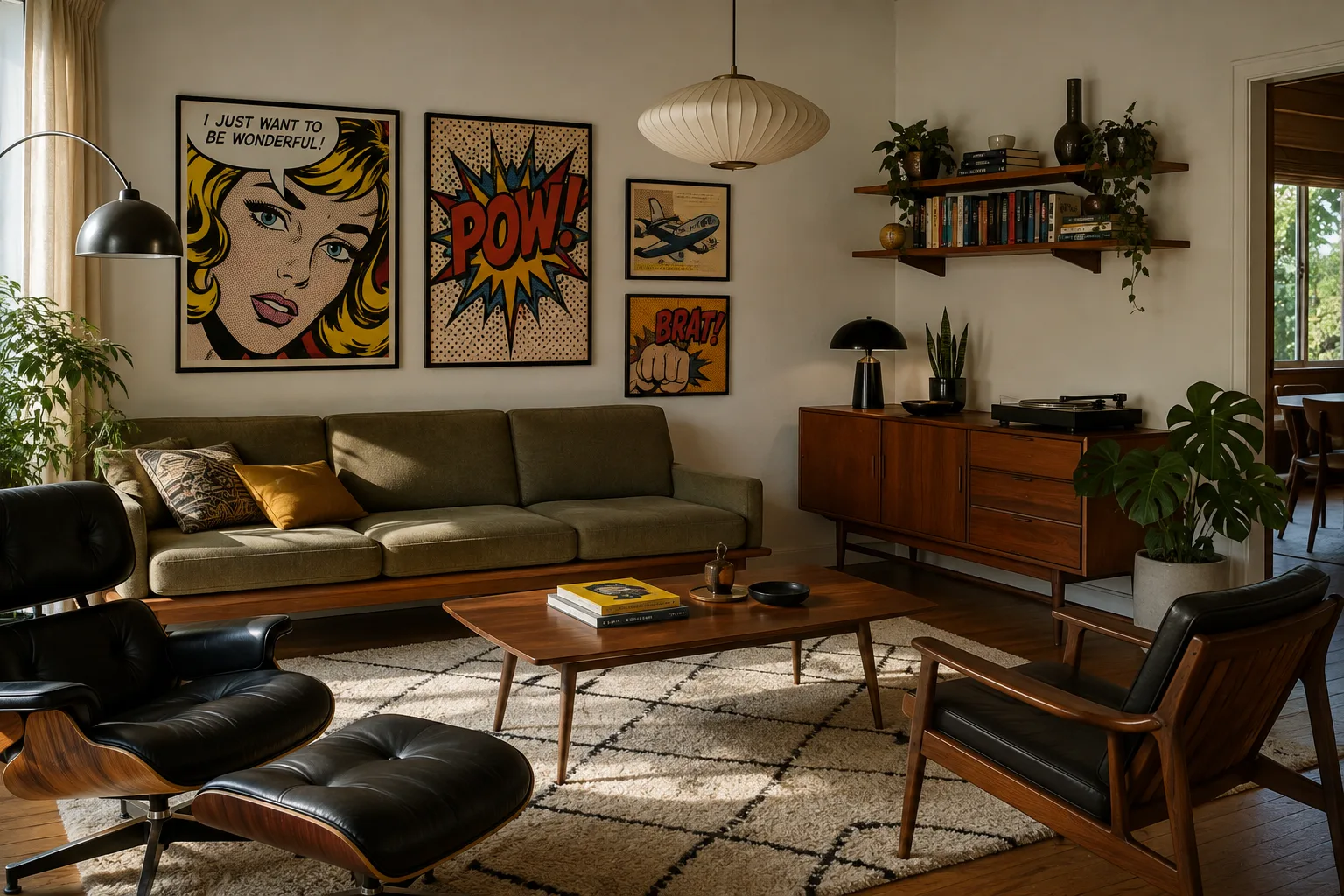
That may also explain its renewed relevance. Its colors and shapes have long since resurfaced in social media, fashion, and product design — often less radical than the original, though. Today, Memphis is happily paired with mid-century, Space Age, or modern, neutral interiors. The result is a more livable version of the style: less manifesto, more accent — but still unmistakably confident, playful, and a little cheeky.
The style allows things that really shouldn't go together. It doesn't take color too seriously, shape too rationally, or decorating as a test of good taste. That can be liberating.
Memphis is a reminder that a home doesn't have to look like a perfectly curated showroom. It's allowed to have rough edges, a sense of humor, and sometimes even be a little strange.
You don't have to love Memphis because of that. It might even be enough to find it interesting. Because hardly any other interior style forces us quite so directly to reconsider our own ideas of beauty.
And maybe that's its greatest strength: Memphis doesn't want to please everyone. It wants us to look.