Shibui Stillness Meets a Brutalist Bathroom
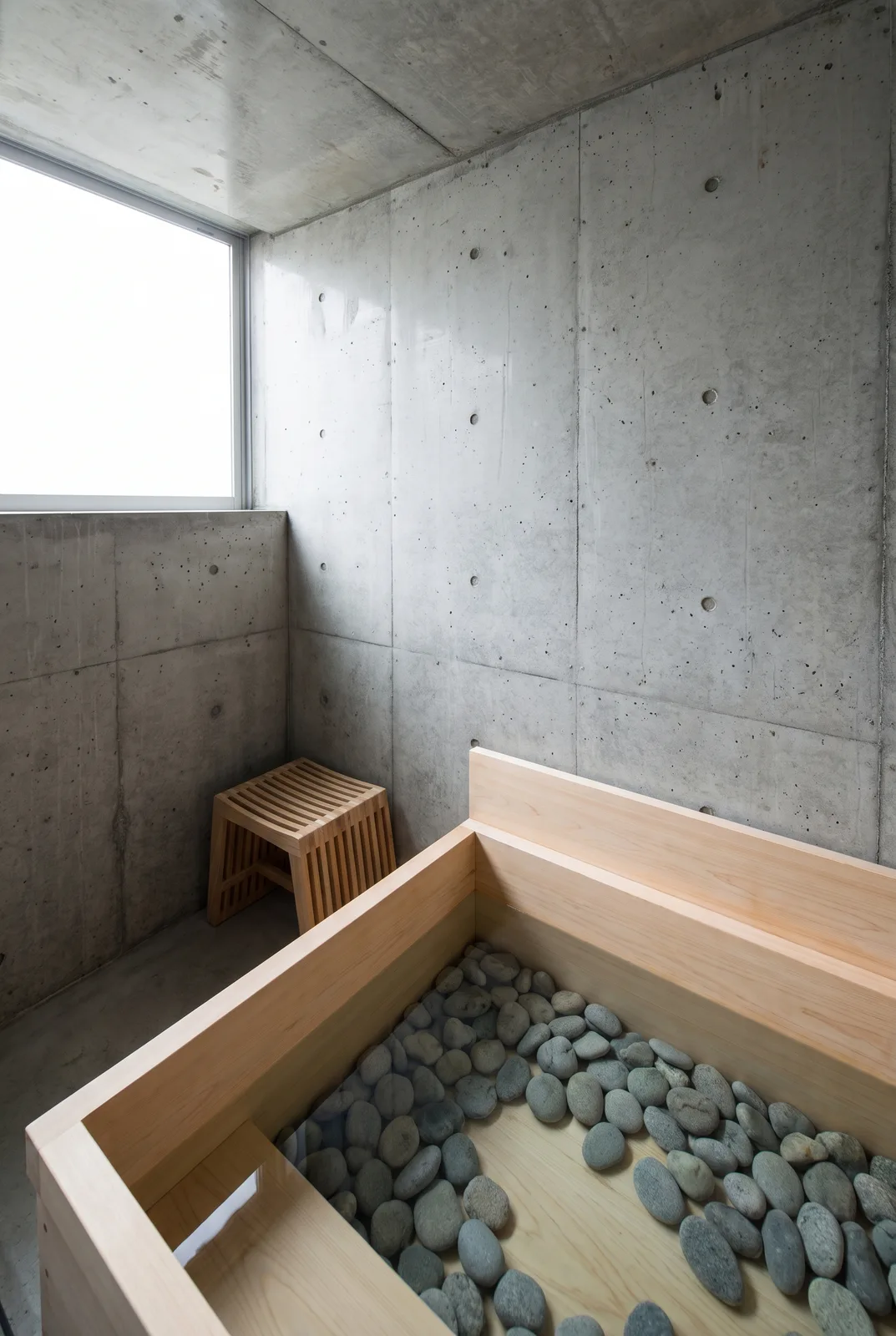
A bathroom that places Japanese restraint directly inside an architecturally raw shell: an oval bathtub of pale, fragrant hinoki wood sits on a bed of smooth grey river stones, surrounded by unfinished exposed-concrete walls and a matching ceiling. No ornament, no tile, no extra decor distracts from the actual ritual of bathing — just wood, stone, and concrete in their purest form.
Style DNA
This fusion connects two philosophies of restraint from entirely different cultures — Japanese Shibui and Western Brutalism — that pursue the same goal: showing nothing superfluous.
Color palette & materials
Cool concrete grey forms the architectural shell, while warm, honey-toned hinoki wood and grey river stones supply the room's one but powerful note of warmth.
Why the combination works
Because both the concrete and the hinoki wood stay untreated and materially honest, no style clash occurs — instead, one continuous principle of reduction simply shifts between two temperatures, cool and warm.
Three decorating rules
- One warm material island, like a wood tub, is enough to make a fully raw concrete room feel livable.
- Consistently avoid tile pattern or ornament so the room's calm stays undisturbed.
- Natural stone, like river stones beneath the tub, connects the two material worlds of wood and concrete in a natural way.
Key furniture types
In the image: an oval hinoki wood bathtub, smooth grey river stones, and unfinished exposed-concrete walls and ceiling.
Similar style fusions
This bathroom's raw exposed concrete shares its material language with our Wabi-Sabi × Hollywood Regency bedroom — both rooms show how untreated, raw surfaces work as a stage for one warm element.