Color ideas for your home
What Colors Go with Purple? 7 Interior Color Pairings
From cream to mustard: discover seven purple color pairings, with room images, palettes and ideas to try at home.
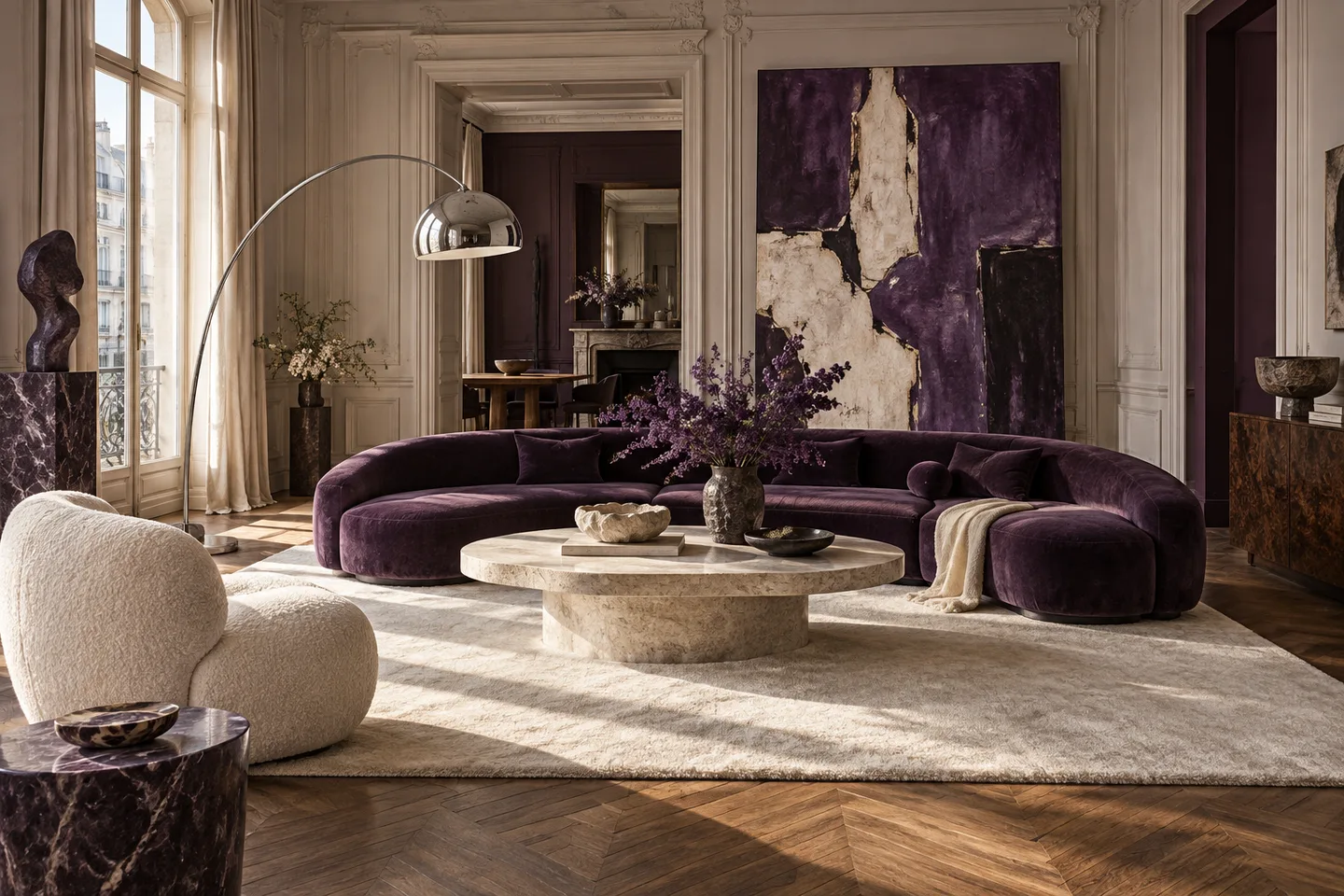
Choose your shade of purple first
Purple covers a wide range. Pale lilac looks different from a clear blue-violet; plum and aubergine introduce deeper, sometimes redder notes. Start with a particular fabric or paint sample. Screen images are useful for gathering ideas, but they cannot replace a sample in your own room.
Place your options beside the floor, curtains and existing furniture. Look at them in the morning and evening, with the lamps on as well. The swatches below are palette suggestions, not paint specifications or exact matches for the images.
1. Purple and cream: a soft backdrop for bold shapes
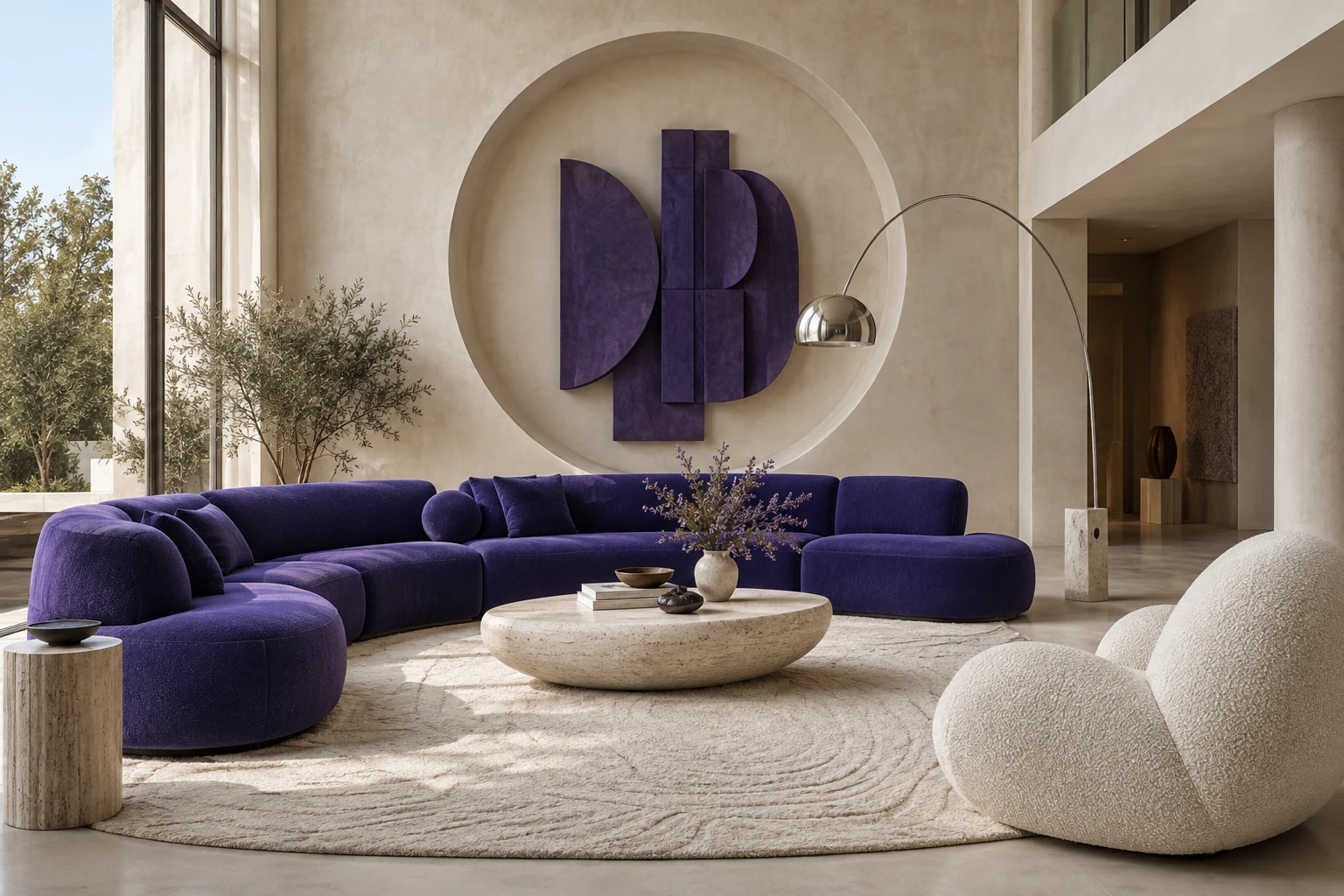
Cream is an easy starting point if you love purple but do not want color on every surface. A plum sofa stands out against a cream wall, while a pale rug connects it to the chairs and curtains. The softer contrast leaves room for subtle changes in tone.
Give those pale surfaces different textures: a chunky cushion, a smooth table and loosely draped curtains. For a bolder room, choose a curved sofa and one large artwork that picks up both colors. A straight sofa with two light cushions makes an equally useful everyday version. Leave space around the furniture so its shape remains visible.
2. Purple and yellow: from a small accent to a statement
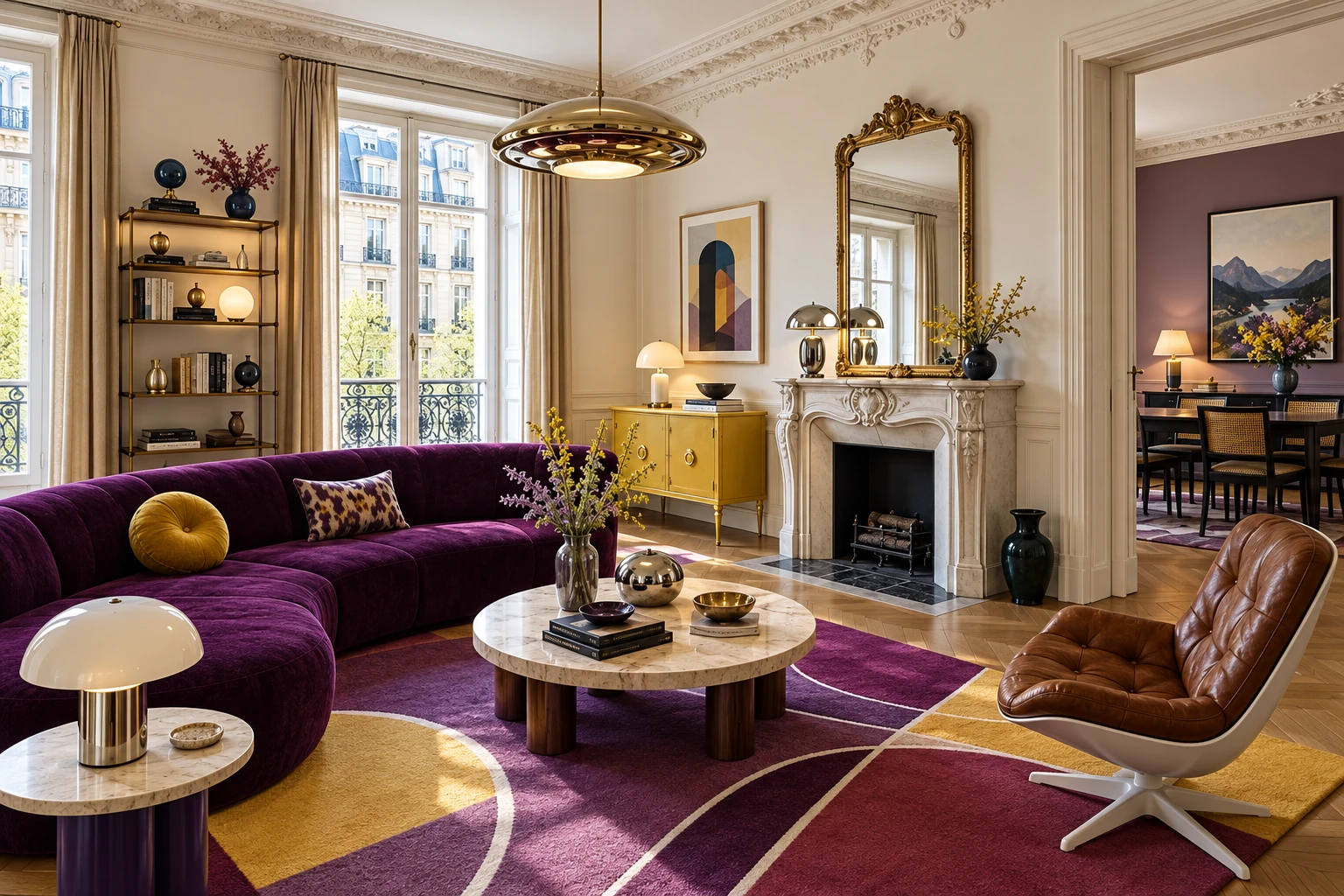
Purple and yellow can work beautifully together. Muted mustard is a useful partner for medium violet or deep plum: both colors stay distinct without taking over every surface. Cream, sand or an existing wooden floor can carry the larger areas.
Decide which color will lead. A purple sofa may need only a mustard chair, lamp or small pattern in the rug. Strong color on the sofa, walls and rug all at once can compete for attention. Repeat the yellow in one smaller detail, such as a painting, to make the pairing feel intentional.
The apartment example pairs a deep violet sofa with a mustard sideboard. A rug with broad, sweeping shapes repeats both colors, while pale walls and a wooden floor leave the arrangement room to breathe. Rounded seating and tables contrast with the straight wall panels and fireplace. Gold-toned details on the mirror and pendant pick up the warmth of yellow; try a few chrome accents if you prefer a cooler finish.
You do not need a period apartment to borrow the idea. Build a seating area around a violet sofa, a small yellow cabinet and a patterned rug. If the rug is busy, keep cushions and curtains plain. A cognac chair or a wooden sideboard you already own can complement the stronger colors. The furniture does not need to come from the same period or be bought as a matching set.
3. Purple and sage green: gentle does not have to mean pale
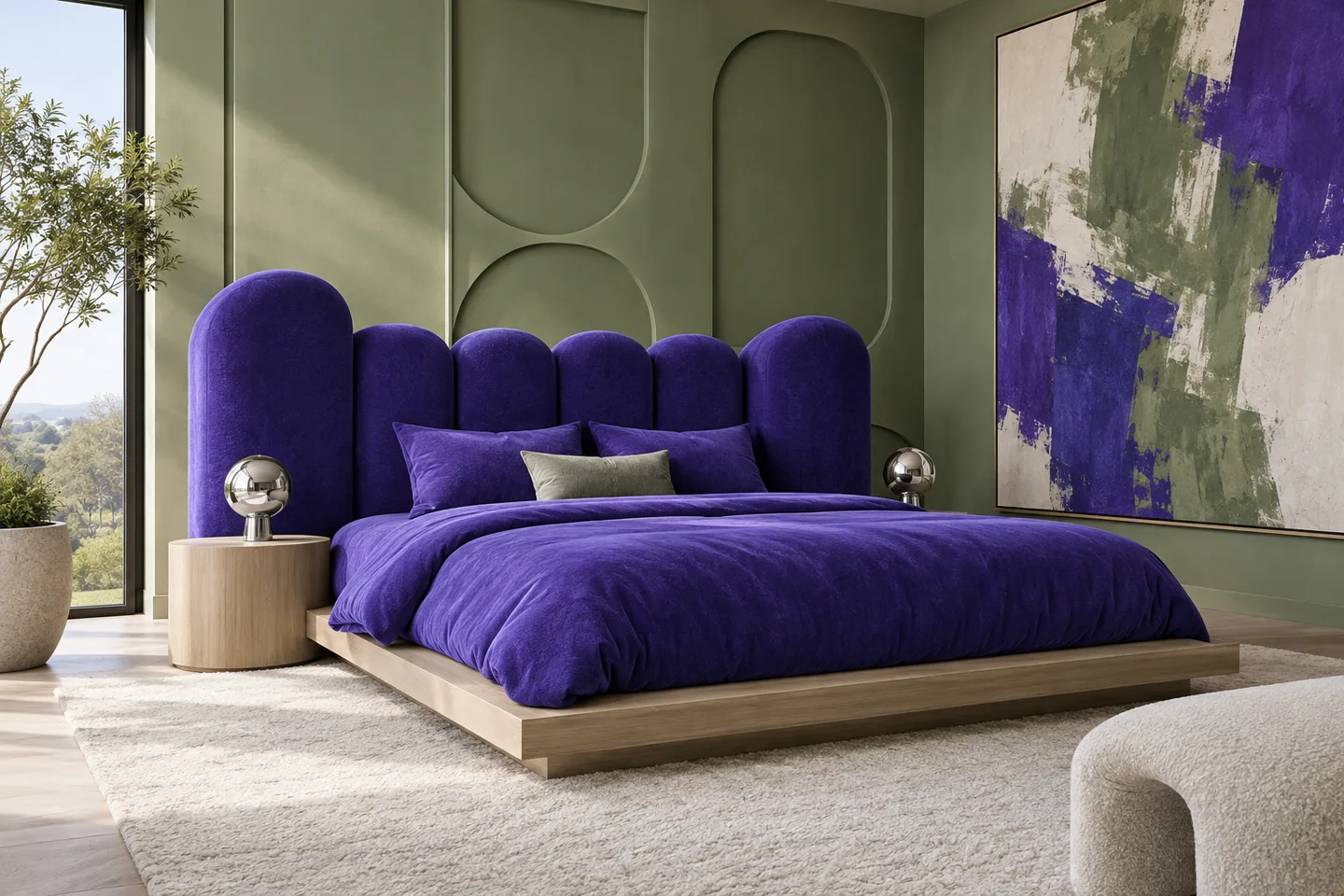
Sage green gives a clear blue-violet a quieter setting. In a bedroom, try a green wall, a violet headboard and pale bedding. Purple does not need to drift into pink: choose a distinctly blue-based violet if pale lilac feels too sweet.
Our bolder example uses a large curved headboard and repeats violet across the bed. The bedside tables, lamps and rug stay relatively simple. For a smaller version, try sage bedding, two violet cushions and a print above the bed. Compare fabric samples together in daylight and under your evening lighting before committing to a major purchase.
4. Purple and burgundy: depth for a cozy corner
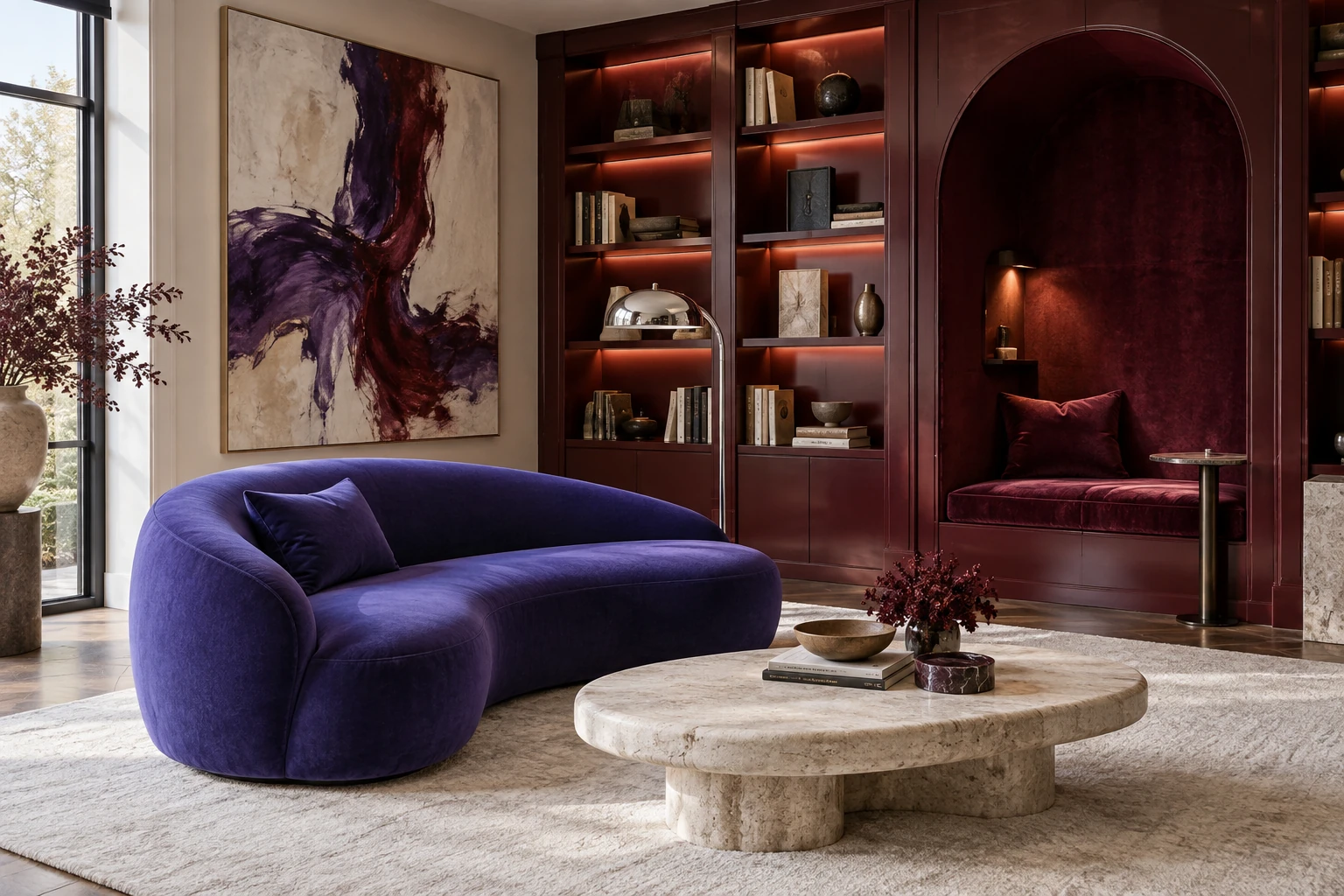
Burgundy beside aubergine creates a rich, dark palette for a reading corner, dining room or living room you mainly enjoy in the evening. Since the two shades can look similar, vary their lightness or texture: a dark burgundy chair against a lighter purple wall, for example.
Include something pale to break up the dark areas. A cream lampshade, light book spines or artwork with plenty of open space gives the eye a resting point. Small rooms do not automatically rule out dark colors, but start with a defined area. A throw and a cushion are an easy way to find out whether you want more.
5. Purple and terracotta: earthy meets expressive
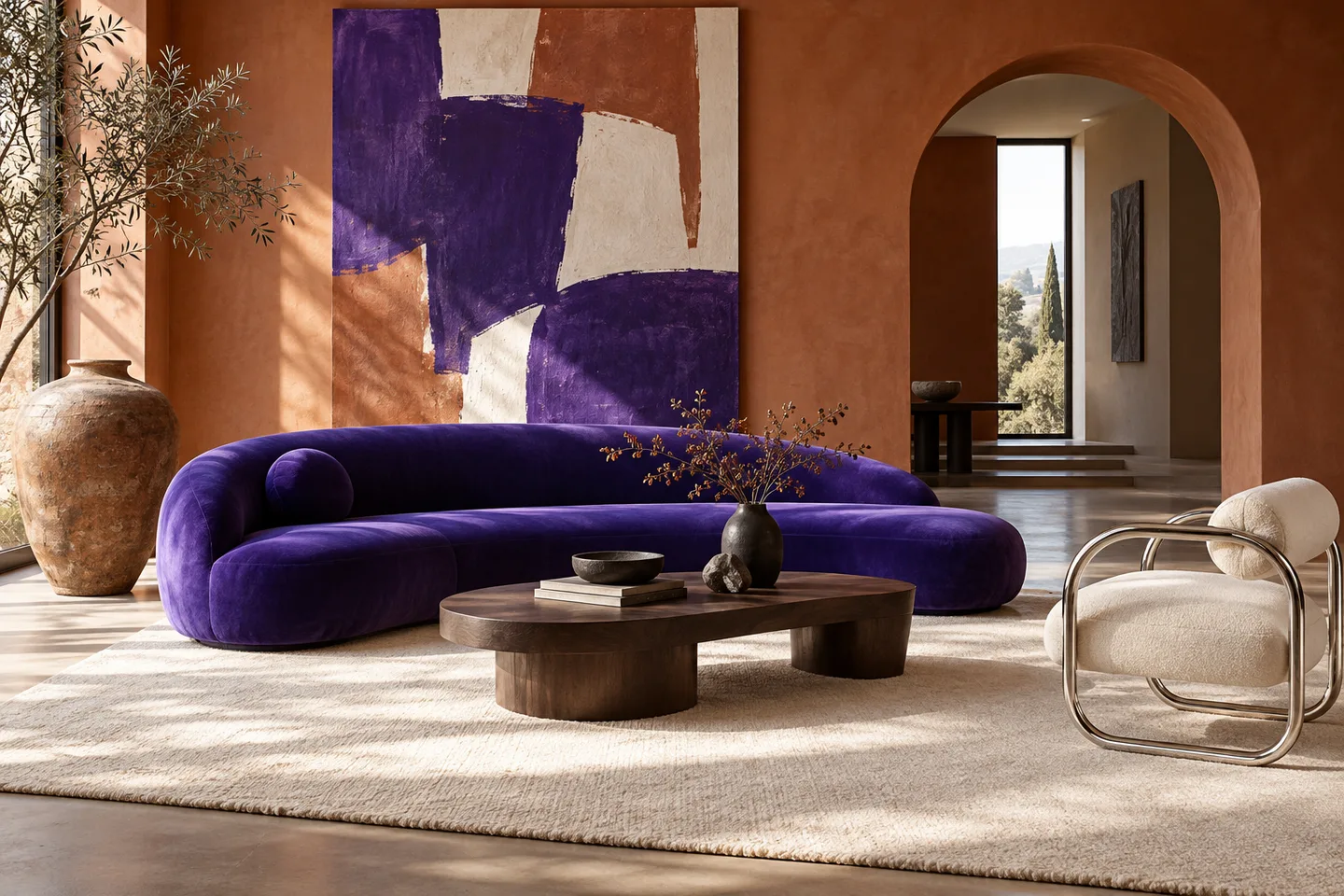
Terracotta introduces an orange-brown tone that makes a cooler violet stand out. A clay-colored wall and a violet sofa can carry the whole palette, with cream and dark wood as supporting elements. You may not need another accent color at all.
The shapes matter as much as the colors in this room: the rounded sofa echoes a broad arch above a low table. You do not need to remodel your home to borrow the idea. A large terracotta-colored area behind a violet seating group, or an abstract painting using both shades, can do the job. Choose a less red-based purple if you want a clear distinction from the warm background.
6. Purple and gray: quiet surroundings, one clear focal point
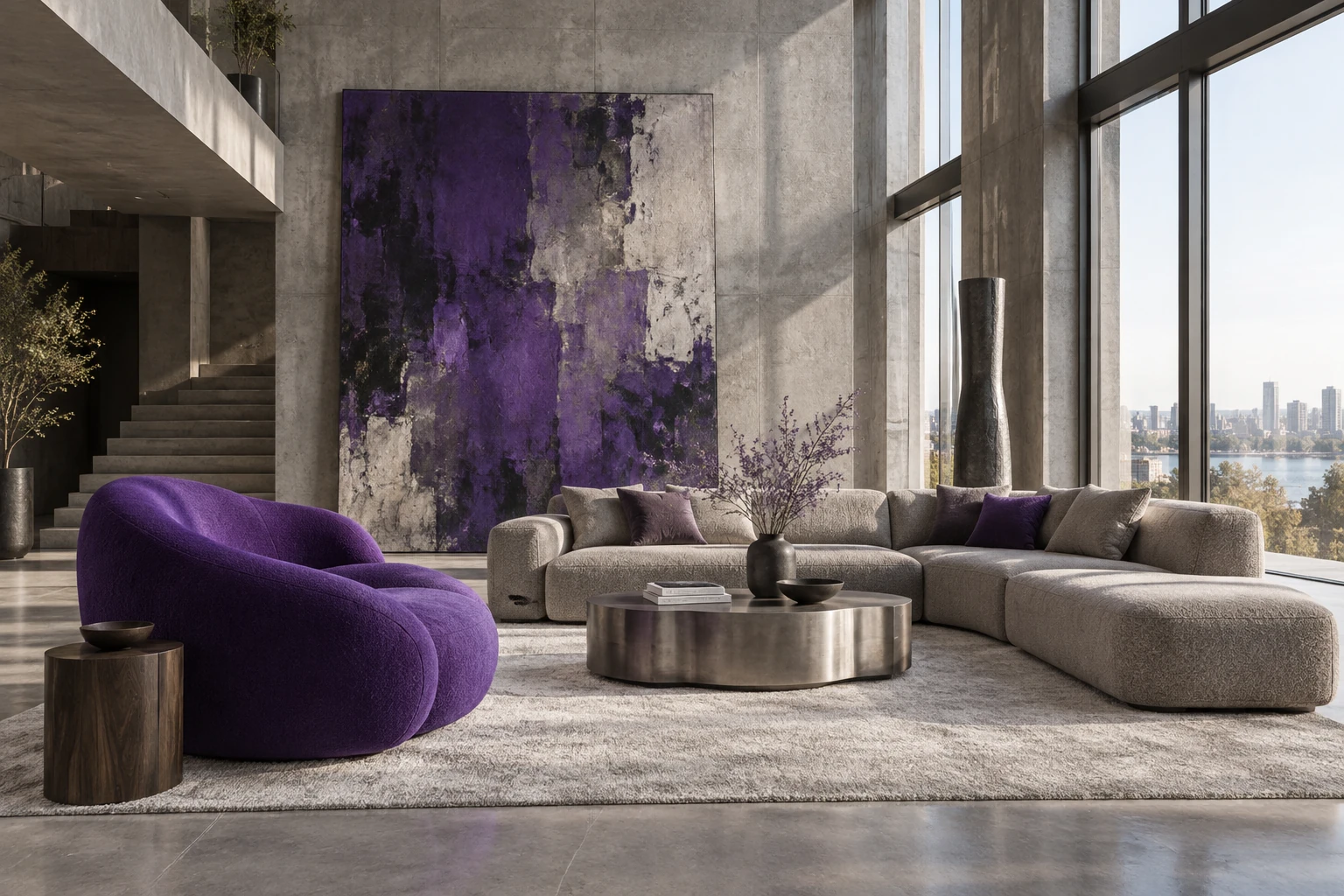
If you already have a gray sofa, purple is an easy addition. Start with a substantial artwork or a rug containing both colors rather than scattering lots of small purple objects around. Try muted plum with greige, or a clearer blue-violet with cooler gray.
Avoid making every surface a similar mid-tone. A cream area or a darker piece of furniture gives the colors more definition. Warm wood and visibly textured textiles can make the setting feel more inviting. Keep the gray furniture you already own; one well-chosen addition can change how the room reads.
7. Purple and wood: work with the furniture you own
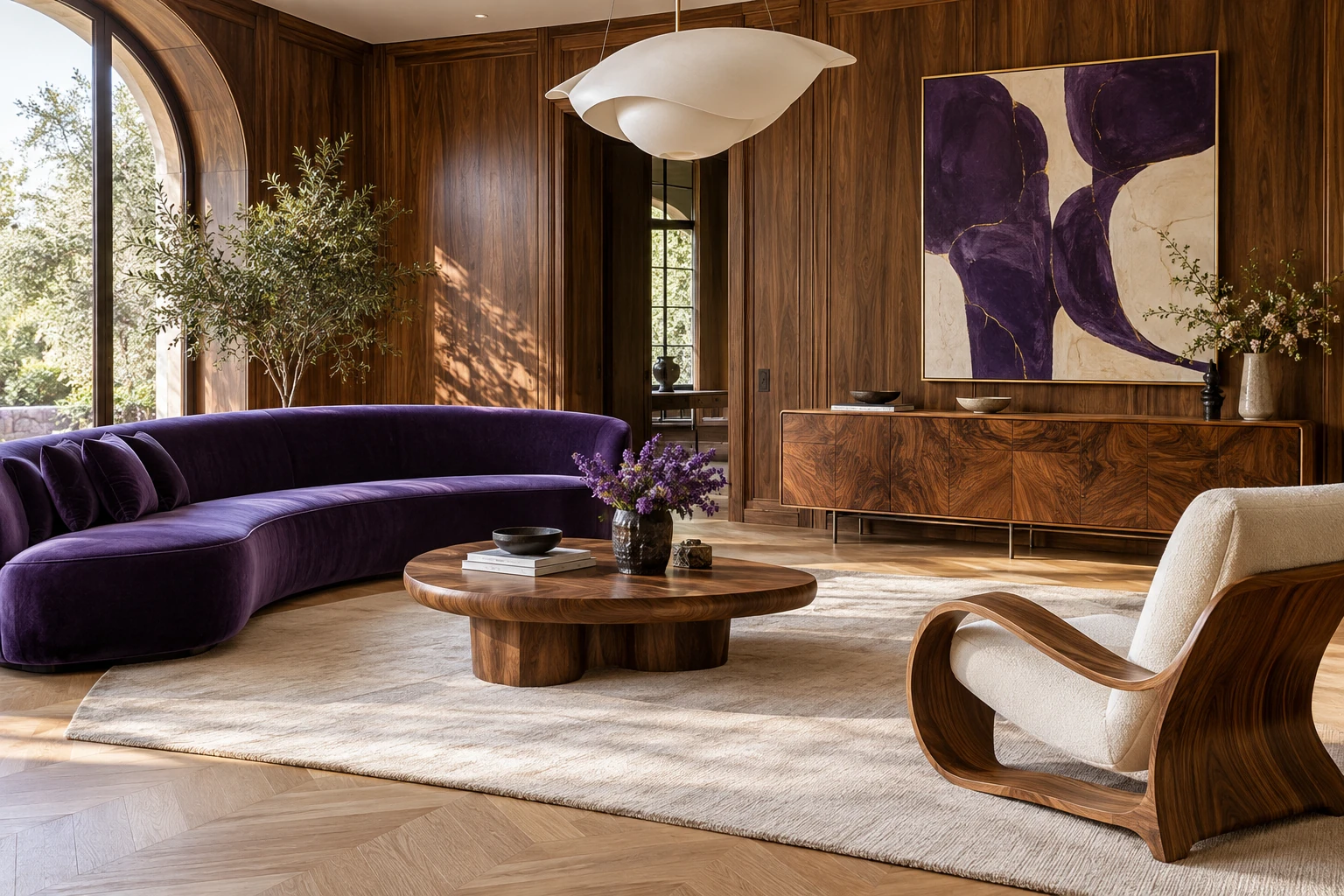
Wood is not a single color. A pale oak floor, a reddish vintage sideboard and a dark table introduce very different tones. Start with the furniture and flooring you intend to keep. Airy lilac is worth trying beside pale wood; a stronger violet can hold its own next to deep brown.
Place a large color sample directly against the wood and look at both from across the room. If the pairing works, there is no need to replace every other wood finish. Repeated pale textiles or a shared tone in a rug can connect the pieces. An older sideboard next to a modern purple sofa often makes a more personal room than a fully matched set.
Find the pairing that works for you
Start with what you want to keep: the sofa, flooring or a favorite painting. Choose one purple and one companion color, then test them with cushions, a throw or a paint sample on the wall. If you still enjoy the combination after a few days, consider a bigger change.
For an understated start, try cream or greige. For stronger contrast, explore mustard or terracotta. If vivid violet is what you love, let it lead: one well-placed piece of furniture can be enough.