Do Yellow and Blue Work Together in Interior Design?
Mustard and navy bring warmth and depth together. Explore complementary shades, room ideas and small changes that make a difference.
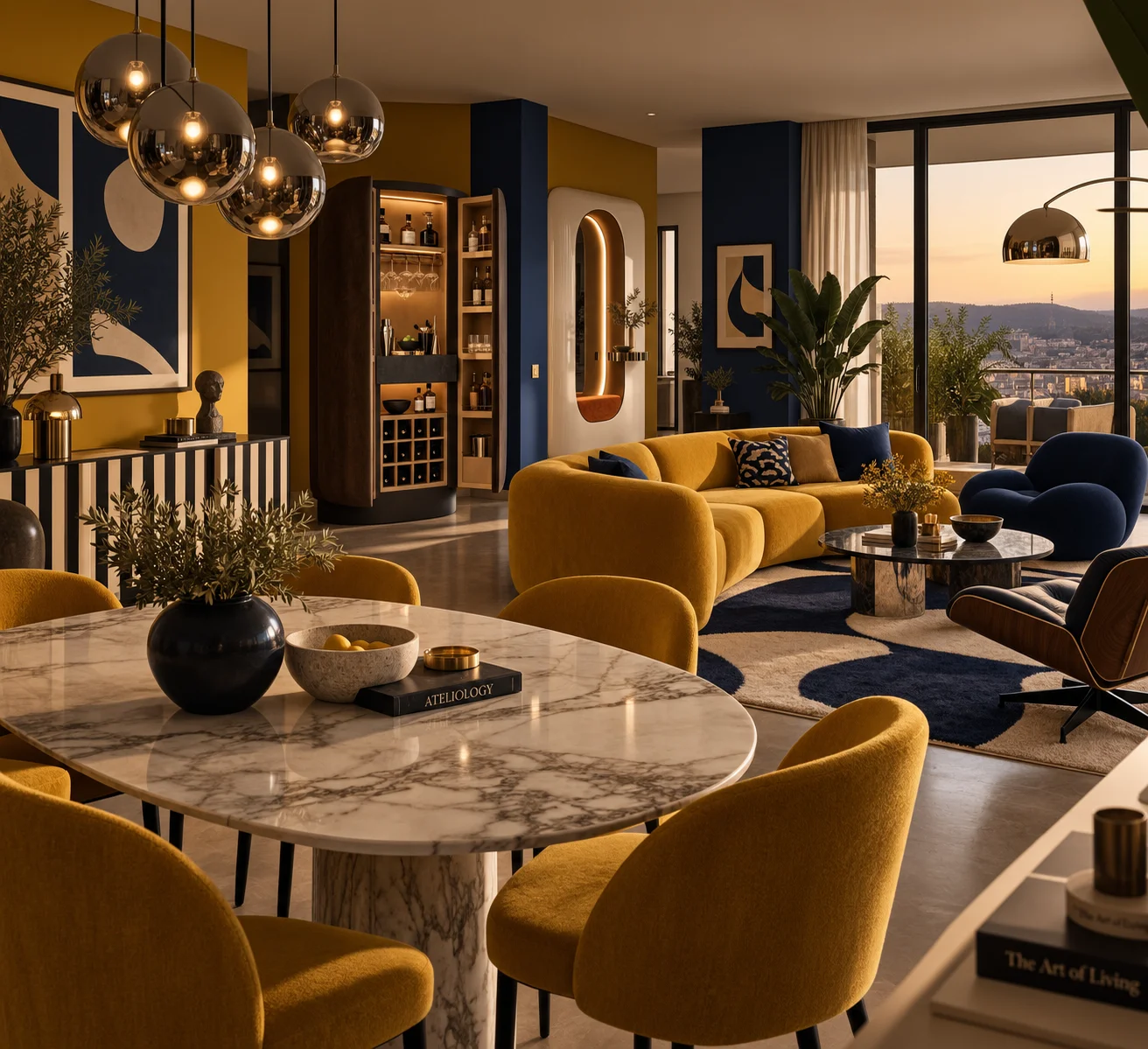
Mustard yellow and navy blue in particular work far better in interiors than their reputation suggests. The reason is simple: the two colors bring very different qualities to the table, and those qualities balance each other out almost perfectly.
Blue calms. Yellow energizes.
Blue adds depth. Yellow brings light.
And while navy tends to look a little serious, mustard walks in and reminds the room that living somewhere is also allowed to be fun.
Why Yellow and Blue Work So Well Together
On the color wheel, yellow and blue aren't direct opposites, but the contrast between warm and cool is strong enough to create real tension — and that tension is exactly what makes the combination interesting.
Navy reads as calm, high-quality, almost architectural. A dark blue wall can instantly give a room more depth. A sofa or armchair in navy usually looks considerably more grown-up than the same piece in a lighter blue.
Yellow works completely differently. It grabs attention. A mustard sofa isn't going to politely fade into the background. It wants to be seen — and that's perfectly fine.
So the trick isn't using both colors in exactly equal amounts. A room with 50 percent yellow and 50 percent blue can quickly look like someone discovered a color scheme and then decided to punish it relentlessly.
A clear hierarchy works much better. One color leads, the other provides accents.
Mustard Instead of Lemon Yellow
If you want to bring yellow into the living room, mustard is by far the easier entry point for most spaces.
A very bright or clear yellow can quickly look loud, artificial, or even a little cheap. Mustard, by contrast, carries brown and ochre undertones, which makes it read warmer and connects it far more naturally to natural materials.
Wood, travertine, marble, brass, leather — suddenly everything makes sense together. That's exactly why a mustard sofa can look surprisingly luxurious. It's colorful, but not playful.
And it has another advantage: mustard works with Mid-Century furniture just as well as with Art Deco, Eclectic, retro, or even more modern, minimalist interiors.
A lemon-yellow sofa can be a statement. A mustard sofa can be an entire interior concept.
Navy Turns Yellow Into an Adult
Yellow on its own can quickly become overpowering. Navy takes some of that energy down a notch. That's where an interesting balance comes from.
Picture a large mustard sofa, for example. Next to it, a navy armchair. The rug picks up both colors again, but far more subtly. Add dark wood, cream, natural stone, and maybe a touch of chrome or brass.
Suddenly the color combination doesn't look colorful anymore. It looks intentional. And that's exactly the difference between a colorful room and a room that looks like several browser tabs got mixed up during the furniture order.
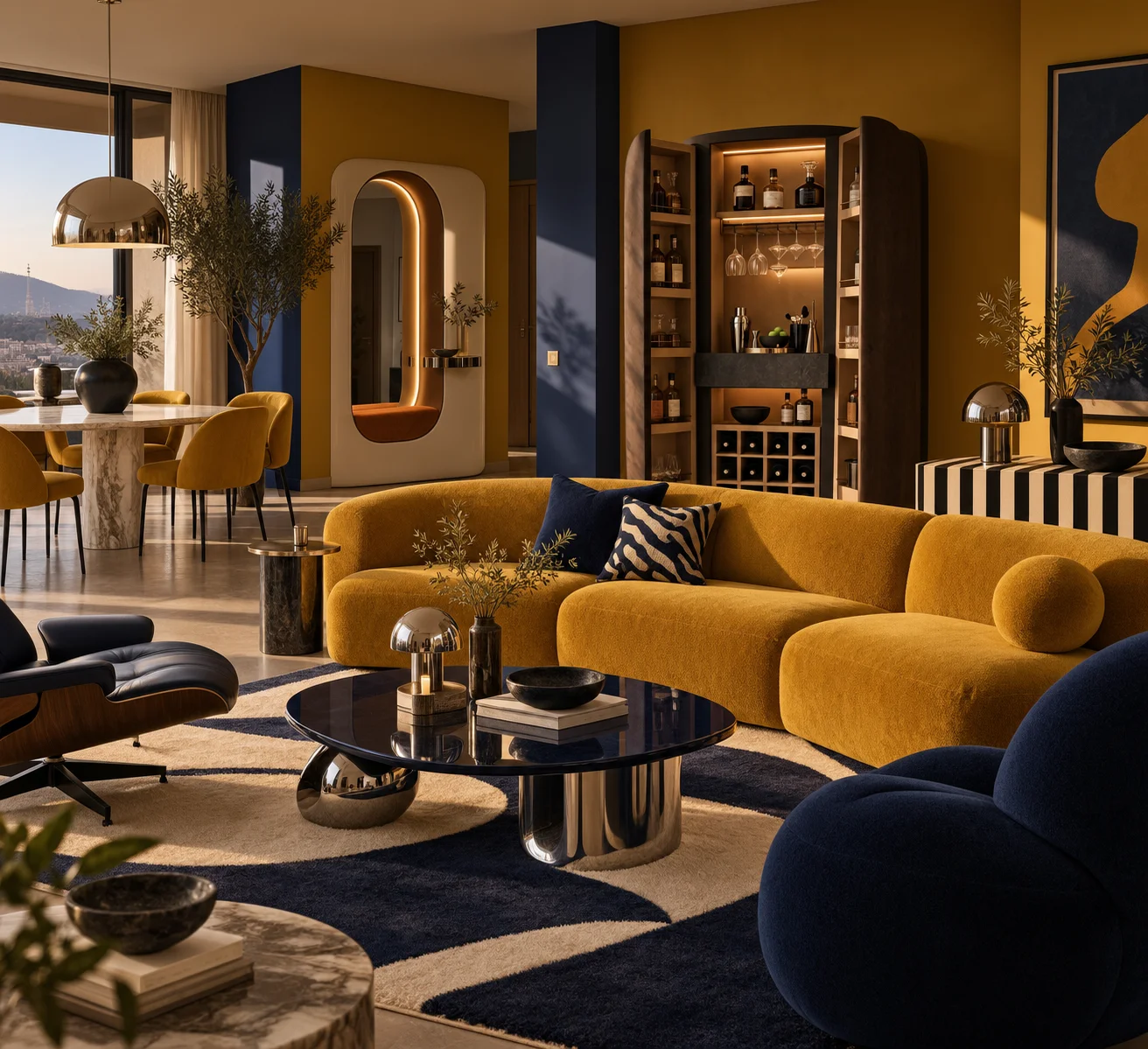
Navy, incidentally, works especially well on larger surfaces. A single dark blue wall can give a room surprisingly strong spatial structure. Curtains, rugs, or larger armchairs work well for this too.
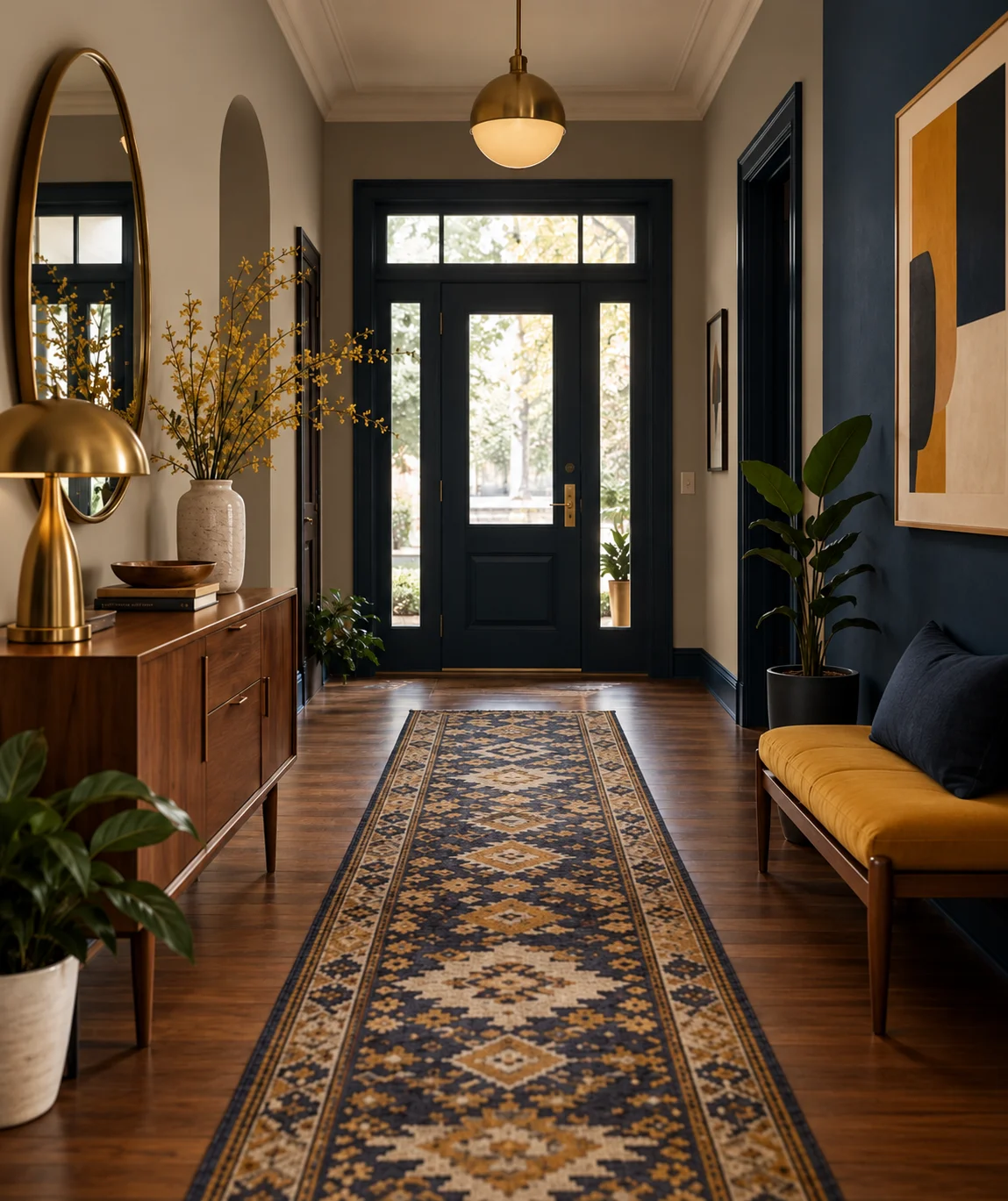
Yellow, on the other hand, I'd use more often as a statement color.
What Should the Third Color Be?
This is often where it's decided whether yellow and blue end up looking elegant or exhausting. Both colors need neutral surfaces around them.
The simplest options are warm whites, cream, beige, or a light greige. They give the eye a rest. And that rest matters.
If the sofa, armchair, rug, wall, art, and cushions are all shouting color at the same time, the room eventually has no lead character left. The whole ensemble turns into a cast of supporting actors all auditioning for the lead.
Wood is also almost always a good addition. I particularly like walnut or dark oak. The brown ties the warmth of mustard to the depth of navy.
Travertine and cream-colored marble work beautifully too. If you want it a little more glamorous, add brass. For something more modern, go with chrome. Black works as well — but sparingly.
Which Interior Styles Does Yellow and Blue Work With?
Interestingly, the combination is remarkably flexible.
In Mid-Century style, it feels almost at home. Mustard, walnut wood, and deep blue could easily have come straight out of a good 1960s or '70s interior.
With Art Deco, the blue can go even darker and the yellow a bit more golden. Brass, marble, and geometric pattern quickly turn it into something very elegant.
In an Eclectic interior, you can get considerably bolder: patterned rugs, art, mixed woods, and a few unexpected shapes.
And the combination even works in a modern living room — as long as the furniture has clean lines and the rest of the palette stays calm.
When Yellow and Blue Aren't a Good Idea
As likeable as the combination is, it doesn't automatically suit everyone.
If you prefer rooms built almost entirely from white, cream, beige, and light wood, a mustard sofa probably isn't going to suddenly deliver your inner fulfillment.
Yellow and blue want to be seen. They create atmosphere.
If you want as little visual stimulation as possible, use them sparingly, as accents.
In very small or dark rooms, navy also needs a careful hand. A full dark-blue wall can look fantastic — but it can also visually shrink a small room.
In that case, a better solution would be: light walls, one mustard piece of furniture, a few navy accents. Same color scheme, considerably less drama.
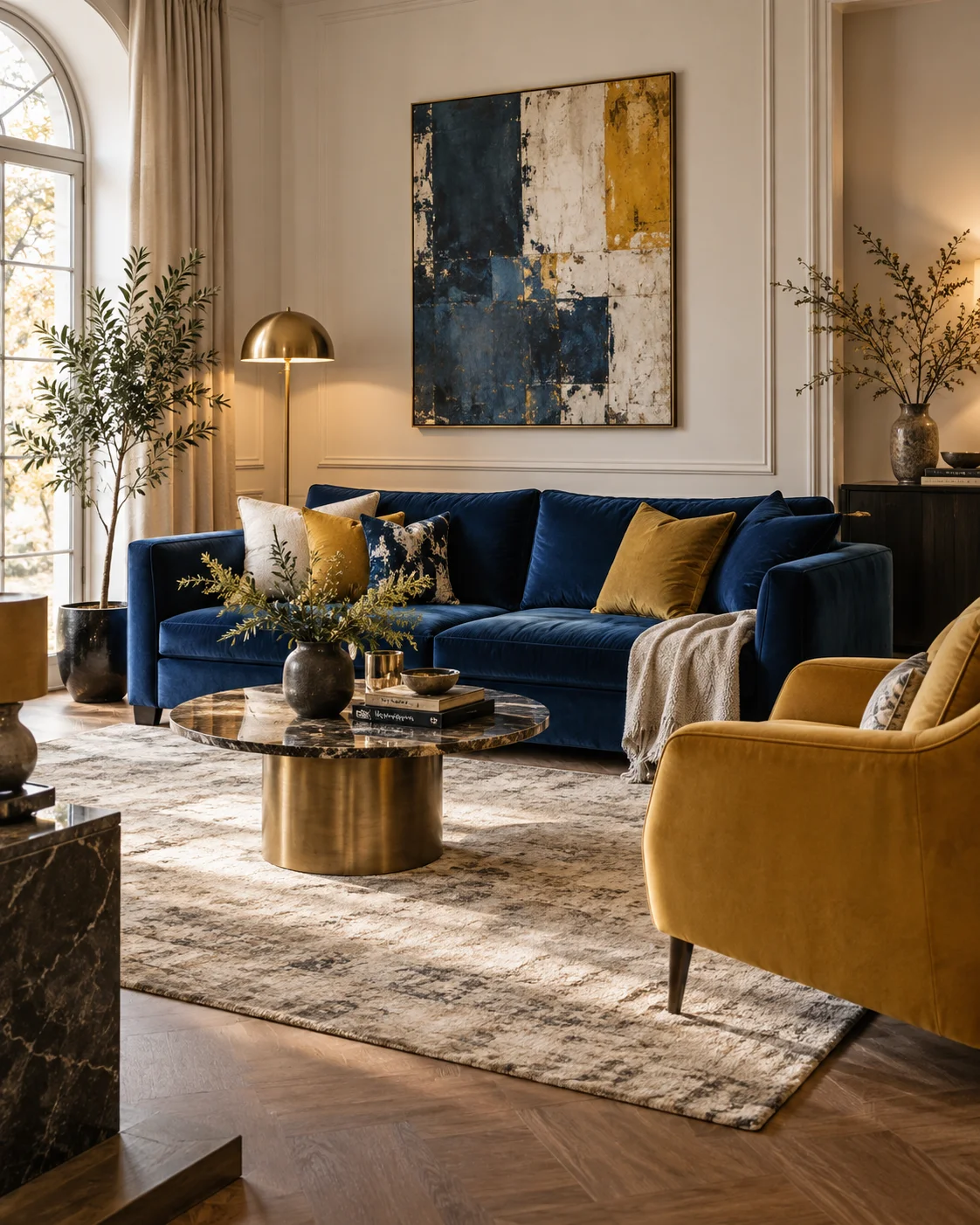
A Simple Test
Before you paint a wall navy or order a ten-foot-wide yellow sofa, try the combination on smaller surfaces first.
A good starting point could look like this:
- one larger mustard element
- two or three navy accents
- cream as the base color
- dark wood
- a rug that subtly ties both colors together
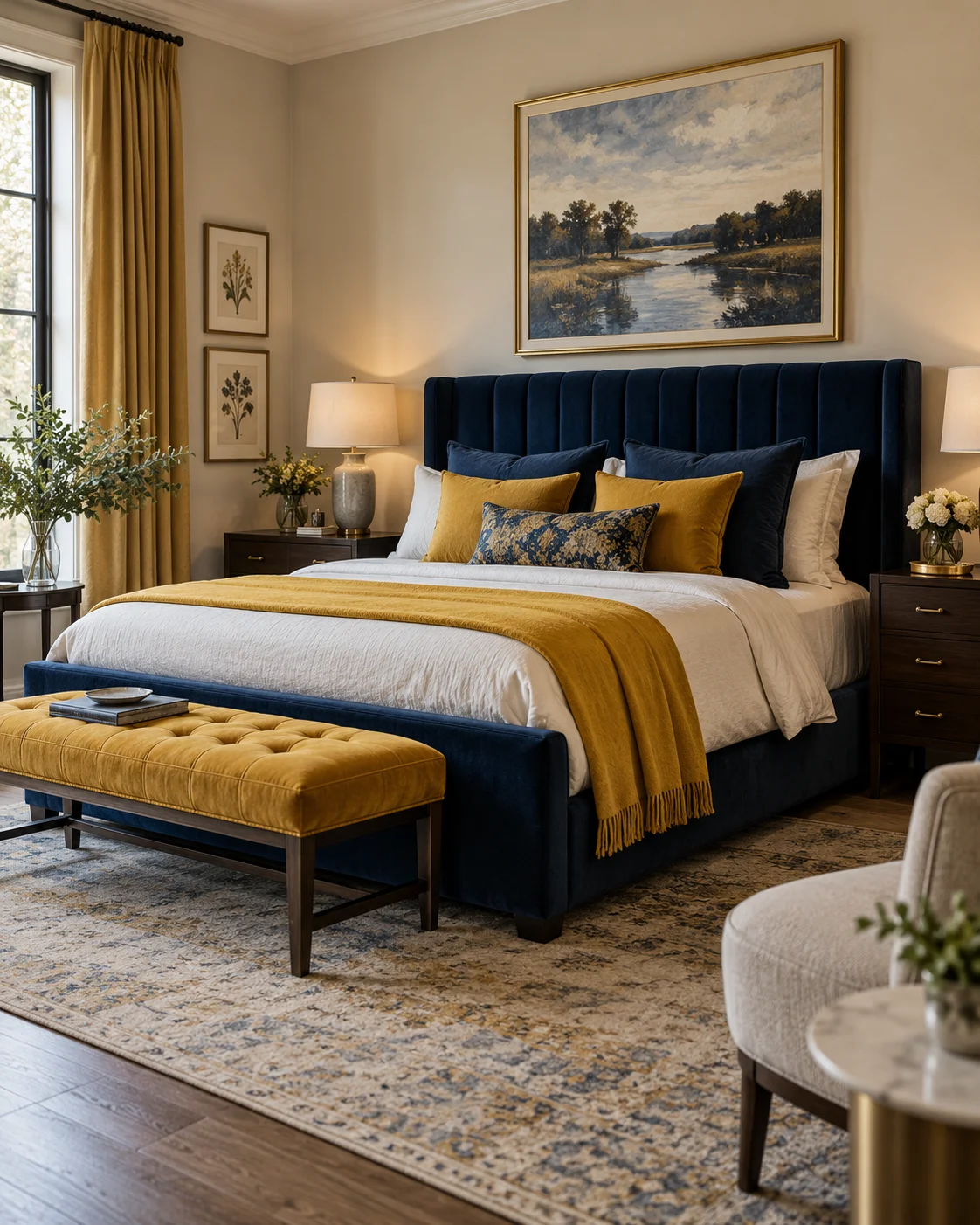
If the room afterward feels a little too calm, you can always add more color. Going the other way is considerably harder.
So, Is Yellow and Blue Right for You?
If you like rooms that feel characterful, warm, and still elegant, this combination is genuinely worth considering.
It's especially suited to people who find beige-only interiors a bit too well-behaved, but still don't want a room that looks like a color experiment.
Navy brings class.
Mustard brings personality.
Together, they create an interior that can feel cozy and self-assured at the same time.
And maybe that's the real appeal of this combination: it doesn't even try to please everyone.
A good living room shouldn't, either.
Ateliology
Interior Design · Furniture Icons · Style Guides