A Gothic Revival Mirror in a Minimalist Hallway
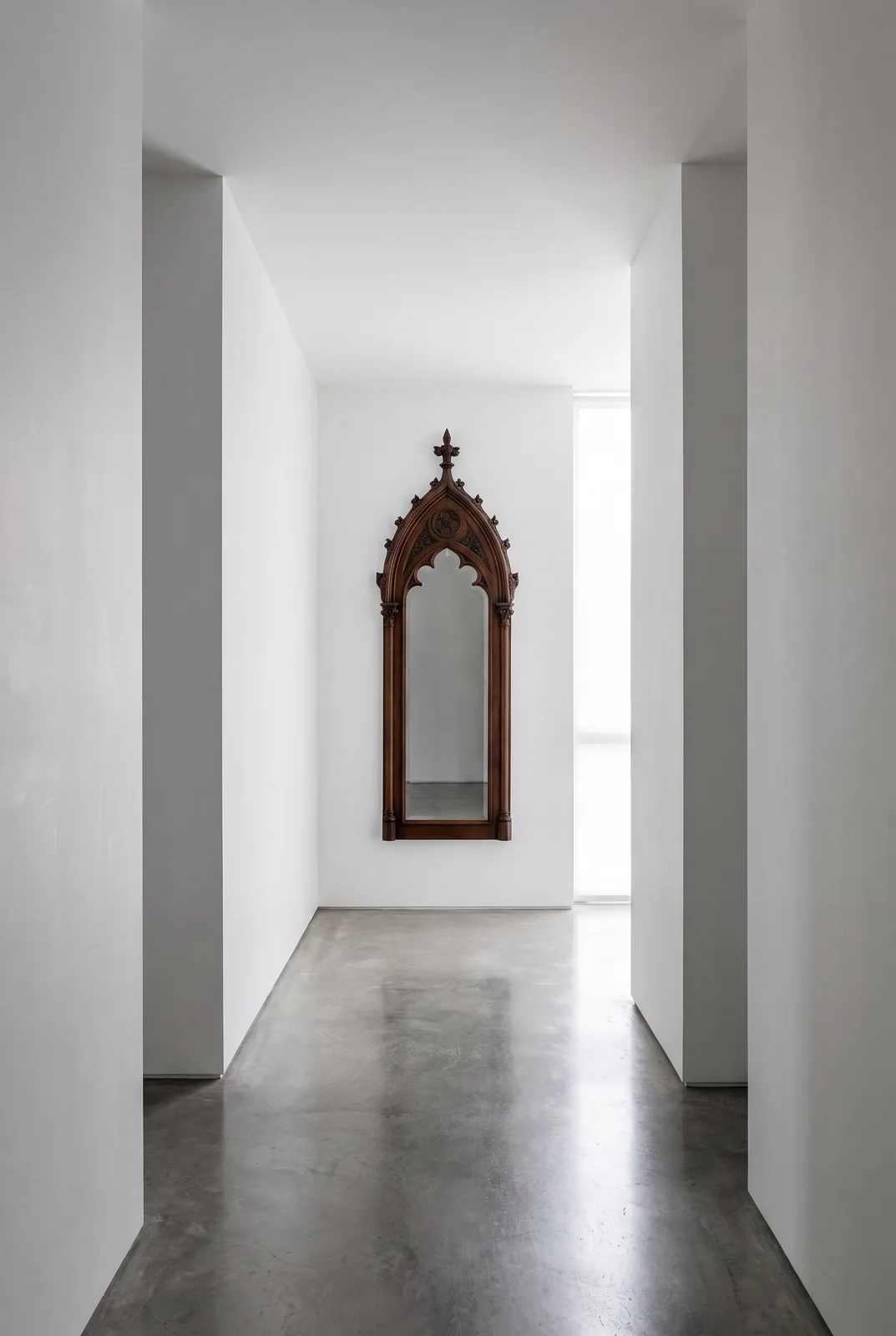
An entrance hallway that forgoes almost everything a home usually shows in this transitional space: no coat rack, no rug, no gallery wall — just pure white walls and a polished grey concrete floor that gently reflects the light. The one exception is a dark, pointed-arch Gothic Revival mirror hanging centered on the end wall, defining the entire hallway as its sole focal point.
Style DNA
This fusion pushes minimalism to its absolute maximum and allows exactly one historic ornament to stand as the sole exception — the contrast here comes from radical emptiness, not from abundance.
Color palette & materials
Pure white and cool concrete grey form the almost entirely neutral base against which the deep, dark wood of the Gothic mirror frame reads like a silhouette.
Why the combination works
Because the room otherwise stays completely empty, the single Gothic Revival element gets the full attention it would never receive in a more densely furnished hallway — here, less context means more impact.
Three decorating rules
- One historic ornament makes the strongest impact in an otherwise completely empty, neutral room.
- In a very reduced hallway, deliberately skip rugs or wall art so nothing distracts from the main element.
- Centered, symmetrical placement on the wall reinforces the architectural, almost sacred effect of a pointed-arch object.
Key furniture types
In the image: pure white walls, a polished grey concrete floor, and a dark, pointed-arch Gothic Revival mirror.
Similar style fusions
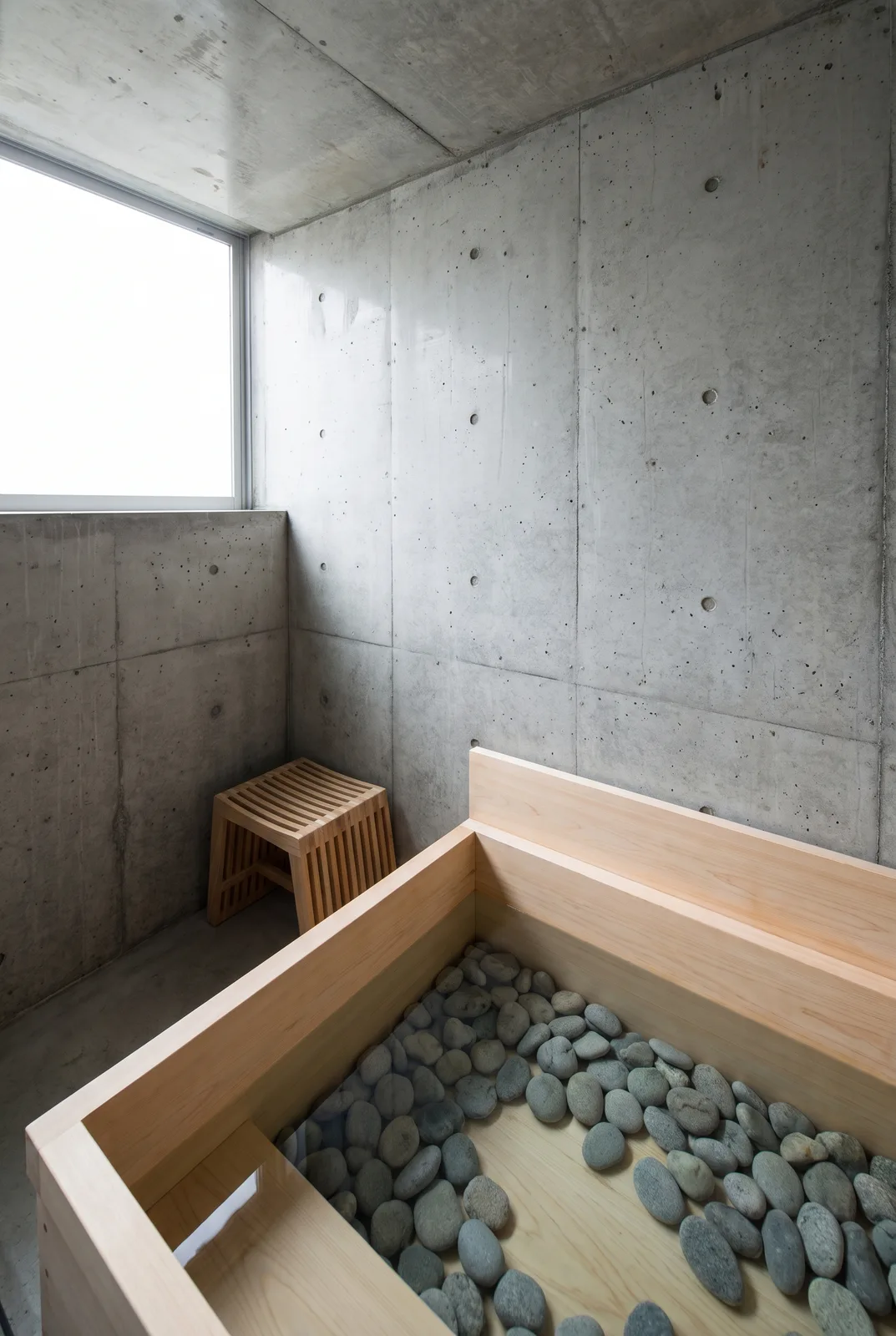
This hallway's radical emptiness sits close in spirit to our Shibui × Brutalism bathroom — both rooms prove that one meaningful element creates more impact than any amount of added decoration.