Chippendale Furniture: Understanding the Style and Styling Inherited Pieces
A curved chest of drawers, a dark cabinet, a table with an elaborate base: some inherited pieces seem to arrive with a whole decorating scheme attached. Your living room does not have to look like your grandparents’ home, though. Chippendale-inspired furniture and later revival pieces can feel surprisingly fresh alongside simple sofas, contemporary lighting and confident colour. First, take a closer look: how do you recognise the style, and what exactly is the piece in your home?
What is Chippendale furniture?
The name comes from the English furniture designer Thomas Chippendale. His pattern book, The Gentleman and Cabinet-Maker’s Director, first published in 1754, brought together designs for different types of furniture. It made those ideas accessible to a wider circle of clients and workshops. The Metropolitan Museum of Art also describes “Chippendale” as a term for English Rococo furniture inspired by its designs. Source: The Met
The style is more varied than the familiar image of a curved furniture leg suggests. Rococo forms, Gothic-inspired elements and European interpretations of Chinese design all belong to its vocabulary. The Victoria and Albert Museum explains this combination in its introduction to chinoiserie. Source: V&A
How to recognise Chippendale furniture
No single detail makes a piece Chippendale. What gives it away is a combination of features:
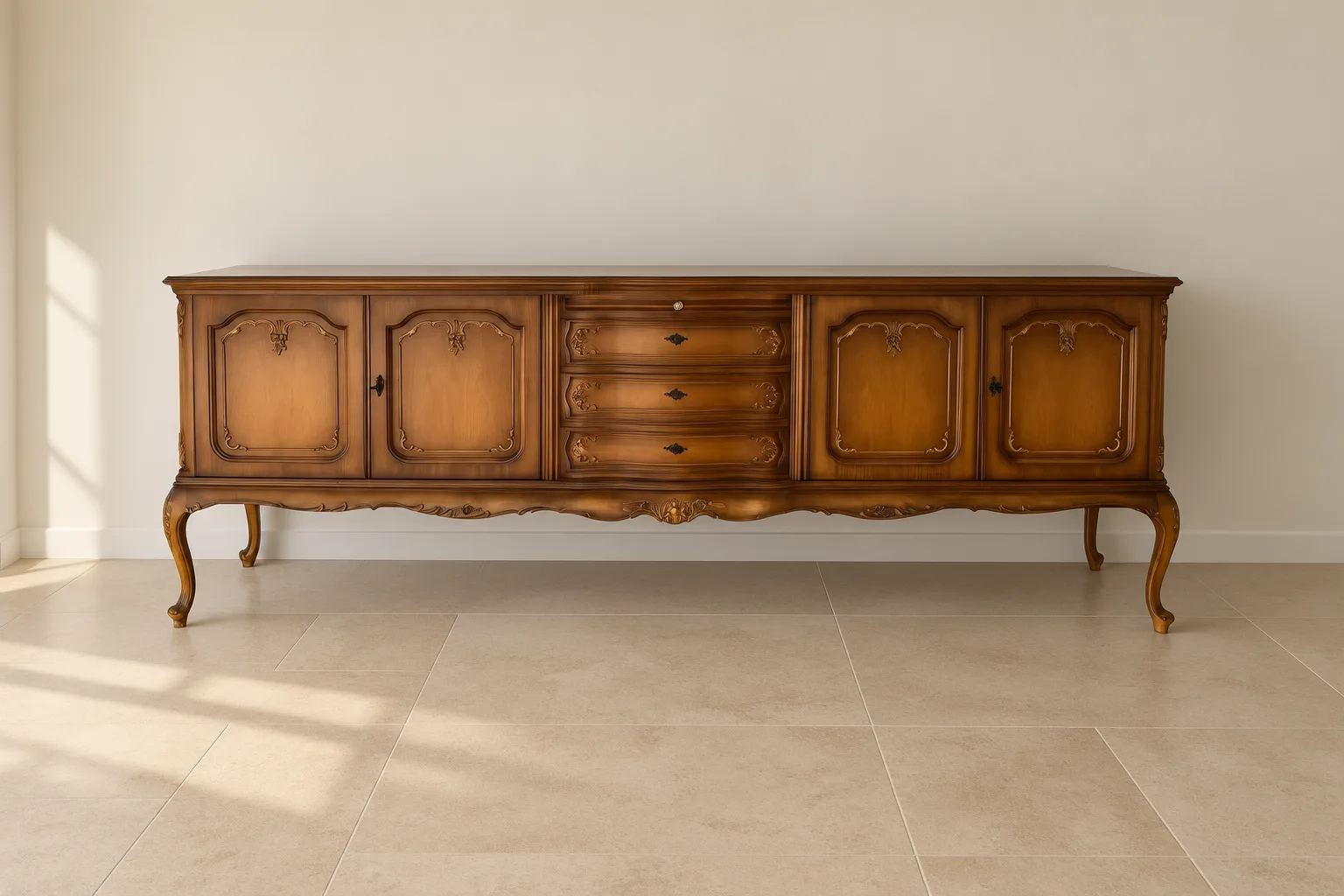
- Cabriole legs with ball-and-claw feet: The leg curves in an S-shape and often ends in a claw gripping a ball. This foot is the style’s best-known signature.
- Straight legs and fretwork: Gothic- or Chinese-inspired designs often stand on straight, square legs instead, with pierced fretwork on aprons, chair backs or crests.
- Pierced chair backs: The central splat is cut through and carved, often with interlaced ribbon or strapwork shapes. The top rail curves gently upwards at the ends.
- Carving: Shells, acanthus leaves and rococo scrolls decorate aprons, knees and crests.
- Mahogany: The preferred timber was mahogany, reddish-brown with a fine, dense grain.
- Brass hardware: Chests and cabinets carry shaped backplates with bail handles.
Original or later revival piece?
“Chippendale” names a style, not a date. Its forms were revived again and again, in the nineteenth century as well as throughout the twentieth, including a wave of reproduction furniture after the Second World War. If you have inherited a curved chest or a carved cabinet, it is most likely one of these later pieces. A few clues help you place it:
- Materials: Look at unfinished edges, drawer bottoms and the back. Veneer over chipboard or blockboard points to twentieth-century production.
- Back panel: A thin hardboard back, nailed in place, is typical of later mass-produced furniture.
- Drawers: Hand-cut dovetails are slightly irregular. Perfectly even, machine-cut joints suggest industrial production.
- Carving: Shallow, completely uniform ornament was often made by machine. Hand carving is deeper and shows small variations.
- Screws and labels: Phillips-head screws only appeared in the twentieth century, unless they were replaced during a repair. Stamps or labels inside drawers or on the back sometimes reveal the maker.
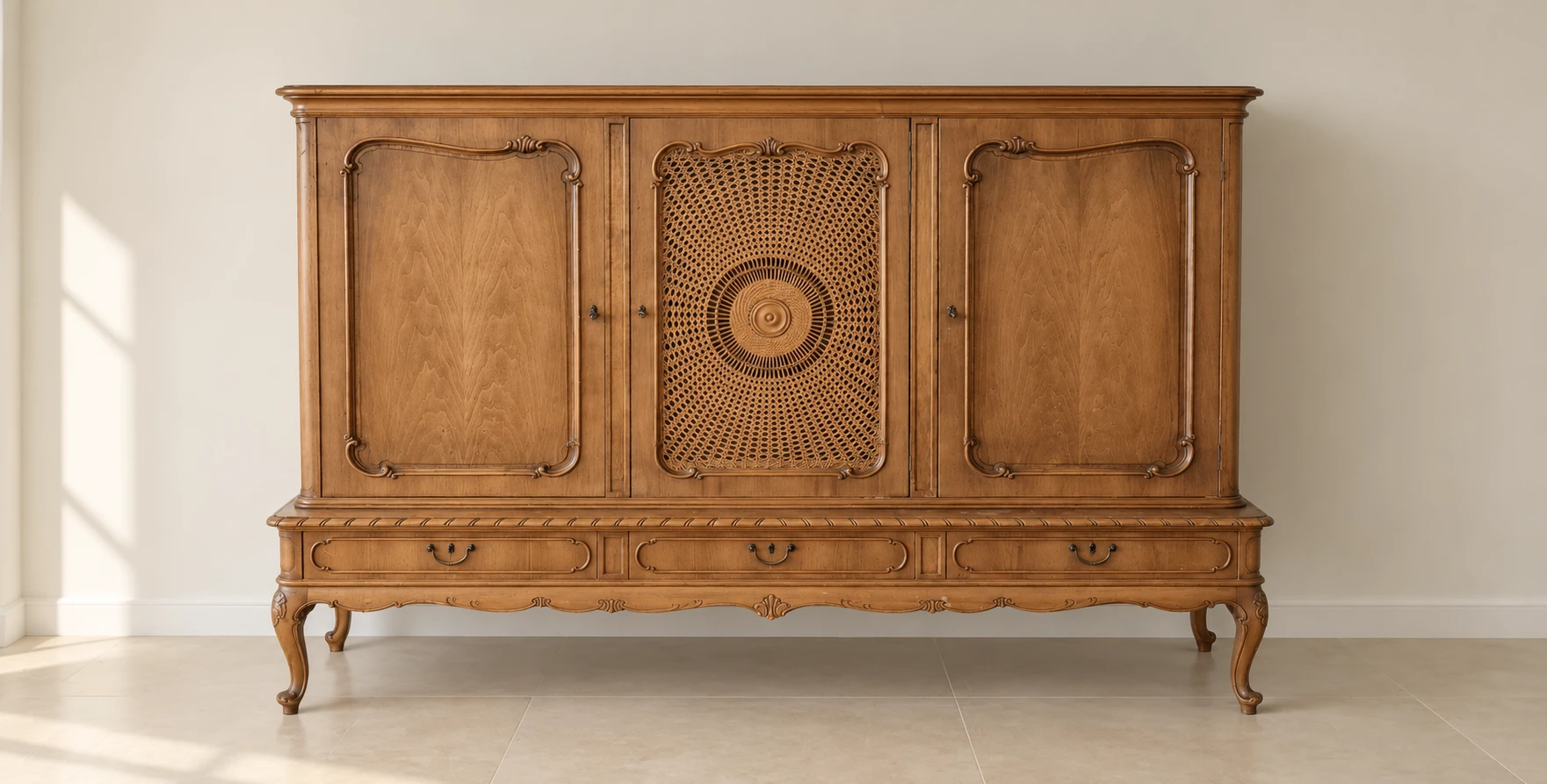
One example is the Warrings sideboard in our furniture archive: a twentieth-century revival piece that brought historical forms into the living rooms of its day. When it comes to decorating, what matters most is how large, dark and decorative your own piece feels in the room.
What is Chippendale furniture worth?
Genuine eighteenth-century furniture has a specialist market. If the timber, construction and history point to an early piece, it is worth asking an auction house or a qualified appraiser.
Revival furniture from the second half of the twentieth century usually sells for far less than it originally cost. Large cabinets and wall units are often hard to sell, while individual chests, side tables or chairs in good condition find new owners more easily. Prices that similar pieces actually achieved, for example through eBay’s “Sold items” filter, give a more realistic picture than asking prices.
That is why keeping a piece is often the better choice: an inherited item that would fetch little on resale can become the focal point of a room in the right setting. The following ideas show how.
Give one expressive piece some space
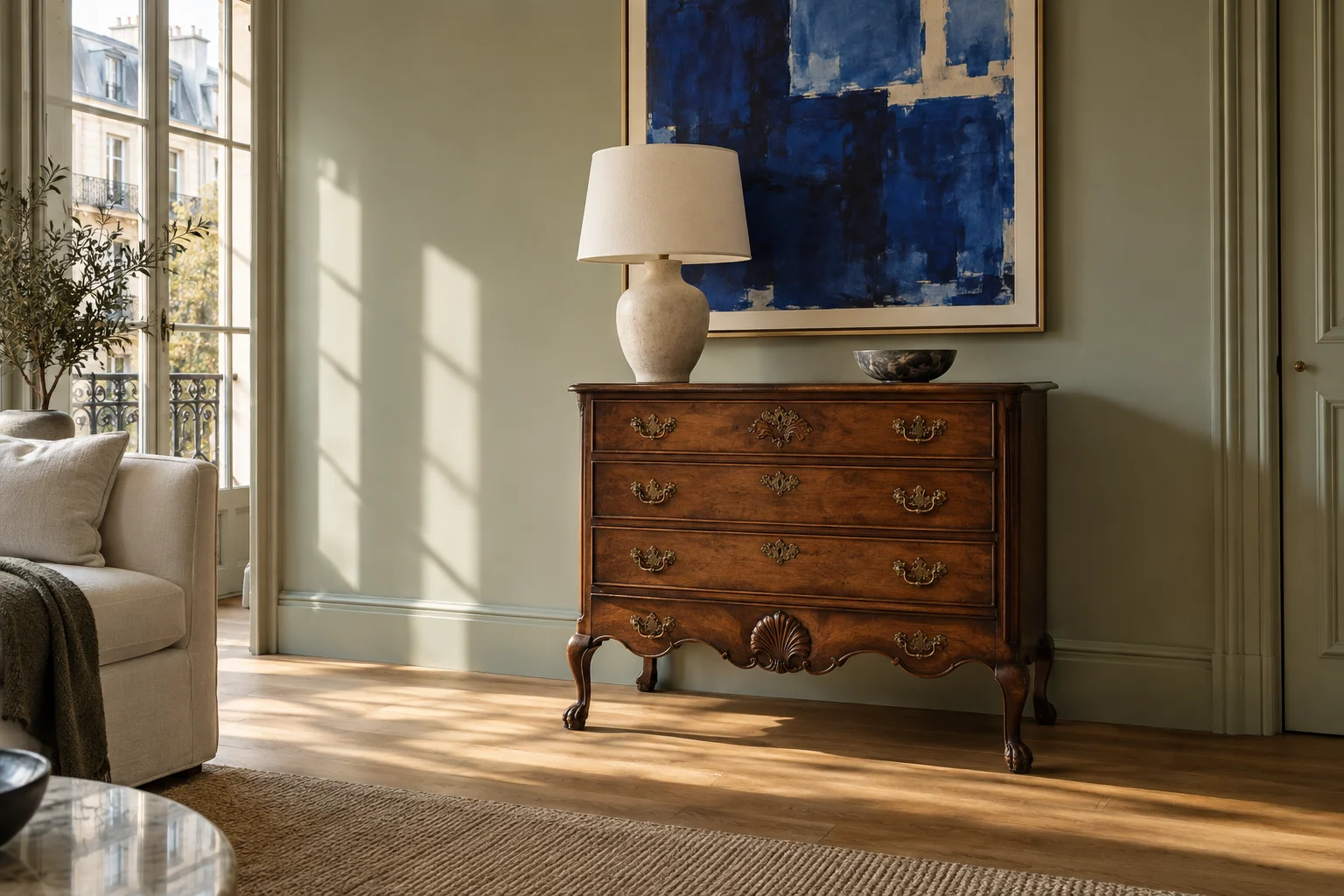
The easiest starting point is a single inherited item. Place the chest against a quiet wall and clear its top. Only then add a lamp, artwork or larger vase. You can see which addition supports the shape and which simply takes up room.
If you own a complete matching suite, you do not have to display it together. Keep the cabinet in the dining room while giving the sideboard a new role in the living area. Separating matching pieces makes the arrangement less formal without changing the furniture itself.
Combination 1: Pale textiles and simple shapes
Cream, oatmeal and a muted green give darker furniture a welcoming setting. Try a simple sofa, a generously sized rug and curtains without an elaborate pattern. The original wood colour can remain part of the scheme: making a room feel current does not automatically mean stripping or painting its furniture.
The contrast is particularly pleasing when the new pieces have clear outlines. A low round coffee table can sit comfortably opposite an ornate cabinet. Echo a warm brown in a small detail rather than trying to match every new wood finish. Different surfaces are allowed to look different.
Combination 2: Chrome, colour and Space Age
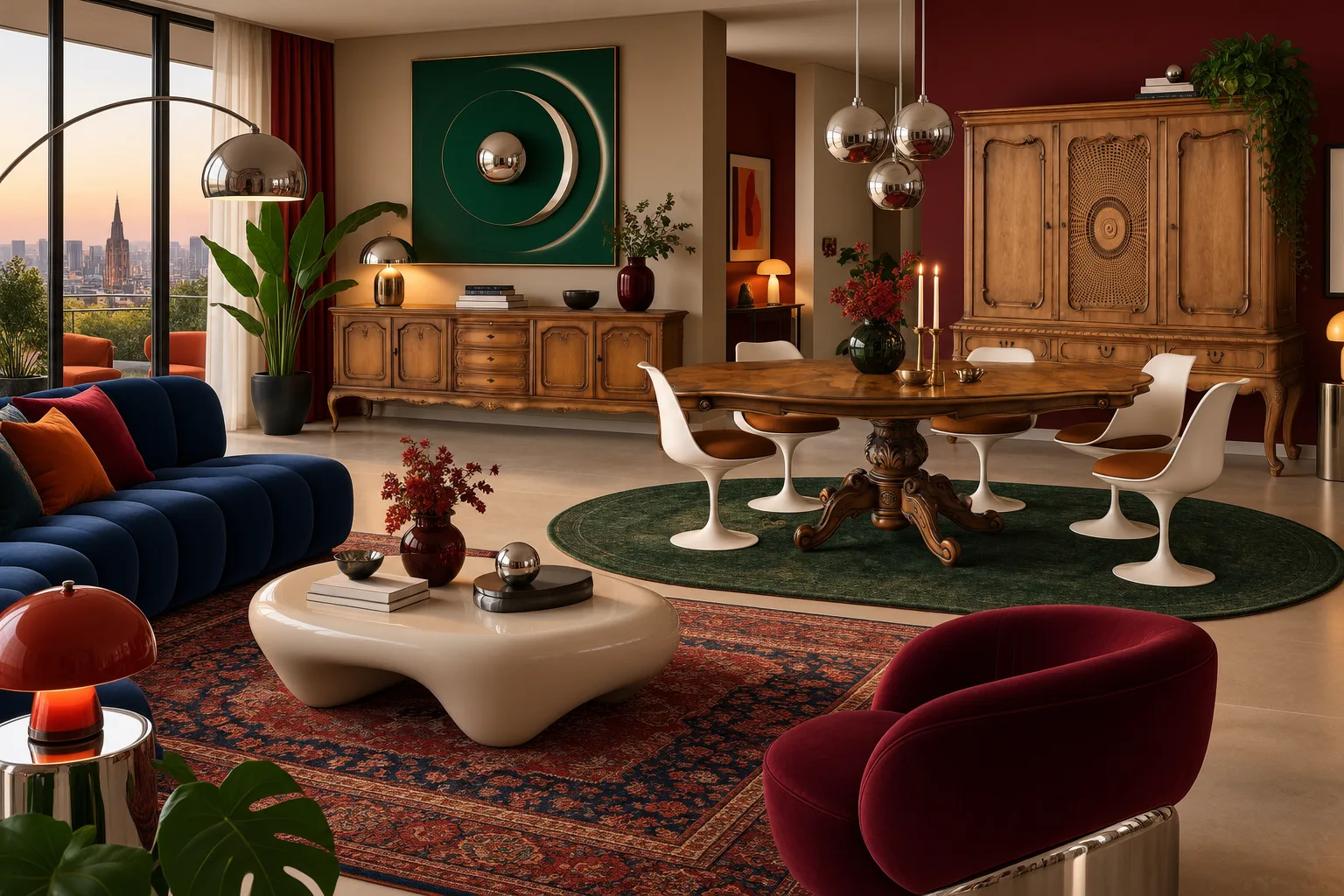
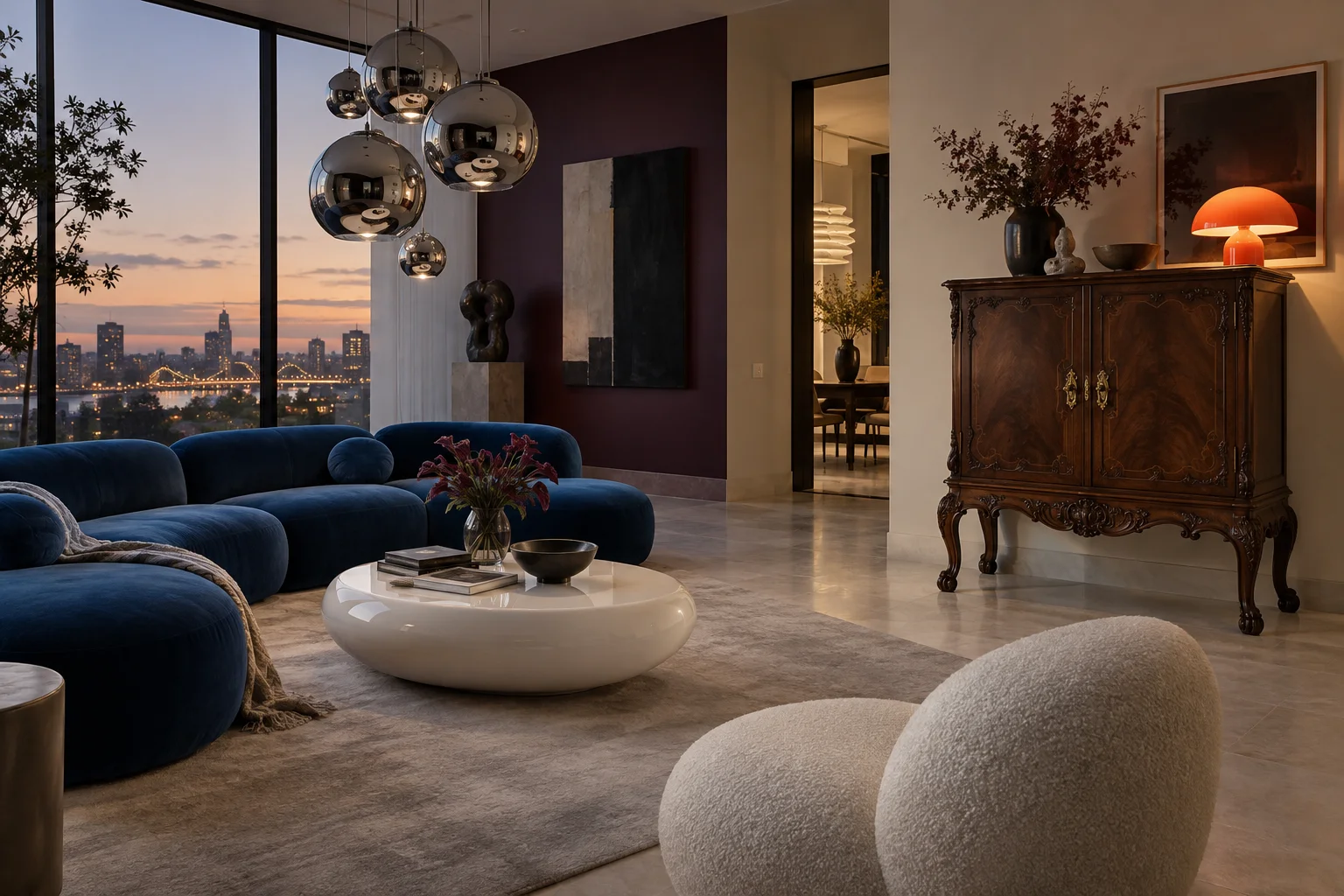
For a more adventurous mix, pair curved wooden furniture with smooth shell chairs, a chrome light or a sculptural sofa. In the opening image, rounded lighting and an oval rug connect the different shapes. Blue, green and red provide deliberate accents.
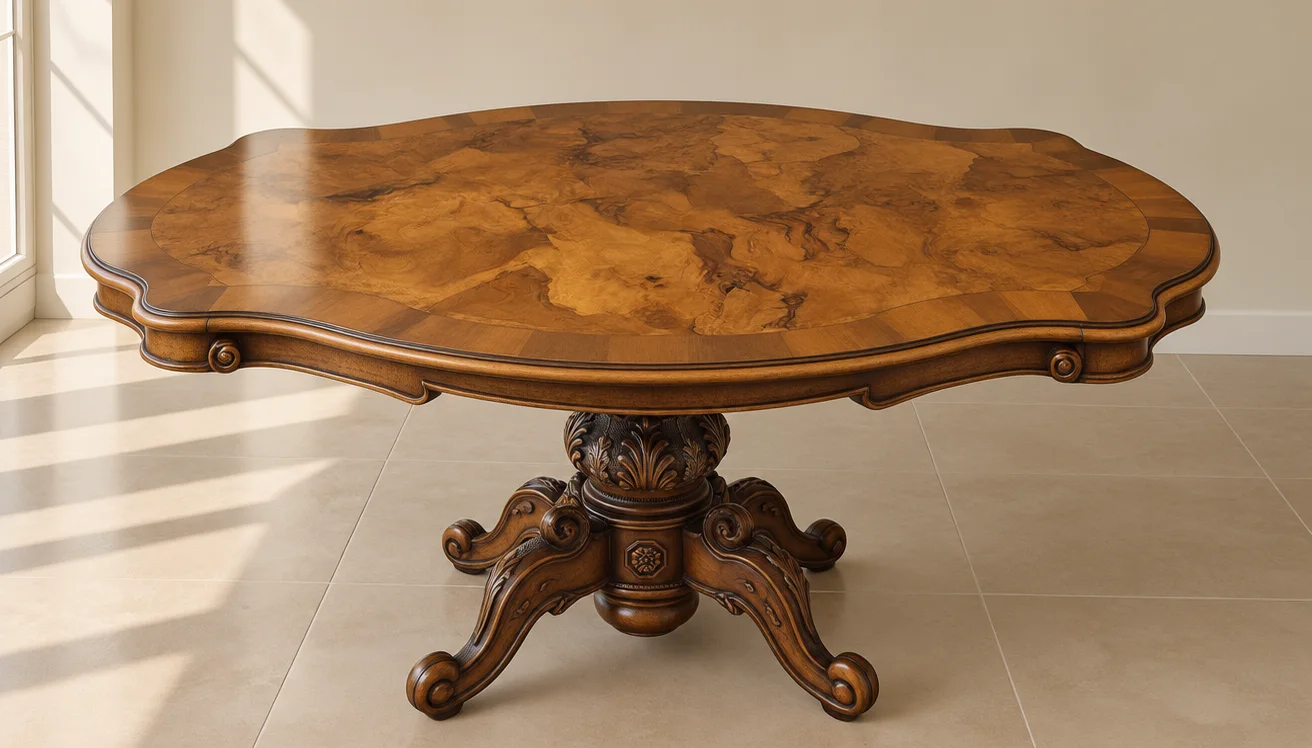
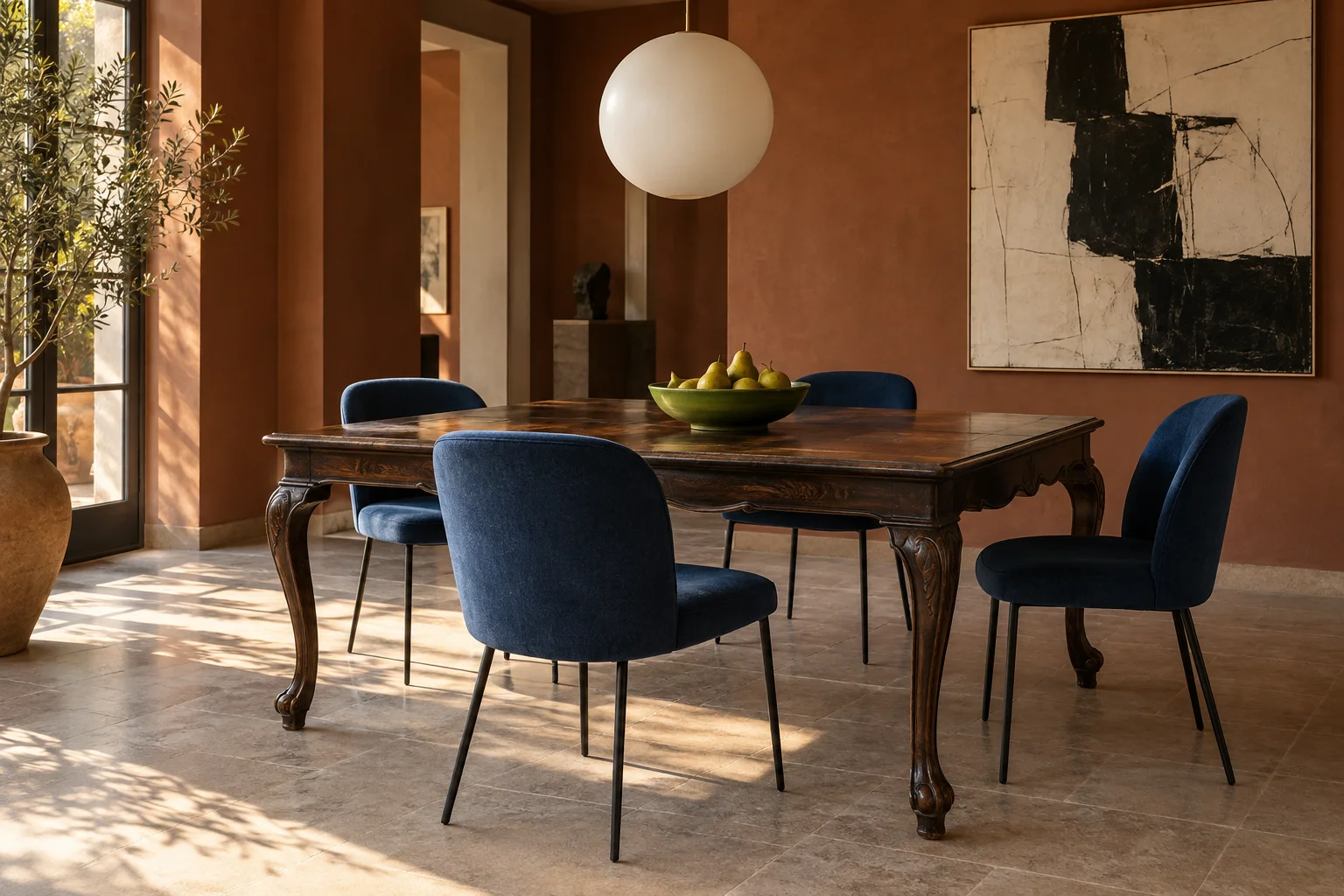
At home, you may only need part of that idea. Start with new chairs around the existing table. Check seat height, armrests and legroom first so the chairs fit under your table’s apron. The combination should work at dinner, not just in a photograph.
Combination 3: Deep green and a little shine
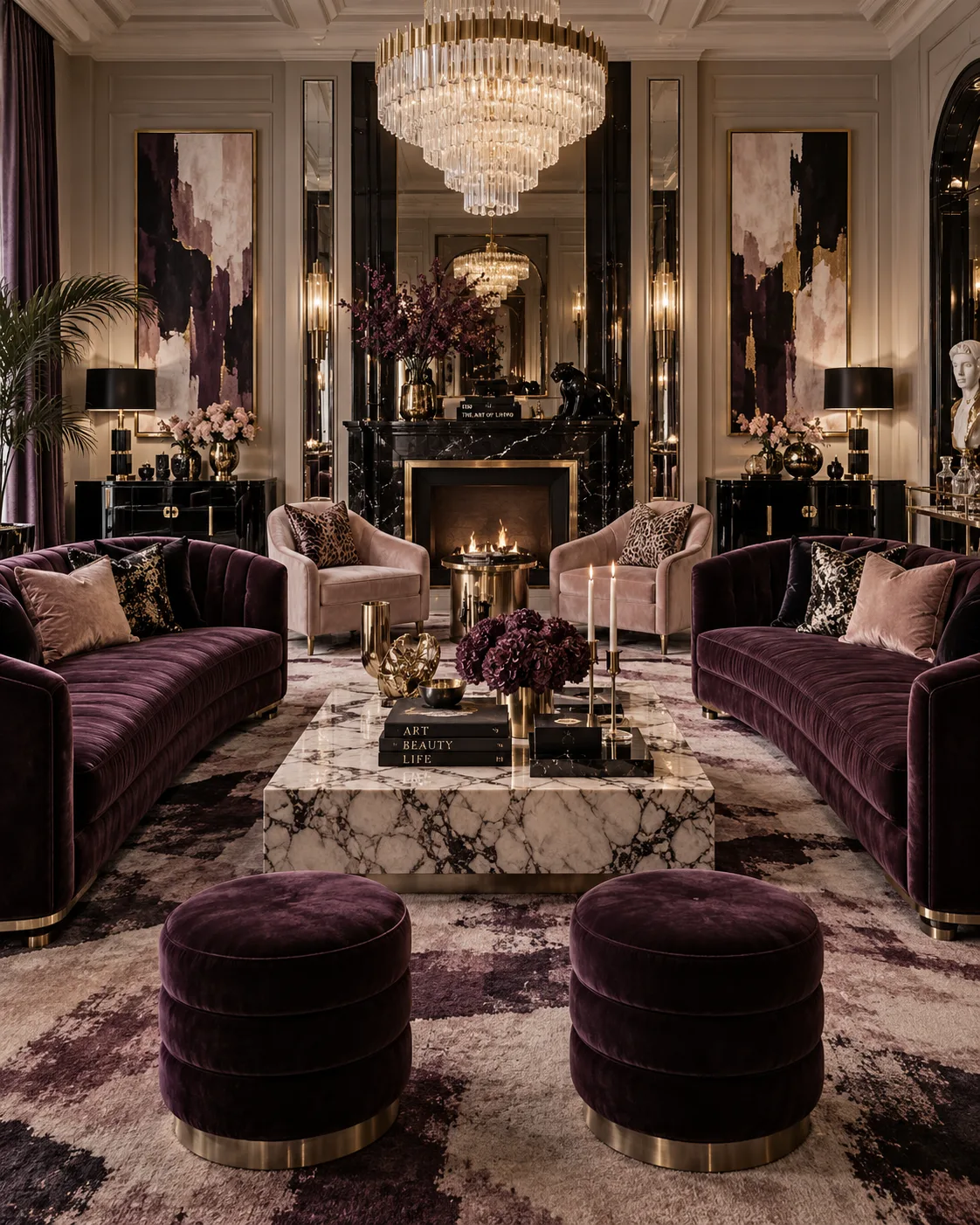
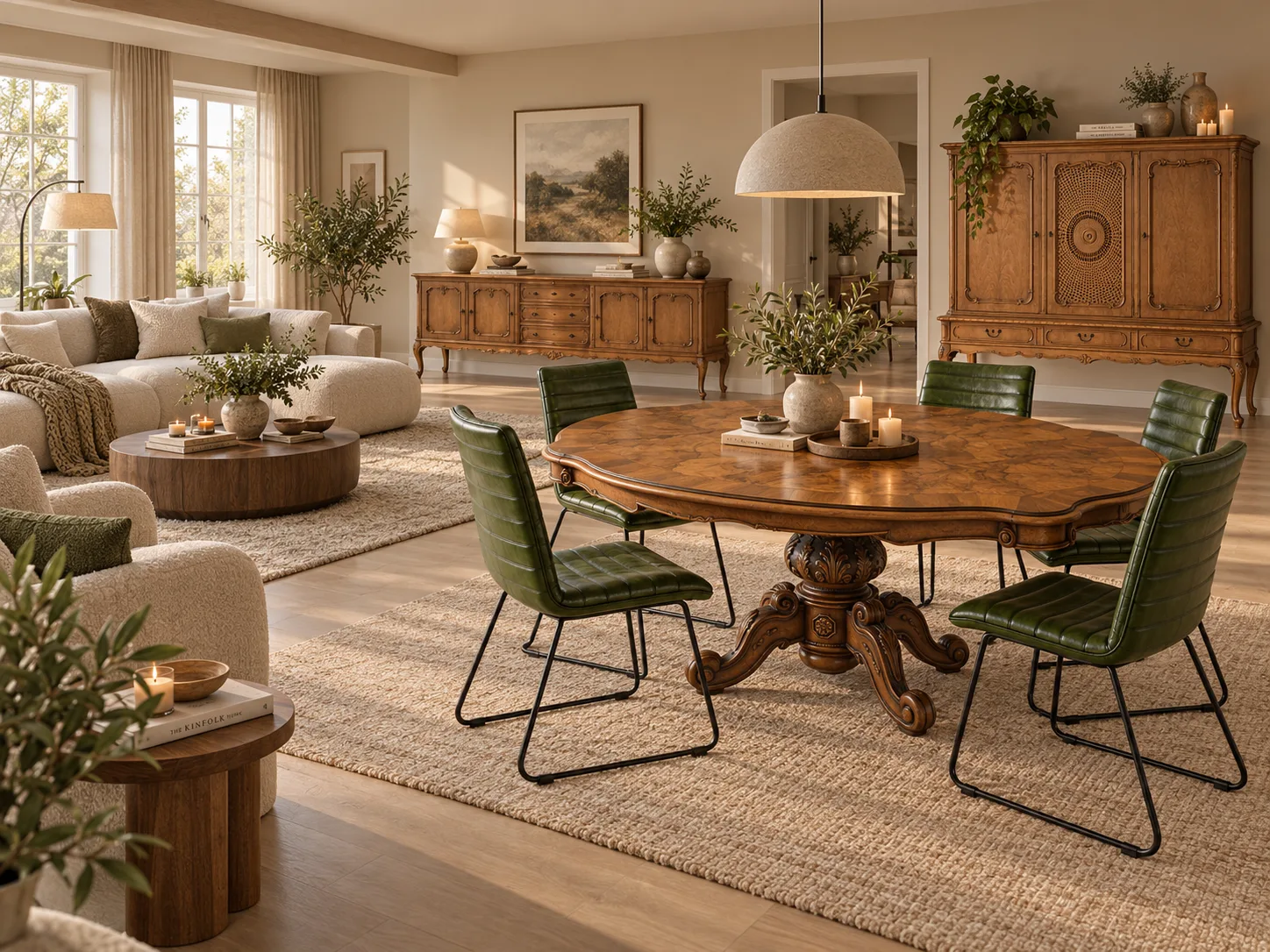
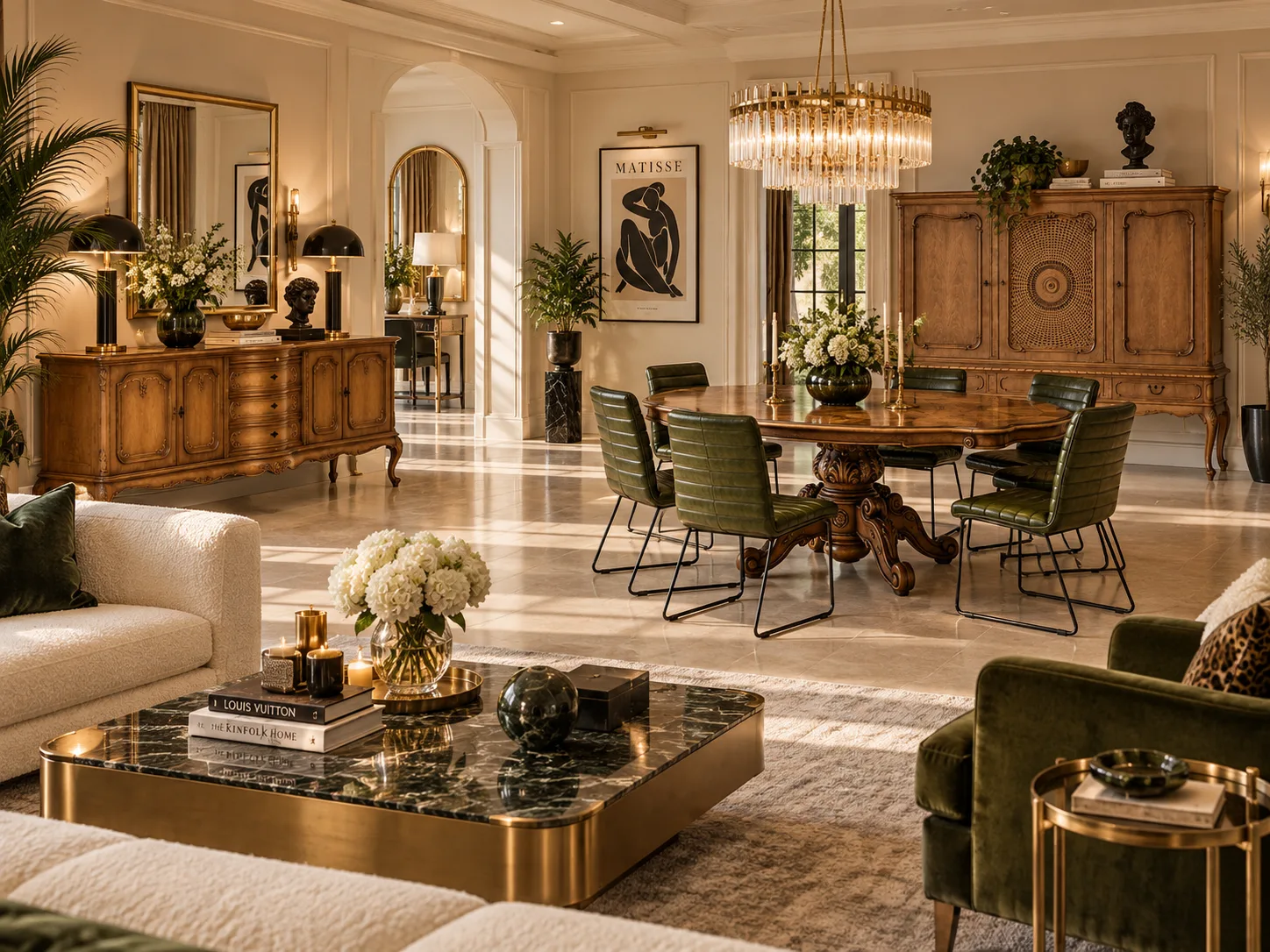
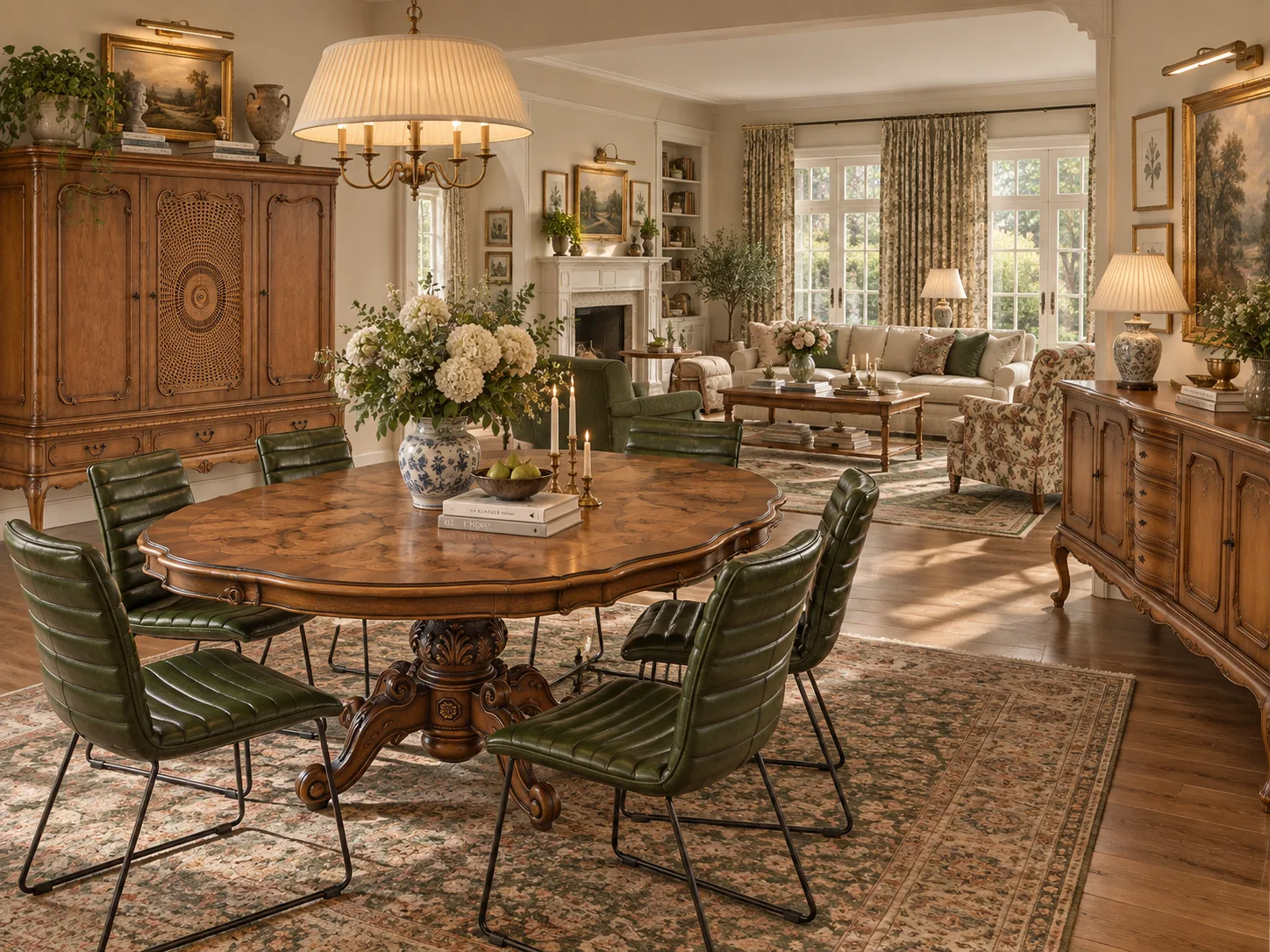
Another direction combines the older forms with deep green, pale upholstery and selected metallic accents. The effect can be generous without every surface shining. Choose one prominent feature, such as the pendant, and keep smaller accessories restrained.
A dark frame or a chair with a simple outline gives the ornament a clear counterpoint. One large artwork above a sideboard can work better than numerous small decorations. Pay attention to scale: the artwork should hold its own beside the furniture without taking over the wall.
Combination 4: Let patterns join the conversation
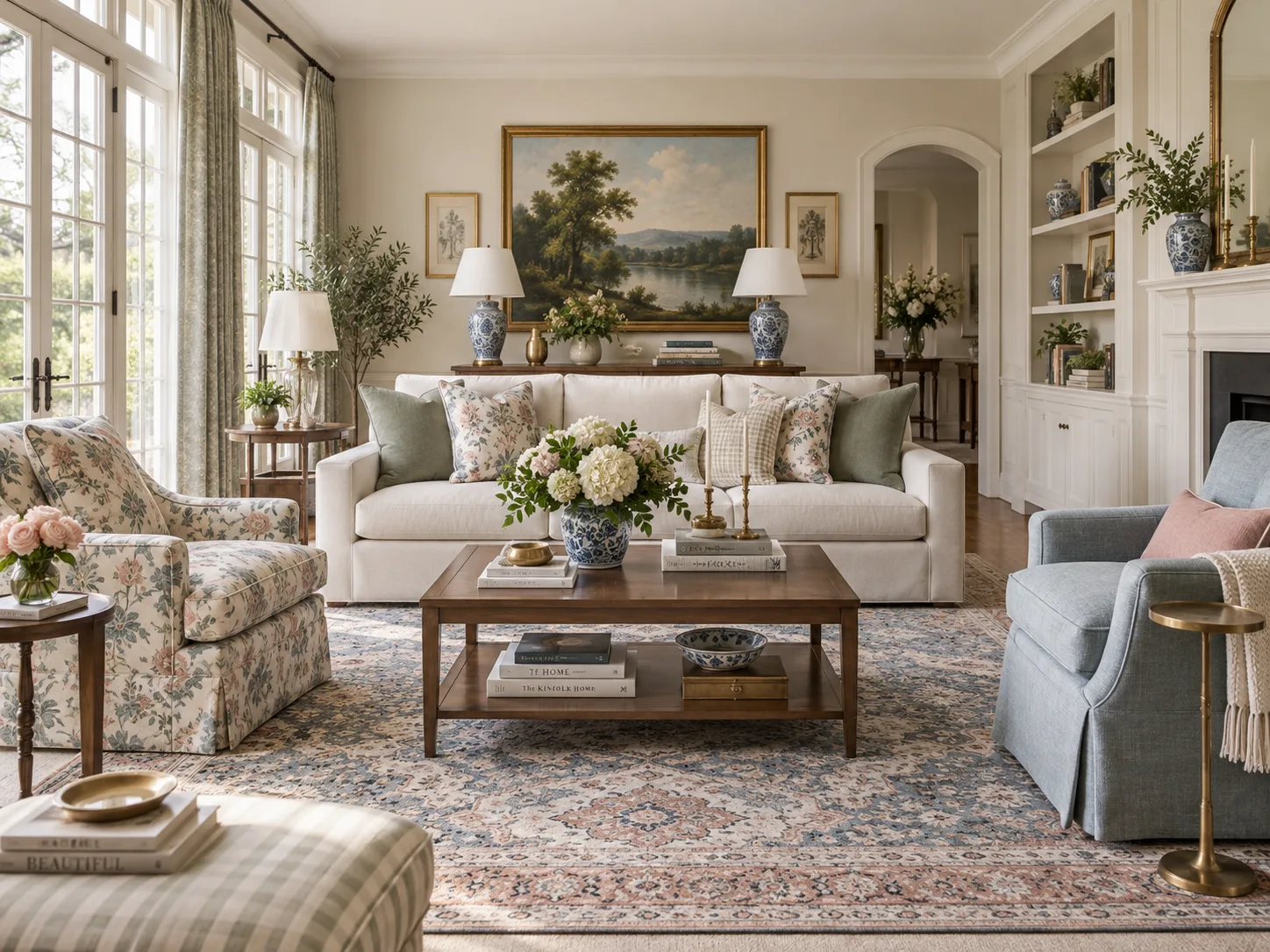
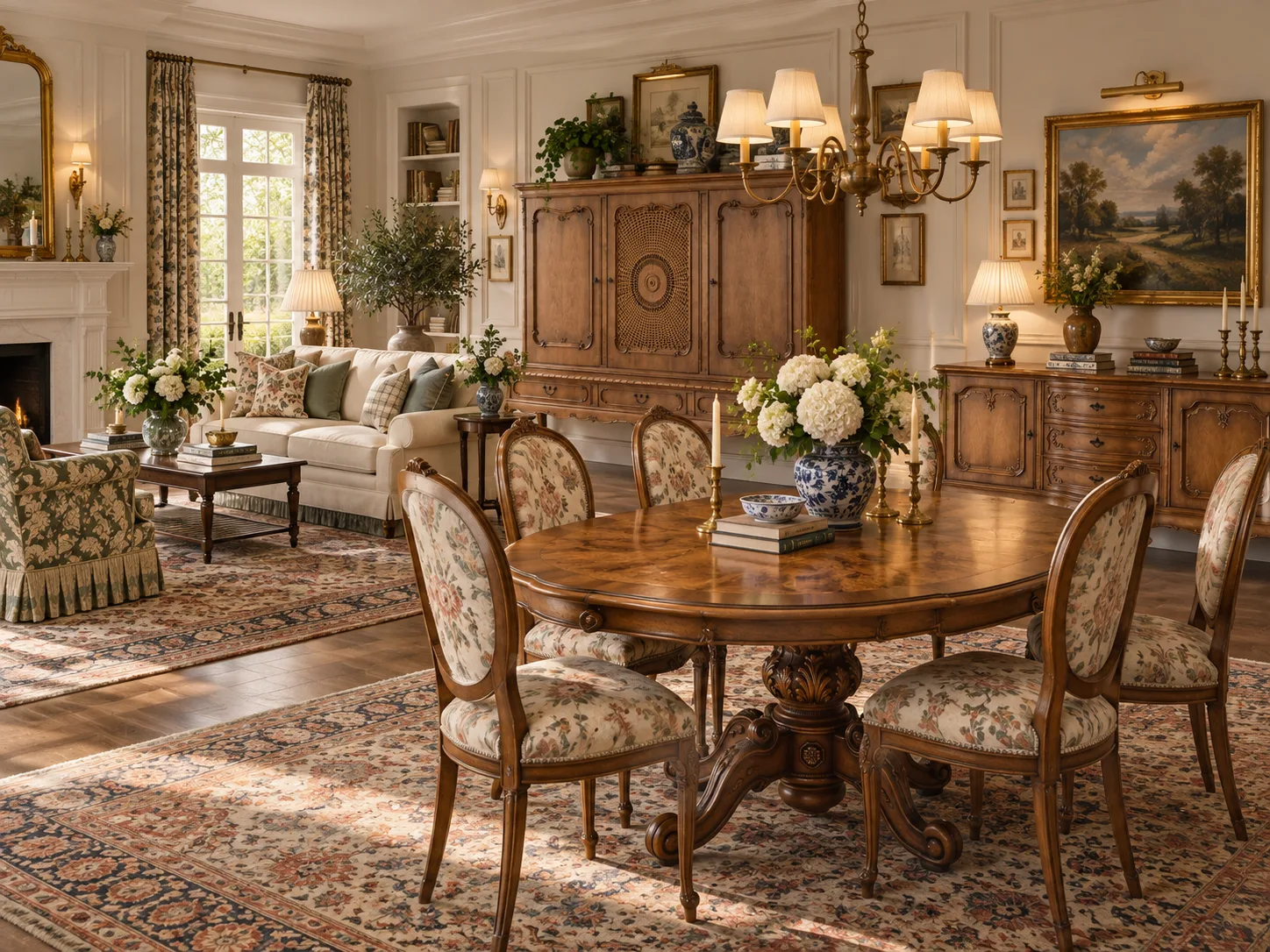
Mixing styles does not require minimalism. If you enjoy patterned fabrics, ceramics and framed pictures, an inherited piece can remain part of a richer interior. A limited palette holds the elements together: cream and green with warm brown, for example.
Give each pattern a different role. A larger floral print on an armchair can sit beside a smaller-scale rug pattern when the sofa and walls remain quieter. Clear tabletops help too. The room can feel collected without filling every corner.
Three decisions before you buy
First, decide which piece deserves the focus. Then choose whether to balance its presence with quiet surfaces or emphasise it through colour and unusual shapes. Only after that is it worth looking for rugs, lighting or chairs.
Measure the room and your existing furniture before ordering additions. Put colour samples beside the piece and look at them under evening lighting too. Often, a new position, a suitable lamp and simpler furniture around it are enough to bring an inherited piece back into focus.
Chippendale furniture: frequently asked questions
How can I tell if furniture is genuine Chippendale?
Typical features are cabriole legs with ball-and-claw feet or straight legs with fretwork, pierced chair backs, carved shells and acanthus, and mahogany. Whether a piece dates from the eighteenth century only becomes clear from its materials, joints and history. Most Chippendale-style furniture in homes today is later revival furniture.
What is twentieth-century Chippendale-style furniture worth?
Usually far less than it originally cost. Individual chests, tables or chairs in good condition sell more easily than large cabinets. Look at prices similar pieces actually achieved rather than asking prices.
Does Chippendale furniture work with modern furniture?
Yes. Quiet wall colours, simple sofas and clean shapes let the curved lines stand out. For a bolder look, add chrome, Space Age lighting or strong colours such as blue and green.
Should I strip or paint Chippendale furniture?
Not as a first step. A new position and a suitable setting are often enough. With older, potentially valuable pieces, refinishing can reduce their value, so ask a specialist first.