Organic Modern Living Room: 7 Ideas for Warmth and Character
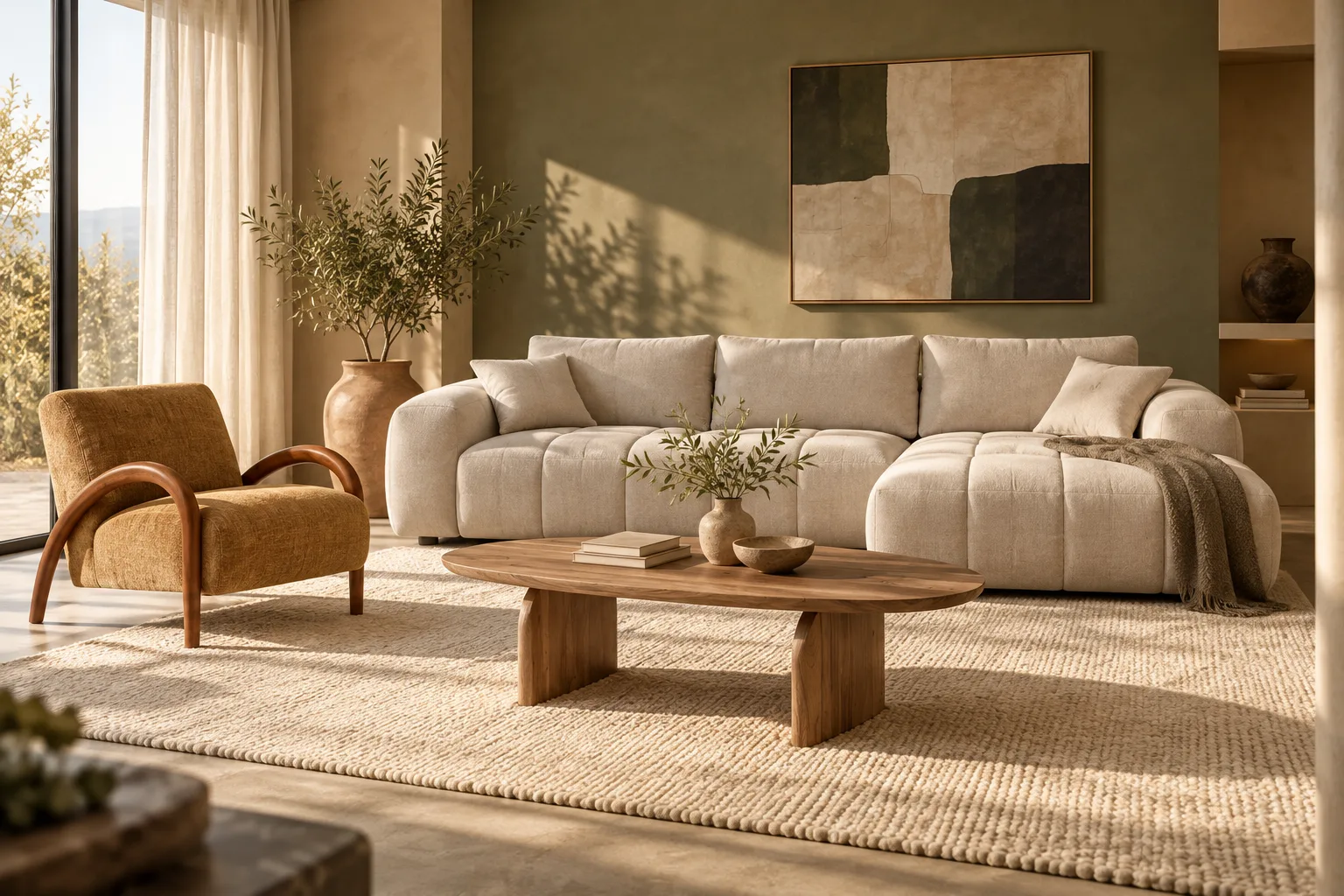
An organic modern living room combines clean-lined furniture with soft contours, natural materials and enough breathing space for everyday life. That can mean beige, but it does not have to. Dark wood, olive green or a bold artwork give the quiet foundation personality. What matters is how shapes, colours and surfaces work together. You do not need an apartment with arched doorways or an entirely new seating arrangement. These seven ideas make the look practical, from a compact living room to an adventurous colour scheme.
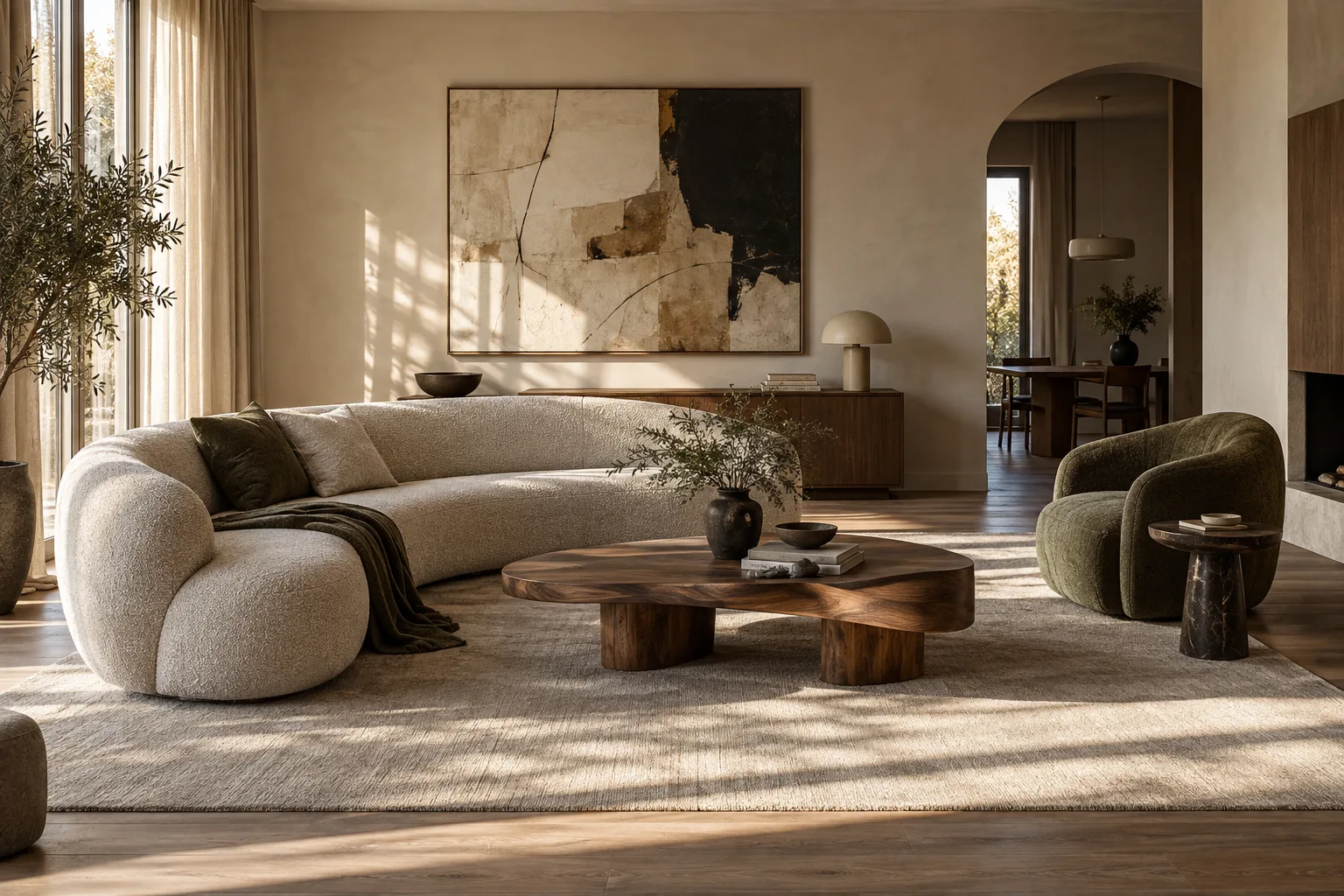
1. Give curved shapes a counterpart
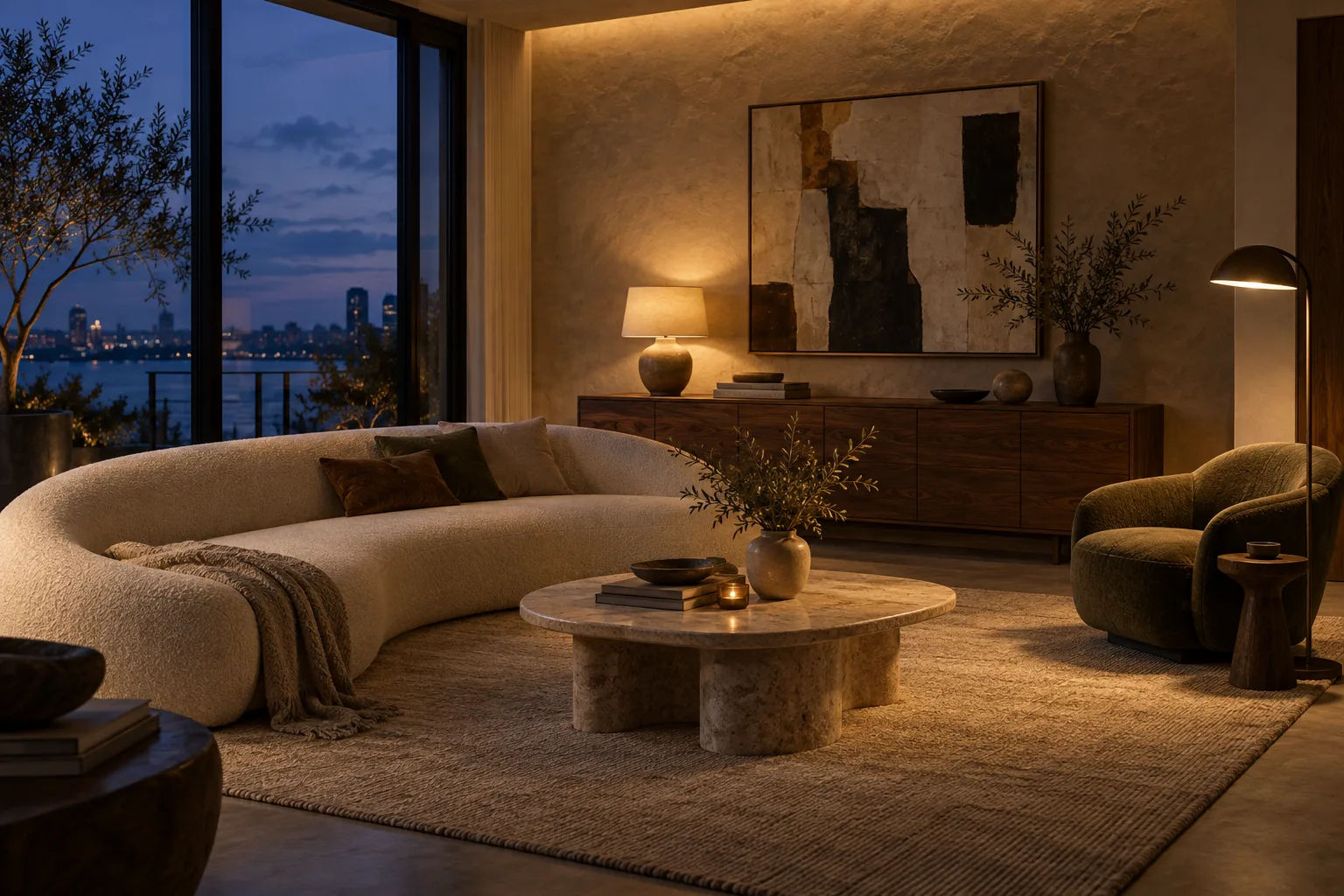
A curved sofa attracts attention immediately. To avoid a room that resembles a collection of oversized pebbles, pair it with straight lines: a simple sideboard, a rectangular painting or plain shelves. Conversely, an existing angular sofa benefits from an oval coffee table and a chair with curved arms. Choose one piece to lead the composition and let the others take a quieter role. Check how its footprint fits your layout. A sweeping sofa may photograph beautifully yet leave little room between the balcony door and dining table. Mark its outline on the floor with tape before buying.
2. Colour makes the difference
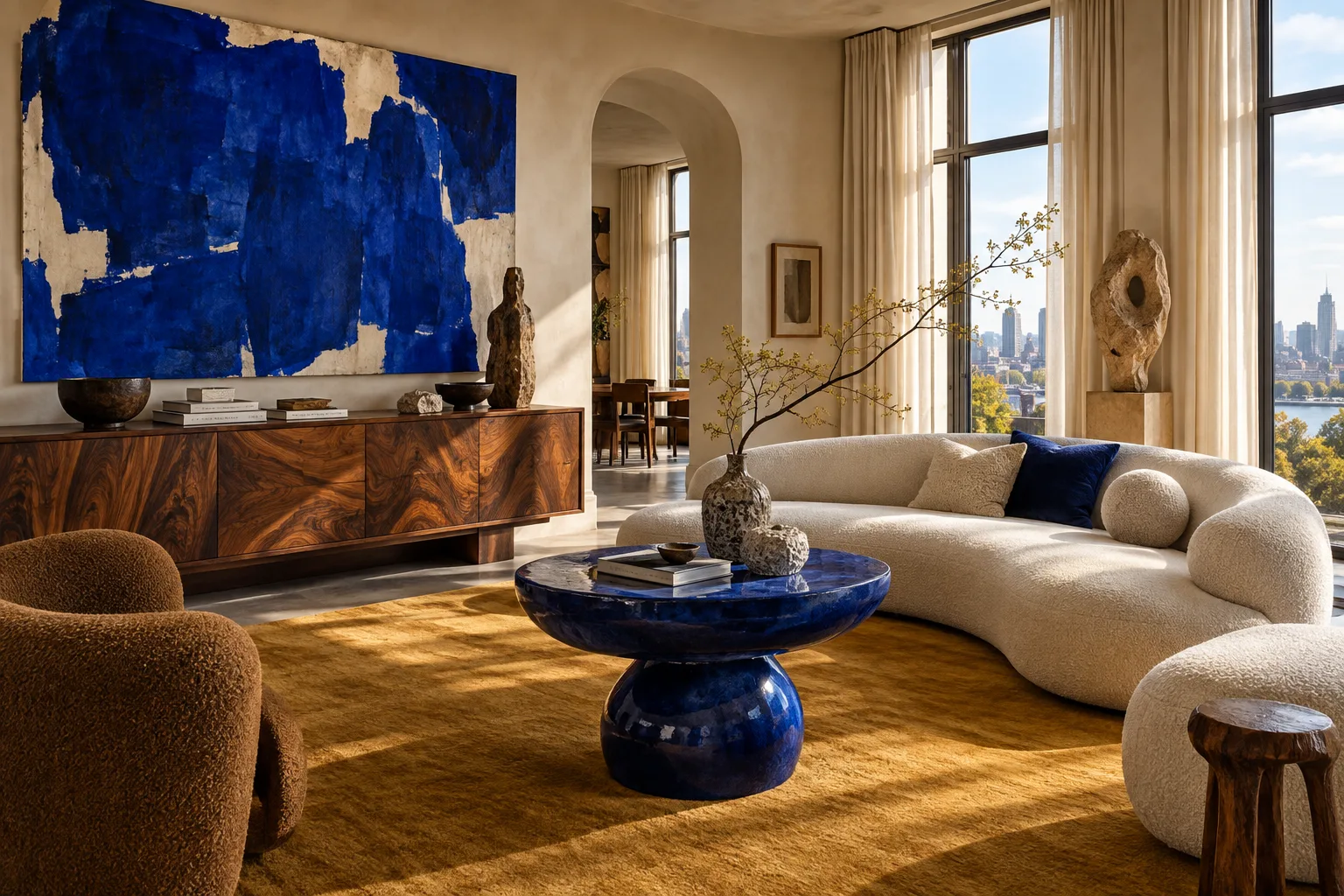
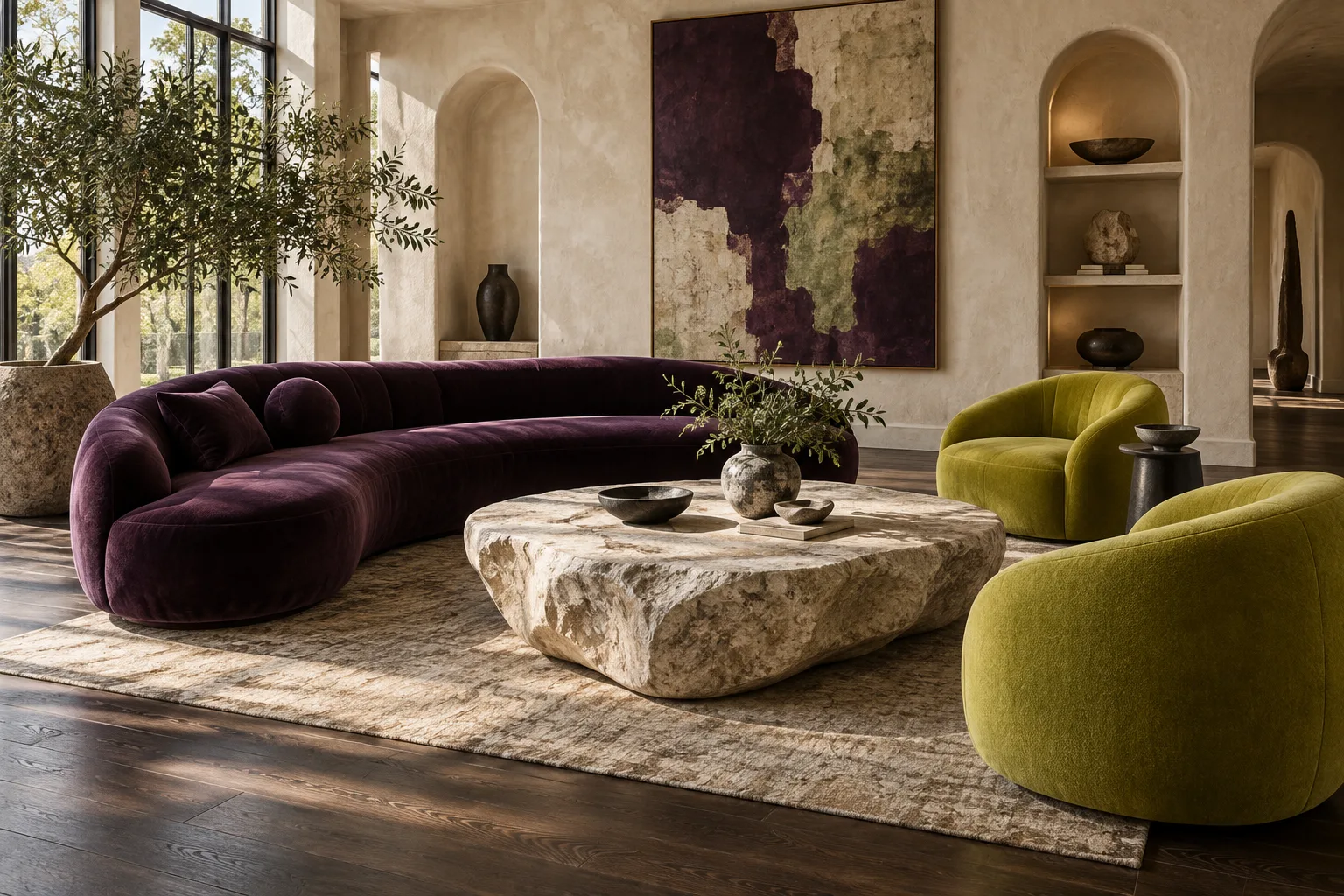
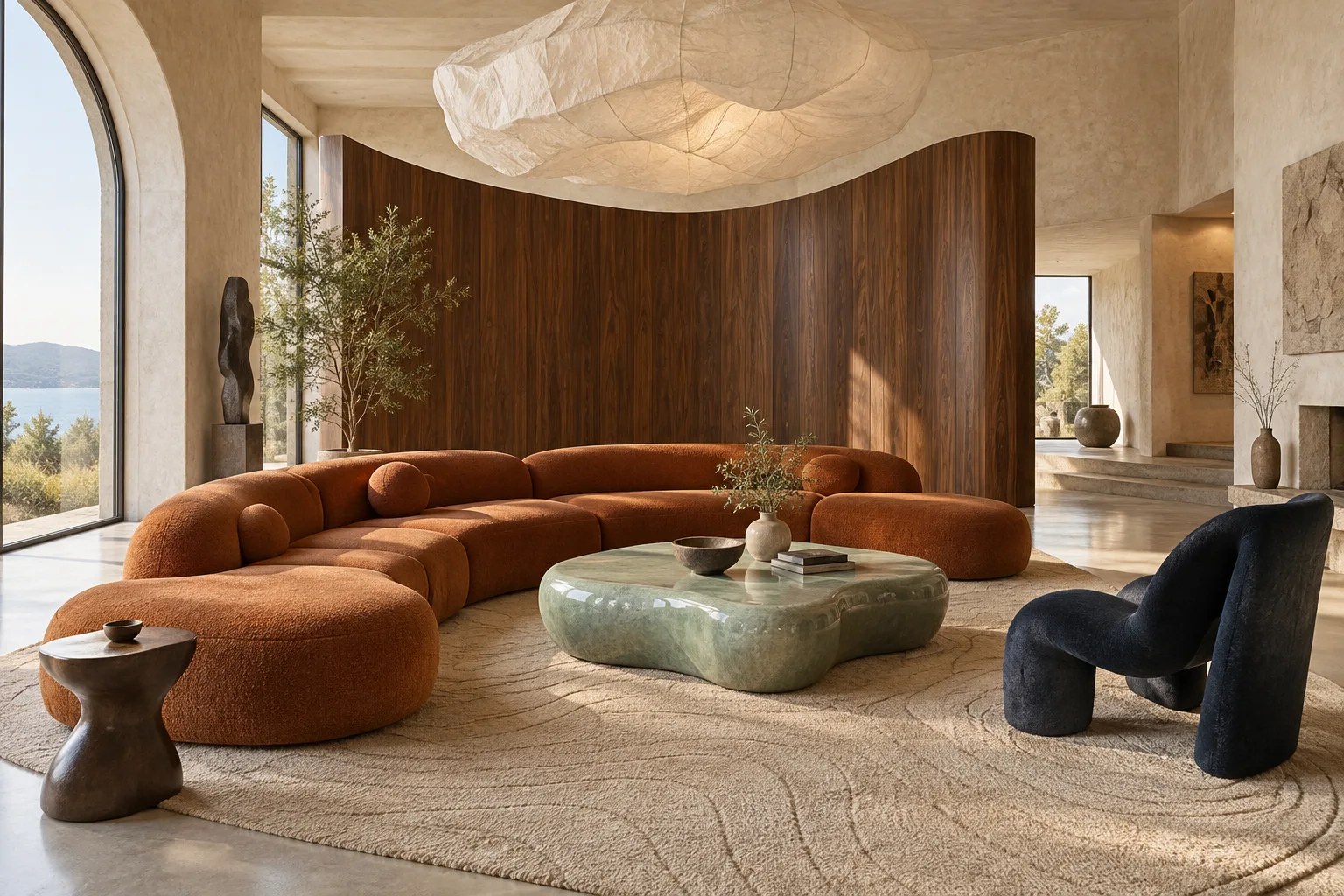
Start with off-white, sand or a warm grey. Add a noticeably darker colour, such as chocolate brown or olive, so the furniture remains distinct from the walls. A few accents are enough to create contrast. An ultramarine painting above a timber sideboard can change the entire room. Aubergine and yellow-green make a more unusual pairing, connected by generous cream surfaces. Rust orange and pale mint also work when one leads and the other appears selectively. Test large colour samples in several places. Look at them morning and evening beside your floor, sofa and curtains before committing to paint.
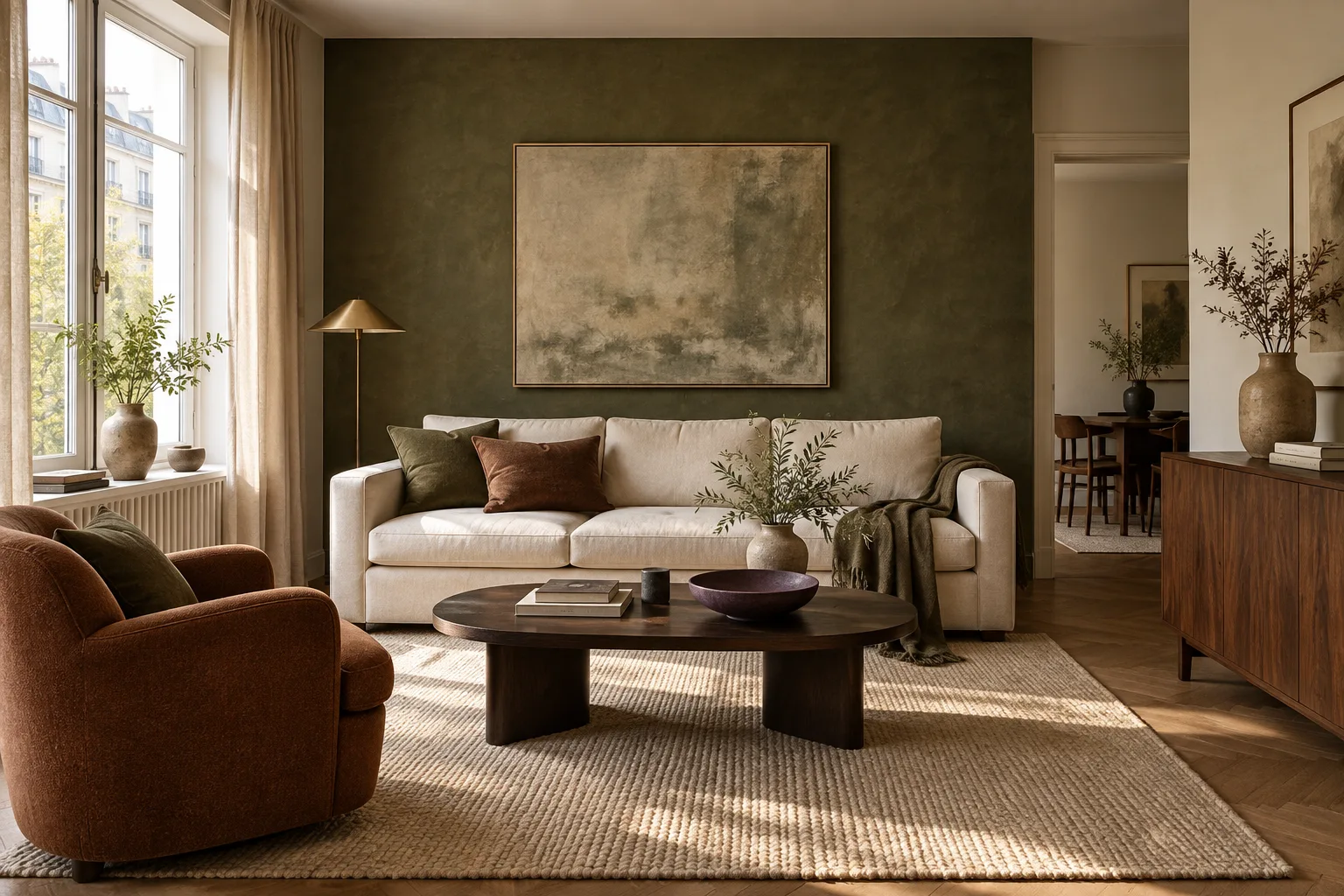
3. Mix materials and compare surfaces
The appeal lies in visible differences: wood grain against woven fabric, or a smooth tabletop beside a textured rug. Three well-chosen surfaces often achieve more than ten decorative extras. Try warm wood with cream upholstery and matte ceramics. If you already have a glossy table, balance it with soft curtains and a textured cushion. Read the actual material description when shopping. Stone-effect finishes are not natural stone, and wood-effect surfaces are not solid timber. Either can suit a scheme when chosen deliberately. Care instructions, removable covers and sensitivity to everyday use matter just as much as appearance.
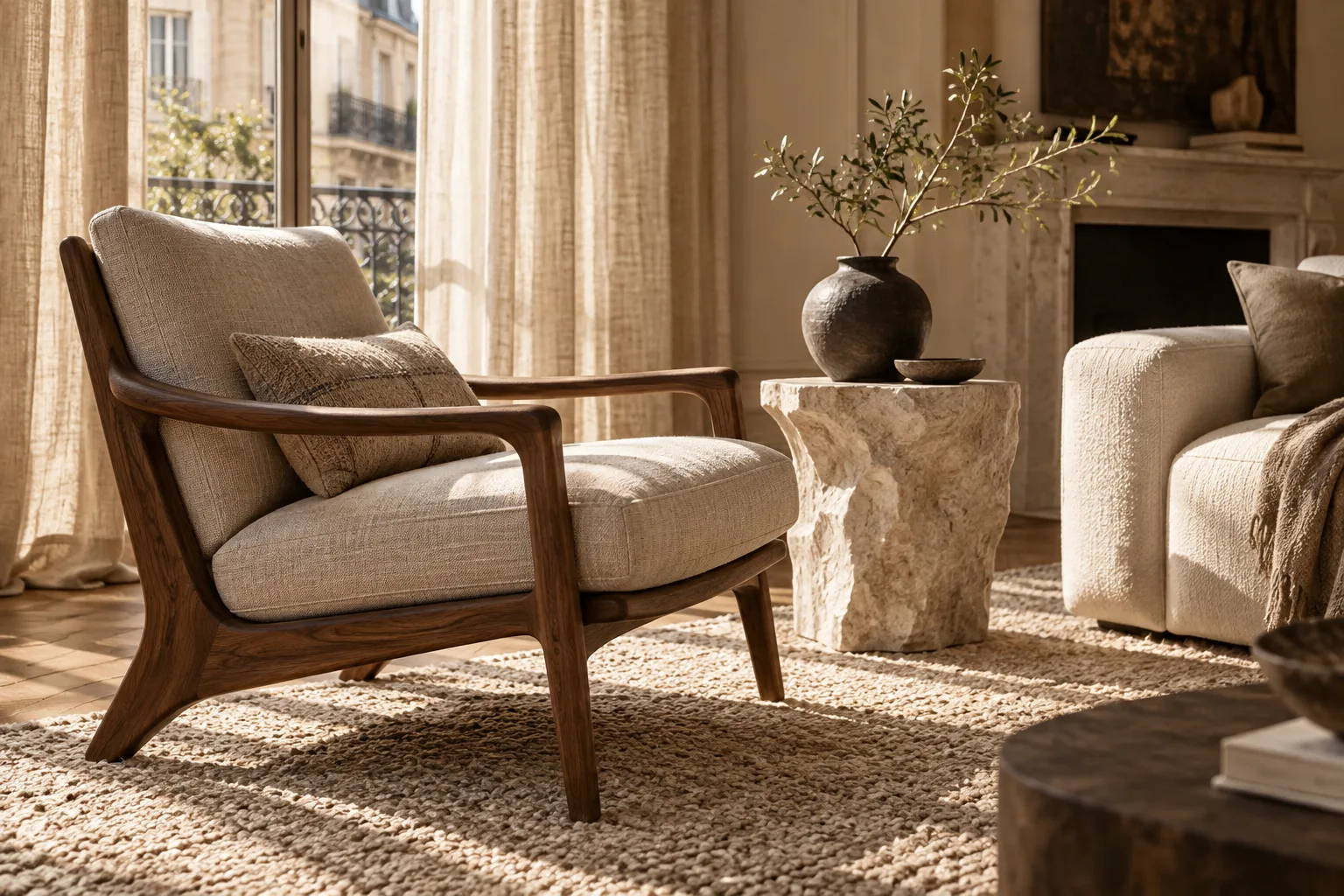
4. Keep routes clear in a small living room
A compact room feels more generous when the layout works. Position the sofa and storage first, then add tables and chairs. Leave comfortable routes to windows, doors and shelves. Two small side tables can be moved more easily for guests than one large heavy coffee table. A pouffe offers an occasional extra seat without permanently claiming a corner. Choose a rug that visibly connects the seating group rather than floating between the furniture. Test its footprint with a blanket or sheets of paper. Curtains can feel generous too, provided they do not cover radiators or obstruct regularly used doorways.
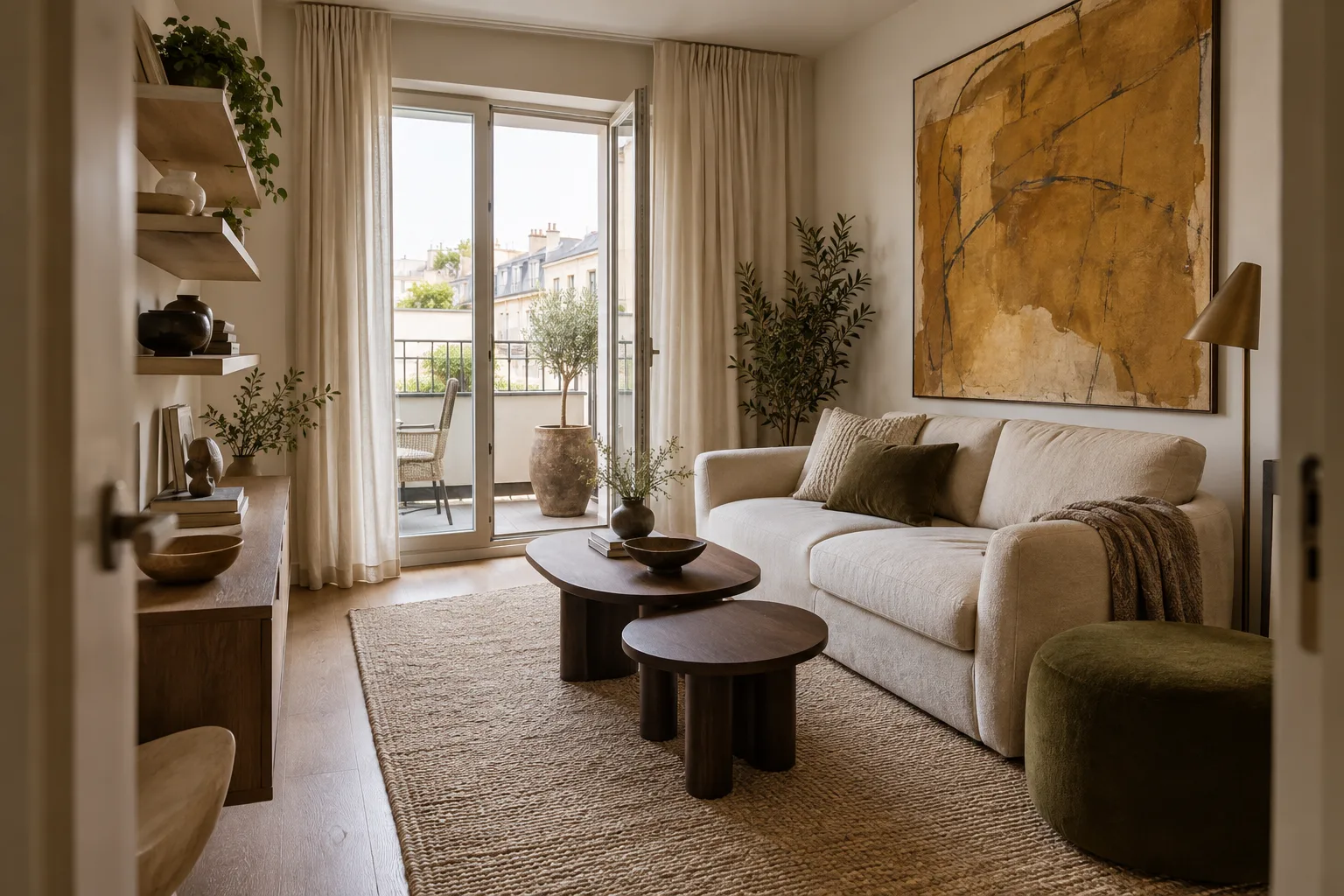
5. Treat lighting as part of the furniture plan
One ceiling fixture rarely handles everything a living room needs after dark. Combine general light with a dedicated reading lamp and a gentle light source on a sideboard. You can then adjust the atmosphere without lighting the entire room equally. Judge each lamp from where you sit: an attractive fitting loses its charm if its bulb shines directly into your eyes. Test shade height and direction. Side lighting can bring out a textured wall. Sometimes a table lamp in a neglected dark corner makes all the difference. Plan sockets and cable routes before settling the furniture into its final position.
6. Personality beats perfect coordination
An organic modern living room can feel collected. An inherited wooden chair, a flea-market find or a colourful painting brings something personal. Choose fewer pieces that you truly enjoy and give them space. One large artwork above a low sideboard can have more presence than lots of small decorations. Repeat one of its colours in a cushion or bowl to connect it to the room. Keep books visible and allow signs of use. Our bolder studies show how far the idea can go: aubergine upholstery, a blue table or rust-orange seating can still feel coherent against quieter surrounding surfaces.
7. Build the look gradually
When several areas share a room, repeat a detail: a similar wood tone at the coffee table and dining area, or a common fabric colour. You do not need a matching furniture range. Small differences help the room feel lived in. Think about everyday clutter too. Closed storage can hold chargers, games and paperwork, while an open shelf displays favourite books. Put storage where it supports the way you actually use the room.
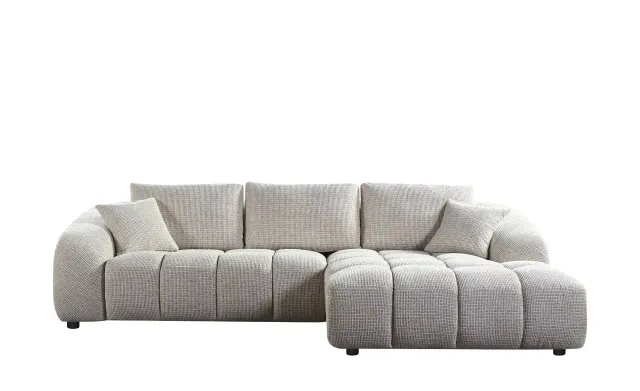
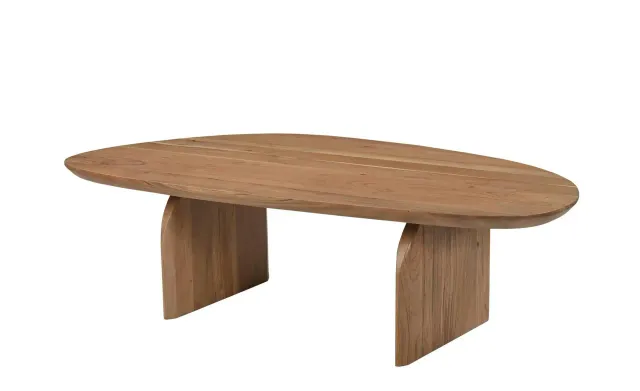
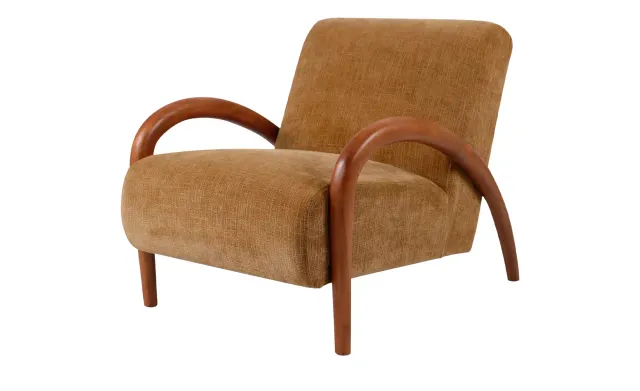
Begin with what you own. Temporarily remove small decorations and photograph the room in daylight. Is it missing a darker contrast, a softer shape or a good reading light? Address that single point first. For a new scheme, a cream corner sofa, an oval wooden table and a chair with curved timber arms make a useful starting point. Leave time between purchases. A room that fits your habits stays interesting beyond its first photograph.
Explore the style: Modern Organic