Balcony design · 4 October 2026
Small Mid-Century Modern Balcony: 7 Practical Design Ideas
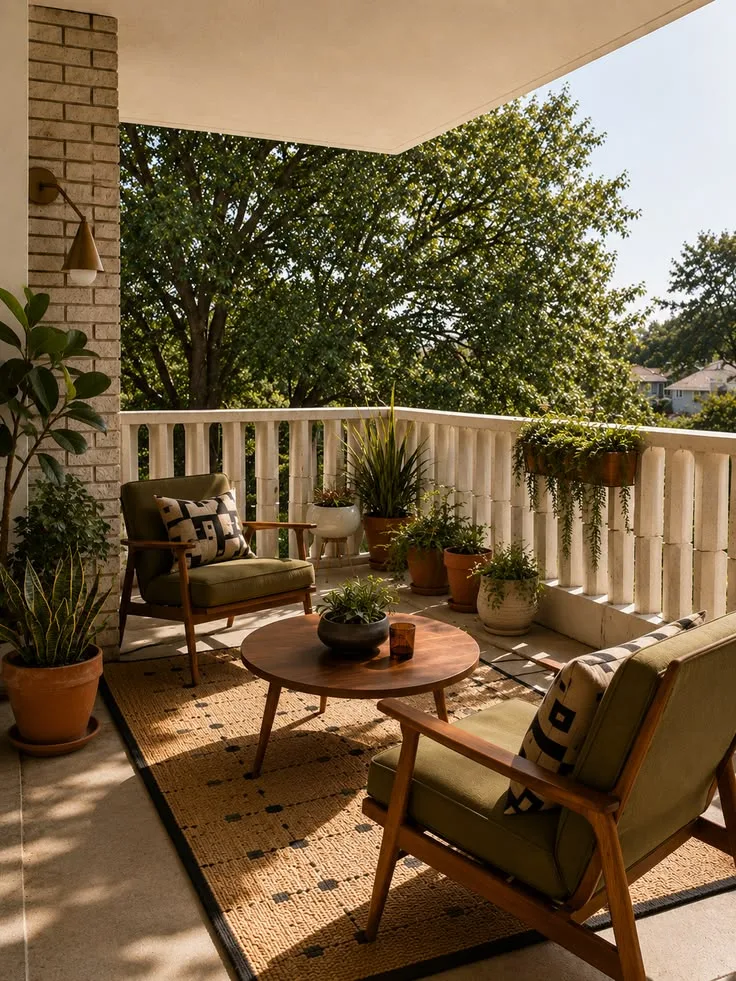
Warm wood, slender furniture and a small seating nook: a mid-century modern balcony does not need a large footprint. What matters is that the shapes feel light and the space is comfortable to use. This guide translates our balcony images into practical choices, from layouts and colour palettes to weather-suitable materials. Start with one chair, a small table and a few plants, then build your balcony gradually.
Which seating layout fits your balcony?
| Situation | Useful starting point | What to check |
|---|---|---|
| Narrow balcony | One chair and a small side table | A clear route to the door |
| Breakfast for two | Two compact chairs and a small table | Room to pull the chairs out |
| Covered reading corner | Outdoor chair, lamp and a group of plants | Suitable materials even beneath a roof |
| Uncovered balcony | Weather-suitable furniture and fewer textiles | Dry storage for cushions |
1. Plan the layout before choosing furniture
A small mid-century modern balcony starts with a decision: do you want breakfast outdoors, or mainly somewhere to read and relax? Two compact chairs and a small table can be enough for coffee together. For a reading corner, one comfortable chair with a side table often works better. Measure the balcony, including door swings, thresholds and existing planters. Mark furniture footprints with tape and test the route from the door to the seat. This reveals whether an attractive piece really fits before you buy it. The layout should make everyday use easier, not just look good in a photograph.
2. Choose lighter shapes instead of a bulky lounge
The mid-century look comes from clean lines, visible wooden frames and legs that feel light. An armchair with open arms reveals more of the floor and can look less enclosed than a deep lounge block. A round table echoes softer contours; on a narrow balcony, a small movable side table may be more practical. Choose furniture explicitly intended for outdoor use by its maker. Moving an indoor vintage chair beneath a roof does not make it outdoor furniture. Use its silhouette as inspiration and look for a weather-suitable alternative with a similar shape.
3. Warm wood, olive and terracotta
Our mid-century balcony idea combines warm wood with olive cushions and terracotta pots. These three tones connect the compact space without making every piece identical. Pale cushions create a quieter transition; one geometric pattern supplies the retro accent. If you already have grey floor tiles, add warmth through wood and textiles. You do not need a green wall. Repeat one accent twice, such as terracotta in a planter and a cushion, and keep the remaining surfaces more restrained. The view beyond the balcony remains part of the design.
Warm wood
Olive
Terracotta
4. Use an outdoor rug to define the seating area
A geometric rug can connect the chairs and table into one seating area. On a narrow balcony, a simple pattern often looks calmer than many small motifs. Check its size against your marked furniture positions rather than choosing solely by the balcony’s width. It should not obstruct the door or cover drainage. Use a rug expressly designed for outdoor use and follow its care instructions. Outdoor textiles still need opportunities to dry. If your cushions already have patterns, a plain rug may be the more comfortable visual companion.
5. Group plants rather than scattering them everywhere
Plants complement the organic shapes of mid-century design. Group a few pots at different heights instead of filling every edge. That leaves a continuous open area. Choose plants for your sunlight, wind exposure and willingness to care for them. A shady city balcony needs different plants from a sunny south-facing one. Keep pots out of walking routes. Check permitted loads for large, heavy containers and use the intended fixings for holders. One larger plant and two smaller companions can already create a green corner on a small balcony.
6. Warm lighting turns the balcony into an evening retreat
A small lamp beside the chair can do more for an evening balcony than extra decoration. Choose a light suitable for its outdoor position and follow the maker’s water-protection guidance. Portable lamps are useful when you do not want a fixed installation. Aim the light at the table and seating rather than illuminating the whole balcony. Walls and plants can cast interesting shadows. For permanently installed electrical lighting, have a qualified professional check the appropriate installation. The shape can recall mid-century design; the equipment must suit the location.
7. Make care and storage part of the plan
A beautiful balcony needs to work on rainy days too. Plan a dry place for cushions and blankets before choosing lots of textiles. Follow the maker’s care recommendations for wood: a weathered colour may be intentional, but it does not replace choosing suitable materials. Position decorative objects so they cannot tip over or fall in wind. In autumn, reduce the seating arrangement and store delicate pieces under suitable protection. A small balcony often feels more convincing with fewer, well-chosen objects. The style comes from relationships between shape, colour and material, not from the longest possible shopping list.
Two related balcony ideas to explore
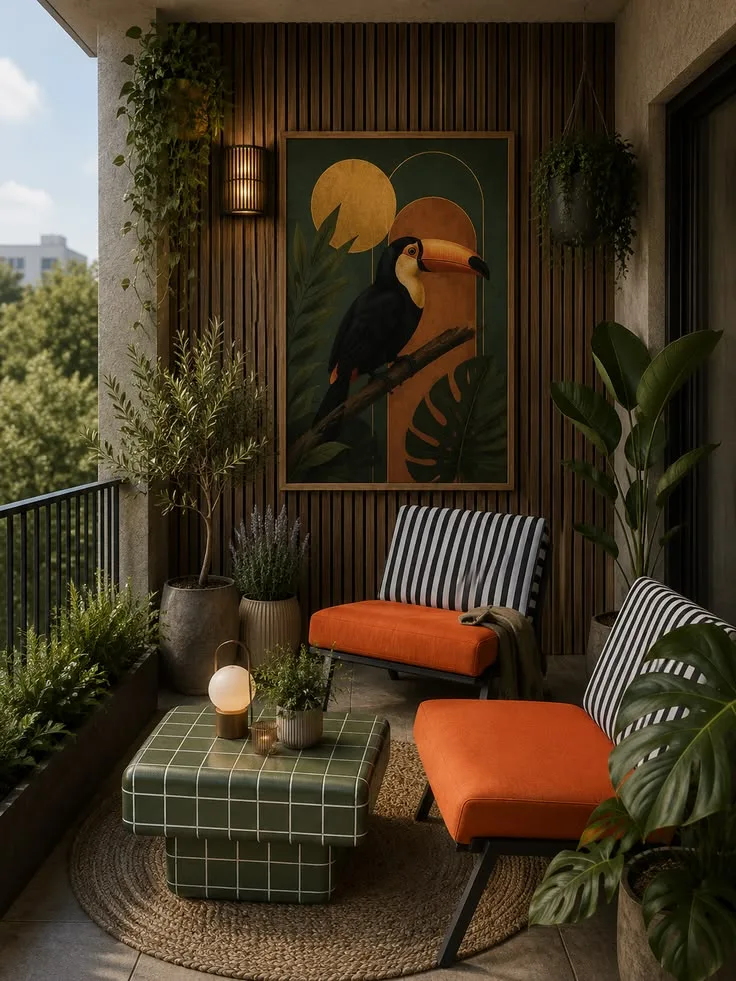
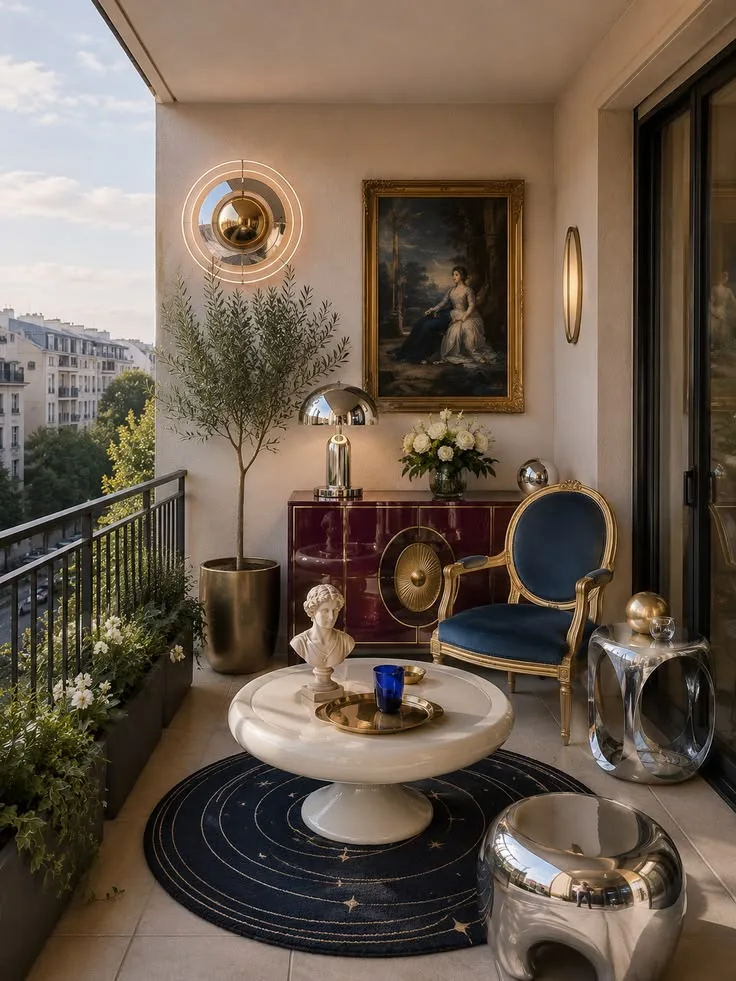
These Ateliology images explore neighbouring styles. Borrow one idea, such as natural materials or a sculptural piece, rather than combining every detail at once.
Mid-century modern balcony questions
Does the style work on a very small balcony?
Yes. Start with one seat, a side table and a few plants. Open furniture frames, a coherent palette and clear walking routes are more useful than a complete lounge set.
Can I use genuine vintage furniture outdoors?
Only when the materials, construction and condition suit the location. Indoor upholstery and delicate finishes can suffer from damp. For permanent placement, furniture designated for outdoor use is a better starting point; vintage pieces can supply the shape inspiration.
Which colours suit the look?
Warm wood, olive, terracotta and cream provide a coherent foundation. Mustard or a black and white geometric pattern can serve as a small accent. Choose two main tones first, then add details deliberately.