Could Cyberpunk Become the Next Big Interior Design Style?
Dark furniture, chrome and carefully placed lighting: explore a cyberpunk interior that works in daylight too.
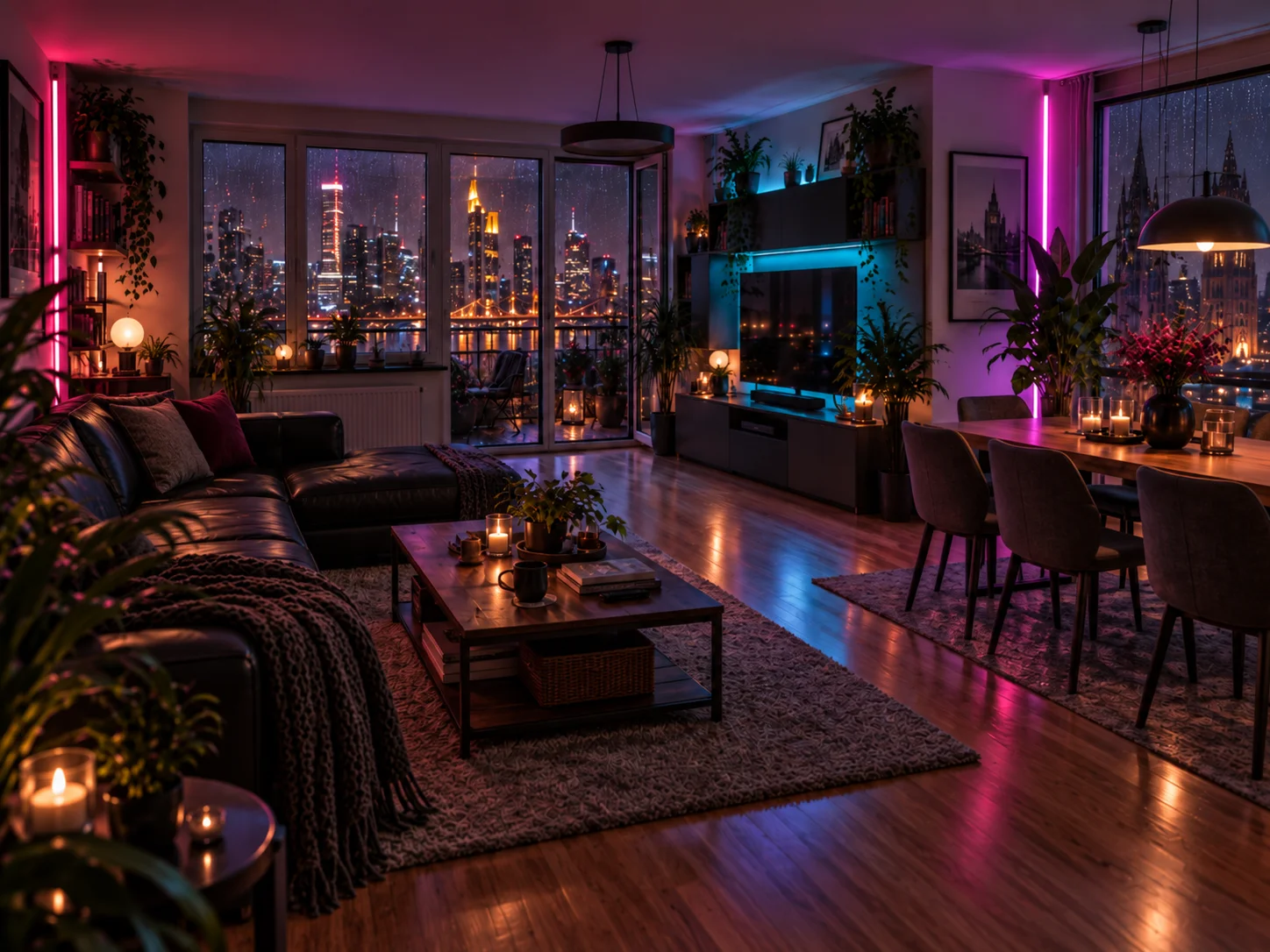
Because if you don't think of cyberpunk as a costume but as an interior style with a clear material, color, and lighting world, something genuinely distinctive could actually emerge from it. Something between dark luxury, industrial design, futuristic technology, and nighttime big-city aesthetics.
Where Cyberpunk Actually Comes From
The aesthetic comes from early-1980s science fiction literature, but it was shaped above all by a single film: Blade Runner. Rain-soaked streets, building-sized neon signs, glossy technology next to decay — that image has barely changed since, whether in video games like Cyberpunk 2077 or in the sequel Blade Runner 2049.
What's interesting is that this visual language was almost exclusively imagined for cities, streets, and clubs. A living room practically never appeared in it.
Cyberpunk Doesn't Have to Look Like a Gaming Room
So far, the biggest problem with the cyberpunk look has been how it gets executed. Usually it means: a black desk, LED strips, an RGB keyboard, a couple of neon colors, done.
That's tech decoration. Not yet interior design.
A genuine cyberpunk interior style would instead have to work exactly like Mid-Century, Art Deco, or Japandi: through recurring forms, materials, colors, and particular moods. And those basic ingredients are actually already there.
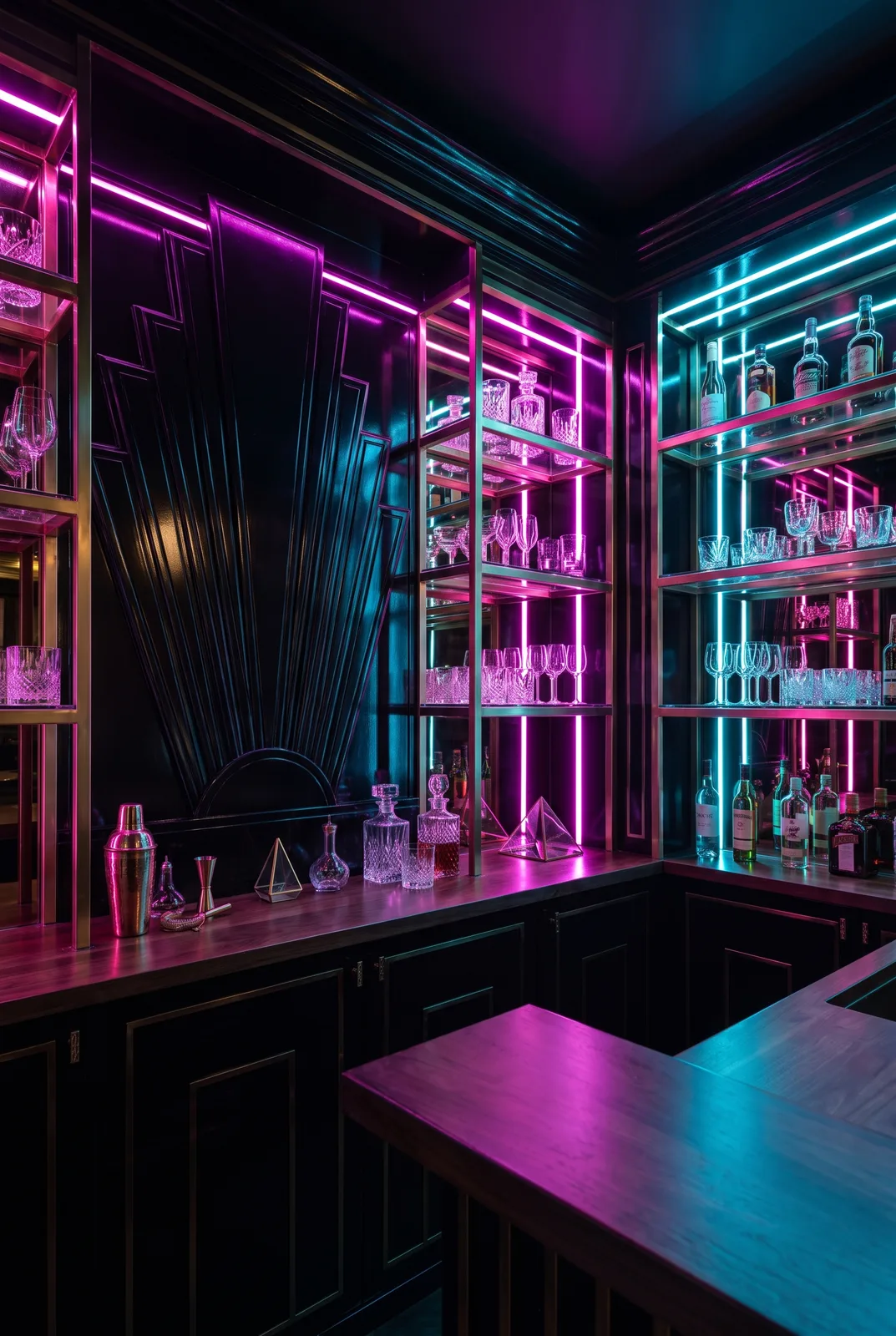
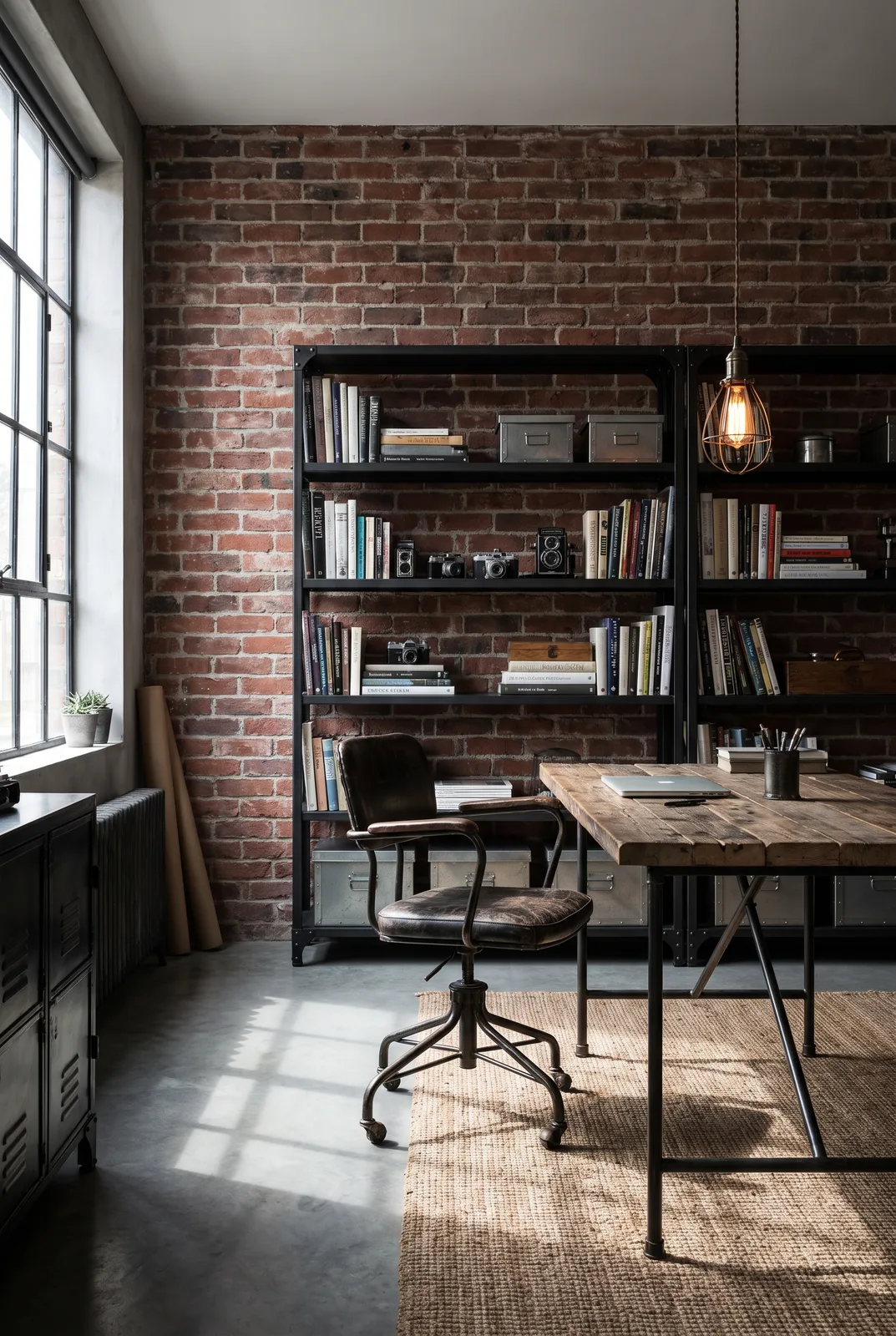
Black. Chrome. Dark wood. Glass. Metal. Leather. Smoked glass. Reflective surfaces. Plus deliberately placed light.
Suddenly, the kid's room with LED strips turns into something that can look pretty grown-up.
The Black Leather Sofa Would Be Almost Mandatory
If there's one piece of furniture that fits cyberpunk perfectly, it's probably a black leather sofa. Not necessarily some angular sofa from a futuristic furniture collection — a classic, slightly more substantial leather sofa could actually work beautifully.
Why? Because leather lives in the light. During the day it looks dark and calm. In the evening it reflects its surroundings. Turquoise light runs across one armrest, warm red across the other. The surface suddenly gains depth.
And it's exactly that mix of something familiar and a futuristic atmosphere that makes the style interesting. Add a low coffee table in smoked glass or chromed metal. Maybe a black rug with an abstract pattern. A single sculptural chair in metal, leather, or dark velvet.
The room shouldn't look like someone laid a cyberpunk filter over it. It should work even without the lights on. That's probably the most important rule.
Red, Black, and Chrome: the Actual Foundation
Neon colors quickly become the most obvious element of the cyberpunk style. The underlying design, though, should be considerably calmer. One especially strong combination would be: black + dark red + chrome.
Black provides the stage. Dark red brings in warmth and a touch of decadence. Chrome delivers the futuristic contrast.
Chrome in particular could play a major role in this style: lamps, table legs, shelving, mirror frames, or entire side tables. The reflective surfaces constantly react to the light and change their effect as a result. A chromed table in an ordinary living room can quickly feel cold. In a cyberpunk room, that coldness is exactly the point.
Add dark wood so the whole thing doesn't tip toward nightclub territory. Walnut, smoked oak, or very dark woods would work beautifully.
The Misted Mirror Ceiling
And now things get a little less sensible. A mirrored ceiling.
Not the classic glossy mirrored ceiling from some questionable 1980s hotel suite. More of a lightly tinted, misted, or smoky mirror surface. It wouldn't even need to cover the entire ceiling — one large central panel of smoked mirror could be enough.
The effect would be huge. Light wouldn't just come from the walls, it would extend upward. Movement, furniture, and plants would appear as dark reflections. The room would gain a second, slightly blurred layer.
Almost as if another living room existed just above the actual one.
That sounds strange.
But it's pretty cyberpunk.
Turquoise and Pink — But Please, With Discipline
Of course neon colors are part of it. Turquoise and pink would probably be the strongest combination. But this is exactly where the style can fail very quickly.
If every wall glows pink and every corner is bathed in turquoise, the room eventually stops looking futuristic. It starts looking like a streaming setup.
The solution is indirect light: a thin turquoise light strip behind a black sideboard, a faint pink glow along one wall edge, warm white lighting as the actual base light, maybe a touch of red in a niche. Neon should be an accent — not the only light source.
It might be even more compelling if the room looks almost completely different during the day. Black, wood, metal, glass. Elegant and dark. And only in the evening does the light transform it.
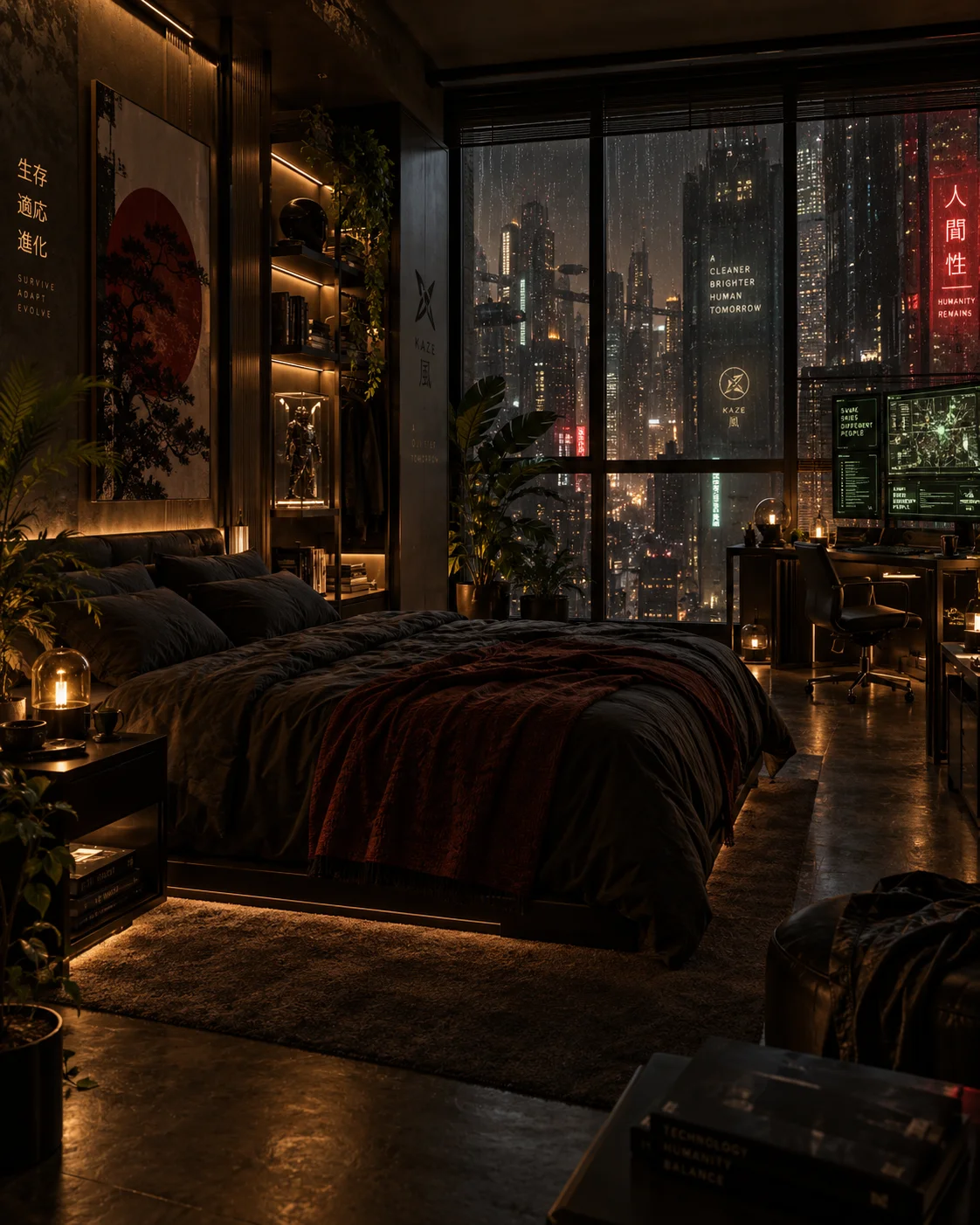
Plants Would Work Surprisingly Well
Cyberpunk isn't only about technology. What makes many futuristic visual worlds so compelling is precisely the contrast between nature and machine.
A large monstera next to a black leather sofa. Trailing plants over a dark metal shelf. A small tree beside a chrome lamp. It works surprisingly well. Green also keeps the room from feeling sterile.
And maybe that's an important difference between the cyberpunk style and classic futuristic interiors. It's allowed to be a little chaotic. A few books. Cables. Art. Plants. Tech. Personal objects.
Cyberpunk, after all, isn't a sterile future.
It's an inhabited one.
And, of Course, the City Outside
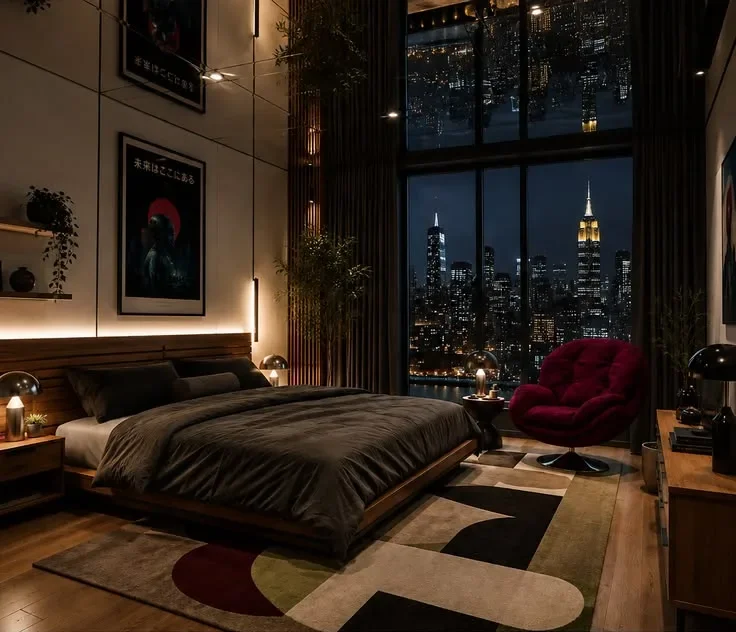
A perfect cyberpunk room really needs one big window. Ideally at night. Rain on the glass. Streetlights. Office towers. Light reflections.
It doesn't have to be Tokyo for that. Frankfurt, of all places, would be almost perfect: bank towers, old buildings, high-rises, trams, the river Main, and light everywhere at night.
A fairly ordinary German living room could suddenly take on a completely different atmosphere through materials and light, without becoming architecturally unrealistic. And maybe that's the interesting part.
Could Cyberpunk Really Become Its Own Interior Style?
Quite possibly. But probably only if it breaks free of its gaming aesthetic.
A grown-up cyberpunk style would be less: RGB + tech + neon.
And more: dark materials + reflective surfaces + industrial elements + unusual light + urban atmosphere.
The black leather sofa would be almost a classic by this point. Smoked glass and chrome would provide structure. Dark red brings warmth. Turquoise and pink set controlled lighting accents. A misted mirror ceiling could give the room something almost unreal.
And suddenly a style emerges that sits somewhere between Industrial, Dark Luxury, futuristic minimalism, and neo-noir.
Maybe that's why cyberpunk isn't actually all that far from becoming a serious interior style.
It just needs fewer RGB strips.
And better furniture.
Ateliology
Interior Design · Furniture Icons · Style Guides