Coastal Living Room Design: How to Combine Navy, Wood and Brass
A coastal living room does not have to look like a holiday rental. With a focused palette, natural materials and a few nautical accents, you can create a calm, modern room with depth.
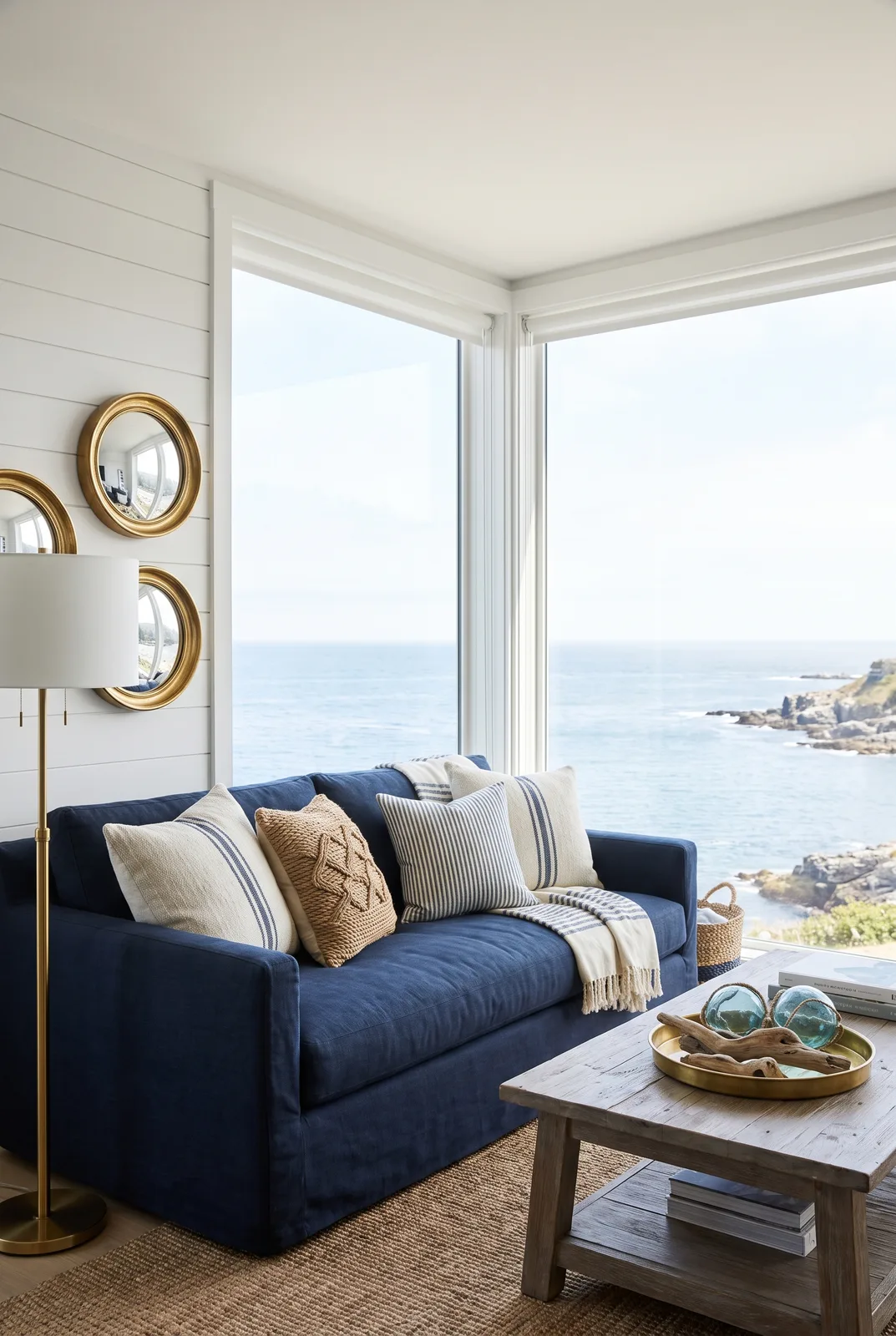
What Makes Coastal Design Feel Modern?
Contemporary coastal design relies on atmosphere rather than themed decoration. Navy or deep teal create a grounded base, while pale walls and linen keep the room light. Wood, rattan and ceramic make cool colors feel inviting.
A useful 60–30–10 split keeps the palette controlled: one quiet base for walls and large surfaces, a second color for the sofa or rug, and a small accent in brass, rust or coral. The result feels edited rather than accidental.
Balancing Navy, Blue and Sand
Navy is a strong anchor for a living room. Use it on a sofa, curtains or one accent wall, then repeat it in two smaller details. A sand-colored rug or pale curtains keep the navy from feeling severe.
For character, add one warm counterpoint: rust recalls weathered metal, ochre late sunlight, and brass the fittings on an old boat. Choose just one accent so the coastal base stays calm.
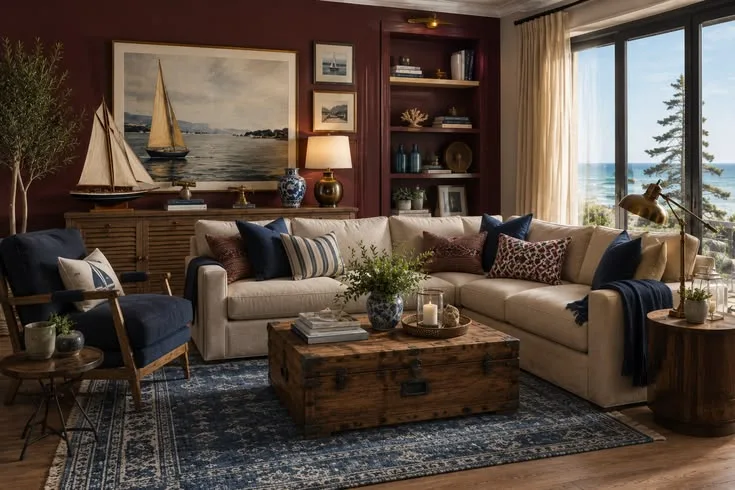
Materials, Furniture and Light
Light or medium wood warms the palette. A grain-forward coffee table, an oak sideboard or one rattan chair is often enough. Linen, cotton and bouclé keep upholstery soft and matte, while glass and brass add small points of light.
Layer the lighting: a pendant above the table, a floor lamp beside the sofa and warm indirect light for the evening. Avoid cool white bulbs, which can make navy feel harsh.
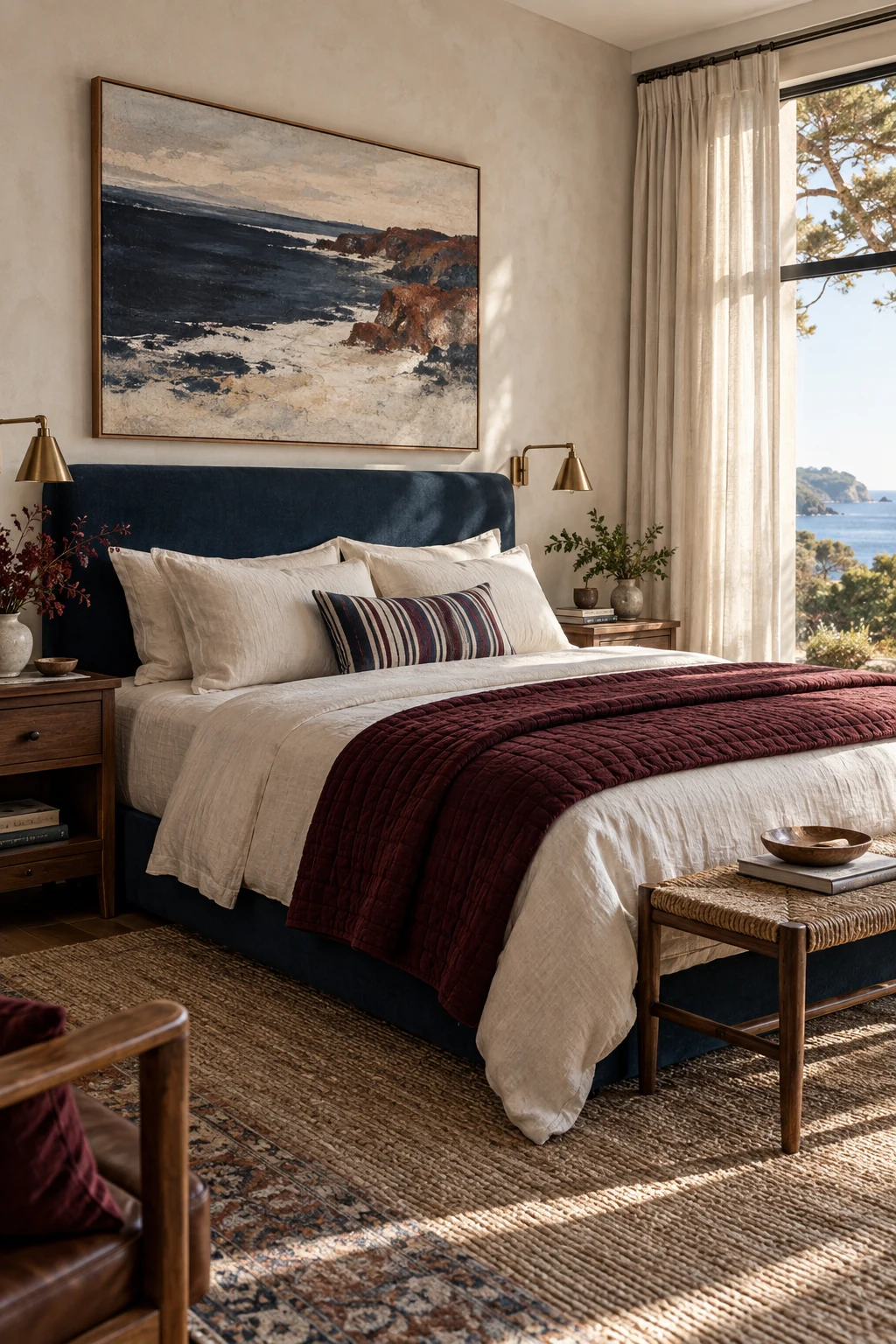
Nautical Accents with a Grown-Up Feel
One considered object is enough: a framed chart, a metal lamp or a striped cushion. Pair it with contemporary art and simple silhouettes. Collections of shells, anchors and nautical lettering can quickly turn the room into a theme set.
For more detail, explore our Modern Maritime style guide.
Create Zones Without Clutter
A coastal living room benefits from a sense of air and calm. Define zones by function rather than adding more colors: a rug frames the seating area, a lamp marks a reading chair, and a slim sideboard can separate the living and dining zones. The room feels larger and the style stays practical.
Keep circulation and sightlines open. A sofa can be a strong anchor, but it should not block a doorway. Low furniture and open shelves keep the eye moving; closed storage calms the places where everyday clutter tends to gather.
Common Coastal Design Mistakes
The first mistake is using blue everywhere. When the wall, sofa, rug and curtains share one tone, the color loses its depth. A more layered mix of navy, faded blue, sand and a warm material such as wood or leather feels richer.
The second mistake is decoration without a connection to daily life. A coastal living room should not feel like a shop window. Choose useful objects: a sturdy throw, a basket for magazines or a bowl for keys. Atmosphere becomes more convincing when it grows from real routines.
Coastal Style in a Small Room
A small living room can still feel coastal. Use navy on one controlled surface and keep the remaining walls light. A sofa with slim arms, a round coffee table and a mirror opposite the window preserve floor space and reflect daylight.
Textiles make the biggest difference in a compact room: linen cushions, a striped runner or off-white curtains add character without taking floor space. Start with one strong piece and add slowly so the room stays clear.
Test Colors in Your Own Light
Navy can look surprisingly different depending on the room's orientation. Before ordering large textiles, place samples next to the floor, curtains and existing furniture. Check them in the morning, afternoon and under artificial light. Warm bulbs soften navy, while cool daylight makes it feel crisper.
Surface matters too: matte linen absorbs light and feels quiet, velvet shifts as you move, and polished brass adds bright reflections. When these differences do the work, the room needs less decoration. That is the strength of a good coastal concept: it suggests the sea and open space without turning the room into a theme.
A Quick Checklist for Your Room
- Choose one base color and repeat navy in two smaller details.
- Add at least one natural texture such as wood, linen or rattan.
- Use one warm accent and keep nautical decoration restrained.